No products in the cart.
CNC Router Prices and 2026 Cost Calculation Table
Contents
CNC Router Prices and 2026 Cost Calculation: A Field Guide and Technical Article
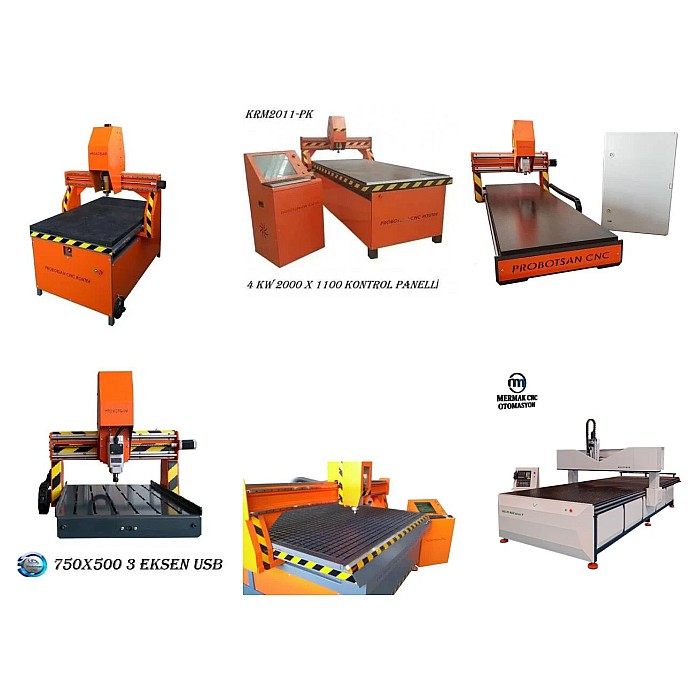


Introduction and Technical Analysis
CNC Router machines, indispensable components of industrial automation, are critical equipment that have revolutionized the manufacturing sector by offering precise and repeatable production capabilities. These machines find wide application in woodworking, metalworking, plastics, composite materials, and sign making, forming one of the cornerstones of digitalization and Industry 4.0. Investment costs, operating expenses, and long-term return potential play a decisive role in businesses’ decisions to invest in this technology. This field guide and technical article aim to detail the factors affecting CNC Router prices, deeply examine their technical specifications, and present cost calculation scenarios, especially for 2026, from an expert perspective. Technological developments in the sector, global economic trends, and local market conditions are parameters that must be considered at every stage, from machine selection to operational optimization. Correct machine selection affects not only the initial cost but also production efficiency, product quality, and the competitive power of the business. Therefore, a comprehensive technical analysis and cost projection are essential for a sustainable investment.
Operating Principle and Technical Data
CNC Router machines operate on the principle of converting models prepared with computer-aided design (CAD) software into numerical commands called G-code via computer-aided manufacturing (CAM) software. These G-codes are interpreted by the machine’s control unit to precisely direct the movements of the processing head (spindle) and the worktable (x, y, z axes). Modern CNC Routers can have three-axis (X, Y, Z) movement capability, as well as five-axis or more axis configurations for more complex geometries. The spindle, or processing motor, rotates the cutting tool at high speeds to shape the material. Spindle power is a critical selection criterion based on the hardness of the material to be processed and the processing depth. It is usually expressed in kW, and different power levels are preferred for different materials. The machine body is typically made of steel or cast iron to minimize vibration and maintain high precision. Motion systems usually consist of ball screws or rack and pinion gear systems driven by servo motors or stepper motors. Servo motors offer higher speed, precision, and feedback control, while stepper motors are more economical solutions. The working area determines the maximum material size the machine can process and is expressed in mm. Positioning accuracy indicates how accurately a point can be repeatedly found, while repeatability indicates how closely the same point can be found in multiple attempts. These technical parameters directly affect the machine’s performance and the quality of the parts to be processed. Automatic Tool Changers (ATC) are important features that increase production efficiency; they can automatically change tools for different processing steps without the need for manual tool changes. Vacuum table systems ensure that the material to be processed is fixed on the table, preventing slippage and improving processing quality. Industrial automation integration, remote monitoring, data collection, and communication capabilities with other production systems are also indispensable features of today’s CNC Routers. These features directly affect the total cost of ownership and operational efficiency.
| Parameter | Value/Description |
|---|---|
| Working Area (X, Y, Z) | 1300x2500x200 mm (Average Industrial Size) |
| Spindle Power | 9 kW (Air Cooled, ATC Supported) |
| Number of Axes | 3 Axes (Advanced 5-Axis optional) |
| Control System | Syntec / OSAI / Fanuc (Varies by manufacturer) |
| Maximum Processing Speed | 20-30 m/min (Varies by material and tool type) |
| Positioning Accuracy | ±0.03 mm (Must be checked according to manufacturer datasheet value.) |
| Tool Change System | Automatic Tool Changer (ATC), 8-12 tool capacity |
| Table Type | Vacuum Table and T-Slot Combination |
| Power Consumption | 15-25 kW (Depends on spindle power and operating conditions) |
| Machine Weight | 2500 – 4500 kg (Depends on machine size and structure) |
| Average Price Range (2024) | 25,000 – 80,000 USD (Depending on configuration) |
| Average Price Range (2026 Estimate) | 30,000 – 100,000 USD (Due to inflation, technology, demand) |
Considerations in the Field
- Machine Selection and Application Suitability: Before investing in a CNC Router, the types of materials to be processed (wood, MDF, acrylic, aluminum, composites, etc.), processing volume, and desired precision level must be clearly defined. For example, intensive metal processing requires a machine with a more rigid chassis, high-torque spindle, and precise servo motors, while more economical models may suffice for hobby or light woodworking tasks. The working area size should be chosen according to the dimensions of current and future projects.
- Spindle Power and Speed: The spindle is the heart of the machine. The hardness of the material to be processed and the processing depth directly determine the required spindle power. Insufficient spindle power leads to tool breakage, slow processing times, and poor surface quality. High RPM capacity is important for achieving smooth surfaces, especially in materials like wood and plastic. When choosing between air-cooled and water-cooled spindles, noise level, ease of maintenance, and cooling efficiency should be considered.
- Control System and Software: The machine’s control system (e.g., Syntec, OSAI, Mach3) should be user-friendly and have an interface that operators can easily adapt to. Furthermore, compatibility with your existing CAD/CAM software (e.g., ArtCAM, VCarve, Fusion 360) is critically important. Advanced control systems offer more complex processing operations, faster data processing, and better error detection capabilities. Software license costs and updates should also be included in the total cost calculation.
- Mechanical Structure and Chassis Robustness: The machine’s chassis must absorb vibration and maintain stability even at high speeds. A heavy and rigid structure means long-lasting use, high precision, and less maintenance. Poor chassis design leads to vibrations during processing, reducing surface quality and shortening tool life. The quality of linear guides, ball screws, and bearings used in the machine’s overall structure should also be examined for precision and durability.
- Tool Change System (ATC vs. Manual): Automatic Tool Changer (ATC) systems significantly increase production efficiency in jobs requiring multiple processing steps with different tools. Manual tool changes lead to time loss as they require operator intervention for each tool change. ATC-equipped models should be preferred by businesses looking to accelerate return on investment and reduce operational costs. Tool magazine capacity is also an important criterion.
- Service and Support: Machine breakdowns can cause production interruptions. Choosing a supplier with a strong local service network, fast spare parts supply, and technical support services is vital. Warranty conditions, maintenance agreements, and remote support options are factors influencing the purchase decision. In the long run, good technical support ensures your business runs smoothly.
- Safety Features: Occupational safety is always a priority. Features such as emergency stop buttons, enclosed cabins, safety sensors, light barriers, and dust collection systems enhance operator safety and make the working environment healthier. Compliance with CE and other international safety standards is important for machine reliability.
Common Problems and Solutions
Some common problems encountered in CNC Router operations and proposed solutions are detailed below:
- Loss of Processing Accuracy and Dimensional Deviations:
Problem: Inconsistencies in the dimensions of processed parts or results below expected precision.
Solution: This situation usually results from mechanical wear, backlash in axes, loose connections, or calibration deficiencies. It is necessary to periodically check the machine’s axes and motion systems (ball screws, linear guides, belts), replace worn parts, and perform axis calibrations. Additionally, the accuracy of tool offsets and Z-axis zeroing settings should be checked. Environmental factors (temperature changes, vibration) can also affect accuracy. - Spindle Malfunctions and Overheating:
Problem: Abnormal noises from the spindle, excessive overheating, loss of power, or complete stoppage.
Solution: Spindle malfunctions are typically caused by bearing wear, cooling system problems (clogged filters, low water level, faulty fan), overloading, or issues with electrical connections. Regular maintenance of the cooling system (filter cleaning, water level check), adjusting processing parameters (RPM, feed rate, cutting depth) to suit the material, and periodically checking and replacing spindle bearings if necessary are important. Electrical connections and drive settings should also be checked. - Control System Errors and Communication Interruptions:
Problem: Error messages on the machine’s control panel, G-code reading problems, or loss of communication between the computer and the machine.
Solution: Such problems usually stem from software incompatibilities, electrical interference, loose cable connections, or control card malfunctions. Ensure the control software is up-to-date, check grounding in the electrical installation, and isolate sources of interference (other electrical equipment). All cable connections (USB, Ethernet, power) should be checked and replaced if necessary. In case of control card or drive failure, seek support from an authorized service. - Tool Breakage or Excessive Wear:
Problem: Frequent tool breakage or much faster wear than expected during processing.
Solution: Tool breakage or excessive wear is generally caused by incorrect tool selection (tool not suitable for the material), incorrect processing parameters (too high feed rate, too low RPM, excessive cutting depth), improper tool clamping, or insufficient material clamping on the table. The appropriate tool type and geometry for the material to be processed should be selected, and cutting parameters recommended by the tool manufacturer should be used. Ensure the tool holder is clean and sound, and the tool is correctly installed. - Vacuum Table Problems:
Problem: Insufficient clamping of the material on the vacuum table, slippage, or vacuum loss.
Solution: Vacuum table problems typically occur due to leaks on the table surface, insufficient performance of the vacuum pump, cracks in hoses, or the material not sitting perfectly flat on the table surface. Check the sealing gaskets on the table surface and replace them if damaged. Clean the vacuum pump filters and check its performance. Ensure the material to be processed has full contact with the table surface, and if necessary, use additional measures for sealing (e.g., foam gasket).
CNC Router Prices and 2026 Cost Calculation Table
CNC Router prices vary greatly depending on many factors such as the machine’s technical specifications, brand, origin, automation level, and additional equipment. A basic 3-axis, manual tool change, small working area hobby machine can start from a few thousand dollars, while an industrial-grade, large working area, 5-axis, automatic tool change (ATC) machine with an advanced control system can cost hundreds of thousands of dollars. Generally, machine size, spindle power, number of axes, quality of motors and drives used (servo vs. stepper), control system brand, vacuum table system, dust collection unit, tool sensors, and safety equipment are the main factors directly affecting the price. European and Japanese brands generally have higher price tags than Chinese brands but may offer higher precision, durability, and better after-sales support.
When calculating costs for 2026, it is essential to consider not only the machine purchase price but also the Total Cost of Ownership (TCO). TCO is the sum of direct and indirect costs incurred throughout the entire lifecycle of an investment. By 2026, global inflation, changes in raw material prices, technological developments, and supply chain dynamics will continue to push machine prices upwards. Additionally, currency fluctuations and import policies in Turkey will also be decisive on prices.
2026 Cost Calculation Table Components
The following components are the main items to consider when calculating the cost of a CNC Router for 2026:
- 1. Initial Investment Costs:
- CNC Router Price: The machine itself. An increase of 10-25% compared to 2024 can be anticipated. (E.g., 30,000 – 100,000 USD).
- Shipping and Insurance: Cost of transporting the machine from the manufacturer to the business. Varies by location and machine size (E.g., 1,000 – 10,000 USD).
- Installation and Commissioning: Installation, setup, and testing of the machine by expert personnel (E.g., 500 – 3,000 USD).
- Training: Training operators and maintenance personnel on machine use and basic maintenance (E.g., 500 – 2,000 USD).
- Ancillary Equipment: Essential equipment to work with the machine, such as a dust collection unit, air compressor, voltage regulator (E.g., 2,000 – 8,000 USD).
- CAD/CAM Software Licenses: Initial purchase or annual subscription costs for necessary design and manufacturing software (E.g., 1,000 – 5,000 USD/year).
- Tools and Consumables (Initial Purchase): Cutting tools, collets, vacuum gaskets, etc., to be used initially (E.g., 500 – 2,500 USD).
- 2. Operating Costs (Annual Estimates):
- Energy Consumption: Electricity cost calculated considering the power consumption of the machine’s spindle, vacuum pump, and other motors. Can be 5,000 – 15,000 USD or more annually depending on intensive use.
- Consumables: Cutting tools, collets, vacuum gaskets, cooling fluids, oils, etc. Annually 1,000 – 5,000 USD (varies by work volume).
- Maintenance and Repair: Periodic maintenance (filter replacement, lubrication, calibration) and potential breakdown repairs. Can be considered as 3-7% of the annual machine price (E.g., 1,000 – 7,000 USD).
- Spare Parts: Cost of worn or faulty parts. Can be evaluated within maintenance costs or kept as a separate item.
- Labor Costs: Salaries and social benefits of machine operators and maintenance personnel. This varies greatly by geography and experience.
- Insurance: Insuring the machine against potential damages or production interruptions (Annual 200 – 1,000 USD).
- Software Updates and Subscriptions: Annual updates or subscription fees for CAD/CAM software (Annual 500 – 2,000 USD in addition to the initial cost above).
- 3. Depreciation and Loss of Value:
- Loss of value of the machine over its economic life. Usually depreciated over 5-10 years. Annual depreciation expense affects the return on investment period and profitability.
- 4. Financing Costs:
- If the machine was purchased with a loan, loan interest and bank charges should also be added to the total cost.
A detailed calculation of these components provides a realistic picture for the business’s budgeting process and allows for a more accurate estimation of the Return on Investment (ROI). By 2026, increases in these items should be revised considering global economic conditions, local inflation rates, and the impact of technological innovations on costs. Especially the volatility in energy and raw material prices will directly affect operating costs.
Expert Advice
Investing in a CNC Router is a strategic decision for modern manufacturing businesses and should be viewed not merely as an immediate purchase but as a long-term business partnership. As detailed in this article, the price of a CNC Router and its total cost for 2026 depend on numerous technical and economic factors. During the machine selection phase, parameters such as current and future production needs, material diversity to be processed, desired precision, and automation level must be meticulously analyzed. While a low-cost machine may seem attractive initially, it can lead to a higher total cost of ownership in the long run due to issues like low performance, frequent breakdowns, high maintenance expenses, and inadequate after-sales support. Therefore, in addition to the machine’s technical capabilities, aspects such as supplier reliability, technical support capacity, spare parts availability, and warranty conditions are of great importance. Especially with energy and raw material costs expected to rise towards 2026, directly impacting operating expenses, investing in energy-efficient, durable, and long-lasting machines will be wiser. Systems compatible with Industry 4.0 integration, capable of remote monitoring and data analysis, will optimize production processes, providing efficiency and a competitive advantage. It should be remembered that a successful CNC Router investment is more than just buying a machine; it is a holistic approach that transforms production processes and gives the business a sustainable growth momentum. Our expert advice is to conduct a comprehensive feasibility study during the decision-making process, obtain detailed quotes from different suppliers, make reference visits, and focus not only on price but also on the machine’s overall quality, technology, and after-sales services. This way, you can realize the most suitable, efficient, and profitable CNC Router investment for your business.
FAQ
What factors influence the price of a CNC Router, and what is the estimated price range for 2026?
CNC Router prices vary significantly based on specifications like working area, spindle power, number of axes, control system, and brand. Entry-level machines might be a few thousand USD, while industrial-grade, multi-axis machines with ATC can cost hundreds of thousands of USD. Our 2026 estimate for industrial models ranges from 30,000 to 100,000 USD.
What components are included in the Total Cost of Ownership (TCO) for a CNC Router?
The Total Cost of Ownership (TCO) for a CNC Router includes initial investment costs (machine price, shipping, installation, training, ancillary equipment, software licenses, initial tools) and annual operating costs (energy, consumables, maintenance, spare parts, labor, insurance, software updates). Depreciation and financing costs also contribute to the TCO.
What are the essential technical specifications to consider when purchasing an industrial CNC Router?
Key technical specifications include working area (e.g., 1300x2500x200 mm), spindle power (e.g., 9 kW with ATC), number of axes (3-axis standard, 5-axis optional), control system (Syntec, OSAI, Fanuc), maximum processing speed, positioning accuracy (e.g., ±0.03 mm), tool change system (ATC), table type (vacuum and T-slot), power consumption, and machine weight.
What are the common operational problems with CNC Routers, and how can they be resolved?
Common issues include loss of processing accuracy (due to wear, backlash, calibration), spindle malfunctions (bearing wear, cooling problems), control system errors (software, electrical interference, loose connections), tool breakage (wrong tool, incorrect parameters), and vacuum table problems (leaks, pump issues). Regular maintenance, correct parameter settings, and quality components are crucial for prevention.
What expert advice should be followed for a successful CNC Router investment?
When selecting a CNC Router, consider the types of materials to be processed, required precision, production volume, spindle power, control system compatibility, mechanical robustness, and the availability of automatic tool changers. Crucially, evaluate the supplier's reliability, technical support, spare parts availability, and warranty conditions to ensure long-term operational efficiency.