




































































































Step Motor vs. Servo Motor for CNC Machines: Which is More Practical?
📑 Table of contents (Click to open)
Introduction and Technical Analysis
At the heart of industrial automation, and especially CNC (Computer Numerical Control) machines, lie precise motion control systems. One of the fundamental components of these systems is undoubtedly the motors that provide axis movements. The two main types of motors widely used in the market, step motors and servo motors, constantly confront engineers and system integrators with the question: “Which one is more practical?” The answer to this question largely depends on the application’s requirements, budget, expected performance, and long-term operating costs. This comprehensive field guide and technical article addresses the selection of step and servo motors for CNC machines from the perspective of industrial automation sector experts, with detailed technical analyses and practical field experiences. Our goal is to provide our readers with a solid foundation for making informed decisions by outlining the operating principles, advantages, disadvantages, and critical selection criteria of these two motor technologies. The precision, speed, and repeatability of movement in CNC machines directly affect the final product quality and production efficiency, making the correct motor selection vital for project success. Especially in applications requiring high-precision machining, rapid tool changes, or complex contours, motor selection becomes a decisive factor in the machine’s overall performance and competitiveness. This article will offer both an engineering perspective by delving into technical details and facilitate decision-making processes with practical advice distilled from field experience.
Operating Principle and Technical Data
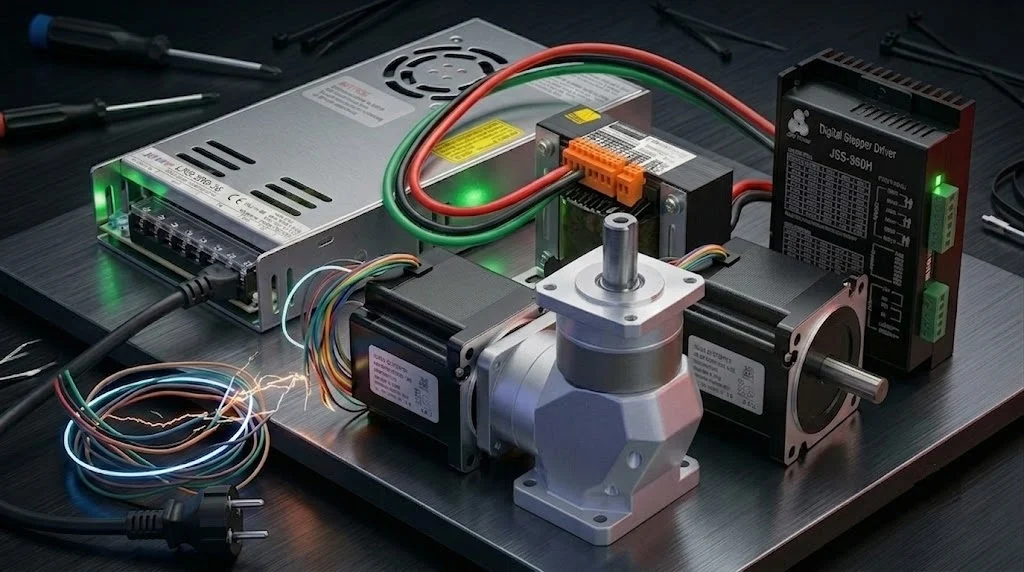
Step Motors: Step motors are brushless DC motors that convert electrical pulses into discrete mechanical steps. They typically have standard step angles, such as 200 steps/revolution (1.8 degrees/step), but with microstepping technology, this resolution can be multiplied up to 256 times, allowing for much smaller steps (e.g., 1/256 step). This provides smoother motion and less vibration. Step motors usually operate with an open-loop control system; that is, the controller sends a specific number of step pulses to the motor, and it is assumed that the motor executes these steps correctly. Since no feedback sensor (encoder) is used, there is no direct information about the motor’s position. This simplicity makes them an attractive option for low-cost and easy-to-install systems. Step motors are particularly effective at providing high holding torque at low speeds. These characteristics make them preferred in applications such as 3D printers, small CNC routers, laser cutters, and pick-and-place robots. However, their torque drops significantly at high speeds, and they carry the risk of step loss under excessive load. Step loss can lead to processing errors by causing a deviation between the position expected by the controller and the motor’s actual position. Additionally, they can experience resonance issues at certain speeds and tend to heat up due to continuous high current draw.
Servo Motors: Servo motors are motors that operate with a closed-loop control system, where position, speed, and torque can be precisely controlled. A servo system consists of a motor, an encoder (or resolver), a drive, and a controller. The encoder provides instant feedback on the actual position and speed of the motor shaft. The drive continuously compares the difference (error) between the target position/speed set by the controller and the actual position/speed from the encoder, and adjusts the motor to zero out this error. Thanks to this feedback mechanism, servo motors offer high precision, dynamic response, and excellent repeatability. They can maintain their torque even at high speeds and do not experience issues like step loss under overload conditions; instead, they issue an overload warning. Servo motors are ideal for high-speed, high-precision, and dynamic response applications such as CNC machining centers, robotic arms, packaging machines, and other complex automation systems. They are more expensive and complex to install compared to step motors due to requiring more complex control algorithms (like PID control) and additional components such as encoders and drives. However, their energy efficiency is generally higher because they only draw power to produce the torque they need, which can reduce long-term operating costs.
| Parameter | Step Motor | Servo Motor |
|---|---|---|
| Control Type | Open-Loop, sometimes with closed-loop option | Closed-Loop |
| Feedback | Generally none, optional encoder for position verification | Continuous feedback with internal encoder (absolute or incremental) |
| Precision | Determined by step angle and microstepping, risk of step loss | Very high, determined by encoder resolution and controller precision |
| Maximum Speed | Medium (Typically 1000-2000 RPM, torque drops at high speed) | High (Typically 3000-5000 RPM and above, maintains high torque) |
| Maximum Torque | High holding torque at low speeds, rapidly decreases at high speeds | High, continuous, and dynamic torque over a wide speed range |
| Cost | Lower initial cost | Higher initial cost |
| Energy Efficiency | Lower due to continuous current draw | Higher due to current draw based on load demand |
| Complexity | Simple setup and adjustment | Complex setup, requires PID tuning |
| Risk of Step Loss | Present under high load or incorrect sizing | None, gives overload warning |
| Maintenance Needs | Low due to brushless design | Low due to brushless design, encoder check may be needed |
| Noise Level | Generally noisier (resonance and vibration) | Quieter and smoother operation |
| Sizing | 50-100% more than application torque requirement recommended | Closer sizing to application torque requirement possible |
Field Considerations
- Application Precision and Repeatability Requirements: If your application demands micron-level precision and high repeatability (e.g., mold making, precise part manufacturing), servo motors are indispensable. Thanks to closed-loop control, servo systems react instantly to external forces or load changes, maintaining positional accuracy. Step motors, operating in open-loop, are more easily affected by external factors and carry the risk of step loss. This can lead to deviations in product quality, especially during long processing operations or under high cutting forces. Therefore, for manufacturing parts with critical tolerances, servo motors should always be the first choice.
- Dynamic Performance and Speed Requirements: In CNC machines, acceleration, deceleration, and continuous high-speed operation capacity are critical for production efficiency. Servo motors excel in dynamic performance over step motors because they can maintain high torque over a wide speed range and respond quickly. Especially in applications with complex tool paths, frequent speed and direction changes, servo motors ensure smoother and faster machine operation, reducing cycle times. Step motors rapidly lose torque at high speeds, limiting the machine’s maximum processing speed. For high-speed machining or machines with frequent “rapid traverse” movements, servo motors increase overall efficiency and productivity.
- Cost and Budget Constraints: Initial investment cost is a significant decision factor for many projects. Step motor systems are generally more cost-effective than servo systems due to the simpler structure of the motor and drive. This makes step motors attractive for hobby, small-scale, or budget-friendly CNC projects. However, when evaluating the total cost of ownership (TCO), not only the initial investment but also factors such as energy consumption, maintenance, failure frequency, and production efficiency should be considered. Servo motors offer higher energy efficiency and lower risk of failure, potentially reducing long-term operating costs. Furthermore, the cost of scrapped products or rework due to step loss in a step motor can quickly offset the initial price difference. Therefore, when evaluating the budget, long-term returns and risks should be analyzed instead of short-term costs.
- Environmental Conditions and Mechanical Loads: CNC machines often operate in dusty, chip-laden, or vibrating environments. These environmental factors and mechanical loads on the machine must be considered when selecting a motor. Excessive dust and moisture can damage the encoder of servo motors, but modern servo motors are generally designed to withstand industrial environments. Regarding mechanical loads, step motors are at increased risk of step loss under high cutting forces, heavy workpieces, or continuously changing loads. In such cases, a more powerful and feedback-controlled servo system offers a more reliable solution to maintain machine stability and precision. In the integration of step motors into mechanical systems, coupler selection and vibration damping measures may become more critical to prevent resonance and optimize torque.
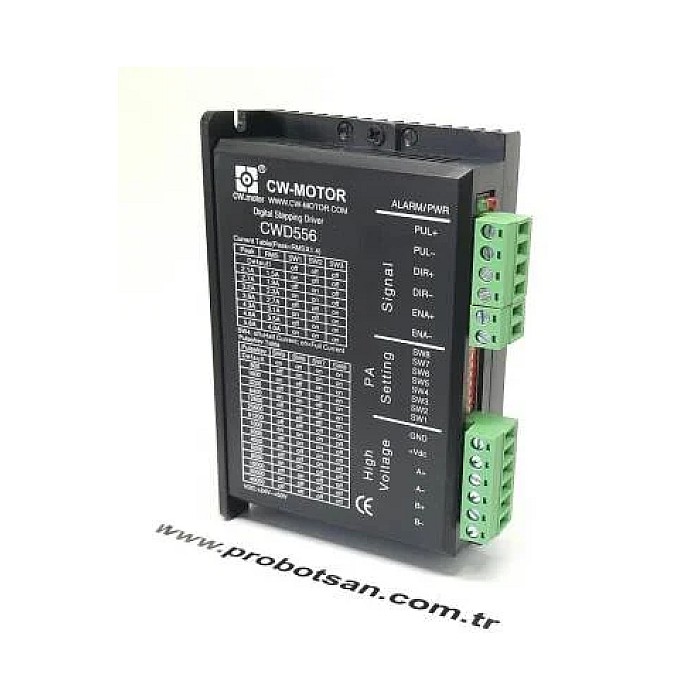
- System Integration and Controller Compatibility: Motor selection must also consider compatibility with the existing or planned CNC controller. While most modern CNC controllers support both step and servo motors, some controllers may be optimized for specific motor types. Tuning the PID parameters of servo systems is a more complex process than for step motors and requires experience. However, many modern servo drives simplify this process by offering auto-tuning features. Step motor integration is generally simpler; they can be directly controlled with pulse/dir signals. Wiring and power requirements will also differ by motor type; servo systems typically require more wiring and a more complex power supply.
- Future Expansion and Upgrade Potential: Over the lifespan of a CNC machine, production requirements or technological expectations may change. When selecting a motor, potential future upgrade or expansion needs should also be evaluated. Servo motor systems generally offer more flexibility for future performance enhancements or integration of new features because they have a wider power and torque range and support more advanced control algorithms. Even if a step motor system is sufficient initially, it may become inadequate if higher speed, greater precision, or more complex processing needs arise in the future, requiring a complete motor replacement. This can make servo motors more advantageous in long-term planning.

Common Problems and Solutions
Common Problems and Solutions for Step Motors:
- Step Loss: This is the most common and critical problem with step motors. It occurs when the motor cannot handle the mechanical load, the drive current is inadequately set, acceleration/deceleration ramps are too aggressive, or mechanical friction is excessive. As a result, a deviation occurs between the position expected by the controller and the motor’s actual position, leading to processing errors.
- Solution: First, ensure the motor is correctly sized. If necessary, use a higher torque motor or a lower gear ratio. Set the drive current correctly according to the motor’s nominal values. Adjust acceleration and deceleration ramps more smoothly to avoid exceeding the motor’s acceleration capacity. Check mechanical system friction and lubricate or adjust if necessary. Closed-loop step motor drives (operating with encoder feedback) can also be used to detect and compensate for step loss.
- Resonance and Vibration: Step motors can enter resonance at certain speeds, coinciding with the motor’s natural frequency, causing excessive vibration or noise. This can lead to mechanical wear and reduce processing quality.
- Solution: Increasing microstepping settings can ensure smoother motor operation and reduce resonance. Optimize speed profiles to avoid resonance frequencies. Using mechanical dampers or drives with anti-resonance filters can also be effective. Ensure the mounting surface for the motor is solid and vibration-absorbing.
- Overheating: Step motors can overheat when continuously operating below or above their nominal current. High current, insufficient cooling, or continuous operation under high load leads to overheating.
- Solution: Set the drive current correctly according to the motor’s nominal values and application requirements. Ensure adequate cooling for the motor and drive; add a fan if necessary. Using drives with idle current reduction features also reduces energy consumption and overheating. Optimize the motor’s duty cycle.
Common Problems and Solutions for Servo Motors:
- Tuning Difficulties and Unstable Operation: Correctly setting the PID (Proportional-Integral-Derivative) gain parameters of servo systems (tuning) is critical for stable and precise system operation. Incorrect tuning can lead to overshoot, slow response, or vibration.
- Solution: Modern servo drives usually offer auto-tuning functions. Use these functions to make initial adjustments. For fine-tuning, manually adjust PID parameters by understanding the system’s dynamics. Seeking expert help or thoroughly reviewing the drive’s manual will be beneficial in this process. Issues like mechanical backlash or flexibility can also complicate tuning; address these problems.
- Encoder Errors or Connection Issues: Encoders, the heart of servo systems, provide precise feedback. Loose connections, damage, electrical noise in encoder cables, or a fault in the encoder itself can cause positional errors or uncontrolled motor movement.
- Solution: Ensure encoder cables are intact, correctly connected, and kept away from electrical noise (use shielded cables). Check connection points and connectors. Ensure the encoder is clean and not mechanically damaged. Replace the encoder or its cable if necessary. Check encoder error indicators on the drive.
- Overload Faults: Servo motors can stop and issue an overload fault when forced beyond a certain torque capacity. This can occur due to mechanical jamming, insufficient motor sizing, or cutting forces being higher than expected.
- Solution: First, check for any jamming or abnormal friction in the mechanical system. Ensure the motor’s torque capacity is sufficient for the material to be processed and the cutting depth; use a more powerful motor if necessary. If overloading is momentary, you can reduce the sudden load on the motor by lowering acceleration/deceleration ramps. Check and adjust the drive’s overload protection parameters appropriately.
- Noise or Vibration (Mechanical Origin): Although servo systems generally operate quietly, backlash in mechanical components, misalignment, or worn bearings can cause noise and vibration.
- Solution: Ensure all connections in the mechanical system are tight and correctly aligned. Ensure couplers are flexible and of the appropriate type. Check for backlash in ball screws, linear guides, and bearings, and adjust or replace if necessary. Review servo tuning parameters; sometimes overly aggressive gain settings can also trigger mechanical vibration.
Expert Advice
There is no single “right” answer to the question of whether to use a step motor or a servo motor in CNC machines. This decision depends entirely on the specific requirements of the application, budget, expected performance, and long-term operational goals. Our field experience in the industrial automation sector shows that both motor types offer unique advantages in their niche application areas. For low-cost, simple, and medium-precision applications, step motors remain a highly practical choice. Especially in small-scale 3D printers, laser engraving machines, hobby CNC routers, or systems processing light materials, step motors can provide a quick return on investment by keeping initial costs low. However, even in such systems, microstepping and correct sizing are critical to minimize the risk of step loss and achieve smoother movements. In some cases, closed-loop step motor drives can even offer a cost-effective intermediate solution by eliminating the open-loop disadvantages of step motors.
On the other hand, for industrial CNC machines, metal machining centers, robotic applications, or mass production lines requiring high precision, dynamic response, high speed, and repeatability, servo motors are an undeniably superior solution. The closed-loop control of servo systems, instant feedback, and error compensation capabilities provide machining accuracy down to thousandths of a millimeter. This directly impacts product quality and machining efficiency, especially in sectors such as mold making, aerospace, and automotive. Although servo motors have higher initial costs, their energy efficiency, lower risk of failure, longer lifespan, and higher production capacity can make them more economical in terms of total cost of ownership (TCO) in the long run. Furthermore, the flexibility and advanced control capabilities offered by servo systems increase their adaptability to future technological developments and changes in production needs.
As expert advice, focus on determining the “most suitable” motor for your application rather than searching for the “best” motor. The first step is to clearly define your project’s maximum speed, torque, precision, and repeatability requirements. Then, evaluate budget constraints and long-term operational goals. If the budget is limited and tolerances are relatively wide, a correctly sized and well-tuned step motor system may suffice. However, if performance, reliability, and production quality are priorities, opting for a servo motor system, despite a higher initial investment cost, will yield much greater benefits in the long run. Remember that motor selection is not just the selection of a single component but part of the entire motion control system. The harmonious operation of the drive, controller, mechanical transmission elements (ball screw, belt-pulley, etc.), and software as a whole will determine the machine’s overall performance. Therefore, close cooperation with motor suppliers and system integrators to find the most optimized solution for your project is key to a successful CNC machine project.
FAQ
What are the main differences between step motors and servo motors for CNC applications?
Step motors are generally more cost-effective for initial investment and simpler to set up, making them suitable for hobbyist or small-scale CNC applications where high precision and speed are not critical. Servo motors, while more expensive initially, offer superior precision, speed, dynamic response, and energy efficiency, making them ideal for industrial CNC machines, robotics, and high-volume production lines where performance and reliability are paramount.
How can I prevent step loss in my CNC machine using a step motor?
Step loss is a common issue with step motors, occurring when the motor cannot keep up with the commanded steps due to excessive load, incorrect current settings, or aggressive acceleration. To mitigate this, ensure proper motor sizing, adjust drive current correctly, use smoother acceleration/deceleration ramps, and consider closed-loop step motor systems with encoder feedback.
When should I choose a servo motor over a step motor for my industrial CNC router?
Servo motors are preferred for applications requiring high precision (micron level), high speeds (3000-5000 RPM and above), dynamic response, and excellent repeatability, such as mold making, aerospace component manufacturing, and complex robotic tasks. Their closed-loop control ensures accurate positioning even under varying loads.
What are the typical challenges with servo motor systems and their solutions?
Tuning difficulties, encoder errors, and overload faults are common with servo motors. Tuning involves adjusting PID parameters for stable operation, often aided by auto-tuning features. Encoder issues require checking cables and connections for damage or noise. Overload faults indicate mechanical jamming or undersized motors, requiring system inspection and potential motor upgrade.
What factors should I consider when choosing between a step motor and a servo motor for my CNC machine?
When selecting a motor, consider your application's specific requirements for speed, torque, precision, and repeatability. Evaluate your budget for both initial investment and long-term operating costs, including energy consumption and maintenance. Also, factor in environmental conditions, mechanical loads, and compatibility with your CNC controller. For expert guidance, request a quote on WhatsApp from Mermak CNC.