












































































The Critical Importance of Perpendicularity and Parallelism in CNC Router Assembly

📑 Table of contents (Click to open)
- What are Perpendicularity and Parallelism in CNC Routers?
- Why are Perpendicularity and Parallelism So Important?
- 1. Machining Accuracy and Surface Finish
- 2. Tool Life and Cutting Performance
- 3. Component Longevity and Machine Stability
- 4. Repeatability and Consistency
- Technical Considerations and Measurement
- Practical Assembly Tips
Discover why precise alignment, specifically perpendicularity and parallelism, is fundamental for any industrial CNC router. This article explains how these geometric accuracies impact machining precision, surface finish, tool longevity, and machine stability. Learn the technical reasons behind these requirements and what to look for during assembly.
Practical notes for CNC router, automation and industrial motion systems.
In the assembly of a CNC router machine, achieving precise perpendicularity and parallelism is not merely a matter of good practice; it is a fundamental requirement for ensuring optimal performance, accuracy, and longevity. These geometric principles dictate how the machine’s axes interact and how the cutting tool engages with the material. For industrial CNC router operators and maintenance teams, understanding their significance is key to achieving high-quality results and maximizing the return on investment.
What are Perpendicularity and Parallelism in CNC Routers?
Perpendicularity refers to the condition where two lines, planes, or axes are at a precise 90-degree angle to each other. In a CNC router, this primarily concerns the relationship between the X, Y, and Z axes. The Z-axis, which controls the vertical movement of the spindle motor, must be perfectly perpendicular to the X-Y plane (the worktable surface). Similarly, the X and Y axes must be mutually perpendicular to ensure accurate square and rectangular cuts.
Parallelism describes the condition where two lines or planes maintain a constant distance from each other and never intersect. For a CNC router, critical parallelism requirements include:
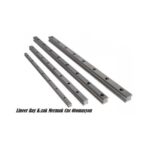
- The linear guide rails for the X-axis must be parallel to each other.
- The linear guide rails for the Y-axis must be parallel to the worktable surface.
- The gantry (the bridge structure that carries the spindle) must remain parallel to the X-axis as it moves along the Y-axis.
Deviations from these ideal geometric conditions, even by fractions of a millimeter, can lead to a cascade of problems affecting the machine’s operation and the quality of the finished parts.
Why are Perpendicularity and Parallelism So Important?
The precision of a CNC router is directly tied to its mechanical accuracy. When perpendicularity and parallelism are not maintained, several critical issues arise:
1. Machining Accuracy and Surface Finish
If the Z-axis is not perfectly perpendicular to the worktable, the cutting tool will enter the material at an inconsistent angle across its path. This results in varying cut depths, leading to tapered edges, uneven surfaces, and a poor surface finish. Similarly, if the X and Y axes are not perpendicular, circles may appear elliptical, and squares may have distorted corners. These geometric inaccuracies compromise the dimensional integrity of the workpiece, often rendering it unusable for applications requiring tight tolerances.
2. Tool Life and Cutting Performance
Improper alignment places uneven stress on the cutting tool and the spindle motor. For instance, if a linear guide rail is not parallel to the work surface, the spindle may be forced to tilt slightly, causing the cutting tool to engage the material unevenly. This can lead to:
- Increased tool wear: One side of the cutting tool may experience significantly more load, leading to premature dulling or breakage.
- Chatter and Vibration: Misalignment can induce vibrations, resulting in a rougher surface finish and potentially damaging the tool or workpiece.
- Reduced cutting efficiency: The machine may struggle to maintain consistent cutting speeds and feeds, impacting productivity.
Maintaining correct alignment ensures that cutting forces are distributed evenly, maximizing tool life and enabling efficient material removal.
3. Component Longevity and Machine Stability
The moving parts of a CNC router, including servo drives, linear guide rails, ball screws, and bearings, are designed to operate under specific load conditions. When axes are misaligned, these components are subjected to torsional or bending stresses they were not designed to handle. This can cause:
- Premature wear: Bearings and guide rails can wear out faster.
- Overheating: Servo drives and motors may overheat due to increased friction.
- Mechanical failures: Components like ball screws or couplings can fail prematurely.
A machine that is correctly assembled with proper perpendicularity and parallelism will experience balanced load distribution, leading to greater stability, reduced maintenance requirements, and a longer overall operational lifespan.
4. Repeatability and Consistency
For manufacturers producing parts in batches, repeatability is paramount. If a CNC router’s geometry is compromised, it may not be able to return to the exact same position consistently. This means that even if the first part is within tolerance, subsequent parts may deviate, leading to quality control issues and increased scrap rates. Precise alignment ensures that the motion control system can accurately command the tool to the same coordinates every time.
Technical Considerations and Measurement
Achieving and verifying perpendicularity and parallelism requires meticulous assembly and the use of specialized metrology equipment. During the assembly of an industrial CNC router, technicians typically use tools such as:
- Laser interferometers: For highly accurate measurement of linear and angular errors over long distances.
- Granite surface plates and precision squares: To establish a true reference plane and measure deviations.
- Dial indicators and test indicators: For precise measurement of runout and surface variations.
- Digital levels and angle gauges: To verify the levelness and angular accuracy of components.
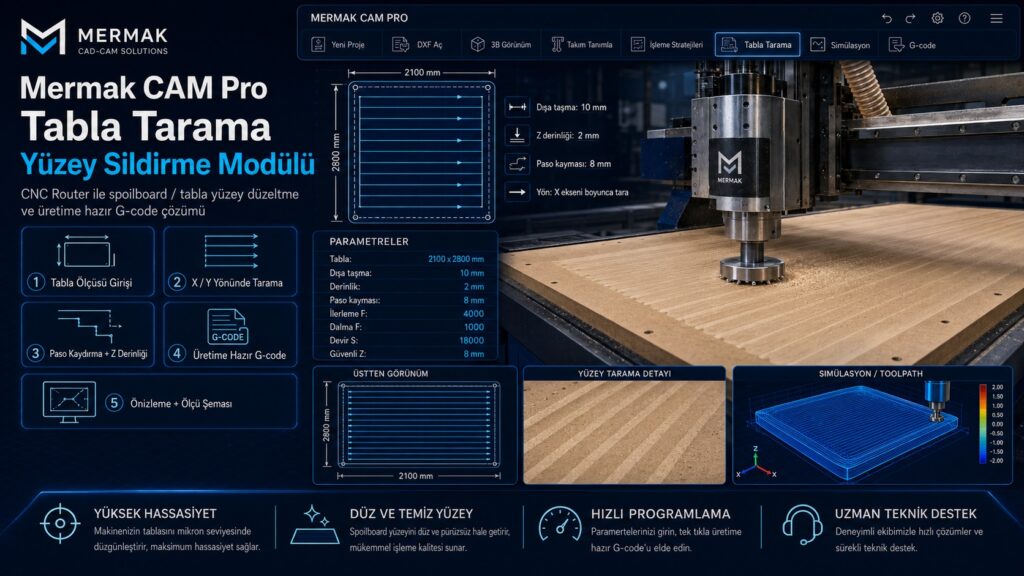
Typical tolerances for high-precision CNC routers might specify deviations of less than 0.05mm over a meter of travel for parallelism and similar tight tolerances for perpendicularity. The vacuum table, for instance, must be perfectly flat and parallel to the X-Y plane to ensure consistent material holding and cutting depth.
| Parameter | Typical Industrial Tolerance |
|---|---|
| X/Y Axis Parallelism to Table | < 0.05 mm / 1000 mm |
| Z Axis Perpendicularity to X-Y Plane | < 0.05 mm / 300 mm |
| Linear Guide Rail Parallelism | < 0.03 mm / 1000 mm |
| Spindle Runout | < 0.01 mm |
| Worktable Flatness | < 0.05 mm / m² |
Practical Assembly Tips
- Foundation: Ensure the floor is level and capable of supporting the machine’s weight without deflection. Use adjustable leveling feet to fine-tune the machine’s base.
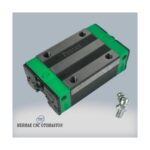
- Rail Installation: Mount linear guide rails on precisely machined mounting surfaces. Ensure they are clean, free of debris, and properly torqued. Use alignment bars or lasers to guarantee parallelism.
- Gantry Alignment: Verify that the gantry moves smoothly and remains parallel to the X-axis throughout its travel. Check for any binding or excessive play.
- Z-Axis Mounting: Ensure the Z-axis assembly is mounted squarely to the gantry and moves vertically without any side-to-side play.
- Regular Checks: Periodically check alignment, especially after significant maintenance or if performance degrades.
In conclusion, the seemingly simple concepts of perpendicularity and parallelism are the bedrock of high-performance CNC machining. Investing time and resources into meticulous assembly and alignment procedures for your industrial CNC router will pay dividends in terms of accuracy, efficiency, tool life, and overall machine reliability. For critical applications, always rely on experienced technicians and proper measurement tools to ensure your machine operates at its peak potential.
Ready to optimize your production with a high-precision CNC router? Request a quote on WhatsApp today!
Related product categories: Electronics · Combination Packages · Linear Guides, Bearings, and Housings