No products in the cart.
CNC Rack and Pinion Lubrication Systems and Periodic Maintenance
Contents
CNC Rack and Pinion Lubrication Systems and Periodic Maintenance: Comprehensive Field Guide
Introduction and Technical Analysis
CNC machines, indispensable components of industrial automation, form the cornerstone of manufacturing processes that demand high precision, speed, and repeatability. The rack and pinion gear systems used in the moving axes of these machines play a critical role in achieving linear motion. The continuous operation of rack and pinion gears under high loads and often in contaminated environments is one of the most significant factors directly affecting the lifespan and performance of these systems. Inadequate or incorrect lubrication increases friction, leading to wear, heat generation, loss of precision, and ultimately, production downtime. Therefore, CNC rack and pinion lubrication systems are not merely auxiliary components but hold strategic importance in terms of machine efficiency and operational costs. A correct lubrication strategy extends gear life, maintains machine precision, optimizes energy consumption, and prevents unexpected breakdowns, thereby reducing the total cost of ownership. In this comprehensive guide, we will delve into the working principles, technical details, common field issues, and periodic maintenance strategies for CNC rack and pinion lubrication systems.
Working Principle and Technical Data
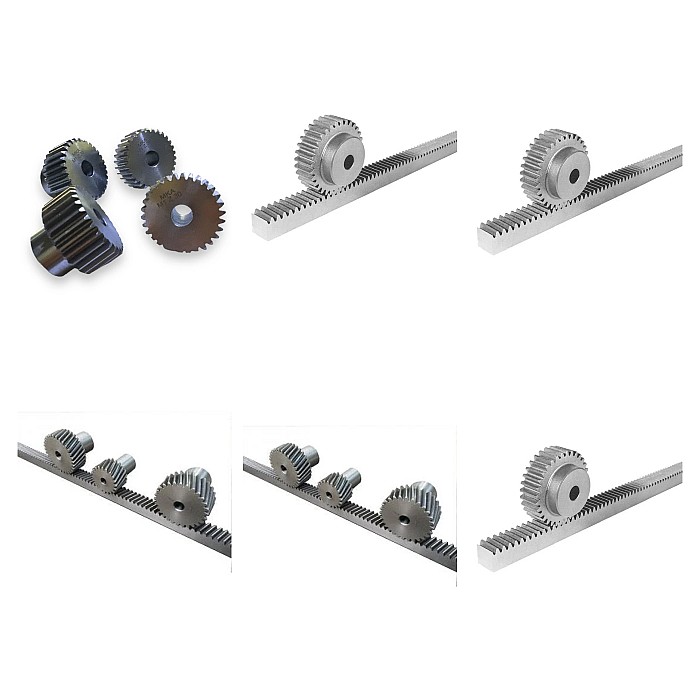
In CNC machines, rack and pinion gear systems are typically employed to provide precise linear motion over long distances, usually in the X, Y, or Z axes. The rotational motion of a pinion gear is converted into linear motion by rolling along a stationary rack gear. While this mechanism offers high rigidity and precision, it carries a significant potential for wear due to continuous contact and sliding friction between the gears. An effective lubrication system is essential to minimize this wear, dissipate heat, and prevent corrosion. The lubrication system is responsible for delivering the appropriate type of lubricant to the gear surfaces at specified intervals and in correct amounts. Generally, two main types of lubrication are used: grease-based lubrication and oil-based lubrication. Grease-based systems may be suitable for heavy loads and low speeds by providing a thicker film layer, while oil-based systems offer better heat transfer and more precise dosing, making them preferable for high-speed applications. Modern CNC router machines typically utilize automatic centralized lubrication systems. These systems consist of a central pump, distribution blocks, dosing units, and lines leading to the lubrication points. At programmed intervals by the control unit, a specific amount of lubricant is precisely delivered to each lubrication point. This minimizes human error and ensures lubrication consistency. Systems are often equipped with pressure sensors, low-level sensors, and flow monitoring sensors to keep the lubrication process under continuous control. Factors such as lubricant viscosity, operating temperature, environmental conditions, and gear surface pressure play a critical role in selecting the correct lubricant. An overly viscous lubricant may not flow adequately, while a low-viscosity lubricant may not provide sufficient film thickness. Additionally, EP (Extreme Pressure) additive lubricants help protect gear surfaces in high-load applications.
| Parameter | Value/Description |
|---|---|
| Recommended Lubricant Type | Lithium Soap Grease (NLGI 000 – 1) or ISO VG 68-220 Oil |
| Viscosity (NLGI Grade for Grease / cSt @ 40°C for Oil) | NLGI 000-1 (Grease) / 68-220 cSt (Oil) – Must be checked against manufacturer datasheet values. |
| Operating Temperature Range | -10°C to +80°C (Varies by lubricant type) |
| Typical Automatic Lubrication Frequency | Every 1-4 hours, 5-15 seconds pumping (Adjusted according to application) |
| Maximum Pump Pressure | 20-300 Bar (Varies by system and lubricant) |
| Typical Reservoir Capacity | 0.5 Liters – 5 Liters (Based on machine size and number of lubrication points) |
| Periodic Maintenance Interval (System Check) | Monthly visual inspection, Annual detailed system check |
| Filter Replacement Frequency | Every 6-12 months or according to system alerts |
Field Considerations
- Correct Lubricant Selection and Usage: The type and viscosity of lubricant recommended by the machine manufacturer must be strictly adhered to. Incorrect lubricant selection can accelerate wear by failing to provide sufficient film thickness or lead to blockages in pumps and lines due to excessive viscosity. Furthermore, mixing different lubricants should be avoided; this can cause chemical reactions and degradation of the lubricant’s properties. Attention should be paid to lubricant storage conditions, ensuring they are kept away from moisture and dust, at appropriate temperatures.
- Regular Inspection of Lubrication System Components: The lubrication pump, distribution blocks, dosing units, pipe and hose lines, connection points, and lubrication nozzles should be regularly inspected. Ensure the pump is operating correctly, generating sufficient pressure, and that there are no abnormal noises. Check hose and pipe lines for cracks, kinks, or leaks, and ensure connections are not loose. Inspect distribution blocks and nozzles for signs of blockage or damage, and verify that lubricant reaches every lubrication point; this is vital.
- Monitoring Sensor and Warning Systems: Modern automatic lubrication systems are typically equipped with sensors that detect conditions such as low lubricant level, pressure drops, or line blockages. Ensure these sensors are functioning correctly and that warning systems are active. Never ignore warnings or alarms on the control panel; these are often the first signs of a serious malfunction or system inadequacy. Sensor calibration and functionality should be tested periodically.
- Contamination Control and Prevention: Rack and pinion gears often operate in environments exposed to chips, dust, coolant, and other industrial residues. Contaminants reaching the lubrication system or gear surfaces increase abrasive effects and shorten lubricant life. Protective covers and sealing elements around lubrication points should be regularly checked, and damaged ones replaced. Ensure the reservoir cap is tightly closed and that cleanliness rules are followed during refilling. Regular inspection and replacement of system filters are critical steps in maintaining lubricant cleanliness.
- Optimization of Lubrication Settings: Lubrication frequency and quantity should be optimized according to the machine’s operating conditions (speed, load, operating time) and environmental conditions. Excessive lubrication leads to lubricant waste and environmental pollution, while insufficient lubrication accelerates wear. The machine manufacturer’s initial settings are a reference point, but fine-tuning should be done based on actual operating conditions. These settings may need to be reviewed, especially when switching to a new lubricant or when the machine’s usage profile changes.
Common Problems and Solutions
Problems encountered in CNC rack and pinion lubrication systems often manifest with similar symptoms and can lead to severe machine damage if not addressed promptly. Here are some common issues and suggested solutions:
- Insufficient Lubrication:
- Symptoms: Excessive wear on gears, increased noise, overheating, decrease in machine precision, signs of rust.
- Possible Causes: Low lubricant level, pump malfunction, clogged lubrication lines or nozzles, incorrect lubrication frequency/quantity settings, distribution block malfunction.
- Solutions: Check and refill the reservoir level. Verify that the pump is operating and generating sufficient pressure. Check all lubrication lines and nozzles for blockages; clean or replace if necessary. Review and increase frequency and quantity settings from the lubrication control unit. Test the functionality of distribution blocks; replace if faulty.
- Excessive Lubrication:
- Symptoms: Lubricant accumulation around the machine, environmental contamination, abnormal increase in lubricant consumption, increased costs.
- Possible Causes: Incorrect lubrication frequency/quantity settings, dosing unit malfunction, clogged return line (in oil systems).
- Solutions: Reduce frequency and quantity settings from the lubrication control unit. Check that dosing units are dispensing the correct amount; replace if faulty. In oil systems, ensure the return line is clear.
- Lubricant Leaks:
- Symptoms: Visible lubricant leaks around lubrication lines, connection points, or pump, rapid drop in lubricant level.
- Possible Causes: Damaged or cracked lubrication lines/hoses, loose connections, damaged seals in the pump or distribution block.
- Solutions: Identify the source of the leak. Replace damaged lines or hoses. Tighten loose connections. Check and replace pump or distribution block seals if necessary.
- Pump Malfunctions:
- Symptoms: Pump not operating, not dispensing lubricant, abnormal noises, pressure drop, lubricant depletion despite no low-level alarm.
- Possible Causes: Electric motor malfunction, pressure switch malfunction, wear in pump components, clogged suction filter, low lubricant level.
- Solutions: Check electrical connections and fuses. Test the functionality of the pressure switch. Inspect the physical condition of pump components; repair or replace the pump if there is wear. Clean or replace the suction filter. Check the reservoir level.
- Clogged Lines or Nozzles:
- Symptoms: Lubricant not reaching specific lubrication points, increased pressure at other points, wear at lubrication points.
- Possible Causes: Contaminated lubricant, metal chips, solidification of old lubricant, incorrect lubricant viscosity.
- Solutions: Identify and clean the clogged line or nozzle. In severe blockages, the line or nozzle may need to be replaced. Check lubricant cleanliness and replace filters if necessary. If a different lubricant is being used, check for viscosity compatibility.
Expert Advice
Effective management of CNC rack and pinion lubrication systems is indispensable for achieving the precision, reliability, and efficiency goals at the heart of industrial automation. A proactive and informed approach to these systems not only extends machine life but also minimizes production losses due to unexpected breakdowns and significantly reduces operating costs. As an expert, based on my field experience, I emphasize that investment in lubrication systems should be approached with a holistic strategy, ranging from selecting high-quality lubricants and equipment to regular periodic maintenance and personnel training. Strictly adhering to the machine manufacturer’s original recommendations, choosing the correct lubricant, and regularly inspecting the lubrication system are fundamental steps. Beyond this, optimizing lubrication frequency and quantity settings according to the system’s operating conditions, continuously monitoring sensor data, and promptly addressing potential anomalies play a critical role in preventing major failures. It should be remembered that lubrication systems are not a “set and forget” system; they are a dynamic process requiring continuous attention and adaptation. Smart lubrication systems integrated with modern automation solutions can further simplify this process by offering remote monitoring and automatic adjustment capabilities. The use of such technologies reduces the workload of maintenance teams while maximizing machine performance and reliability. In the long run, a correct lubrication strategy is not just a maintenance activity but a strategic investment for sustainable success in a competitive manufacturing environment. I hope this guide serves as a valuable resource for technical personnel and managers in the field, illuminating their path toward increasing the lifespan and efficiency of CNC machines.
FAQ
Why are lubrication systems essential for CNC rack and pinion gears?
CNC rack and pinion lubrication systems are crucial for industrial CNC router machines as they ensure the smooth, precise, and long-lasting operation of the linear motion axes. Proper lubrication minimizes friction, prevents wear, dissipates heat, and protects against corrosion, thereby maintaining machine accuracy and extending its operational life. Without adequate lubrication, gears can suffer rapid wear, leading to costly downtime and reduced production quality.
What are the main types of lubrication systems used for CNC rack and pinion gears?
The two primary types are grease-based and oil-based lubrication systems. Grease-based systems are often suitable for heavy loads and lower speeds, providing a thicker protective film. Oil-based systems, on the other hand, offer superior heat transfer and more precise dosing, making them ideal for high-speed applications. Modern industrial CNC routers typically use automatic centralized lubrication systems that deliver lubricant precisely to multiple points.
How do I choose the right lubricant for my CNC rack and pinion system?
Key factors include the machine manufacturer's recommendations, the operating conditions (speed, load, temperature), and environmental factors. It's crucial to select a lubricant with the correct viscosity and, if necessary, with Extreme Pressure (EP) additives for high-load applications. Always avoid mixing different types of lubricants, as this can lead to chemical reactions and degrade performance.
What is the recommended periodic maintenance schedule for CNC rack and pinion lubrication systems?
Regular maintenance involves monthly visual inspections and annual detailed system checks. This includes verifying lubricant levels, checking pump functionality, inspecting lines and nozzles for blockages or leaks, and ensuring all sensors and warning systems are operational. Filters should be replaced every 6-12 months or as indicated by system alerts.
What are the common problems in CNC rack and pinion lubrication systems and how can they be resolved?
Common issues include insufficient lubrication (leading to wear, noise, overheating), excessive lubrication (causing waste and contamination), lubricant leaks, pump malfunctions, and clogged lines or nozzles. Solutions involve checking lubricant levels, inspecting system components, adjusting lubrication settings, repairing or replacing faulty parts, and ensuring lubricant cleanliness.