No products in the cart.
CNC Operator Salaries and Job Opportunities in the Industry 2026
Contents
- Introduction and Technical Analysis In an era where industrial automation is rapidly advancing and the Industry 4.0 transformation is reshaping the manufacturing sector, the profession of a CNC operator continues to play a critical role. Computer Numerical Control (CNC) machines are fundamental components that ensure precision, repeatability, and efficiency in production processes. The effective operation, programming, and maintenance of these machines fall within the expertise of qualified CNC operators. As we approach 2026, this profession is expected not only to retain existing skills but also to integrate with next-generation technologies such as artificial intelligence (AI), robotic integration, and data analytics. This article provides a comprehensive guide for industry professionals and those interested in the field, delving into CNC operator salary expectations, job opportunities in the sector, and the future of the profession from an industrial automation perspective. With the transition from traditional manufacturing methods to modern, digitized factories, the role of CNC operators is evolving beyond simple machine operation towards the management and optimization of complex systems. This evolution necessitates continuous learning and adaptation abilities from operators. Operating Principles and Technical Data
- Key Considerations in the Field
- Common Problems and Solutions
- Expert Advice
- FAQ
Introduction and Technical Analysis
In an era where industrial automation is rapidly advancing and the Industry 4.0 transformation is reshaping the manufacturing sector, the profession of a CNC operator continues to play a critical role. Computer Numerical Control (CNC) machines are fundamental components that ensure precision, repeatability, and efficiency in production processes. The effective operation, programming, and maintenance of these machines fall within the expertise of qualified CNC operators. As we approach 2026, this profession is expected not only to retain existing skills but also to integrate with next-generation technologies such as artificial intelligence (AI), robotic integration, and data analytics. This article provides a comprehensive guide for industry professionals and those interested in the field, delving into CNC operator salary expectations, job opportunities in the sector, and the future of the profession from an industrial automation perspective. With the transition from traditional manufacturing methods to modern, digitized factories, the role of CNC operators is evolving beyond simple machine operation towards the management and optimization of complex systems. This evolution necessitates continuous learning and adaptation abilities from operators.
Operating Principles and Technical Data
A CNC operator is a specialist who produces precise parts by processing various materials such as metal, plastic, and composites using the computer-controlled systems of machine tools. The operating principle is based on transferring parts created in computer-aided design (CAD) software to the machine via computer-aided manufacturing (CAM) software using a special language like G-code and M-code. The operator interprets these codes, loads them into the machine, selects the correct tools, clamps the workpiece, sets offset values, and runs the program. Throughout the production process, the operator continuously checks critical parameters of the workpiece such as dimensions, tolerances, and surface quality. This process is not merely about running a program; it also requires engineering skills such as tool life management, optimization of cutting parameters, detection and resolution of potential errors.
From an industrial automation perspective, CNC machines are no longer isolated units but have become integrated systems within production line automation. They work in conjunction with robotic arms, automatic loading/unloading systems, automatic tool changers (ATCs), and even automatic measurement systems (probes or laser sensors) to minimize human intervention. This level of automation shifts the operator’s role from physical labor to supervision, programming optimization, troubleshooting, and system integration management. Therefore, it is crucial for a CNC operator to possess not only machine operation skills but also fundamental knowledge of PLC control systems, SCADA, and other automation components. By 2026, these competencies are expected to deepen further, with operators interacting with digital twins, cyber-physical systems, and cloud-based manufacturing execution systems (MES/MOM) platforms. This will necessitate operators developing not only mechanical but also software and networking skills.
| Parameter | Value/Description |
|---|---|
| Average Salary Expectation (2026, Turkey) | Varies by expertise level and sector, averaging 30,000 TL – 55,000 TL+ (Considering inflation and economic conditions.) |
| Required Core Competencies | Technical drawing interpretation, G/M code programming, tool knowledge, use of measuring instruments, material knowledge, CAD/CAM software proficiency. |
| Education Level and Certification | Vocational high school, Associate Degree (Machinery, Mechatronics), Journeyman/Mastery certificate, İŞKUR/MEB approved CNC Operator courses. |
| Sectoral Growth Rate (Industrial Automation) | Global average annual growth of 8-12% (2026 target), with potential above this rate in Turkey. |
| Automation Integration Level | Robotic loading/unloading, automatic tool changers, automatic measurement systems, AGV/AMR integration. |
| Occupational Safety Standards | TSE, ISO 45001, OHSAS 18001 (replaced by ISO 45001), CE Certification compliance. |
| Expected Skill Development (2026) | AI-powered process optimization, data analytics, IoT integration, cybersecurity awareness, robot programming. |

Key Considerations in the Field
- Precision and Tolerance Management: The greatest advantage of CNC machines is their ability to produce with high precision. The operator must continuously check the workpiece’s compliance with the tolerance values in the technical drawing, effectively use precise measuring instruments such as micrometers, calipers, and dial indicators, and detect and correct deviations immediately. Even the smallest deviation can lead to significant costs in mass production.
- Tool Management and Optimization: Cutting tools are at the heart of CNC production. The selection of the correct tool, adjustment of cutting parameters (RPM, feed rate, depth of cut), and monitoring of tool life are critically important. A dull tool not only degrades surface quality but can also damage the workpiece. The operator must monitor tool wear, change tools when necessary, and keep the tool library updated.
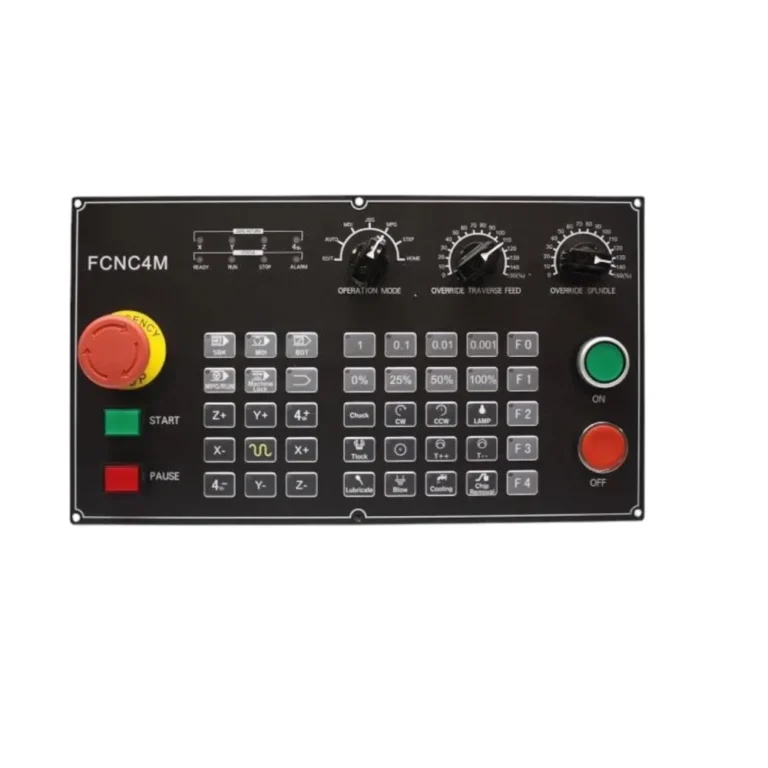
- Occupational Safety and Environmental Awareness: Occupational safety is always a priority in industrial environments. The CNC operator must fully use personal protective equipment (PPE), regularly check the functionality of machine safety guards and emergency stop buttons, and pay attention to chip and coolant management. Furthermore, they must have environmental awareness regarding waste management and energy efficiency.
- CAD/CAM and Programming Proficiency: The ability to make simple program edits, adjust offset values, and understand G/M codes is fundamental. However, by 2026, operators are expected to have basic modeling and tool path generation skills in CAD/CAM software, and even proficiency in robot programming interfaces. This provides greater flexibility and problem-solving ability in the production process.
- Continuous Learning and Adaptation: The industrial automation sector is constantly evolving. New machine technologies, control systems, software, and production methodologies are emerging. A CNC operator must follow these innovations, participate in professional development courses, and continuously update their skills. Adaptation to AI and machine learning-based production optimization tools, in particular, will be key to future success.
- Troubleshooting and Analytical Thinking: The ability to produce quick and analytical solutions to problems encountered during the production process, such as malfunctions, dimensional deviations, or surface defects, is highly valuable. The operator must identify the root cause by performing root cause analysis, and resolve the issue by optimizing machine parameters or the program. This requires an engineering approach, beyond just operating the machine.

Common Problems and Solutions
Problems encountered in CNC operations typically stem from mechanical, electrical, software, or human errors. For instance, tool breakage or excessive wear is a common issue, often caused by incorrect cutting parameters, unsuitable tool selection, or incompatibility with material hardness. As a solution, cutting speeds and feed rates should be optimized, tool material and geometry re-evaluated according to the material to be processed, and tool life monitoring systems utilized. Another common problem is the production of dimensional deviations or out-of-tolerance parts. This can result from incorrect tool offset settings, improper workpiece clamping, backlash in machine axes, or thermal expansion. As a solution, offsets should be carefully checked, clamping fixture tightness inspected, machine geometry periodically calibrated, and machine warm-up time considered for thermal stability. Surface quality issues are often caused by dull tools, unsuitable cutting fluids, vibration, or incorrect tool path strategy. In this case, the tool should be replaced, coolant flow and concentration checked, machining parameters (especially feed rate and RPM) precisely adjusted, and machine rigidity reviewed. Additionally, machine alarm errors require prompt intervention from the operator. These alarms typically result from sensor failures, limit switch violations, motor overloads, or programming errors. The operator should read the alarm code on the machine control panel, follow the troubleshooting suggestions in the machine manual, or contact technical service. While often resolvable with a simple reset or program correction, these situations can sometimes require more in-depth fault detection. Finally, material waste and high scrap rates are a consequence of incorrect programming, faulty workpiece clamping, or inadequate quality control processes. The operator must meticulously perform first-part inspection, utilize program simulations, and maintain strict in-process checks to minimize such losses. Most of these problems are directly related to the operator’s experience, training, and analytical thinking skills.
Expert Advice
As we advance towards 2026, the CNC operator profession continues its evolution in tandem with the transformation of the industrial sector. The transition from a traditional “machine user” role to a “production system manager” and “automation integrator” is an inevitable reality. Salary expectations will increase in parallel with the operator’s skill set, experience, and adaptability. Operators who can not only operate the machine but also program robotic systems, perform data analysis, utilize AI-powered optimization tools, and possess knowledge of industrial networks will be more valuable and sought-after professionals in the sector. Job opportunities will continue to grow, especially in high-precision sectors such as aerospace, defense industry, automotive, medical devices, and mold making. However, continuous development and learning are essential to capitalize on these opportunities.
As an industrial automation expert, my advice is for existing CNC operators and new candidates entering this field not to be content with just mechanical knowledge and skills. Digitalization skills, software literacy, and automation systems knowledge are indispensable competencies for future CNC operators. Especially having basic knowledge of cloud computing, IoT (Internet of Things), and cybersecurity will provide a significant advantage in interpreting production data and ensuring system security. Furthermore, being proficient in the latest standards for occupational safety and environmental awareness is not just a legal requirement but also an ethical responsibility. Participation in professional certification programs, expanding areas of expertise, and closely following industry innovations will play a critical role in career development. In 2026 and beyond, CNC operators will be positioned not only as implementers of production processes but also as architects and optimization engineers of smart factories. Those who act with this vision will make a significant difference in both their personal careers and the competitiveness of the national industry.
FAQ
What is the primary role of a CNC operator?
A CNC operator is a skilled professional who uses computer numerical control machines to precisely manufacture parts from various materials. They interpret CAD/CAM programs, set up machines, select tools, monitor production, and ensure quality control.
What essential skills are required for a CNC operator in 2026?
Key skills include technical drawing interpretation, G/M code programming, tool knowledge, proficiency with measuring instruments, material science understanding, and CAD/CAM software experience. Increasingly, knowledge of AI, robotics, and data analytics is also vital.
What are some common problems faced by CNC operators and how are they resolved?
Common issues include tool breakage, dimensional inaccuracies, poor surface finish, and machine alarm errors. Solutions involve optimizing cutting parameters, precise offset adjustments, regular machine calibration, proper tool management, and understanding alarm codes.
What is the outlook for job opportunities in the CNC sector?
The industrial automation sector is experiencing significant growth, with a global average annual rate of 8-12%. This translates to increasing job opportunities for skilled CNC operators, especially in high-precision manufacturing industries.
How can CNC operators stay competitive in the evolving industry?
Continuous learning and adaptation are crucial. Operators should pursue professional development courses, stay updated on new machine technologies, control systems, and software, and develop skills in digitalization, IoT, and cybersecurity.