



































































Choosing the Right Stepper Motor and Driver for Industrial Applications
📑 Table of contents (Click to open)
Selecting the correct stepper motor and driver is crucial for the performance and reliability of industrial automation systems. These components enable precise positioning and speed control in applications ranging from CNC machines to robotics. This guide covers key technical factors to consider when choosing a stepper motor and driver combination to ensure optimal system efficiency and longevity.
Practical notes for CNC router, automation and industrial motion systems.
Selecting the Right Stepper Motor and Driver for Industrial Applications
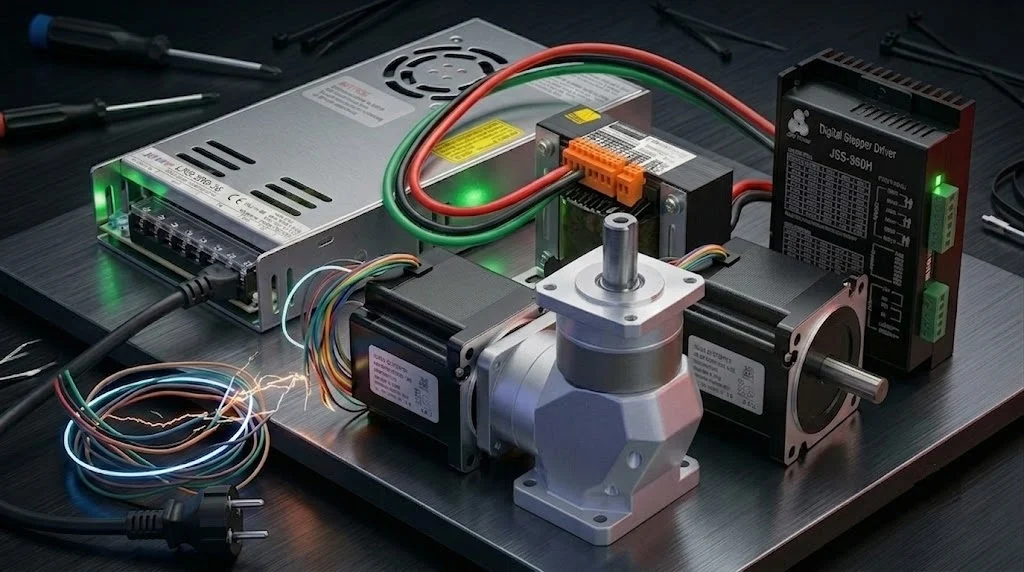
Stepper motors and their associated drivers are fundamental components in industrial automation, enabling precise control over positioning, speed, and torque. Choosing the correct motor-driver pair is vital for the efficiency, reliability, and overall lifespan of any automated system. Incorrect selections can lead to operational disruptions and significant production losses. This technical guide delves into the essential considerations for selecting a stepper motor and driver kit, offering practical insights for industrial buyers.
Understanding Stepper Motors and Drivers
Stepper motors are brushless DC motors that convert electrical pulses into discrete mechanical movements, rotating a specific angle with each pulse. This characteristic makes them ideal for applications requiring high positional accuracy. They are often used in open-loop systems, where the controller dictates movement based on the number of pulses sent, without direct position feedback.
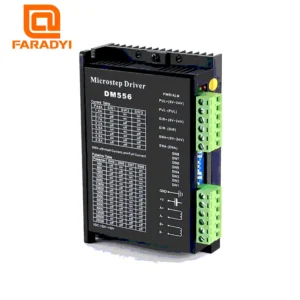
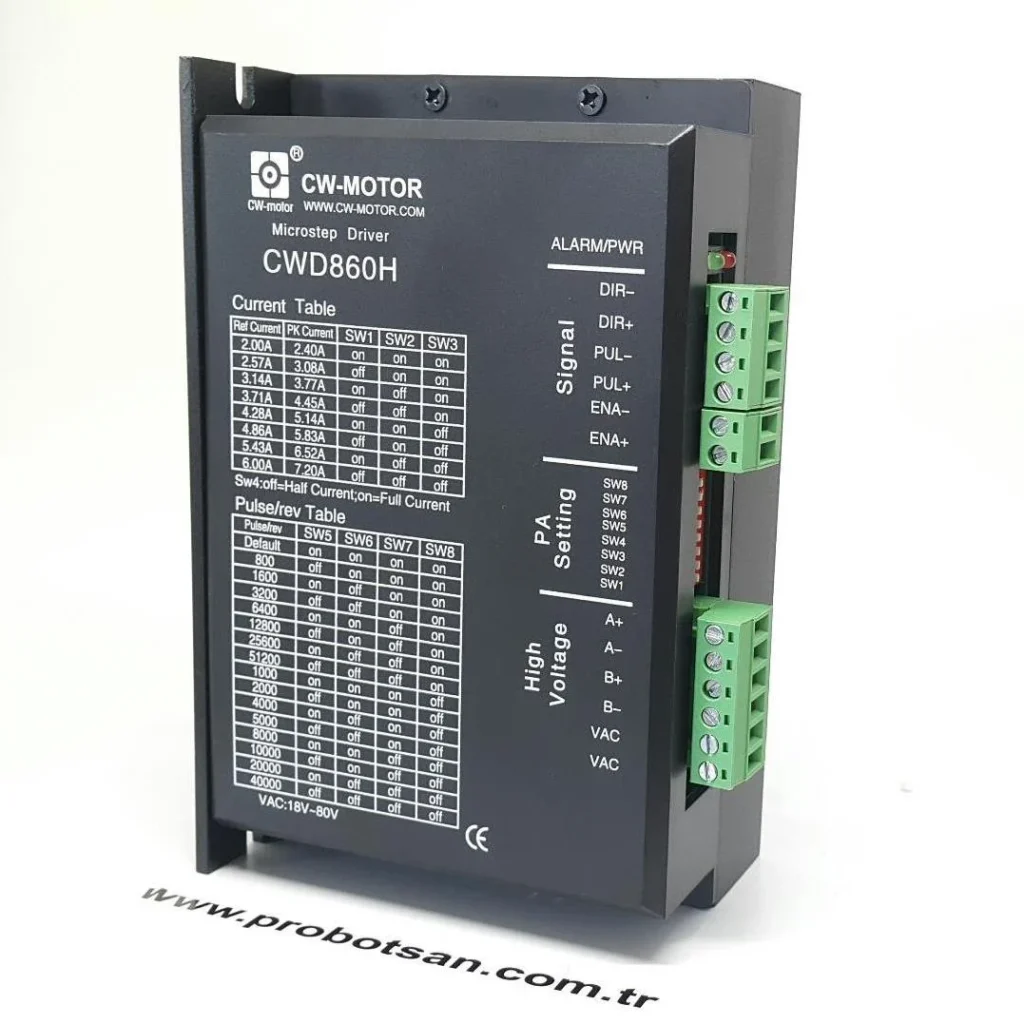
A stepper motor driver acts as the interface between the control system (like a CNC controller or microcontroller) and the motor. It translates low-level control signals into the appropriate current and voltage for the motor’s windings. Drivers ensure the motor receives the correct power for each step, facilitate microstepping for smoother motion, reduce resonance, and protect the motor from overcurrent or overvoltage conditions. Selecting the right driver is essential to unlock the motor’s full potential and ensure stable operation.
How Stepper Motors Work
Stepper motors operate by sequentially energizing coils within the stator. This creates a magnetic field that attracts or repels the rotor, locking it into a specific position. By cycling through these energizations, the rotor moves in precise steps. The total number of steps required for a full rotation depends on the motor’s design and step angle (e.g., a 1.8-degree step motor needs 200 steps for a full revolution).
Microstepping technology, implemented by the driver, allows for finer control by dividing each basic step into smaller increments. For instance, 1/16 microstepping on a 1.8-degree motor results in 0.1125-degree steps. This significantly improves motion smoothness, resolution, and vibration reduction, crucial for delicate operations. However, microstepping can slightly reduce torque, so selecting the appropriate microstepping level is key.

The Role of the Driver
Stepper motor drivers are the ‘brains’ of the system, converting digital control signals (pulse, direction, enable) into analog current signals for the motor windings. They regulate the motor’s current to prevent overheating and ensure efficient torque delivery. Advanced driver algorithms can minimize vibration and resonance, especially at higher speeds or during microstepping, leading to quieter and more stable operation.
Most modern drivers utilize PWM (Pulse Width Modulation) for precise current control, enhancing energy efficiency. Some high-end drivers also incorporate closed-loop capabilities, using feedback from an encoder or measuring back-EMF to monitor and correct motor position, mitigating the risk of missed steps and approaching servo motor performance.
Industrial Applications for Stepper Motors
Stepper motor and driver systems are widely adopted in industrial automation due to their cost-effectiveness, reliability, and precise positioning capabilities. They are particularly well-suited for applications where accuracy is paramount, but the extreme dynamic performance of servo motors isn’t strictly necessary.
Their simpler control structure and lower cost make them an attractive choice for small to medium-scale automation projects. Stepper motors excel in repetitive, precise tasks such as material handling, automated assembly, labeling, and cutting operations on CNC router machines.

Key Selection Criteria
When selecting a stepper motor and driver, several technical parameters must be carefully evaluated:
- Motor Size and Mounting (NEMA Standard): Ensure the motor’s physical dimensions and mounting pattern (e.g., NEMA 17, 23, 34) match your mechanical design requirements.
- Holding Torque: This is the maximum torque the motor can exert when stationary. It should be sufficient to hold the load without slipping.
- Rated Current per Phase: This value, typically specified in Amps, determines the motor’s operational current. The driver must be capable of supplying this current.
- Voltage Rating: Both motor and driver should have compatible voltage ratings. Higher voltages generally allow for higher speeds.
- Step Angle: Standard step angles are 1.8° or 0.9°. Smaller angles provide higher resolution but may require more complex control.
- Driver Current Output: The driver’s maximum current output must match or slightly exceed the motor’s rated current.
- Microstepping Capability: Choose a driver that supports the desired level of microstepping for smooth motion.
- Input Signal Compatibility: Ensure the driver’s input signals (e.g., step/direction, CW/CCW) are compatible with your motion controller.
- Protection Features: Look for drivers with built-in overcurrent, overvoltage, and thermal protection for enhanced reliability.
Matching Motor and Driver
The synergy between the motor and driver is paramount. A common guideline is to select a driver whose rated current output is approximately 10-20% higher than the motor’s rated current. This margin helps ensure the driver operates within its optimal range and provides adequate power without overheating. For example, a motor rated at 4A might pair well with a driver capable of delivering up to 4.5A or 5A.
The driver’s voltage rating also plays a role, particularly in achieving higher speeds. Higher voltage drivers can maintain motor torque at higher RPMs by overcoming the motor’s back-EMF more effectively. Always consult the datasheets for both the motor and driver to confirm compatibility and optimal operating parameters. For instance, a NEMA 34 stepper motor will require a more powerful driver than a NEMA 17 motor.
Common Pitfalls to Avoid
When specifying stepper motor systems, several common mistakes can lead to performance issues:
- Undersized Drivers: Using a driver with insufficient current output will lead to overheating, reduced torque, and potential damage.
- Ignoring Motor Torque Curves: Relying solely on holding torque without considering torque at operating speeds can result in missed steps.
- Incorrect Wiring: Misconnecting motor phases or driver inputs can instantly damage the components. Always follow wiring diagrams precisely.
- Over-reliance on Microstepping: While beneficial, excessive microstepping can reduce torque and may not be necessary for all applications.
- Ignoring Heat Dissipation: Both motors and drivers generate heat. Ensure adequate ventilation or heatsinking for reliable long-term operation.
Conclusion
Choosing the right stepper motor and driver combination is a critical step in building a robust and efficient industrial automation system. By carefully considering the motor’s specifications, the driver’s capabilities, and the application’s unique requirements, you can ensure precise motion control, enhance system reliability, and optimize performance. Understanding the interplay between torque, speed, voltage, and current is key to making an informed decision.
For expert advice on selecting the perfect stepper motor and driver for your CNC router machine or other industrial automation projects, contact our specialists. We offer a wide range of high-quality components designed for demanding industrial environments.
Ready to optimize your automation? Request a quote on WhatsApp today!