No products in the cart.
Understanding Backlash in Stepper Motor Shafts and Its Impact on CNC Machines

Contents
Stepper motors are crucial for precise motion control in industrial automation. However, backlash, or unwanted looseness, in the stepper motor shaft can significantly degrade machine performance. This occurs between the motor shaft and its driven components like couplings, lead screws, or gears. Backlash leads to delayed motion, positioning errors, and reduced repeatability, impacting the quality of manufactured parts. Understanding and mitigating backlash is essential for maintaining high-performance CNC operations.
Mermak CNC Technical Guide
Practical notes for CNC router, automation and industrial motion systems.
What is Backlash in a Stepper Motor Shaft and Its Effects on Machines?
In industrial automation, stepper motors are widely employed for their ability to provide precise positioning and motion control. These motors move in discrete steps, translating digital pulses into mechanical rotation to position connected systems accurately. However, backlash, a form of mechanical looseness that can develop in the stepper motor shaft over time or due to improper assembly, poses a critical challenge to machine performance. This looseness refers to the undesirable play between the motor shaft’s rotation and the movement of the mechanical components it drives, such as couplings, gears, or lead screws. For precision-critical applications, this can lead to unacceptable outcomes.
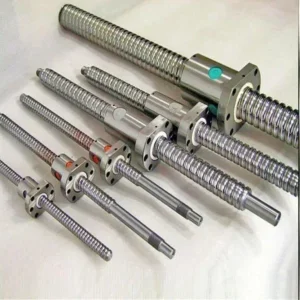
Backlash can manifest at various points in the transmission chain, starting from the connection between the motor shaft and the coupling, within the coupling itself, between the gears in a gearbox, or due to wear in a lead screw and nut assembly. This mechanical slack means that when the motor begins to rotate in one direction, a portion of its initial movement is consumed by taking up this slack, resulting in a delayed or incomplete start to the actual mechanical motion. During direction changes, the motor may rotate within this backlash zone before engaging the driven element, causing positioning errors.
Impact of Backlash on Machine Performance and General Mechanisms
Backlash in the stepper motor shaft or its associated drive system can have detrimental effects on the overall machine performance. These impacts extend beyond mere loss of precision and repeatability to affect dynamic performance and mechanical longevity. The fundamental mechanism of backlash is the delay or deviation of the motor’s commanded movement, leading to instability in the control loop and reducing the machine’s predictability.
In applications requiring high speed or high acceleration, the lack of immediate response caused by backlash prevents the system from achieving its intended dynamic parameters. Vibrations, resonance, and increased noise levels are common side effects of backlash. This not only degrades the working environment but also reduces energy efficiency and operator comfort. In the long term, backlash can subject other mechanical components to excessive stress, leading to premature failure and increasing the total cost of ownership.
Loss of Positioning Accuracy
Positioning accuracy in stepper motor systems is directly tied to the motor’s ability to translate each step into a precise and consistent mechanical movement. Backlash in the shaft means the motor cannot fully transmit every commanded step to the mechanical system. Particularly during direction changes, the motor rotates by the amount of backlash without moving the mechanical load. This results in a positional error, measured in microns or degrees, with each direction reversal, preventing the machine from reaching its exact target position.
This loss of accuracy can lead to deviations in workpiece dimensions on CNC machining centers, layer shifts in 3D printing, or assembly errors in robotic systems. For instance, 0.1 mm of backlash can accumulate as a significant error with each direction change, leading to results outside tolerance in repetitive movements. This directly impacts final product quality, increases scrap rates, and drives up production costs.
Repeatability Issues
Repeatability is the ability of a machine to produce the same result every time it executes the same command. Backlash in the stepper motor shaft severely compromises this critical characteristic. Because the amount of backlash and the dynamics of direction changes can vary with each movement cycle, it becomes difficult for two consecutive movements from the same starting point to the same target point to follow the exact same path or reach the identical endpoint.
This lack of repeatability causes significant problems in mass production and quality control. For example, the precision of product placement in a packaging machine, the positional accuracy of a camera in an optical inspection system, or the spot accuracy of a soldering robot can become inconsistent due to backlash. This leads to fluctuations in product quality, false positives/negatives in inspection processes, and a general decrease in overall production efficiency.

Reduced Dynamic Performance
Backlash not only causes static positioning errors but also negatively affects the machine’s dynamic response. Looseness in the motor shaft causes the mechanical system to react with a delay to instantaneous load changes during acceleration and deceleration. This can lead to vibrations, overshoot, undershoot, and instability during rapid speed changes or direction reversals.
Reduced dynamic performance means the machine must operate at slower speeds, requires longer settling times, and exhibits less precise motion profiles. This directly impacts production speed and efficiency. For instance, a CNC router machine with backlash may struggle to maintain accurate tool paths during complex contouring operations, leading to surface finish imperfections and longer machining times. Addressing backlash is crucial for optimizing the performance of industrial CNC routers and other automated machinery.
To ensure optimal performance and longevity of your CNC machinery, it is vital to address any signs of backlash. Regular maintenance, proper component selection, and timely replacement of worn parts are key. If you are experiencing issues related to motion control precision or suspect backlash in your stepper motor systems, our experts are ready to assist.
Ready to enhance your machine’s precision and efficiency?
Request a quote on WhatsApp today and let us help you find the perfect solution for your industrial automation needs.