No products in the cart.
Understanding Step Motor Holding Torque vs. Running Torque

Contents
- Introduction to Step Motor Torque Concepts: Holding Torque vs. Running Torque
- Basic Working Principle of Step Motors
- Step Mechanism and Electromagnetic Field
- What is Holding Torque?
- Generation and Importance of Holding Torque
- Role of Holding Torque in Static Load Handling
- What is Running Torque?
- Factors Affecting Running Torque
- Running Torque in Motion Control Applications
- Key Differences Summarized
- Selecting the Right Step Motor for Your Application
- Conclusion
In industrial automation, understanding the nuances of step motors is crucial for optimal performance. This article delves into the key differences between holding torque and running torque, explaining their significance in applications like CNC routers. Learn how these torque values affect your machinery and how to make informed motor selections for precision and reliability.
Mermak CNC Technical Guide
Practical notes for CNC router, automation and industrial motion systems.
Introduction to Step Motor Torque Concepts: Holding Torque vs. Running Torque
In industrial automation, precise positioning and motion control are paramount for manufacturing efficiency and product quality. Step motors are widely adopted for their open-loop control capabilities, high accuracy, and cost-effectiveness. However, effective selection and implementation of these motors hinge on a thorough understanding of their fundamental performance characteristics, particularly holding torque and running torque.
This article aims to provide industrial automation professionals with a comprehensive overview of step motor torque dynamics, the key distinctions between holding and running torque, their impact on system performance, and best practices for selecting the appropriate motor. Incorrect torque selection can lead to reduced machine performance, system failures, and production losses, making a solid grasp of static and dynamic motor behavior essential for successful automation projects.
Basic Working Principle of Step Motors
Step motors operate on electromagnetic principles, functioning as synchronous brushless DC motors that move in discrete steps. They achieve precise positioning by converting digital pulses into mechanical rotation. The interaction between the magnetic fields generated by the stator windings and the permanent magnets or toothed rotor causes the rotor to align with specific angular positions. Each pulse from the motor driver commands a specific “step angle” of rotation, enabling highly accurate positioning.
These motors are favored in applications demanding high positional accuracy and repeatability, such as CNC machines, 3D printers, robotic arms, and packaging equipment. The precise control offered by step motors is indispensable in these industrial settings. The motor’s step-by-step movement is synchronized with signals from the driver, facilitating the advantages of open-loop control.
Step Mechanism and Electromagnetic Field
The stepping mechanism involves sequentially energizing the stator windings. When current flows through a winding, it generates a magnetic field that attempts to align the rotor’s magnetic poles or teeth. Energizing the next winding, while de-energizing the previous one or reversing its polarity, causes the rotor to move to align with the new magnetic field. This sequential energization drives the rotor in the desired direction and amount.
This process allows for extremely precise control over the motor’s angular position. Different control modes, such as full-step, half-step, and micro-stepping, can further subdivide the step angle, enhancing motion smoothness and positional accuracy. Micro-stepping, in particular, is valuable for reducing vibration at low speeds and achieving higher resolution, though it can affect the motor’s effective torque.
What is Holding Torque?
Holding Torque refers to the maximum torque a step motor can exert to resist external forces when it is energized but not rotating (i.e., in a static state). It represents the motor’s ability to maintain a specific position against an applied load. This torque is present as long as the motor is powered and current flows through its windings, effectively locking the motor in its current position.
Holding torque is typically specified on the motor’s datasheet as “Holding Torque” or “Static Torque,” usually measured in N·m (Newton-meters) or oz-in (ounce-inches). It is critical for applications where the motor must hold a load stationary, such as in vertical axis applications, stabilizing robotic arms, or preventing movement of a component when the system is idle. A higher holding torque indicates a greater ability for the motor to maintain its position against external forces.
Generation and Importance of Holding Torque
Holding torque arises from the alignment force between the magnetic field generated by the energized stator windings and the rotor’s magnetic poles. When the motor is stationary, the driver energizes specific windings, creating a magnetic field that locks the rotor into a particular step position. Any external force attempting to displace the rotor from this position is met with resistance from this electromagnetic field, generating the holding torque.
The importance of holding torque is evident in applications requiring the motor to maintain a load’s position when not in motion. For instance, holding a load on a vertical axis or securing a robotic arm in a specific pose necessitates substantial holding torque. This torque ensures positional stability against vibrations or minor impacts, preserving positioning accuracy. It’s also worth noting the detent torque, a residual holding torque present when the motor is de-energized, though it is significantly lower than the energized holding torque.

Role of Holding Torque in Static Load Handling
Holding torque plays a vital role in static load handling. For example, on a CNC router, when the spindle motor is not actively cutting, the Z-axis must remain stable. The holding torque of the step motor driving the Z-axis prevents the spindle assembly from dropping due to gravity. Similarly, in robotic applications, holding torque ensures that a manipulator arm remains in position without drifting, even when subjected to external forces or vibrations. Without adequate holding torque, systems could experience positional errors or component slippage when static, compromising the integrity of the operation.
What is Running Torque?
Running Torque, also known as dynamic torque, is the torque a step motor can produce while it is rotating. This is the torque available to perform work, such as moving a load, overcoming friction, or accelerating the system. Unlike holding torque, which is a static measure, running torque is dependent on the motor’s speed and the applied voltage/current from the driver.
As a step motor’s speed increases, its available running torque generally decreases. This is due to factors like inductive reactance in the windings, which limits current flow at higher frequencies (speeds), and back EMF (electromotive force) generated by the rotating motor, which opposes the applied voltage. Therefore, the torque curve of a step motor typically shows a decline in torque as speed rises.

Factors Affecting Running Torque
Several factors influence a step motor’s running torque:
- Speed: As mentioned, running torque typically decreases with increasing speed.
- Voltage and Current: Higher supply voltage and current from the driver generally result in higher running torque, up to the motor’s and driver’s limits.
- Driver Micro-stepping Settings: While micro-stepping improves smoothness, it can sometimes reduce the effective torque compared to full-step or half-step modes at the same current.
- Motor Winding Resistance and Inductance: Lower inductance motors tend to maintain torque better at higher speeds.
- Temperature: Increased motor temperature can lead to increased winding resistance, reducing current flow and thus torque.
- Load Inertia and Friction: The inertia of the load and any frictional forces must be overcome by the running torque.
Understanding these factors is crucial for ensuring the motor can deliver sufficient torque throughout the required speed range of the application.

Running Torque in Motion Control Applications
In motion control applications like CNC machining, running torque is what enables the cutting process. The spindle motor must provide enough torque to drive the cutting tool through the workpiece material, overcoming resistance and chip formation. Similarly, the axis motors (X, Y, Z) must generate sufficient running torque to accelerate the machine’s moving components, move them at the commanded speed, and overcome any friction in the linear guide rail or ball screw systems. For instance, a CNC router cutting aluminum requires significantly more running torque than one cutting soft wood.
The servo drive and motor combination must be selected such that the required running torque is available at the operational speeds. If the running torque is insufficient, the motor may stall, lose steps (in open-loop systems), or fail to achieve the desired speed, leading to production delays or incomplete operations. This is where the motor’s torque curve becomes a critical design parameter.
Key Differences Summarized
The fundamental difference lies in the motor’s state: holding torque is for static conditions, while running torque is for dynamic (rotating) conditions.
| Feature | Holding Torque | Running Torque |
|---|---|---|
| Motor State | Stationary (Energized) | Rotating |
| Purpose | Maintain position, resist external forces when stopped | Perform work, accelerate, overcome load during motion |
| Speed Dependency | Independent of speed (as motor is not moving) | Decreases as speed increases |
| Measurement | Maximum static torque capacity | Torque available at a given speed |
Selecting the Right Step Motor for Your Application
Choosing the correct step motor involves balancing holding torque and running torque requirements with other factors like speed, accuracy, and budget. Here’s a practical approach:
- Analyze Load Requirements: Determine the maximum static load the motor needs to hold (for holding torque) and the torque required to move the load at the desired speeds, including acceleration and overcoming friction (for running torque).
- Consult Torque Curves: Examine the motor’s torque-speed curve provided by the manufacturer. Ensure that the required running torque is available at the maximum operating speed.
- Consider Safety Margins: Always select a motor with torque ratings (both holding and running) that exceed the calculated requirements by a safety margin (e.g., 25-50%) to account for unexpected loads, voltage fluctuations, or component wear.
- Evaluate Application Type: For applications requiring precise positioning and minimal movement, holding torque is critical. For continuous motion and work execution, running torque is the primary concern. Many industrial CNC router machines require a balance of both.
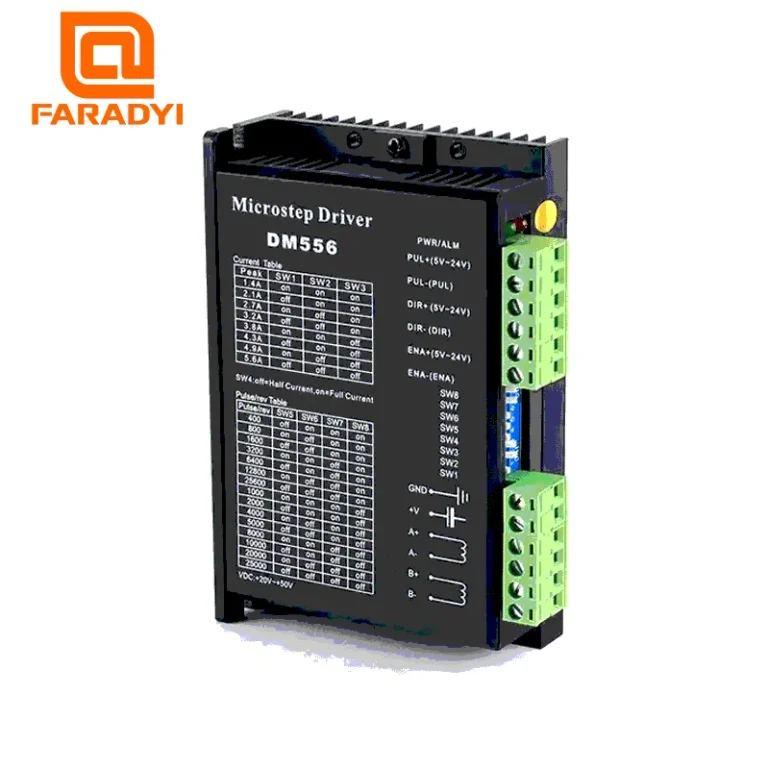
- Factor in Driver Capabilities: The step motor driver must be capable of supplying the necessary voltage and current to achieve the desired torque levels. Ensure compatibility between the motor and driver.
For example, a vertical axis on a CNC machine might require a high holding torque to prevent the spindle from dropping when powered off, while the same motor needs sufficient running torque to rapidly move the Z-axis during tool changes or rapid traverses. A NEMA 34 step motor, known for its higher torque output, might be suitable for demanding applications, while a NEMA 23 could suffice for lighter tasks.
Conclusion
Understanding the distinction between holding torque and running torque is fundamental for selecting and implementing step motors effectively in industrial automation. Holding torque ensures positional stability when the motor is static, crucial for maintaining accuracy and safety. Running torque dictates the motor’s ability to perform work while in motion, impacting speed, acceleration, and operational efficiency. By carefully analyzing application requirements and consulting motor specifications, engineers can choose the right step motor and driver combination to ensure reliable and high-performance operation of CNC routers and other automated machinery.
For expert advice on selecting the optimal step motor solution for your industrial needs, including CNC router machines and other automated systems, our specialists are ready to assist. Request a quote on WhatsApp today!