




































































Can Sigma Profiles Be Used Under Linear Guide Rails?
📑 Table of contents (Click to open)
Practical notes for CNC router, automation and industrial motion systems.
Yes, sigma profiles (aluminum extrusion profiles) can be successfully used as a base for linear guide rail systems under specific conditions and with appropriate engineering analysis. They offer advantages in cost-effectiveness and modularity, particularly for light to medium-duty applications and prototyping. However, for high-precision, heavy-load, or high-dynamic requirements, the rigidity, flatness, and thermal expansion characteristics of the profile must be carefully evaluated. Reinforcements or precision-machined intermediate plates may be necessary in such cases.
In industrial automation and machine manufacturing, linear guide rails are essential for achieving high-precision, repeatable, and controlled linear motion. Traditionally, these rails are mounted on robust and stable bases such as machined steel, cast iron, or granite to ensure maximum rigidity and flatness. However, when factors like cost, weight, and assembly flexibility become critical, sigma profiles, also known as aluminum extrusion profiles, emerge as a viable alternative base material.
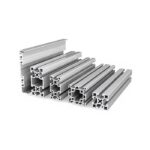
Sigma profiles are modular structural components made from anodized aluminum, featuring T-slots or V-slots for easy assembly. They are commonly used for machine frames, protective enclosures, conveyor systems, and test fixtures due to their light weight, ease of machining, corrosion resistance, and rapid assembly capabilities. The question of whether they can be used under linear guide rails depends heavily on the application’s specific requirements for precision, load capacity, speed, and environmental conditions.
While the short answer is yes, integrating sigma profiles under linear guide rails presents engineering challenges and requires careful consideration. Compared to steel or cast iron, aluminum profiles inherently possess lower rigidity and dimensional stability. This can negatively impact linear guide performance, especially in long-stroke, heavy-load, or high-speed applications. Therefore, integrating sigma profiles requires thorough engineering assessment and adherence to sound design principles.
Operating Principles and Technical Data
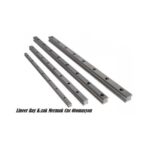
Mounting linear guide rails onto sigma profiles directly affects the system’s overall rigidity, precision, and lifespan. The principle involves fixing the linear guide rail to the top surface of the sigma profile, typically using intermediate adapter plates or direct bolting. The flatness and parallelism of the sigma profile’s top surface are critical for this setup. Standard sigma profiles may not meet the stringent flatness tolerances required by high-precision linear guides. Consequently, machining the profile’s top surface or using a precision-machined intermediate plate (e.g., made of steel or aluminum) is often necessary.
Key technical parameters to consider when using sigma profiles under linear guide rails include:
- Rigidity and Deflection: Aluminum’s Young’s modulus (approx. 70 GPa) is about one-third that of steel (approx. 210 GPa). This means an aluminum profile of the same cross-section will deflect three times more than a steel profile under the same load. Sufficient rigidity of the supporting structure is crucial for the precise operation of linear guides. The moment of inertia (I) and section modulus (W) of the profile must be carefully calculated based on the applied load and span. If necessary, opt for larger cross-section or reinforced sigma profiles. Deflection due to the weight of the profile and the load, especially in long-stroke applications, can cause binding or impair motion accuracy.
- Mounting Surface Flatness and Parallelism: Linear guide rails require mounting surfaces with flatness and parallelism tolerances in the micrometer range for smooth, vibration-free operation. Standard extruded sigma profiles may not achieve this. Solutions include:
- Precision milling or grinding of the profile’s top surface.
- Interposing a precision-machined adapter plate (e.g., 6061 T6 aluminum or steel) between the profile and the rail.
- Using adjustable support feet or shims to achieve alignment during assembly.
- Thermal Expansion: Aluminum’s coefficient of thermal expansion (approx. 23 µm/m°C) is nearly double that of steel (approx. 12 µm/m°C). Temperature fluctuations, especially in long systems, can cause significant changes in profile length. This expansion or contraction can induce stress in the linear guide rail, leading to bending or binding of the carriage. To minimize this:
- Incorporate expansion gaps or flexible mounting elements in long systems.
- Prefer use in environments with stable temperatures.
- Vibration Damping: Aluminum is not as effective at damping vibrations as steel or cast iron. In high-speed or dynamic load applications, vibrations can reduce performance and increase noise. Filling the profile’s internal cavities with damping materials or creating a more rigid structure might be necessary.
- Fasteners: The quality and proper torque of bolts, nuts, and T-nuts used to mount linear guides to sigma profiles are critical. Insufficient or incorrect tightening can lead to loosening over time, loss of precision, and compromised system stability.
- Profile Cross-Section and Sizing: Select the appropriate profile cross-section considering the maximum load, speed, and acceleration requirements, as well as the profile length and distance between guides. The moment of inertia (I) and section modulus (W) directly influence the profile’s resistance to bending and torsion. To minimize deflection and vibration under dynamic loads, choose the most rigid and suitable profile. Composite structures, such as using two profiles side-by-side or stacked, can increase rigidity.
- Mounting Surface Preparation: Ensure the mounting surface of the sigma profile is adequately prepared. If standard extrusion tolerances are insufficient, precision machining or the use of an adapter plate is essential. The adapter plate should be made of a material with sufficient rigidity and flatness, and its mounting to the sigma profile must also be secure.
- Load Distribution: Distribute the load evenly across the linear guide rails and the supporting sigma profile. Avoid point loads or uneven loading, which can lead to premature wear and reduced accuracy. Consider the load capacity of the specific sigma profile series and its connection method to the base structure.
- Environmental Factors: Assess the operating environment. Extreme temperature variations, high humidity, or exposure to corrosive substances may necessitate special profile treatments, coatings, or alternative base materials.
- Assembly Precision: Meticulous assembly is crucial. Ensure all fasteners are correctly tightened to the specified torque. Misalignment during assembly is a common cause of poor performance and premature failure of linear guide systems.
- Cost is a primary concern: They offer a significant cost saving compared to traditional steel or cast iron bases.
- Weight reduction is important: Their light weight simplifies handling, installation, and reduces the overall mass of moving components.
- Modularity and flexibility are needed: The T-slot system allows for easy integration of other components, sensors, and accessories, enabling quick design modifications.
- Prototyping or low-volume production: They facilitate rapid development and iteration of designs.
- Light to medium loads are involved: Applications with relatively low forces and speeds where extreme precision is not the absolute priority.
- High precision requirements: Where positional accuracy and repeatability are critical (e.g., precision metrology, high-speed pick-and-place).
- Heavy loads: Applications with significant static or dynamic forces exceeding the capacity of standard aluminum profiles.
- High speeds and accelerations: Where inertial forces and vibrations can become problematic.
- Extreme environmental conditions: High temperatures, significant temperature fluctuations, or corrosive atmospheres.
- Long unsupported spans: Where the inherent flexibility of aluminum would lead to unacceptable deflection.
Here’s a comparison of key parameters:
| Parameter | Value/Description |
|---|---|
| Material Type | Sigma Profile: Anodized Aluminum (e.g., 6063 T5/T6); Linear Guide Rail: Hardened Steel |
| Young’s Modulus (E) | Aluminum: ~70 GPa; Steel: ~210 GPa (3x difference in stiffness) |
| Coefficient of Thermal Expansion (α) | Aluminum: ~23 µm/m°C; Steel: ~12 µm/m°C (Higher sensitivity to temperature changes) |
| Typical Load Capacity | Under Sigma Profile: Light – Medium Duty (5-50 kg/carriage); Under Machined Steel Base: Medium – Heavy Duty (50-500+ kg/carriage) |
| Mounting Surface Flatness | Sigma Profile (Standard): ~0.1-0.3 mm/m; Precision Machined Surface: <0.02 mm/m |
| Vibration Damping | Aluminum: Moderate; Cast Iron/Special Steel: High |
| Cost-Effectiveness | Sigma Profile: High (Material & assembly); Precision Machined Steel Base: Medium-Low (Material & machining costs) |
| Application Areas | Prototyping, test fixtures, light assembly lines, enclosed automation cells, 3D printers, low-precision laser marking machines. |
Practical Considerations in the Field
When to Choose Sigma Profiles for Linear Guides
Sigma profiles are an excellent choice for linear guide bases in applications where:
When to Avoid Sigma Profiles or Use Reinforcements
Sigma profiles may not be suitable, or require significant reinforcement, for applications involving:
In these demanding scenarios, consider using machined steel bases, adding steel reinforcement plates to the sigma profile, or employing specialized high-rigidity aluminum profiles.
Ultimately, the decision to use sigma profiles under linear guide rails requires a careful balance of performance requirements, cost considerations, and engineering expertise. When designed and implemented correctly, they can provide a cost-effective and versatile solution for many industrial automation tasks.
For your next CNC router machine project or any industrial automation system requiring precise linear motion, consult with our experts. We can help you select the optimal components and design a robust solution tailored to your needs.
Ready to discuss your project? Request a quote on WhatsApp today!
Related product categories: Sigma Profil · Genel · Alüminyum Profiller