No products in the cart.
Can Over-Lubrication Damage CNC Machines?
Mermak CNC Technical Guide
Practical notes for CNC router, automation and industrial motion systems.
In industrial automation and manufacturing facilities, proper lubrication is critical for the smooth operation of machinery. However, a common misconception is that “more lubrication equals better protection.” This belief can actually cause significant damage to machines. When lubrication is excessive, meaning more lubricant than the optimum amount is used, it can lead to various mechanical and chemical problems. These issues not only reduce machine performance but can also cause unexpected breakdowns, production losses, and costly repairs. Correct lubrication involves not just selecting the right lubricant but also applying the right amount, at the right time, and using the right method. Over-lubrication, in particular, has adverse effects on sensitive components like bearings, gears, and seals.
Operating Principles and Technical Data
The primary purpose of lubrication in machines is to create a film layer between moving surfaces, reducing friction and wear. This film prevents metal-to-metal contact, extending component life and minimizing energy loss. However, this principle holds true only when the lubricant is applied in the correct amount. In cases of over-lubrication, this ideal operating principle is disrupted, leading to a series of negative consequences:
- Overheating (Churning): Especially in high-speed bearings, excess grease or oil can cause a “churning” effect within the bearing. This churning increases the internal friction of the lubricant, generating significant heat. Elevated temperatures reduce the lubricant’s viscosity, thinning the lubrication film and causing it to lose its protective properties. High temperatures can also degrade the bearing’s metal structure, shortening its lifespan.
- Damage to Sealing Elements: Excessive lubricant can increase internal pressure within sealed systems. This pressure can overstress sealing elements like seals and gaskets, leading to their deformation, tearing, or displacement. Damaged seals allow lubricant to leak out and contaminants (dust, moisture, particles) to enter the system, accelerating wear.
- Increased Energy Consumption: Churning and increased internal friction require the machine to draw more power, leading to higher energy consumption. This can significantly increase operating costs, especially for continuously running industrial machines. Motors must expend more energy to overcome the resistance caused by over-lubrication.
- Premature Lubricant Degradation: High temperatures and mechanical churning rapidly degrade the structure of oil or grease. Polymer chains can shear, viscosity can drop, and additives can become depleted, causing the lubricant to lose its protective capabilities. This necessitates shorter lubrication intervals and more frequent lubricant changes.
- Contamination Risk: Leaked lubricant or grease can attract dust, dirt, metal chips, and other particles. These contaminants can accumulate on the machine’s surfaces, creating aesthetic issues and, if they enter the machine through damaged seals or lubrication ports, can cause abrasive wear. This is particularly unacceptable in industries like food and pharmaceuticals due to hygiene standards.
- Measurement and Control Difficulties: Over-lubrication can interfere with the accurate data collection of automatic lubrication systems or vibration analysis sensors. Sensors might misinterpret anomalies caused by over-lubrication, leading to incorrect diagnoses.
- Problems in Specific Applications: In some sensitive applications, such as electric motors, excess grease can reach the motor windings, reducing insulation resistance and potentially causing short circuits.
For these reasons, the concept of “correct lubrication” is vital for efficient and sustainable operation in the industrial automation sector. Engineering calculations and manufacturer recommendations should be the primary guides for determining the optimal lubrication amount.
| Parameter | Value/Description |
|---|---|
| Over-Lubrication Effect | Overheating in Bearings (Churning) |
| Cause | High-speed internal friction of the lubricant (grease/oil) |
| Consequences | Energy loss, reduced bearing life, lubricant degradation |
| Seal Damage | Deformation/tearing of seals due to increased internal pressure |
| Contamination Risk | Leaked lubricant attracting dust and dirt, abrasive effect |
| Energy Consumption | Increased motor current draw due to higher friction |
| Recommended Approach | Follow manufacturer instructions, controlled periodic lubrication, automated systems |
| Optimal Lubrication Amount | 30-50% of bearing volume (for grease), oil level indicators |
Key Considerations for Field Application
- Adherence to Manufacturer Instructions: The lubricant type, amount, and lubrication interval specified by the manufacturer for each machine and component are crucial. These instructions are based on the machine’s design and operating conditions. Manuals should be carefully reviewed and followed.
- Correct Lubrication Amount and Interval: Various formulas and practical methods exist for determining lubrication quantities. For bearings, grease quantity is often a specific percentage (typically 30-50%) of the bearing’s free volume. A common formula for grease amount (in grams) is: Grease Amount (gr) = K * D * B (where K is a coefficient, D is the outer diameter in mm, and B is the width in mm). Lubrication intervals should be adjusted based on operating hours, temperature, load, and environmental conditions.
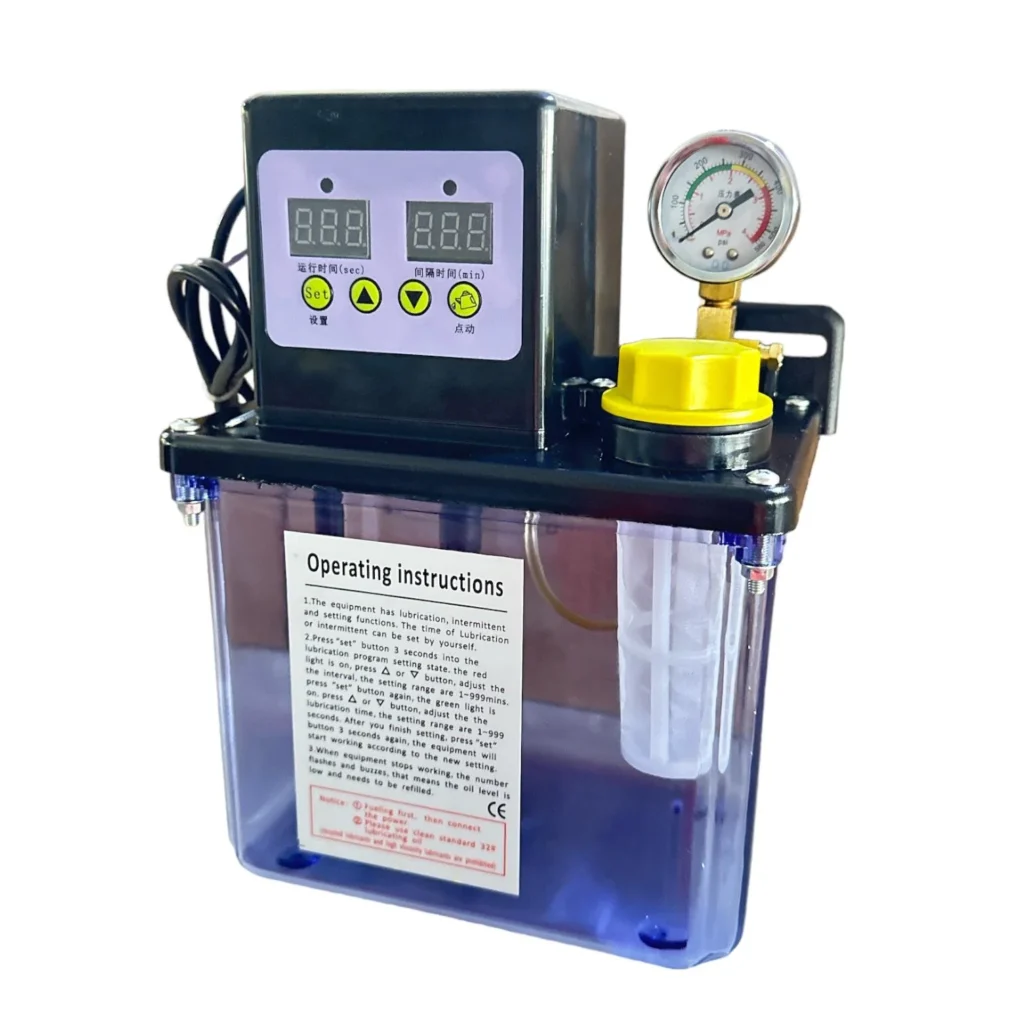
- Use of Automatic Lubrication Systems: Especially in large facilities or for machines with hard-to-reach points, automatic lubrication systems prevent both over- and under-lubrication by delivering the correct amount of lubricant at the right time, continuously. These systems minimize human error and ensure optimal lubrication conditions.
- Proper Use and Calibration of Lubrication Equipment: Grease guns, lubrication pumps, and dosing equipment should be regularly inspected and calibrated. Malfunctioning or improperly calibrated equipment can lead to incorrect lubricant application. Using clean lubrication equipment also prevents contamination.
- Regular Inspection of Sealing Elements: Check for oil leaks or grease buildup around machine parts regularly. Leaks can indicate over-lubrication or damaged seals, which should be replaced immediately.
- Visual and Thermal Inspections: Perform visual checks for signs of over-lubrication (e.g., grease extruding from bearing housings). Regularly monitor surface temperatures of critical components like bearings or gearboxes using thermal cameras. Abnormal temperature increases can be an early sign of over-lubrication or other faults.
- Oil Analysis and Condition Monitoring: For critical machinery, regular oil analysis (viscosity, particle count, water content, additive depletion) indicates the lubricant’s condition and the machine’s health. Condition monitoring techniques like vibration analysis can also detect excessive load or damage in bearings.
Implementing these practices ensures that your industrial CNC router machine and other equipment operate efficiently, extending their lifespan and reducing maintenance costs. Proper lubrication is a cornerstone of reliable industrial operations.
For expert advice on maintaining your CNC machinery or to explore solutions like advanced lubrication systems, contact us today. Request a quote on WhatsApp to ensure your operations run smoothly and efficiently.
Related product categories: Sigma Profiles · CNC Routers · General