











































































Choosing the Right Blade for Composite Panel Cutting
📑 Table of contents (Click to open)
Selecting the correct blade is crucial for efficient and high-quality composite panel cutting. This article explores the primary blade types used in industrial settings: Tungsten Carbide Tipped (TCT) saw blades, Polycrystalline Diamond (PCD) blades, and specialized router bits. We detail their applications, technical specifications, and key considerations for maximizing performance and tool life when working with materials like ACM, FRP, and CFRP.
Practical notes for CNC router, automation and industrial motion systems.
Understanding Composite Panel Cutting Challenges
Industrial automation and manufacturing processes demand precision when cutting composite panels. The heterogeneous nature, high abrasiveness, and thermal sensitivity of these materials present unique challenges. Composite panels, such as Aluminum Composite Panels (ACM), Fiber Reinforced Plastics (FRP), Carbon Fiber Reinforced Polymers (CFRP), and honeycomb structures, each possess distinct physical and chemical properties. These properties dictate the selection of the appropriate cutting tool. Primarily, three categories of blades are used: Tungsten Carbide Tipped (TCT) Saw Blades, Polycrystalline Diamond (PCD) Blades, and Specialized Router Bits. The correct choice ensures superior cut quality, optimal speed, extended tool life, and operational safety. Incorrect selection can lead to poor finish, material damage, premature tool wear, and safety hazards.
Key Blade Types and Technical Specifications
Tungsten Carbide Tipped (TCT) Saw Blades
TCT blades are often the go-to for less abrasive composites, particularly Aluminum Composite Panels (ACM) and certain types of FRP. Their tips are made of tungsten carbide, offering high hardness and wear resistance. The quality of the carbide, tip geometry, and tooth count significantly impact cut quality and blade longevity.
- Tooth Geometry: Common geometries include Alternate Top Bevel (ATB) for clean finishes and Triple Chip Grind (TCG) for better chip evacuation and durability in harder materials.
- Tooth Count: A higher tooth count results in a smoother surface finish but may require slower feed rates. Fewer teeth allow for faster cutting and better chip removal, though potentially at the cost of surface finish.
- Rake Angle: Negative or low positive rake angles help prevent material tear-out, ensuring a more controlled cut.
- Coatings: Some TCT blades feature specialized coatings (e.g., TiN, AlTiN) to reduce friction and heat buildup.
Polycrystalline Diamond (PCD) Blades
For the most demanding applications, PCD blades offer unparalleled performance and lifespan. As diamond is the hardest known material, PCD blades are ideal for cutting highly abrasive composites like CFRP and dense fiberglass panels. They consist of small diamond particles brazed onto a carbide body.
- Exceptional Wear Resistance: PCD blades can last 50-100 times longer than TCT blades, drastically reducing downtime and costs associated with frequent tool changes.
- Superior Heat Management: Diamond’s high thermal conductivity efficiently dissipates cutting heat, minimizing the risk of material melting or burning.
- High-Quality Cuts: Their ultra-sharp, durable edges minimize delamination and produce exceptionally clean, smooth cut surfaces.
- Cost-Effectiveness: While the initial investment is higher, their extended lifespan often results in a lower total cost of ownership.
Specialized Router Bits
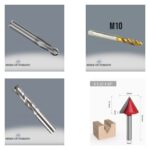
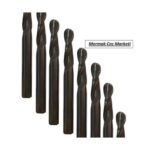
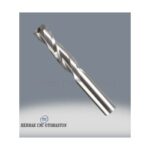
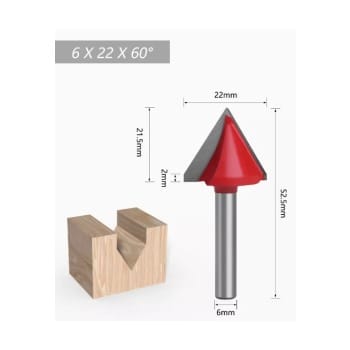
Router bits are essential for CNC router machines, enabling the creation of complex profiles, drilling, grooving, and intricate shaping. Composite-specific router bits include:
- Spiral Router Bits: Up-cut, down-cut, or compression (up-and-down spiral) designs optimize chip evacuation and edge quality. Compression bits are particularly effective at preventing tear-out on both the top and bottom surfaces of the material.
- Diamond-Coated Bits: Similar to PCD blades, these bits provide extended life and superior cutting performance in abrasive composite materials.
- Variable Flute Counts: Bits with single, double, or multiple flutes are chosen based on the required cutting speed and chip load capacity.
| Parameter | Tungsten Carbide Tipped (TCT) Saw Blade | Polycrystalline Diamond (PCD) Blade |
|---|---|---|
| Material Compatibility | ACM, medium-density FRP, wood-based composites | CFRP, high-density FRP, abrasive composites |
| Key Feature | Good cut quality, moderate tool life, cost-effective | Extended tool life, superior cut quality, heat resistance |
| Tooth Geometry | ATB or TCG | Specialized diamond geometries, often negative rake |
| Typical RPM Range | 3,000 – 6,000 RPM (varies by material and diameter) | 4,000 – 12,000 RPM (higher for precision cuts) |
| Cooling Requirement | Recommended (air jet, Minimum Quantity Lubrication – MQL) | Highly recommended (air jet, MQL, sometimes liquid) |
| Cost Factor | Moderate | High (amortized by longevity) |
Critical Considerations for Composite Cutting
- Blade Selection & Material Compatibility: This is paramount. For highly abrasive materials like carbon fiber, PCD blades are essential. For softer composites like ACM, TCT blades may suffice. Incorrect choices lead to delamination, burning, burring, and reduced tool life.
- Optimizing Cutting Parameters: Spindle speed (RPM) and feed rate must be adjusted according to material type, thickness, and blade diameter. Consult manufacturer recommendations and perform test cuts to find optimal settings.
- Effective Cooling: Proper cooling (air blast, MQL, or liquid) is vital to manage heat buildup, prevent material damage, and extend blade life, especially when using PCD tooling.
- Machine Rigidity: A robust CNC router machine with a powerful spindle motor and precise motion control system is necessary to handle the forces involved in composite cutting and maintain accuracy. Ensure linear guide rails and servo drives are well-maintained for consistent performance.
- Vacuum Table System: A reliable vacuum table system is crucial for securely holding thin composite panels during cutting, preventing movement and ensuring dimensional accuracy.
Conclusion
The selection of the right cutting tool—whether a TCT saw blade, a PCD blade, or a specialized router bit—is fundamental to achieving high-quality results when cutting composite panels. By understanding the material properties, blade technologies, and critical operational parameters, manufacturers can optimize their processes, reduce costs, and enhance productivity. For demanding composite cutting applications, investing in high-performance tooling like PCD blades, paired with a capable industrial CNC router, is key to success.
Ready to optimize your composite material processing? Request a quote on WhatsApp for Mermak CNC solutions tailored to your needs.
Related product categories: Genel · Mekanik · Kompozit Derz Açma Bıçakları