




































































Why Do Stepper Motors Overheat When Idle?
📑 Table of contents (Click to open)
- Introduction: The Phenomenon of Idle Overheating in Stepper Motors and Its Importance
- Key Symptoms of Idle Overheating and Initial Checks
- Visual and Tactile Inspection
- Operating Environment and Motor Surface Temperature
- Driver Status Indicators
- Physical and Electrical Causes of Idle Overheating
- Holding Current and Copper Losses
- Incorrect Drive Settings
- Environmental Factors
- Motor Winding Issues
- Risks Associated with Overheating
- Preventive Measures and Solutions
- Optimize Holding Current Settings
- Improve Ventilation and Cooling
- Select Appropriate Motor and Driver
- Regular Maintenance and Monitoring
- Conclusion
Stepper motors are crucial for precise automation, but they can overheat even when idle. This phenomenon, often caused by the ‘holding current’ required to maintain position, can lead to energy waste and reduced component lifespan. This article delves into the technical reasons behind idle overheating, its potential risks, and practical solutions for industrial applications.
Practical notes for CNC router, automation and industrial motion systems.
Introduction: The Phenomenon of Idle Overheating in Stepper Motors and Its Importance
Stepper motors, indispensable components in industrial automation systems, are favored for applications requiring precise positioning and torque control. However, a common issue encountered by engineers and technicians is the noticeable overheating of these motors, even when they are idle. This situation not only leads to energy wastage but can also shorten the lifespan of the motor and its driver, negatively impacting the overall reliability and performance of the system. This article aims to provide a comprehensive guide for industrial automation professionals by examining the technical reasons behind stepper motor idle overheating, its potential risks, and the preventive measures that can be taken.
Due to the operating principle of stepper motors, current is continuously or intermittently applied to their coils. Even when the motor is not moving, a certain level of current (holding current) is maintained in the coils to fix its position and resist external loads. This holding current causes resistive losses (Joule heating) in the motor windings, leading to overheating even when idle. While this heating is often normal, exceeding a certain threshold can indicate serious system issues requiring detailed investigation.
Key Symptoms of Idle Overheating and Initial Checks
Stepper motor idle overheating is typically a gradual process with specific indicators. Correctly interpreting these symptoms and intervening early is critical to prevent potential failures. Initial checks usually begin with visual and tactile inspections, followed by a review of electrical parameters.
Visual and Tactile Inspection
The surface temperature of the motor is the most apparent indicator of idle overheating. If the motor feels “warm” to the touch, it might indicate a temperature around 50-60°C, which is often within acceptable limits for most stepper motors. However, if the motor is “too hot” to touch (generally above 70°C), it is a strong sign of a problem requiring immediate attention. Additionally, any burning smell, smoke, or discoloration around the motor or its driver indicates severe overheating and potential failure.
It’s also important to check for abnormal vibrations in the motor casing or nearby mechanical components like couplings or bearings. Excessive heat can degrade insulation materials or bearing lubricants within the motor, leading to mechanical imbalances that further shorten its life and reduce system precision. Visual deformities such as discoloration or swelling on driver board components (MOSFETs, resistors) are also direct evidence of overheating.
Operating Environment and Motor Surface Temperature
The ambient temperature where the stepper motor operates significantly impacts its overall thermal performance, in addition to its self-generated heat. High ambient temperatures reduce the motor’s cooling efficiency, making it more prone to overheating. Therefore, measuring the motor’s surface temperature with a thermal camera or an infrared thermometer provides objective data for understanding the issue. Manufacturer-specified maximum operating temperature values should serve as the benchmark for these measurements.
The motor’s mounting method and surrounding airflow also directly affect thermal management. Operating the motor within an enclosed housing or in an area with insufficient ventilation can impede heat dissipation, exacerbating idle overheating problems. This is particularly critical in applications using high currents or requiring continuous torque holding. Surface temperature measurements help quantitatively assess the impact of such environmental factors.
Driver Status Indicators
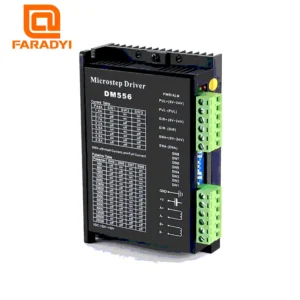
Modern stepper motor drivers are often equipped with LED indicators that signal operating status and potential faults. These indicators can signal conditions like over-temperature, over-current, or under-voltage. Consulting the driver’s manual for specific LED codes can provide initial clues as to whether the problem is electrical or thermal. For instance, an “over-temperature” or “thermal protection” error LED indicates that the motor or the driver itself is overheating.
Some advanced drivers offer more detailed diagnostic information through built-in error logs or software interfaces. Monitoring data from internal temperature sensors, operating current, and voltage values via these interfaces allows for a deeper analysis of idle overheating issues. If overheating occurs after a specific operating mode or idle period, checking settings like the driver’s idle current reduction feature is crucial.
Physical and Electrical Causes of Idle Overheating
Stepper motor idle overheating is not attributable to a single factor but typically results from a combination of multiple physical and electrical influences. Understanding these factors is key to accurate diagnosis and lasting solutions.
Holding Current and Copper Losses
The primary reason for idle overheating is the ‘holding current’ supplied to the motor windings to maintain its position. This current, even when the motor shaft is stationary, flows through the winding resistance, generating heat according to Joule’s law (P = I²R). While some heat generation is unavoidable, excessive holding current or high winding resistance can lead to significant temperature increases.
Incorrect Drive Settings
Improper configuration of the stepper motor driver is a frequent cause of overheating. Settings such as microstepping, current limits, and idle current reduction levels directly influence motor temperature. For example, setting the current limit too high for the motor’s rating will cause excessive current flow and heat. Similarly, if the idle current reduction feature is disabled or set too low, the motor will continuously draw a high current even when stationary.
Environmental Factors
High ambient temperatures, poor ventilation around the motor, or direct sunlight exposure can significantly reduce the motor’s ability to dissipate heat. If the motor is mounted in a confined space or surrounded by other heat-generating components without adequate airflow, its operating temperature will rise, especially during idle periods when natural convection might be insufficient.
Motor Winding Issues
Internal issues within the stepper motor itself can also contribute to overheating. Short circuits between windings, damaged insulation, or even manufacturing defects can lead to increased current draw and localized heating. If a motor consistently overheats regardless of driver settings or environmental conditions, a closer inspection of the motor windings might be necessary.
Risks Associated with Overheating
Ignoring stepper motor overheating can lead to several detrimental consequences:
- Reduced Component Lifespan: Excessive heat degrades insulation materials, lubricants, and electronic components in both the motor and the driver, significantly shortening their operational life.
- Performance Degradation: Overheating can affect the motor’s magnetic properties and increase resistance, leading to reduced torque, decreased accuracy, and potential loss of steps.
- System Failures: In severe cases, overheating can cause catastrophic failures, such as winding burnout, driver failure, or even damage to connected mechanical components.
- Increased Energy Consumption: Heat generated by idle current represents wasted energy, increasing operational costs.
Preventive Measures and Solutions
To mitigate idle overheating issues in stepper motors, consider the following practical solutions:
Optimize Holding Current Settings
Most stepper motor drivers offer an adjustable holding current. Reducing this current when the motor is idle, but still requires position holding, can significantly decrease heat generation. Many drivers feature an automatic idle current reduction function that lowers the current after a short period of inactivity. Ensure this feature is enabled and properly configured. For applications where holding torque is not critical during idle periods, consider disabling the holding current entirely.
Improve Ventilation and Cooling
Ensure adequate airflow around the stepper motor and its driver. If the motor is mounted in an enclosure, consider adding ventilation holes or a small fan. For high-power applications or environments with high ambient temperatures, active cooling solutions like heatsinks or dedicated fans might be necessary. Proper mounting on thermally conductive surfaces can also aid heat dissipation.
Select Appropriate Motor and Driver
Choosing a stepper motor and driver combination that is correctly sized for the application is crucial. Motors with higher thermal resistance or those designed for continuous operation at higher temperatures may be suitable for demanding environments. Similarly, selecting a driver with efficient heat management and appropriate current ratings prevents it from becoming a heat source itself.
Regular Maintenance and Monitoring
Implement a regular maintenance schedule that includes checking motor and driver temperatures, inspecting connections, and verifying drive settings. Using thermal imaging or temperature sensors can help monitor conditions proactively. Addressing any signs of overheating promptly can prevent minor issues from escalating into major failures.
Conclusion
Stepper motor overheating when idle is a common but manageable issue in industrial automation. By understanding the underlying causes—primarily holding current, drive settings, and environmental factors—and implementing appropriate preventive measures such as optimizing current settings, improving cooling, and selecting the right components, you can ensure the longevity, reliability, and efficiency of your CNC machinery. Proactive monitoring and maintenance are key to preventing costly downtime and performance degradation.
If you are experiencing persistent issues with stepper motor overheating or need assistance in selecting the right components for your industrial CNC router, our experts are ready to help. Request a quote on WhatsApp today for personalized solutions.