
No products in the cart.
%55 Discount


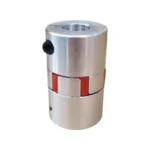
GS19 Coupling 19×19 D40XL66 Machined Ready Size
Original price was: 12.96$.5.83$Current price is: 5.83$.
Best Quality, Best Price Guarantee
In stock
🔥 Special for Today Only %55 Discount Opportunity!📦 Category: 19x19 Lead Screws and Nuts🏷️ Dimensions: 19x19🏷️ Coupling Series: GS19
Mermak assuranceFrom factory to end user · importer / main dealer · strong stock
ImporterMain dealer / distributorStrong stockGood priceCorporate invoice
In stock / available to order · 14-day return for standard unused products; conditions may vary for custom size/cut products.
GS19 Coupling 19X19 D40XL66 Machined Ready Size
INDUSTRIAL AUTOMATION PARTS | SUPERIOR PERFORMANCE SERIES
Detailed Product Review
The GS19 Coupling 19X19 D40XL66 is a machined and ready-to-use flexible coupling solution specifically designed for motion control applications in industrial automation systems requiring high precision, dynamic response, and long service life. This coupling ensures zero backlash torque transmission between two rotating shafts while effectively compensating for inevitable radial, angular, and axial misalignments between shafts. Its operating principle relies on transmitting torque through a flexible spider element positioned between two metal hubs. This elastomeric element transmits torque while simultaneously damping vibrations and absorbing stresses caused by shaft misalignments, thereby extending the life of connected mechanical components (motors, bearings, ball screws, etc.). It is a key component that directly impacts the overall performance and reliability of systems requiring precise positioning and repeatability, especially in critical applications involving servo motors, stepper motors, encoders, and ball screw systems.
The body of the product is manufactured using CNC machining techniques from high-strength aluminum alloy. This material choice allows the coupling to offer low inertia while maintaining high torque capacity, which enhances rapid acceleration and deceleration capabilities in dynamic applications. The special polyurethane elastomer used as the spider element provides stable performance over a wide temperature range, offering long operational life with its chemical resistance and wear resistance properties. With an outer diameter of 40mm and a total length of 66mm (D40XL66), the GS19 Coupling features a compact structure, allowing for easy integration into systems with limited mounting space. The precisely machined 19mm bore on both sides ensures a direct and secure connection with standard industrial shafts, eliminating the need for additional machining and significantly reducing assembly time and cost. This coupling contributes to the uninterrupted, error-free, and highly efficient operation of systems across a wide range of industrial applications, from CNC machining centers to robotic systems, packaging machines, and printing and textile machinery.
GS19 Coupling 19X19 D40XL66 Machined Ready Size Advantages
Zero Backlash Torque Transmission: The GS19 Coupling operates without any angular play or delay between the driving and driven shafts during torque transmission. This zero backlash feature critically enhances positioning accuracy and repeatability, especially in precision motion control systems like servo motors and stepper motors. The absence of backlash improves the system’s dynamic response time, minimizes vibrations, and ensures precise control even during high-speed direction changes, directly impacting machining quality and product consistency.
Versatile Shaft Misalignment Compensation: This coupling has the capacity to effectively absorb three main types of shaft misalignments: radial (±0.2 mm), angular (±1.0°), and axial (±0.5 mm). Radial misalignment refers to the condition where shaft axes are parallel but offset, angular misalignment occurs when shaft axes intersect at an angle, and axial misalignment is the relative forward or backward displacement of shaft ends. This compensation capability reduces stress and wear on connected mechanical components like motors and bearings, extending the overall system life. It also lowers vibration and noise levels, enhancing operational stability.
Optimized Dimensions and Ease of Integration: With a D40mm outer diameter and a 66mm total length (D40XL66), the GS19 Coupling offers a compact form factor. These dimensions allow for easy integration, particularly in industrial machines and automation modules with limited mounting space. Manufacturing from high-strength aluminum alloy ensures the coupling’s light weight (approximately 180 grams), reducing the system’s overall inertia. The precisely machined 19x19mm bores at both ends enable direct and quick mounting with standard industrial shafts without requiring additional machining, minimizing installation time and labor costs while accelerating system commissioning.
Technical Specifications and Capacity
FeatureValue/Description
ModelGS19 Flexible Coupling
Shaft Diameter (D1 x D2)19mm x 19mm (Pre-Machined)
Outer Diameter (D)40mm
Total Length (L)66mm
Maximum Torque12 Nm
BacklashZero Backlash
Technical Frequently Asked Questions (FAQ)
How does the zero backlash feature of the GS19 Coupling provide a technical advantage in high-precision automation systems?
The zero backlash feature means there is no angular play or free movement between the driving and driven shafts during torque transmission. This technical characteristic is critical in feedback-controlled systems, particularly those using servo motors, stepper motors, and encoders. The backlash-free design ensures that the motion commanded by the motor is transmitted instantly and accurately, maximizing positioning accuracy and repeatability. For example, the precision of a tool path in a CNC machine, the accuracy of a robotic arm reaching a target point, or the synchronization of rollers in a printing press directly depends on this zero backlash torque transmission. A coupled system with backlash can lead to oscillations, vibrations, and positioning errors, whereas the GS19 Coupling’s zero backlash design eliminates such adverse effects, enhancing the system’s dynamic performance and overall production quality.
With what engineering principles does the GS19 Coupling’s polyurethane elastomer spider compensate for shaft misalignments and dampen vibrations?
The polyurethane elastomer element at the center of the GS19 Coupling is a special polymer with properties such as high elasticity, damping capacity, and wear resistance. This ‘spider’ shaped element is placed between the two metal hubs of the coupling, acting as a flexible connection while transmitting torque. Compensation for shaft misalignments occurs through the elastomer’s ability to deform. In case of radial misalignment, the elastomer’s side surfaces compress and stretch, absorbing the parallel offset between shaft axes. For angular misalignment, different regions of the elastomer compress at varying rates, balancing the angular difference between shaft axes. In axial misalignment, the elastomer’s dimensional flexibility accommodates small changes in the distance between shaft ends. Furthermore, the viscoelastic nature of the polyurethane material effectively dampens shock loads and vibrations by converting kinetic energy into heat energy. This damping feature extends the life of connected motors and bearings, reduces system noise levels, and provides a more stable operating environment.
How does the high-strength aluminum alloy body of the GS19 Coupling contribute to the coupling’s overall performance and system dynamics?
The choice of high-strength aluminum alloy for the GS19 Coupling’s body is a significant engineering decision that directly impacts the coupling’s structural integrity and operational performance. Aluminum alloys offer high strength-to-weight ratios compared to steel, despite their lower density. This characteristic minimizes the coupling’s overall weight, reducing the system’s moment of inertia. Low inertia allows the motor to accelerate and decelerate with less energy consumption, especially in high-speed applications requiring frequent start-stop cycles, thereby improving energy efficiency and enhancing the system’s dynamic response time. Additionally, aluminum’s good thermal conductivity helps the coupling maintain stable performance within its operational temperature range. The high precision surfaces and tolerances achieved through CNC machining ensure a tight fit at the shaft connections, further reducing vibration and backlash, thus providing a long and reliable service life.
What technical advantages does the GS19 Coupling’s clamp-type connection mechanism offer in terms of torque transmission and shaft damage?
The clamp-type mounting mechanism of the GS19 Coupling provides a connection based on the principle of frictional force between the shaft and the coupling hub. This method creates a radial clamping force on the shaft by tightening one or more set screws on the coupling hub. This clamping action generates a high coefficient of friction between the shaft surface and the coupling’s inner diameter, ensuring reliable torque transmission. Its technical advantages include the elimination of the need to machine keyways or holes on the shaft, unlike keyed or set screw connections. This preserves the shaft’s strength and eliminates stress concentration points, increasing the shaft’s fatigue life. Furthermore, clamp-type connections provide a more balanced clamping force distribution, resulting in less vibration and better centering even at high speeds. Assembly and disassembly are faster and easier, simplifying maintenance processes and reducing system downtime. This connection type offers high torque transmission and reliability while preserving the integrity of the shaft, especially in precision and dynamic applications.
| Dimensions | 19x19 |
|---|---|
| Coupling Series | GS19 |
You must be logged in to post a review.


Reviews
There are no reviews yet.