
No products in the cart.


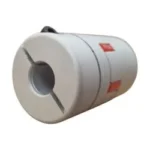
GS19 Coupling 14×19 D40XL66 Machined Ready-to-Fit
12.96$
Best Quality, Best Price Guarantee
In stock
📦 Category: 14x19 Lead Screws and Nuts🏷️ Dimensions: 14x19🏷️ Coupling Series: GS19
Mermak assuranceFrom factory to end user · importer / main dealer · strong stock
ImporterMain dealer / distributorStrong stockGood priceCorporate invoice
In stock / available to order · 14-day return for standard unused products; conditions may vary for custom size/cut products.
GS19 Coupling 14X19 D40XL66 Machined Ready-to-Fit
INDUSTRIAL AUTOMATION PARTS | SUPERIOR PERFORMANCE SERIES
Detailed Product Review
The GS19 Coupling series is designed as a critical component for power and motion transmission in industrial automation systems. This specific model, the GS19 Coupling 14X19 D40XL66, is a flexible spider coupling (jaw coupling) optimized to transmit torque and angular position with high precision by connecting two rotating shafts. The primary function of a coupling is to establish a mechanical connection between the driving (motor) and driven (ball screw, gearbox, encoder, etc.) shafts, while simultaneously accommodating shaft misalignments (angular, parallel, and axial) and effectively damping torsional vibrations within the system. The D40XL66 sizing indicates an outer diameter of 40 mm and a total length of 66 mm, while the precisely CNC-machined shaft diameters of 14 mm and 19 mm offer a ready-to-fit solution, eliminating the need for additional machining on-site. The zero-backlash feature, which is of critical importance especially in servo and stepper motor applications, ensures that any movement and positioning command is transmitted with millimeter precision between the input and output shafts without any delay or free play, making it an indispensable performance criterion for systems requiring high repeatability and accuracy.
The material composition of the GS19 Coupling has been selected with the goals of high performance and longevity in mind. The coupling body is precisely machined from a high-strength aluminum alloy using CNC machines; this material offers high torque transmission capacity while also providing lightness and corrosion resistance. The elastomer (spider) responsible for torsional flexibility and vibration damping is made from industrial-grade polyurethane. Polyurethane elastomer stands out for its ability to absorb shock loads, reduce resonance, and maintain stable performance over a wide operating temperature range. This combination of materials extends the life of connected equipment (motor mounts, ball screw bearings, etc.) and enhances the overall reliability of the system. The pre-machined shaft diameters simplify the installation process and save time and cost by eliminating the need for additional on-site machining. This coupling offers an ideal integration solution for stable, efficient, and precise power transmission between motor and driven shafts in various applications such as CNC machines, robotic systems, automation lines, packaging machinery, and general industrial motion control.
Advantages of the GS19 Coupling 14X19 D40XL66 Machined Ready-to-Fit
Direct Integration with Precisely Machined Ready Shaft Diameters: The GS19 Coupling has undergone precise CNC machining processes at the factory for 14×19 mm shaft diameters. This feature allows the coupling to be mounted directly onto the motor and driven shafts, completely eliminating the need for additional machining or adapter use. From an engineering perspective, this significantly shortens assembly time, reduces labor costs, and minimizes the risk of machining errors on-site. Furthermore, precise machining optimizes the fit tolerances between the shaft and the coupling, ensuring a more secure and concentric connection that reduces vibrations and dynamic imbalances.
High Torque Transmission and Zero-Backlash Performance: The GS19 Coupling has a nominal torque transmission capacity of 8 Nm and a maximum of 24 Nm, reliably performing the power transmission required in industrial automation applications. The zero-backlash feature, critical especially in servo and stepper motor systems, is achieved by mounting the coupling’s elastomer element with pre-load. This mechanism guarantees that any movement of the input shaft is instantly and losslessly transmitted to the output shaft. Consequently, positioning accuracy, repeatability, and the overall precision of the system are enhanced; this is a fundamental requirement for motion control at millimeter or even micron levels, particularly in CNC machines, robotic manipulators, and precision indexing systems.
Effective Vibration Damping and Shaft Misalignment Tolerance: The industrial-grade polyurethane elastomer used in the coupling’s construction has the ability to effectively damp torsional vibrations and shock loads in the system. This damping capability reduces dynamic stresses on the motor and driven equipment, extending the life of connected components (bearings, shafts) and lowering the overall noise level of the system. Additionally, this flexible structure accommodates inevitable misalignments between shafts: it offers ±1° angular misalignment, ±0.2 mm parallel misalignment, and ±0.5 mm axial misalignment tolerances. These tolerances absorb minor deviations resulting from assembly errors or thermal expansion, ensuring stable system operation, preventing overloading of bearings, and thus extending maintenance intervals and increasing operational reliability.
Technical Specifications and Capacity
Feature|Value/Description
Coupling Type|Flexible Spider Coupling (Jaw Coupling)
Body Material|High-Strength Aluminum Alloy (CNC Machined)
Elastomer (Spider) Material|Industrial Grade Polyurethane
Outer Diameter (D)|40 mm
Total Length (L)|66 mm
Shaft Diameters|14 mm and 19 mm (Pre-Machined)
Nominal Torque|8 Nm
Maximum Torque|24 Nm
Maximum Speed|10,000 RPM
Backlash|Zero Backlash
Operating Temperature|-20°C to +80°C
Mounting Type|Set Screw / Clamp
Technical Frequently Asked Questions (FAQ)
How does the “zero-backlash” feature of the GS19 Coupling contribute to the positioning accuracy and repeatability of a CNC machine?
Zero-backlash refers to the absence of any angular free play or delay between the input and output shafts of the coupling. Backlash in conventional couplings causes the output shaft to follow the motor’s movement with a slight delay when the motor starts moving in a direction. This negatively affects tool path accuracy, contour fidelity, and machining quality, especially in CNC machines. The zero-backlash feature in the GS19 Coupling is achieved by mounting the elastomer element with pre-load, ensuring that millimeter movement commands are transmitted instantly and losslessly between the shafts during torque transfer. Consequently, micron-level positioning accuracy, high repeatability, and machining surface quality, which are critical for CNC machines, are significantly improved. This provides an indispensable advantage, particularly in precision parts manufacturing and the machining of complex geometries.
What are the specific advantages, in terms of mechanical properties and operational life, of using high-strength aluminum alloy for the GS19 Coupling’s body and industrial-grade polyurethane for its elastomer?
High-strength aluminum alloy is an ideal material for the coupling body because it has a high strength-to-weight ratio, allowing it to maintain structural integrity under dynamic loads while keeping the system’s overall inertia low. Furthermore, aluminum’s excellent corrosion resistance offers a long-lasting solution for industrial environments that may be exposed to moisture or chemical vapors. Industrial-grade polyurethane elastomer, on the other hand, possesses properties such as high elasticity, wear resistance, and chemical durability. This elastomer effectively dampens torsional vibrations and shock loads, reducing stress on the motor and driven equipment, which in turn extends the life of bearings and other mechanical components. Polyurethane’s wide operating temperature range (-20°C to +80°C) ensures that the coupling performs stably under various industrial conditions. This combination of materials provides the GS19 Coupling with high torque transmission capacity, superior vibration damping capability, and a long operational life in demanding industrial environments.
How do the angular (±1°), parallel (±0.2 mm), and axial (±0.5 mm) misalignment tolerances of the GS19 Coupling manage shaft misalignments in the system, and how does this affect the lifespan of connected components?
Shaft misalignment refers to the absence of ideal axial alignment between the driving and driven shafts and is categorized into three main types: angular (when shaft axes intersect at an angle), parallel (when shaft axes are parallel but in different planes), and axial (when shafts move back and forth in the axial direction). The GS19 Coupling’s polyurethane elastomer has the ability to absorb these types of misalignments through flexible deformation. For instance, a ±1° angular tolerance means the coupling can accommodate an angular deviation of this degree between the shafts within its own structure. This flexibility significantly reduces excessive radial and axial loads on motor bearings, ball screw bearings, and other rotating components. Misaligned shafts can cause premature wear in bearings, increased friction, vibration, and heat generation, reducing the system’s energy efficiency and shortening component life. The GS19 Coupling’s ability to manage misalignments within its specified tolerances ensures that connected equipment operates smoothly for longer periods, reducing maintenance costs and increasing operational reliability.
What are the fundamental differences between the set screw and clamp mounting types for the GS19 Coupling, and in which application scenarios should each be preferred?
The GS19 Coupling supports both set screw and clamp mounting methods for shaft connection. Set screw mounting provides a connection by applying direct pressure to the shaft surface with one or two screws in the coupling body. This method is generally simpler and more economical but can cause a small indentation or damage to the shaft surface and carries a risk of slippage in high-torque applications. It is typically preferred in applications requiring lower torque, less precision, or where cost is a priority. Clamp mounting, on the other hand, ensures that the inner diameter of the coupling is evenly compressed around the shaft when one or two screws around the coupling’s circumference are tightened. This method does not damage the shaft surface, offers higher torque transmission capacity, provides better concentricity, and ensures a more secure grip on the shaft. Furthermore, disassembly and reassembly are easier. Clamp mounting is the preferred method in applications requiring high precision, high speed, and zero-backlash, such as servo motor and stepper motor applications, CNC machines, and robotic systems, as it reduces vibration and enhances long-term reliability.
| Dimensions | 14x19 |
|---|---|
| Coupling Series | GS19 |
You must be logged in to post a review.


Reviews
There are no reviews yet.