
No products in the cart.


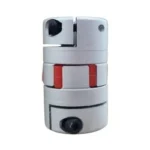
GS19 Coupling 14×16 D40XL66 Machined Ready Size
12.96$
Best Quality Best Price Guarantee
In stock
📦 Category: 14x16 Lead Screws and Nuts🏷️ Dimensions: 14x16🏷️ Coupling Series: GS19
Mermak assuranceFrom factory to end user · importer / main dealer · strong stock
ImporterMain dealer / distributorStrong stockGood priceCorporate invoice
In stock / available to order · 14-day return for standard unused products; conditions may vary for custom size/cut products.
The GS19 Coupling series is a high-performance elastomer spider (jaw) coupling designed for torque transmission and shaft connection in industrial automation systems. This specific model features precisely machined bores of 14 mm and 16 mm diameter, with an outer diameter of D40 mm and a total length of 66 mm. Its primary function is to transmit torque with high accuracy between a driving shaft (e.g., servo or step motor) and a driven shaft (e.g., ball screw or gearbox input), while also flexibly compensating for angular, parallel, and axial misalignment errors within the system. The integrated polyurethane elastomer spider optimizes the system’s dynamic performance by absorbing shock loads and damping vibrations, thereby extending the lifespan of connected mechanical components (bearings, housings) and reducing maintenance costs. Its zero-backlash design ensures that motor command movements are transferred to the shaft without any loss or delay, guaranteeing absolute positioning accuracy, especially in applications requiring high precision and repeatability.
The body of the GS19 Coupling is manufactured from high-strength Aluminum Alloy (e.g., Al 7075 T6), optimized to provide high torque capacity and low inertia. The surface of the body has undergone hard anodization to enhance resistance to corrosion and wear in demanding industrial environments. These structural features ensure that the coupling exhibits long-lasting and reliable performance. In terms of system integration, it offers easy and quick installation with pre-machined H7 tolerance shaft bores and standard set screws, minimizing setup time and labor costs. This coupling is designed for a wide range of industrial applications, including CNC machines (lathes, mills, machining centers), joint points of robotic arms, precision packaging machines, automated assembly lines, medical dosing systems, and laboratory equipment. Its ability to maintain stable torque transmission and vibration damping even at high speeds enhances the operational reliability and precision of the system in such critical applications.
Advantages of the GS19 Coupling 14×16 D40XL66 Machined Ready Size
Zero-Backlash Torque Transmission and Positioning Accuracy: The GS19 Coupling operates on the principle of zero backlash, thanks to its pre-loaded elastomer spider design. This feature ensures that torque from the drive motor (servo or step) is transmitted to the driven shaft without any angular loss or delay. In precision motion control systems, particularly those requiring sub-millimeter accuracy like CNC machines and robotic systems, this maximizes positioning accuracy and repeatability, directly impacting machining quality and operational efficiency. Backlash-free torque transmission maintains system stability even during rapid direction changes or high-speed movements.
Advanced Vibration Damping and Mechanical Component Lifespan Optimization: The integrated polyurethane elastomer spider effectively absorbs torsional vibrations and shock loads generated within the system. This damping capability reduces dynamic stresses at the connection point between the motor and the drive shaft. Consequently, wear and fatigue effects on motor bearings, gearbox gears, ball screws, and other precision mechanical components are minimized. This extends the overall service life of the system, reduces the risk of failure, and optimizes planned/unplanned maintenance intervals, leading to significant operational cost savings.
Versatile Misalignment Compensation and System Reliability: The GS19 Coupling possesses the ability to flexibly compensate for angular (max. 1.0°), parallel (max. 0.2 mm), and axial (max. 0.2 mm) shaft misalignment errors that may occur during installation or operational conditions. This flexibility simplifies installation processes and reduces the need for ultra-precise shaft alignment. Effective compensation for misalignment reduces radial and axial loads on shafts and bearings, minimizing the risk of premature wear and failure. This enhances the system’s operational reliability, prevents unexpected downtime, and ensures overall production continuity.
Technical Specifications and Capacity
Coupling TypeGS Series Elastomer Spider (Jaw) Coupling
Shaft Diameters (Machined)Ø14 mm x Ø16 mm (Pre-Machined, H7 Tolerance)
Outer Diameter (D) / Total Length (L)Ø40 mm / 66 mm
Body Material / Surface TreatmentHigh-Strength Aluminum Alloy (e.g., Al 7075 T6) / Corrosion-Resistant Hard Anodization
Elastomer Spider MaterialPolyurethane (Shore A 92 Hardness, Yellow Color)
Nominal Torque / Maximum Torque22 Nm / 44 Nm
Maximum Speed8,000 RPM (with dynamic balancing and vibration damping)
Misalignment Compensation (Angular/Parallel/Axial)Max. 1.0° / Max. 0.2 mm / Max. 0.2 mm
Operating Temperature-20°C to +80°C
WeightApprox. 0.15 kg
Technical Frequently Asked Questions (FAQ)
How does the “zero backlash” feature of the GS19 Coupling affect positioning accuracy in precision motion control systems?
The zero backlash feature of the GS19 Coupling is achieved by pre-loading the elastomer spider between the coupling jaws. This design ensures that torque from the motor shaft is transmitted directly and instantaneously to the driven shaft without any angular delay or free play. In precision motion control systems, especially in servo and stepper motor applications, this guarantees that every micron commanded by the motor is accurately reflected in the movement of the driven component (e.g., ball screw or rotary table). Backlash-free torque transmission eliminates positioning errors, enhances repeatability, and maintains system stability even during high-speed direction changes, directly improving machining quality and final product precision. This is an indispensable engineering advantage for critical applications such as CNC machining, optical positioning, and robotic joint control.
What contributions does the Shore A 92 hardness of the polyurethane elastomer spider used in the GS19 Coupling make to the coupling’s dynamic performance?
The Shore A 92 hardness of the polyurethane elastomer spider indicates that the material possesses both sufficient rigidity and operates within a specific range of flexibility. This hardness level allows the GS19 Coupling to maintain high torque transmission capacity while effectively providing vibration damping and shock load absorption. A harder spider (higher Shore value) can transmit higher torques with less deformation and better maintain backlash-free operation, while sufficient flexibility allows it to absorb mechanical stresses from sudden acceleration/deceleration or impact loads, protecting system components. This balance optimizes the coupling’s dynamic response time, minimizes resonance frequencies, and reduces stress on connected shafts and bearings, thereby enhancing overall system stability and lifespan. Shore A 92 offers an optimal balance between torque capacity, vibration damping, and durability for industrial automation applications.
What are the engineering implications of the specified -20°C to +80°C operating temperature range for the GS19 Coupling in industrial applications?
The specified operating temperature range of -20°C to +80°C for the GS19 Coupling indicates that the coupling, and particularly its elastomer spider, will exhibit reliable and stable performance within these limits. This range is sufficiently wide for most general industrial automation environments. At low temperatures (-20°C), the polyurethane elastomer may increase in hardness and slightly decrease in flexibility, which could marginally affect its vibration damping capacity while maintaining high torque transmission capability. At high temperatures (+80°C), the material’s flexibility may increase, and a minimal reduction in nominal torque capacity might be observed, but material degradation or permanent deformation is not expected within these limits. This temperature range allows the coupling to be used in various environments, from cold storage areas to heat-generating machine interiors. For applications with extreme temperature variations or outside this range, a detailed examination of the elastomer’s properties or consideration of different coupling types may be necessary.
What are the engineering effects of the GS19 Coupling’s 14×16 mm machined shaft diameters and D40xL66 mm dimensions on a system’s design and assembly processes?
The 14×16 mm machined shaft diameters of the GS19 Coupling directly match standard motor and ball screw diameters, eliminating the need for additional machining or adapter use. These ready-made sizes significantly reduce assembly time and labor costs. The H7 tolerance machined bores ensure a tight, backlash-free fit with the shafts, enhancing torque transmission efficiency and minimizing wear. The D40 mm outer diameter and L66 mm total length indicate a compact structure for the coupling. This compactness facilitates integration in automation systems with limited space and offers greater flexibility in machine design. Furthermore, its low inertia contributes to reduced load on the motor, especially during high-speed operations or frequent acceleration/deceleration cycles, improving energy efficiency and allowing the motor to respond faster. This sizing is carefully designed to optimize both the mechanical performance and system integration of the coupling.
Mermak has 16 years of experience in the industrial automation sector. Our products are stocked at our Ankara Uzay Sanayi factory/warehouse, and website stock quantities and prices are up-to-date. Stocked products are dispatched directly from our warehouse without production delays. We ensure careful packaging, meticulous invoice and document follow-up, and utilize reliable logistics partners. The Mermak team closely monitors the shipment process. Upon request, product videos and factory tours can be arranged via WhatsApp or other contact channels. We proudly supply our products to international markets, including the United Kingdom, United States, Canada, Australia, Ireland, New Zealand, and South Africa, alongside similar countries and global markets.
| Dimensions | 14x16 |
|---|---|
| Coupling Series | GS19 |
You must be logged in to post a review.
Taksit Tablosu
Related Products
 %55 DiscountGS19 Coupling 19x19 D40XL66 Machined Ready SizeOriginal price was: 12.96$.5.83$Current price is: 5.83$.View
 GS19 Coupling 10x10 D40XL66 Machined Ready Size12.96$View
 GS19 Coupling 14x14 D40XL66 Machined Ready Size12.96$View
Reviews
There are no reviews yet.