
No products in the cart.


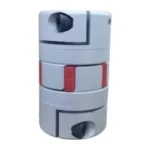
GS19 Coupling 10×12.7 D40XL66 Machined Ready-to-Fit
12.96$
Best Quality, Best Price Guarantee
In stock
📦 Category: 10x12.7 Lead Screws and Nuts🏷️ Dimensions: 10x12,7🏷️ Coupling Series: GS19
Mermak assuranceFrom factory to end user · importer / main dealer · strong stock
ImporterMain dealer / distributorStrong stockGood priceCorporate invoice
In stock / available to order · 14-day return for standard unused products; conditions may vary for custom size/cut products.
Mermak CNC engineered and manufactured, this specific model from the GS19 Coupling series is a mechanical connection element developed for applications where power and motion transmission is critical in industrial automation systems. Its primary function is to connect two rotating shafts (typically a motor shaft and a driven shaft), precisely transmitting torque and rotational motion while absorbing potential shaft misalignment errors (axial, angular, and radial) to minimize mechanical stress. This model is optimized to establish a vibration-free, reliable, and high-performance connection between motor and processing units with 10mm and 12.7mm (1/2 inch) shaft diameters. Its compact geometry, with an outer diameter of 40mm and a total length of 66mm, offers flexibility to system designers by maintaining high torque transmission capacity even in confined installation spaces. The flexible structure of the coupling effectively dampens shocks and vibrations arising from sudden torque changes or dynamic loads, extending the wear life of connected motors, bearings, and other mechanical components, and enhancing operational stability.
GS19 series couplings are manufactured using CNC machining technology from high-strength aluminum alloys. This manufacturing method ensures material homogeneity and geometric precision of the final product, while guaranteeing critical performance parameters such as excellent balance and low inertia. Low inertia shortens acceleration/deceleration times and maximizes positioning accuracy, especially in applications requiring high precision and dynamic response, such as servo motors, stepper motors, and encoders. The “Machined Ready-to-Fit” designation indicates that the coupling’s shaft bores (10mm and 12.7mm) are machined to ready-to-install precision, eliminating the need for further processing. This feature significantly speeds up the installation process, minimizes assembly errors, and allows businesses to save on commissioning costs. The clamp-type clamping mechanism provides high clamping force without causing any notching or deformation on the shafts, preventing slippage in torque transmission and ensuring a reliable connection. This coupling is designed for use in a wide range of industrial automation applications, including CNC machines, robotic systems, automated assembly lines, and precision measuring equipment.
GS19 Coupling 10X12.7 D40XL66 Machined Ready-to-Fit Advantages
High Torque Capacity and Precise Power Transmission: With a nominal torque capacity of 12 Nm and a maximum of 36 Nm, the GS19 coupling can reliably transmit the high loads required by industrial automation applications. The high strength of the aluminum alloy and the precise tolerances achieved through CNC machining ensure that torque is transmitted with millimeter accuracy. This is a critical factor that directly affects machining quality, repeatability, and surface finish in CNC machines, enabling them to achieve their full potential, especially with servo and stepper motors. Lossless torque transmission increases the overall efficiency of the system and minimizes energy waste.
Superior Vibration Damping and Shock Absorption: The flexible structural design and material properties of the coupling offer the ability to effectively absorb vibrations and mechanical shocks caused by sudden torque changes, impact loads, or shaft misalignment errors. This damping capability significantly reduces excessive stresses and fatigue loads on motors, bearings, ball screws, and other sensitive mechanical components. As a result, equipment lifespan is extended, maintenance intervals are reduced, and operational stability is increased, ensuring long-term reliability.
Easy and Fast Installation with High Compatibility: The “Machined Ready-to-Fit” feature guarantees that the coupling directly and precisely fits shaft diameters of 10mm and 12.7mm (1/2 inch). This allows for quick and error-free installation without the need for additional machining, adapters, or special tools. The clamp-type clamping mechanism ensures a secure connection with high clamping force without causing any deformation or damage to the shafts. This ease of integration reduces installation time, saves labor costs, and lowers commissioning expenses, thereby increasing business efficiency.
Technical Specifications and Capacity
Shaft Diameters (d1 x d2)
10 mm x 12.7 mm (Machined Ready)
Outer Diameter (D)
40 mm
Total Length (L)
66 mm
Nominal Torque Capacity
12 Nm (Newton-meter)
Maximum Speed
10,000 RPM
Misalignment Compensation
Axial: ±0.5 mm, Angular: ±2°, Radial: ±0.2 mm
Fixing Type
Clamp Type Compression
Material
High-Strength Aluminum Alloy (CNC Machined)
Technical Frequently Asked Questions (FAQ)
How does the low inertia moment of the GS19 coupling affect system performance, especially in servo motor applications?
Low inertia moment is a critical parameter directly affecting the acceleration and deceleration capabilities of a rotating system. The manufacturing of the GS19 coupling from high-strength aluminum alloy using CNC machining significantly reduces its inertia moment due to minimum mass and optimized geometry. Servo motors are used in applications requiring precise positioning and fast dynamic response. The lower the inertia moment of a coupling, the less inertia load is added to the motor’s rotor. This allows the motor to accelerate and decelerate faster, thus achieving shorter cycle times. Furthermore, low inertia enables the motor’s control loop to operate more stably, reducing the risk of overshoot and oscillation, which increases positioning accuracy and overall system precision. In high-frequency motion profiles, low-inertia couplings also contribute to energy efficiency by reducing the motor’s thermal load.
What are the technical advantages of the clamp-type clamping mechanism over the setscrew (grub screw) type fastening?
The clamp-type clamping mechanism offers significant technical advantages over setscrew (grub screw) type fastening on shafts. Setscrew type connections typically transmit torque by creating a small notch or indentation on the shaft surface. This can reduce the shaft’s strength, lead to stress concentrations, shorten fatigue life, and increase the risk of slippage, especially under dynamic loads. In clamp-type clamping, a uniform clamping force is applied around the shaft’s circumference through slots and clamping screws on one or both sides of the coupling. This creates high frictional force for secure torque transmission without damaging the shaft surface. Uniform clamping prevents stress concentrations on the shaft, preserves the shaft’s integrity, and provides a more reliable connection with higher torque transmission capacity. Additionally, clamp-type connections help in precisely centering the shaft and allow for easier adjustment of the shaft’s axial position during installation.
What is the practical importance of the specified axial, angular, and radial misalignment compensation values of the GS19 coupling in industrial applications?
Achieving ideal alignment between shafts is often difficult and practically impossible in industrial automation systems. The axial (±0.5 mm), angular (±2°), and radial (±0.2 mm) misalignment compensation values provided by the GS19 coupling are critical for minimizing the adverse effects of these deviations on the system. Axial compensation tolerates dimensional differences or thermal expansion between shafts, while angular compensation absorbs angular deviations between shafts. Radial compensation manages the eccentricity between shafts. Through these compensation capabilities, the coupling dampens lateral forces, bending moments, and vibrations caused by shaft misalignment, reducing excessive stress on the motor, bearings, and other connected components. This leads to a longer system lifespan, reduced maintenance requirements, and more stable operation. It also reduces the time and labor costs associated with precise alignment during installation, thereby increasing overall efficiency.
What are the effects of the coupling’s high-strength aluminum alloy construction on its torque capacity and operating temperature range?
The construction of the GS19 coupling from high-strength aluminum alloy is a fundamental design choice that directly impacts the product’s technical performance. Although aluminum alloys have lower density compared to steel, they can exhibit high tensile and yield strengths through specific alloying elements and heat treatment processes. This high strength allows the coupling to achieve impressive torque capacities, such as 12 Nm nominal and 36 Nm maximum, despite its compact dimensions. The material’s rigidity minimizes torsional deformation during torque transmission, preserving precision. Furthermore, aluminum’s good thermal conductivity helps the coupling effectively dissipate heat generated during operation. This thermal management capability allows the coupling to perform stably over a wide operating temperature range, such as -20°C to +80°C. This temperature range is sufficient for reliable operation in most industrial automation environments, and the material’s design, considering its thermal expansion coefficient, maintains the integrity of the shaft connection even with temperature changes.
| Dimensions | 10x12,7 |
|---|---|
| Coupling Series | GS19 |
You must be logged in to post a review.
Taksit Tablosu
Related Products
 GS19 Coupling 10x10 D40XL66 Machined Ready Size12.96$View
 GS19 Coupling 16x19 D40XL66 Machined Ready Size12.96$View
 %55 DiscountGS19 Coupling 19x19 D40XL66 Machined Ready SizeOriginal price was: 12.96$.5.83$Current price is: 5.83$.View
Reviews
There are no reviews yet.