
No products in the cart.


Ball Screw SCR 2010
24.19$
Out of stock
📦 Category: 20 mm Lead Screws and Nuts🏷️ Shaft Diameter: 20 mm🏷️ Pitch: 10 mm Pitch
Mermak assuranceFrom factory to end user · importer / main dealer · strong stock
ImporterMain dealer / distributorStrong stockGood priceCorporate invoice
Contact us for stock information · 14-day return for standard unused products; conditions may vary for custom size/cut products.
Ball Screw SCR 2010
INDUSTRIAL AUTOMATION PARTS | SUPERIOR PERFORMANCE SERIES
Detailed Product Review
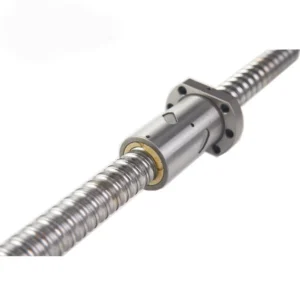
Ball Screw SCR 2010 series is a ball screw system that forms the basis of high-precision linear motion in industrial automation applications. This system converts rotational motion into linear motion with high efficiency, designed to maintain micron-level positioning accuracy, especially in high-speed and heavy-load operations. The rolling method (rolled thread) applied in the manufacturing of the screw compresses the material’s grain structure, achieving a high hardness level of 55 HRC (Rockwell C Hardness) on the surface. This hardness significantly increases the screw’s wear resistance, delays surface fatigue, and extends its operational life even under demanding working conditions, thus ensuring uninterrupted and reliable performance in production lines requiring continuous operation. The screw’s geometric precision and surface quality ensure low-friction movement of the balls, while directly contributing to the system’s overall efficiency and thermal stability.
The SCR 2010 series exhibits mechanical compatibility with SFUR series flanged nuts and functions as a reliable drive element in motion systems supported by linear bearings. The four rows of balls (recirculating balls) within the nut mechanism maximize axial force resistance, offering stable and repeatable motion capability even under high static and dynamic loads. This multi-row ball arrangement optimizes load distribution, reducing stress on the contact surfaces of the balls and the screw, thereby extending the system’s fatigue life. Furthermore, seals integrated into both sides of the steel nuts prevent dust, dirt, and other particles from the working environment from entering the internal mechanism, preserving the cleanliness of the ball tracks and the integrity of lubrication. This protective mechanism ensures the system’s precision and long-term performance. The 10mm pitch option allows for direct integration with various drive elements such as servo motors, stepper motors, and geared motors, providing flexibility and adaptability across a wide range of industrial applications.
Ball Screw SCR 2010 Advantages
High Axial Load Capacity: The four-row ball design within the nut allows the load to be distributed over multiple contact points, enabling it to withstand much higher axial forces compared to single or double-row systems. This structural feature maintains the system’s rigidity and stability even under heavy workloads while minimizing localized stresses on the ball and screw surfaces. Consequently, the fatigue life of the ball screw is extended, and positioning accuracy is maintained even under dynamic loads, increasing system reliability for applications where repeatability is critical.
Superior Positioning Accuracy: The geometric accuracy of the screw, precisely manufactured using the rolling method, and the optimized 10mm pitch provide high-resolution linear motion. The C7 accuracy class guarantees that the total lead error over a specific length and periodic pitch variations are within industrial standards. These technical specifications offer micron-level positioning accuracy and excellent repeatability even at high speeds, exhibiting performance that directly impacts the final product quality in critical applications such as CNC machining, measurement, and assembly systems.
Maximum Durability and Long Operational Life: The 55 HRC hardness achieved through the rolling process on the screw surface significantly increases wear resistance and surface fatigue strength. This high hardness enhances the screw’s resistance to deformation and surface damage, especially in systems operating continuously under heavy loads. Additionally, the seals integrated into the nut prevent abrasive particles and contaminants from entering the ball tracks, preserving lubrication integrity and increasing the internal mechanism’s resistance to corrosion. This protective mechanism extends maintenance intervals, minimizes downtime, and significantly increases the product’s total operational life, thereby reducing the total cost of ownership.
Technical Specifications and Capacity
FeatureValue/Description
SeriesSCR Series
Ball Screw Diameter20 mm
Pitch10 mm (10mm of travel per full revolution of the screw)
Manufacturing MethodRolled Thread (High strength and smooth surface)
Surface Hardness55 HRC (Rockwell C Hardness – Resistance to wear and deformation)
Nut TypeSFUR Series Flanged Nut (Easy mounting and high rigidity)
Number of Ball Circuits4 Circuits (High load-carrying capacity and long life)
Protection MechanismIntegrated Seals (Protects precision by preventing dust, dirt, and particle ingress)
Accuracy ClassC7 (Common and sufficient accuracy class for industrial applications)
Maximum Axial LoadApproximately 20,000 N (May vary depending on application and mounting conditions)
Maximum SpeedApproximately 3,000 RPM (Designed for fast positioning and motion capability)
Technical Frequently Asked Questions (FAQ)
What level of positioning accuracy does the C7 accuracy class of the Ball Screw SCR 2010 provide in industrial applications?
The C7 accuracy class refers to a tolerance level defined by the ISO 3408 standard and offers sufficient and appropriate accuracy for the vast majority of industrial automation applications. This class guarantees that the total lead error over a specified measuring length and the periodic pitch variations per revolution of the screw remain within defined limits. For example, for a 300 mm long screw, the C7 class typically allows for a total lead error of around 50 micrometers (0.05 mm). This is more than sufficient accuracy for positioning workpieces or cutting tools with precision in the tenths of a millimeter in CNC machining centers, robotic systems, and automated assembly lines. In terms of repeatability, the C7 class also contributes to the sustainability of production quality by providing consistent results when returning to the same point repeatedly.
How does the 55 HRC surface hardness of the screw affect its operational life under dynamic loads?
The 55 HRC (Rockwell C Hardness) surface hardness is a critical parameter that directly and positively affects the operational life of the Ball Screw SCR 2010 under dynamic loads. This high hardness provides superior resistance to Hertzian stresses caused by the rolling contact of the balls on the screw’s surface. Harder surfaces undergo less plastic deformation and are more resistant to fatigue mechanisms such as pitting. It also increases resistance to abrasive wear, slowing down the degradation of the ball tracks over time. This extends the fatigue life of the ball screw, especially in systems operating at high speeds and loads, reduces maintenance intervals, prevents unexpected failures, and increases overall equipment effectiveness (OEE). The 55 HRC hardness is a balance point that ensures optimal wear resistance on the surface while maintaining the core strength of the screw.
What should be considered during installation and alignment to ensure optimal performance of the Ball Screw SCR 2010?
Installation and alignment processes are crucial for ensuring the optimal performance and longevity of the Ball Screw SCR 2010. Firstly, the flatness and parallelism of the screw’s and nut’s mounting surfaces are critical. Any angular or parallel misalignment between the screw’s bearing blocks and the flanged connection surface of the nut can impose unnecessary preload on the system, leading to localized stress concentration in the ball tracks and premature fatigue. The axial alignment of the screw should also be ensured in the connection with the drive motor via a coupling; although the coupling’s flexibility can tolerate a certain amount of misalignment, excessive misalignment leads to vibrations, noise, and energy loss. Furthermore, tightening the nut’s flange according to the specified torque values ensures a rigid connection, improving the system’s dynamic response. Adhering to cleanliness protocols during installation and avoiding damage to the screw surface are also essential for maintaining the effectiveness of the integrated seals and the system’s resistance to contamination.
How do the integrated seals affect the maintenance intervals and environmental resistance of the Ball Screw SCR 2010?
The seals integrated into the Ball Screw SCR 2010 nut have a direct and significant impact on the system’s maintenance intervals and environmental resistance. These seals isolate the ball tracks and lubricant inside the nut from the external environment, preventing dust, chips, moisture, and other abrasive particles from entering the internal mechanism. The ingress of external factors into the ball tracks accelerates wear on the contact surfaces between the balls and the screw, increases friction, and causes the lubricant film to degrade. Integrated seals prevent such contamination, allowing the lubricant to maintain its effectiveness for a longer period, thereby reducing the need for re-lubrication. This extends maintenance intervals and increases the system’s overall operational life. Furthermore, it offers superior resistance to environmental factors and minimizes the risk of failure, even in harsh industrial environments, by maintaining the system’s precision and performance.
With 16 years of experience, Mermak serves industrial automation needs from its factory and warehouse in Ankara Uzay Sanayi. Our website displays up-to-date stock quantities and prices. Stocked products are dispatched directly from our warehouse, eliminating production waiting times. We ensure careful packaging, meticulous invoice and document follow-up, and collaborate with reliable logistics partners. The Mermak team actively monitors the shipment process. Upon request, product videos and factory tours can be arranged via WhatsApp or our contact channels. We proudly supply to the United Kingdom, United States, Canada, Australia, Ireland, New Zealand, and South Africa, alongside similar countries and international markets.
| Dimensions | |
|---|---|
| Shaft Diameter | 20 mm |
| Pitch | 10 mm Pitch |
You must be logged in to post a review.
Taksit Tablosu
Related Products
 %7 DiscountBall Screw SCR 2510Original price was: 38.68$.36.16$Current price is: 36.16$.View
 %64 DiscountBall Screw SCR 4010Original price was: 77.56$.27.84$Current price is: 27.84$.View
 %33 DiscountBall Screw SCR 1610Original price was: 54.00$.36.16$Current price is: 36.16$.View
Reviews
There are no reviews yet.