
No products in the cart.
%27 Discount


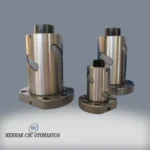
2010 Ball Screw Nut | Sfu Nut
Original price was: 33.60$.24.53$Current price is: 24.53$.
SFUR Series Ball Screw Nut, 20mm Nominal Diameter, 10mm Lead.
In stock
🔥 Special for Today Only %27 Discount Opportunity!📦 Category: 10 mm Pitch Ball Screw Nuts🏷️ Shaft Diameter: 20 mm🏷️ Pitch: 10 mm Pitch🏷️ Ball Screw Series: SFU2010
Mermak assuranceFrom factory to end user · importer / main dealer · strong stock
ImporterMain dealer / distributorStrong stockGood priceCorporate invoice
In stock / available to order · 14-day return for standard unused products; conditions may vary for custom size/cut products.
2010 Ball Screw Nut | Sfu Nut
INDUSTRIAL AUTOMATION PARTS | SUPERIOR PERFORMANCE SERIES
Detailed Product Review
The 2010 Ball Screw Nut, as a critical component of the SFUR series ball screw systems, is a mechanical drive element designed to convert rotational motion into linear motion with high precision. This nut integrates with a ball screw of nominal 20mm diameter and 10mm lead, ensuring that for every full revolution of the ball screw, the nut advances axially by 10mm. Its operating principle relies on steel balls, precisely fitted into helical grooves within the nut and matching grooves on the ball screw, rolling along these paths as the screw rotates. The balls are continuously recirculated to the loading zone via a specially designed return mechanism within the nut, creating a continuous and low-friction motion cycle. This rolling motion offers a significantly lower coefficient of friction compared to traditional sliding friction systems, minimizing the torque required for driving and increasing system efficiency. This low friction also reduces heat generation and delays wear, contributing to the system’s longevity and stable operation.
The product is constructed from high-strength alloy steel, with the ball screw surface formed by the rolling method and heat-treated to achieve a hardness of 55 HRC. This high surface hardness enhances wear resistance, ensuring the system maintains its performance even under dynamic loads. The 2010 Ball Screw Nut can be integrated directly or via couplings with various rotary drive elements such as servo motors, stepper motors, or geared motors. This integration precisely converts the motor’s rotational movement into linear displacement, fulfilling positioning tasks in automation systems. The flanged design of the nut allows for easy and secure mounting to the moving part; it is fastened using bolts through the flange surface, establishing a rigid connection between the nut body and the moving mechanism. These types of ball screw nuts are used in a wide range of applications requiring high precision, load-carrying capacity, and durability, including CNC machines, robotic arms, precision measuring instruments, semiconductor manufacturing equipment, medical devices, and general industrial automation lines.
Advantages of the 2010 Ball Screw Nut | Sfu Nut
High Axial Load Capacity and Rigidity: The 2010 Ball Screw Nut, with its internal structure featuring 4 rows of ball circuits, distributes axial loads over a large contact area through numerous balls, offering superior load-carrying capacity compared to conventional screw systems. This multi-row ball configuration minimizes nut deformation even under dynamic and static loads, increasing the overall rigidity of the system. High rigidity is a critical engineering parameter that directly impacts machining accuracy and machine stability, especially under heavy processing conditions or high-acceleration movements. This design also allows for preloading to minimize or eliminate system backlash, providing superior performance in applications requiring precise positioning.
Superior Positioning Accuracy and Repeatability: The rolling friction, which is the fundamental operating principle of ball screw nuts, eliminates the “stick-slip” phenomenon seen in sliding friction systems. This enables very smooth and stable motion, even at low speeds, allowing for micron-level positioning accuracy. The 10mm lead of the 2010 Ball Screw Nut precisely defines the linear movement for each motor revolution, creating an ideal basis for high-resolution position control. The rolling method used for manufacturing the ball screw and the precise tolerances of the ball grooves within the nut minimize mechanical clearances, guaranteeing positioning repeatability even during prolonged operation. This feature is of critical importance in automation and robotics applications.
Long Service Life and Low Maintenance Requirement: The longevity of ball screw systems is achieved through a combination of high-quality material selection and optimized design features. The 55 HRC surface hardness of the ball screw significantly reduces wear on the ball raceways and extends fatigue life. Furthermore, integrated seals on both sides of the nut prevent dust, chips, moisture, and other particles from the operating environment from entering the nut, protecting the internal mechanism. These sealing elements prevent contamination of the balls and raceways, preserve the effectiveness of the lubricant, and prevent premature failures caused by abrasive particles. Consequently, regular maintenance intervals are extended, downtime is reduced, and overall equipment effectiveness (OEE) is increased by lowering operational costs.
Technical Specifications and Capacity
Feature
Value/Description
Product Series
SFUR Series
Nominal Diameter x Lead
20mm x 10mm
Ball Screw Manufacturing Method
Rolling Method
Ball Screw Surface Hardness
55 HRC
Sealing Elements
Double-Sided Seal
Number of Ball Circuits
4 Rows
Product Barcode Number
8692024003147
Technical Frequently Asked Questions (FAQ)
What critical effects do the nominal diameter and lead of the 2010 ball screw nut have on system performance?
The nominal diameter of the 2010 ball screw nut, 20mm, is a parameter that directly affects the bending rigidity and critical speed of the ball screw. Larger diameter screws offer higher bending rigidity, showing less deflection over longer unsupported spans or under higher axial loads. This increases positioning accuracy and system stability, especially in long-stroke applications. The lead value, 10mm, determines the linear speed and positioning resolution of the system. An advancement of 10mm per motor revolution provides a suitable ratio for high-speed movements while establishing a direct relationship between the motor’s angular resolution and linear resolution. A larger lead means higher linear speed for the same motor revolution, while a smaller lead allows for finer positioning steps. The combination of 20mm diameter and 10mm lead offers a balanced performance between sufficient load capacity and rigidity, and high-speed, precise positioning.
How does the 4-row ball circuit configuration in SFUR series ball screw nuts optimize axial load capacity and rigidity?
The integrated 4-row ball circuit configuration in SFUR series ball screw nuts is a fundamental engineering principle for significantly increasing axial load capacity and system rigidity. This design allows the load to be distributed over more balls and a larger contact area. Each ball circuit shares the load between the ball screw and the nut, reducing the unit pressure on the balls compared to single or double-row designs. This extends the fatigue life of the balls and raceways while increasing the system’s dynamic and static load-carrying capacity. Furthermore, increased ball-raceway contact enhances the system’s resistance to axial deformation, thereby increasing rigidity. High rigidity directly improves machining accuracy and machine performance by minimizing unwanted deflections and vibrations, especially in applications where cutting forces or external loads are significant. This multi-row design also makes the application of preloading more effective, allowing for complete elimination of backlash and more stable system operation.
What are the negative impacts of dust and external factors on the performance of ball screw and ball screw nut systems, and how does the integrated seal structure of the 2010 ball screw nut protect against these effects?
Dust, chips, metal particles, moisture, and other environmental contaminants can severely negatively impact the performance of ball screw and ball screw nut systems. These particles can enter the ball raceways, causing abrasive wear, leading to surface damage, increased friction, overheating, and ultimately premature failure. Additionally, contaminants can degrade the properties of the lubricant, reducing its effectiveness and promoting corrosion. The integrated seal structure on both sides of the 2010 ball screw nut acts as a critical barrier against these external factors. The seals physically isolate the nut’s internal mechanism, preventing contaminants from reaching the ball grooves and lubrication area. This preserves the cleanliness of the internal components and the integrity of the lubricant, keeping wear and friction at a minimum. The seals also prevent lubricant leakage to the outside of the nut, allowing the system to operate under optimal lubrication conditions for longer periods and extending maintenance intervals. This integrated protection directly enhances the reliability and lifespan of the system, especially for machines operating in harsh industrial environments.
What engineering principles and design features enable the 2010 ball screw nut to maintain its precision even at high speeds?
The ability of the 2010 ball screw nut to maintain its precision even at high speeds is achieved through a combination of advanced engineering principles and design features. Firstly, the inherently low friction coefficient of ball screw systems ensures minimal heat generation even at high speeds. While excessive heat generated at high speeds in traditional sliding friction systems can lead to thermal expansion and subsequent loss of accuracy, ball screw nuts minimize this effect. Secondly, the rolling method used for manufacturing the ball screw and its 55 HRC surface hardness provide superior resistance to dynamic loads and wear that may occur at high speeds. This ensures that the geometry and surface quality of the ball raceways do not degrade over time, contributing to the preservation of long-term accuracy. Thirdly, the optimized design of the ball recirculation mechanism within the nut guarantees smooth and regular circulation of the balls even at high speeds, which reduces vibration and noise, ensuring stable motion. Finally, the dynamic balance of the system is designed to prevent the ball screw and nut from generating resonance or vibration at high speeds, which is a critical factor in maintaining positioning accuracy.
| Dimensions | |
|---|---|
| Shaft Diameter | 20 mm |
| Pitch | 10 mm Pitch |
| Ball Screw Series | SFU2010 |
You must be logged in to post a review.
Taksit Tablosu
Related Products
 %32 Discount3205 Ball Screw Nut | SFU NutOriginal price was: 48.00$.32.56$Current price is: 32.56$.View
 Ball Screw SCR 201024.19$View
 %43 Discount1610 Ball Screw Nut | SFU NutOriginal price was: 39.60$.22.60$Current price is: 22.60$.View
Reviews
There are no reviews yet.