
No products in the cart.
%47 Discount


40×80 Sigma Profile 8 Channel Light Duty Wholesale
Original price was: 34.46$.18.38$Current price is: 18.38$.
Modular aluminum profile system for industrial automation and machine construction. Optimized for applications with lower static and dynamic loads.
In stock
🔥 Special for Today Only %47 Discount Opportunity!📦 Category: Sensors and Switches🏷️ Dimensions: 40 mm🏷️ Slot Size: 8 Slots🏷️ Profile Size: 40x80
Mermak assuranceFrom factory to end user · importer / main dealer · strong stock
ImporterMain dealer / distributorStrong stockGood priceCorporate invoice
In stock / available to order · 14-day return for standard unused products; conditions may vary for custom size/cut products.
40×80 Sigma Profile 8 Channel Light Duty Wholesale
INDUSTRIAL AUTOMATION PARTS | SUPERIOR PERFORMANCE SERIES
Detailed Product Review
The 40×80 sigma profile is an extruded aluminum profile system designed for creating modular frame structures in industrial automation systems and machine construction. This specific “light duty” variant is optimized for applications where static and dynamic loads are lower, or where total system weight is a critical engineering parameter. The profile features a rectangular cross-section measuring 40 mm in width and 80 mm in height, with a total of 8 standard 8 mm T-slot channels across its four surfaces. These channels allow for the quick and precise mounting of various fasteners, nuts, and accessories, enabling the integration of other profile elements, panels, sensors, or actuators. The T-slot system offers high flexibility and adjustability in component positioning, accelerating prototyping processes and allowing for easy adaptation to production line changes. The internal structure of the profile is designed with a lattice structure optimized to minimize weight while maintaining sufficient torsional and bending rigidity, making it ideal for lightweight yet structurally sound solutions.
This sigma profile is manufactured from high-quality 6063-T5 aluminum alloy. The 6063-T5 alloy is a magnesium and silicon alloy offering excellent extrudability, good weldability, and high corrosion resistance. The profile’s surface is finished with natural anodization. This process creates a controlled oxide layer on the aluminum surface, enhancing the material’s wear resistance, corrosion resistance, and electrical insulation properties, while also providing an aesthetic finish. The 40×80 light duty sigma profile can be used in a wide range of applications, including chassis for industrial automation cells, supporting structures for conveyor systems, frames for testing and calibration equipment, ergonomic workstations, machine enclosures, and protective barriers. Its standard 8 mm T-slot channels ensure full compatibility with a wide array of commercially available fasteners, hinges, covers, and panel holders, simplifying system integration and minimizing the need for custom parts. The lightweight nature of the profile facilitates assembly and disassembly processes while also contributing positively to the overall energy consumption of the system.
Advantages of 40×80 Sigma Profile 8 Channel Light Duty Wholesale
High Structural Modularity and Configuration Flexibility: This profile system offers a modular structure that allows components to be freely positioned and adjusted along the T-slot channels. This feature enables rapid prototyping in engineering design processes, significantly reducing the time required to transform conceptual designs into physical models. It demonstrates high flexibility for revisions and adaptations in production lines or test setups; system components can be easily added, removed, or repositioned without the need for complete disassembly of the existing structure. This increases operational efficiency while reducing the cost and time of engineering changes, thus maximizing the system’s adaptability throughout its lifecycle.
Optimized Strength-to-Weight Ratio: Thanks to its specific internal geometry, the 40×80 light duty sigma profile has a lower mass density compared to standard profiles, yet it retains critical structural rigidity and strength characteristics. This optimization enhances the overall dynamic performance of the system, particularly in applications such as robotic systems or high-speed conveyor systems where dynamic loads and inertial forces are significant. The low weight reduces labor costs and physical strain during system transportation and assembly, while also minimizing energy consumption when the system needs to be moved or repositioned. This offers a significant technical advantage, especially for modern industrial facilities where energy efficiency and operational agility are paramount.
Extensive Accessory and Fastener Compatibility: The profile’s 8 mm standard T-slot channels ensure full compatibility with a wide range of fasteners and accessories commonly used in the industrial automation sector. This allows for easy integration of components such as T-nuts (hammer nuts, spring nuts), corner connectors (angle brackets), hinges, covers, casters, leveling feet, and panel holders. This broad accessory ecosystem enables engineers and designers to create complex and functional structures using standard components without the need for custom fabrication or complex machining processes. It also provides integrated solutions for cable management, pneumatic lines, and sensor mounting, contributing to a neat, aesthetic, and functional system design, thereby enhancing overall system reliability and ease of maintenance.
Technical Specifications and Capacity
Feature Value/Description
Profile Size 40×80 mm (Width x Height)
Channel Count 8 Channels (T-Slot System, 4 surfaces)
Profile Type Light Duty, optimized internal geometry
Material High-Quality Anodized Aluminum Alloy (6063-T5)
Weight per Meter Approx. 2.20 kg/m (Optimized nominal value for light duty)
Surface Treatment Natural Anodization, provides corrosion and wear resistance
Channel Width 8 mm (Compatible with industrial standard T-Slot accessories)
Technical Frequently Asked Questions (FAQ)
How does the “light duty” designation of the 40×80 light duty sigma profile affect its structural rigidity and load-bearing capacity?
The “light duty” designation indicates that the internal geometry of the profile has been optimized using less material compared to a standard profile of the same external dimensions. This optimization may result in a slight reduction in the profile’s cross-sectional area and, consequently, its moment of inertia. However, the design process ensures that the profile maintains sufficient critical torsional and bending rigidity for most industrial automation applications. The load-bearing capacity depends not only on the profile’s cross-sectional properties but also on factors such as the type of fasteners used, the point of load application, the support span, and the maximum allowable deflection. Light duty profiles are preferred in applications where dynamic loads are lower or where weight is a critical design constraint (e.g., robotic arm extensions, light conveyor chassis, portable test equipment). For systems operating under high static or dynamic loads, it may be necessary to use standard or heavy-duty profiles with higher moments of inertia, or to support light duty profiles with shorter spans. It is recommended to verify the load capacity through finite element analysis (FEA) or structural calculations for each specific application.
What are the technical advantages of anodization (anodizing) surface treatment, and how does it contribute to the profile’s lifespan?
Anodization is a process that thickens and hardens the natural oxide layer on the aluminum surface through a controlled electrochemical treatment. This process significantly contributes to the profile’s technical performance and lifespan. Its primary advantage is enhanced corrosion resistance; the anodized layer strengthens the aluminum’s resistance to environmental factors (moisture, chemicals, salty environments), preventing rust and oxidation. Secondly, it increases surface hardness, making the profile more resistant to scratches, abrasion, and impacts, which is crucial in applications with moving parts or frequent contact. Thirdly, the anodized layer is electrically insulating, allowing the profile to be used in the assembly of electrical and electronic components and reducing the risk of unwanted short circuits. Finally, the anodization process improves the aesthetic appearance of the profile and facilitates surface cleaning. The combination of these properties ensures that the profile functions reliably and without issues for many years, even in harsh industrial environments, significantly extending its overall service life and reducing maintenance costs.
What industrial standards do the 8 mm T-slot channels of the 40×80 sigma profile comply with, and how does this compatibility affect system integration?
The 8 mm T-slot channels of the 40×80 sigma profile comply with a widely accepted standard for industrial aluminum profile systems in Europe and globally. This standard enables the use of fasteners and accessories compatible with profiles commonly referred to as “8 series” or “40 series.” The channel width of 8 mm and a depth of approximately 12 mm allow for the secure and robust placement of standard fasteners such as T-nuts, hammer nuts, spring nuts, and various connecting plates. This broad compatibility offers critical advantages for system integration: Firstly, it allows engineers and designers to use components from different manufacturers within a single system, increasing supply chain flexibility and reducing costs. Secondly, it ensures that new profiles and accessories can be easily integrated when expanding or modifying existing systems, thereby enhancing the system’s adaptability throughout its lifecycle. Thirdly, it simplifies design and assembly processes by minimizing the need for custom fabrication or modifications, which shortens project timelines and reduces engineering errors.
What are the cutting and machining tolerances and pre-assembly preparation processes for standard 6000 mm length profiles?
40×80 sigma profiles in standard 6000 mm lengths are typically manufactured within specific tolerances after extrusion. Dimensional tolerances generally comply with industrial standards such as DIN EN 12020-2 or similar, with length tolerances ranging from ±1 mm to ±3 mm, while cross-section dimensions and perpendicularity have tighter tolerances (e.g., ±0.15 mm). Pre-assembly preparation processes are shaped according to project requirements. Cutting the profile to the desired length should be done using a precision saw (e.g., a carbide-tipped saw designed for aluminum). Deburring after cutting is mandatory for proper fastener seating and workplace safety. Some applications may require threading (tapping) or drilling operations on the profile ends; appropriate cutting fluids and tool speeds should be selected for these processes. Especially for high-precision connections, it is important to check the squareness and flatness of the profile ends. During assembly, ensure that T-nuts and other fasteners are correctly inserted into the channels and tightened according to torque specifications. These detailed preparation and assembly processes directly impact the system’s final structural integrity, precision, and longevity.
| Dimensions | 40 mm |
|---|---|
| Slot Size | 8 Slots |
| Profile Size | 40x80 |
You must be logged in to post a review.
Taksit Tablosu
Related Products
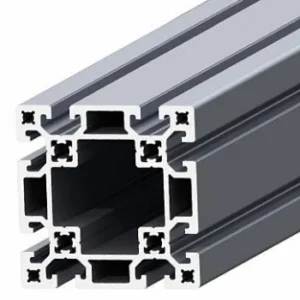 %47 Discount80x80 Sigma Profile 8 Channel Heavy Duty WholesaleOriginal price was: 88.50$.47.20$Current price is: 47.20$.View
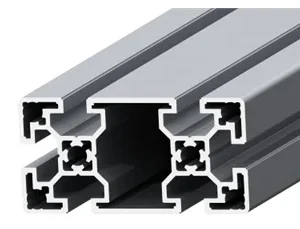 %47 Discount40x80 Sigma Profile 10 Channel Light Duty WholesaleOriginal price was: 37.25$.19.87$Current price is: 19.87$.View
 %47 Discount15x120 Surface Coated Sigma Profile 8 Channel WholesaleOriginal price was: 40.61$.21.66$Current price is: 21.66$.View
Reviews
There are no reviews yet.