
No products in the cart.
%47 Discount


15×120 Surface Coated Sigma Profile 8 Channel Wholesale
Original price was: 40.61$.21.66$Current price is: 21.66$.
High-strength extruded aluminum profile for industrial automation systems, machine frames, and structural applications. Features 8 integrated T-slots for versatile component mounting.
In stock
🔥 Special for Today Only %47 Discount Opportunity!📦 Category: Sensors and Switches🏷️ Dimensions: 15 mm🏷️ Slot Size: 8 Slots🏷️ Profile Size: 15x120
Mermak assuranceFrom factory to end user · importer / main dealer · strong stock
ImporterMain dealer / distributorStrong stockGood priceCorporate invoice
In stock / available to order · 14-day return for standard unused products; conditions may vary for custom size/cut products.
The 15×120 Surface Coated Sigma Profile 8 Channel, offered by Mermak CNC Technology Market, is a high-strength extruded aluminum profile element designed for the construction of industrial structural systems. This profile has a rectangular cross-section measuring 15 mm in width and 120 mm in height. This geometric configuration provides a high moment of inertia, particularly against bending and torsional moments, offering superior structural rigidity and stability under dynamic and static loads. The primary function of the profile is to serve as a load-bearing and supporting frame element in applications such as machine skeletons, automation cells, conveyor systems, and test benches. The integrated eight T-channels allow for versatile and precise mounting of standard fasteners and accessories, offering design engineers a wide range of modularity and configuration flexibility. These channels enable micrometer adjustments in component positioning, enhancing the precision and adaptability of the systems.
The material structure of the product is obtained by processing a high-strength aluminum alloy using the extrusion method. This production process ensures that the material has a homogeneous microstructure and exhibits consistent mechanical properties throughout the cross-section. The natural corrosion resistance of aluminum is further enhanced by a special surface coating, which increases the profile’s resistance to corrosive chemicals, moisture, and mechanical wear, ensuring long-lasting and maintenance-free use in industrial environments. In terms of system integration, the T-channels are fully compatible with a wide range of industrial components such as T-nuts, corner connectors, panel holders, and linear motion systems. This allows it to be used as a fundamental structural element in various engineering projects, including complex automation systems, robotic workstations, cleanroom equipment, and ergonomic workstations. The modular structure of the profile allows for rapid prototyping, easy modification, and optimization for future expansions.
Advantages of the 15×120 Surface Coated Sigma Profile 8 Channel Wholesale
High Moment of Inertia and Bending Rigidity: The 15×120 mm rectangular cross-section geometry maximizes the second moments of inertia (area moments of inertia) of the profile around both the X and Y axes. This provides superior resistance to bending deformation, especially in structural elements operating under long spans or high static and dynamic loads. High bending rigidity is critical for maintaining positioning accuracy in precision automation systems, enhancing vibration damping, and safely supporting heavy equipment. This feature minimizes deflection, increasing the overall stability and operational reliability of the system, thus allowing for wider spans with fewer support points in engineering designs.
Enhanced Surface Protection and Chemical Resistance: The special surface coating of the profile reinforces the natural properties of the extruded aluminum alloy, creating an increased barrier against environmental factors. This coating increases the surface hardness of the profile, enhancing its resistance to scratches and abrasion, making it more durable against mechanical impacts and friction commonly encountered in industrial environments. Furthermore, this special treatment significantly increases the profile’s resistance to corrosion from chemical substances such as industrial oils, cooling fluids, cleaning agents, and mild acidic/basic solutions. This preserves the aesthetic appearance and structural integrity of the profile throughout its long operational life, reduces maintenance costs, and enhances the overall durability of the system.
Eight-Channel Structural Modularity and Connection Flexibility: The profile’s eight integrated T-channel structure offers unique modularity and connection flexibility, ensuring full compatibility with industrial T-slot standards. These channels allow a wide range of accessories, such as standard T-nuts, corner connectors, hinges, door locks, linear guides, and panel holders, to be quickly and securely mounted onto any surface of the profile. This modular design allows for the easy construction of complex 3D structures, rapid modification, or expansion of existing systems. Additionally, the precise adjustability of component positions speeds up prototyping processes and increases manufacturing flexibility. The channels can also be used for cable management, contributing to the system’s organized and safe operation.
Technical Specifications and Capacity
Feature
Value/Description
Profile Cross-Section Dimensions
15 mm (width) x 120 mm (height)
Channel Configuration
8 integrated T-channels (Industrial T-slot standard)
Material Standard
High-strength extruded aluminum alloy (e.g., 6063-T5 or equivalent)
Surface Treatment
Special surface coating (Increased resistance to wear, scratches, and industrial chemicals)
Minimum Order Quantity
60 meters (in 10 pieces of 6-meter lengths)
Application Areas
Industrial automation, machine frames, conveyor systems, test and measurement benches, robotic cells, cleanroom equipment
Technical Frequently Asked Questions (FAQ)
What engineering advantages do the 15x120mm cross-section dimensions of this profile offer in terms of structural rigidity and load-bearing capacity?
The 15x120mm cross-section dimensions allow the profile to achieve a high second moment of inertia (I) value, particularly along its longer axis (120mm). According to Euler-Bernoulli beam theory, this increases the profile’s resistance to bending deformation, as seen in the formulas for bending stresses (σ = My/I) and deflection (δ = PL³/48EI). A higher moment of inertia means less deflection and lower stresses under the same load, enabling the profile to carry heavier loads or be used over longer spans. Especially in systems operating under dynamic loads or requiring precise positioning, high rigidity significantly enhances system stability and operational accuracy by reducing vibration amplitude. This geometric optimization aims to optimize material usage in engineering designs without compromising structural performance.
How is the performance and lifespan of the special surface coating on this profile technically explained in industrial environments?
The special surface coating on the profile is typically an oxide layer formed through anodization or a similar electrochemical process, creating a controlled oxide layer on the aluminum surface. This layer is much thicker, harder, and denser than the natural oxide layer of aluminum. Technically, this coating increases the profile’s wear resistance, reduces the coefficient of friction, and enhances the surface’s resistance to mechanical damage. In terms of chemical resistance, this inert oxide layer prevents direct contact of the profile with corrosive substances such as industrial oils, cutting fluids, cleaning chemicals, and mild acidic/basic solutions, minimizing galvanic corrosion and chemical degradation. Consequently, the surface quality and structural integrity of the profile are maintained for many years, even in industrial environments exposed to moisture, dirt, or chemical vapors, reducing maintenance needs and extending the overall service life of the system.
What are the engineering impacts of the eight integrated T-channels on modular system integration and design flexibility?
The eight integrated T-channels provide multiple connection points on the profile’s four main surfaces (two wide, two narrow), offering a standardized mounting interface in industrial automation systems. These channels, via T-nuts and associated fasteners, allow components to be mounted directly and adjustably onto the profile without requiring any drilling or welding. From an engineering perspective, this increases design flexibility as component positions can be adjusted with millimeter precision and easily changed if the system needs to be reconfigured or expanded. Furthermore, the channels help in concealing cables and pneumatic lines within the profile for a tidy appearance and increased safety. This modular structure shortens prototyping times, reduces assembly costs, and enables the rapid and efficient construction of complex 3D frames, enclosures, or workstations.
What critical properties does the production of this sigma profile from high-strength extruded aluminum alloy provide from a materials science perspective?
High-strength extruded aluminum alloy offers a range of critical properties from a materials science perspective. The extrusion process ensures that the alloy has a homogeneous grain structure and precise dimensional tolerances, leading to consistent mechanical properties throughout the profile’s cross-section. The aluminum alloy used (typically 6000 series, e.g., 6063-T5) possesses properties such as high tensile strength (approx. 200-250 MPa), yield strength (approx. 150-200 MPa), and a modulus of elasticity (approx. 69 GPa). These mechanical properties allow the profile to withstand high static and dynamic loads without deforming. Additionally, aluminum’s low density (approx. 2.7 g/cm³) offers a superior strength-to-weight ratio compared to steel, enabling the creation of lightweight yet robust structures. This is a significant advantage, especially in the design of moving parts or portable systems, for energy efficiency and ergonomics. Furthermore, aluminum alloys have good fatigue resistance and thermal conductivity, which enhances the profile’s reliability under long-term cyclic loads and in environments with temperature variations.
Mermak CNC Technology Market, with 16 years of experience, supplies high-quality industrial automation components from its factory and warehouse in Ankara. We ensure that stock quantities and prices on our website are up-to-date. Stocked products are dispatched directly from our warehouse, eliminating production waiting times. We provide careful packaging, meticulous invoice and document follow-up, and utilize reliable logistics partners. The Mermak team closely monitors the shipment process. Upon request, we can arrange product videos or factory viewings via WhatsApp or other contact channels. We proudly serve clients in the United Kingdom, United States, Canada, Australia, Ireland, New Zealand, South Africa, and similar countries and international markets, providing robust solutions for your industrial needs.
| Dimensions | 15 mm |
|---|---|
| Slot Size | 8 Slots |
| Profile Size | 15x120 |
You must be logged in to post a review.
Taksit Tablosu
Related Products
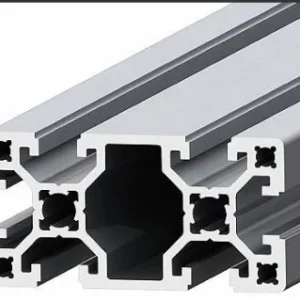 %47 Discount40x80 Sigma Profile 10 Channel Heavy Duty WholesaleOriginal price was: 50.68$.27.02$Current price is: 27.02$.View
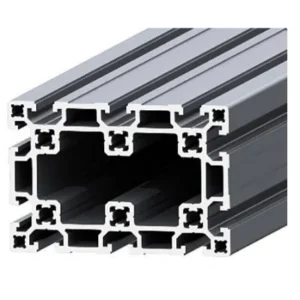 %47 Discount90x135 Sigma Profile Channel 10 WholesaleOriginal price was: 172.73$.92.12$Current price is: 92.12$.View
 %47 Discount45x45 Sigma Profile 10 Channel Standard Type WholesaleOriginal price was: 30.52$.16.27$Current price is: 16.27$.View
Reviews
There are no reviews yet.