
No products in the cart.
%47 Discount

40×80 Sigma Profile 10 Channel Light Duty Wholesale
Original price was: 37.25$.19.87$Current price is: 19.87$.
High-strength, modular aluminum extrusion profile for industrial automation systems. Features 10 integrated T-slots for versatile connections.
In stock
🔥 Special for Today Only %47 Discount Opportunity!📦 Category: Sensors and Switches🏷️ Dimensions: 40 mm🏷️ Slot Size: 10 Slots🏷️ Profile Size: 40x80
Mermak assuranceFrom factory to end user · importer / main dealer · strong stock
ImporterMain dealer / distributorStrong stockGood priceCorporate invoice
In stock / available to order · 14-day return for standard unused products; conditions may vary for custom size/cut products.
40×80 Sigma Profile 10 Channel Light Duty Wholesale
INDUSTRIAL AUTOMATION PARTS | SUPERIOR PERFORMANCE SERIES
Detailed Product Review
The 40×80 Sigma Profile is a high-strength, modular aluminum extrusion profile designed for creating structural frameworks in industrial automation systems. This light-duty profile is developed to provide optimal performance, especially in applications where weight restrictions are a concern or dynamic loads require precise management. Its 10 integrated T-slot channels offer versatile connection points, forming a flexible and adaptive foundation for a wide range of engineering projects, including machine frames, conveyor systems, test stands, robotic cell constructions, and linear motion systems. The profile’s cross-sectional geometry maximizes torsional and bending strength, while its light-duty nature minimizes the system’s overall inertia and energy consumption, offering a critical advantage for applications demanding high-speed and precise movements.
This sigma profile is manufactured from a high-quality extruded aluminum alloy (typically EN AW-6063 T6), which offers excellent machinability, high corrosion resistance, and superior mechanical properties. The profile’s surface has undergone an anodizing (anodized) treatment to protect against wear and environmental factors, extending the product’s lifespan in industrial settings. The 10mm wide T-slot channels ensure full compatibility with standard fasteners and T-nuts commonly available on the market, allowing for quick and error-free integration of complex systems. This modular design accelerates prototyping processes, simplifies system adaptation, and provides ample flexibility for future modifications. Designed for wholesale buyers, manufacturers, and system integrators, this product offers economies of scale while ensuring a reliable solution compliant with Mermak CNC’s quality standards. Mermak CNC has 16 years of experience, operating from our Ankara Uzay Sanayi factory/warehouse. Our website stock quantities and prices are up-to-date. Stocked products are dispatched directly from our warehouse, eliminating production waiting times. We ensure careful packaging, meticulous invoice and document follow-up, and utilize reliable logistics partners. The Mermak team monitors the shipment process closely. Product videos or factory viewings can be arranged via WhatsApp or our contact channels upon request. We supply to the United Kingdom, United States, Canada, Australia, Ireland, New Zealand, South Africa, and similar countries/international markets.
Advantages of 40×80 Sigma Profile 10 Channel Light Duty Wholesale
Modular Design and Adaptability: The 10 T-slot channels provide multiple connection points on each surface of the profile, allowing for flexible mounting of system components (sensors, actuators, cable trays, pneumatic lines) in three dimensions. This design enables rapid changes in production lines, easy reconfiguration of systems, and adaptation to future technological advancements with minimal engineering effort. This modularity reduces project timelines and optimizes labor costs while enhancing system sustainability throughout its lifecycle.
Optimized Strength-to-Weight Ratio: Thanks to the light-duty aluminum alloy and optimized cross-sectional geometry, this profile significantly reduces the overall system weight without compromising structural integrity. This is particularly beneficial in applications involving moving or dynamic loads (e.g., robotic arms, gantry systems), as it lowers inertia, increases energy efficiency, and allows for precise positioning at higher speeds. The lightness, combined with high torsional and bending resistance, also simplifies assembly and reduces transportation costs.
Comprehensive System Integration Capability: The standard 10mm T-slot channels ensure full compatibility with a wide range of accessories and fasteners available on the market. This means that linear guides, safety barriers, control panels, hinges, feet, and other automation components from various manufacturers can be seamlessly integrated into the profiles. This broad integration capacity enhances design freedom for engineers in complex automation projects, simplifies component sourcing, and contributes to faster system commissioning.
Technical Specifications and Capacity
Feature
Value/Description
Profile Type
Sigma Profile (T-Slot Channel)
Cross-Sectional Size (Nominal)
40mm x 80mm
Number of Channels
10 Channels
Channel Width
10 mm (Standard T-Slot)
Material
Extruded Aluminum Alloy (EN AW-6063 T6)
Surface Treatment
Anodized (Anodized)
Approximate Weight per Meter
~ 2.8 – 3.2 kg/m (Optimized light duty)
Minimum Order Quantity
60 Meters (Shipped in 10 x 6-meter lengths)
Technical Frequently Asked Questions (FAQ)
Can you provide detailed information about the mechanical properties and corrosion resistance of the aluminum alloy used in the production of the 40×80 Sigma Profile?
This sigma profile is typically produced using the extrusion method with the EN AW-6063 T6 aluminum alloy. EN AW-6063 is an aluminum-magnesium-silicon alloy known for its good extrudability, surface quality, and high corrosion resistance. The T6 heat treatment enhances the alloy’s strength, typically achieving tensile strength values of around 205 MPa (30 ksi) and yield strength of 170 MPa (25 ksi). The Brinell hardness is approximately 70 HB. This alloy naturally possesses high resistance to atmospheric corrosion. Furthermore, the anodizing treatment applied to the profile’s surface creates a protective aluminum oxide layer, further increasing corrosion resistance, providing wear resistance, and extending the profile’s service life. These properties make the profile a reliable structural element even in humid or mildly corrosive environments.
What are the typical ranges for the torsional and bending strength values of this light-duty sigma profile under static and dynamic loads, and how should these values be considered in system design?
The performance of the 40×80 sigma profile under static and dynamic loads is characterized by its cross-sectional moments of inertia (Ix, Iy) and section moduli (Wx, Wy). For a 40×80 cross-section, typical moments of inertia are approximately 13.5 cm⁴ for Ix (about the x-axis) and 54.0 cm⁴ for Iy (about the y-axis). The section moduli are approximately 6.75 cm³ for Wx and 13.5 cm³ for Wy. These values directly influence the profile’s bending strength; a higher moment of inertia means less deflection. Torsional strength is related to the torsional constant (J), which is approximately 10.0 cm⁴ for this profile. In system design, stress and deflection calculations should be performed using these values, considering the maximum static and dynamic loads to be applied, the profile’s own weight, vibration frequencies, and desired deflection limits. Especially for dynamic loads, fatigue analysis and safety factors are critical for the profile’s long-term, safe operation. The light-duty feature reduces inertia, enabling faster response times and lower energy consumption in dynamic systems.
What technical advantages do the 10mm T-slot channels offer in integrating various automation components (e.g., linear guides, sensors, pneumatic cylinders), and how should fasteners be selected?
The 10mm T-slot channels offer superior flexibility and precision in integrating automation components. Technical advantages include the ability to easily position and adjust components at any point along the profile without requiring permanent processes like drilling or welding. This modularity allows for rapid changes during prototyping and easy optimization of production line configurations. Components such as sensors, actuators, pneumatic cylinders, and linear guides can be directly mounted into the channels using T-nuts (hammer head, drop-in, or standard) and appropriate bolts. Fastener selection should be based on the applied load, ease of installation, and aesthetic requirements. For instance, hammer head T-nuts are preferred for applications requiring high load-bearing capacity, while drop-in T-nuts offer easier installation when adding components to an existing structure. Additionally, the channels can be used to conceal cables and pneumatic lines, creating a tidier and safer working environment.
What are the technical effects of the anodized surface treatment on the profile’s performance and lifespan, and in which environmental conditions does this treatment provide advantages?
Anodizing is an electrochemical process that creates a controlled oxide layer on the aluminum profile’s surface. This treatment enhances the profile’s performance and lifespan in several technical ways. Its primary effect is significantly increasing the aluminum’s natural corrosion resistance; the resulting oxide layer makes the profile more resistant to moisture, chemicals, and saline environments. Secondly, the anodized layer increases surface hardness, improving resistance to wear and scratches, making the profile more durable against mechanical damage in industrial settings. Furthermore, the anodized layer offers electrical insulation properties, which can provide an additional layer of safety when the profile is used in systems integrating electrical and electronic components. Aesthetically, it provides a smooth and uniform surface finish. These advantages ensure that the profile maintains reliable and aesthetic performance for many years, even in demanding industrial conditions such as humid production environments, areas with mild chemical vapors, or high-traffic assembly lines.
| Dimensions | 40 mm |
|---|---|
| Slot Size | 10 Slots |
| Profile Size | 40x80 |
You must be logged in to post a review.
Taksit Tablosu
Related Products
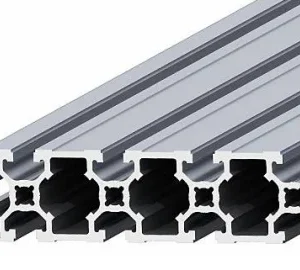 %47 Discount45x180 Sigma Profile 10 Channel BulkOriginal price was: 113.51$.60.54$Current price is: 60.54$.View
 %47 Discount90x90 Sigma Profile | 10 Channel | Heavy Duty WholesaleOriginal price was: 126.72$.67.58$Current price is: 67.58$.View
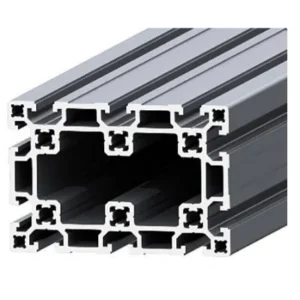 %47 Discount90x135 Sigma Profile Channel 10 WholesaleOriginal price was: 172.73$.92.12$Current price is: 92.12$.View
Reviews
There are no reviews yet.