No products in the cart.
Why Does a CNC Machine Lose Axis Position? Definitive Solutions

Contents
- Why Does a CNC Machine Lose Axis Position? Introduction and Technical Analysis At the heart of industrial automation, CNC (Computer Numerical Control) machines offer unparalleled precision and repeatability in manufacturing processes. However, a critical issue that occasionally arises and directly impacts production quality and efficiency is axis deviation or positioning error. This condition means the machine deviates from its programmed trajectory, leading to undesirable dimensional errors in the workpiece. Axis deviation not only results in scrapped parts but also causes significant delays in the production line, increased costs, and even permanent damage to machine components. This detailed field guide and technical article will examine the fundamental reasons behind axis deviation in CNC machines from a scientific and engineering perspective, then present applicable and proven solutions for industrial automation professionals to definitively resolve these issues. The aim is to provide a comprehensive diagnosis and solution methodology by addressing the mechanical, electrical, electronic, and software dimensions of the problem. Given the complex structure of CNC machines, solving problems like axis deviation requires a multidisciplinary approach that understands not just the symptoms but the root causes. This guide aims to enlighten the challenges encountered in the field, increasing the knowledge level of all relevant personnel, from operators to maintenance engineers. Why Does a CNC Machine Lose Axis Position? Operating Principle and Technical Data
- Why Does a CNC Machine Lose Axis Position? Field Considerations
- Why Does a CNC Machine Lose Axis Position? Common Problems and Solutions
- Why Does a CNC Machine Lose Axis Position? Conclusion and Expert Advice
- FAQ
Why Does a CNC Machine Lose Axis Position? Introduction and Technical Analysis
At the heart of industrial automation, CNC (Computer Numerical Control) machines offer unparalleled precision and repeatability in manufacturing processes. However, a critical issue that occasionally arises and directly impacts production quality and efficiency is axis deviation or positioning error. This condition means the machine deviates from its programmed trajectory, leading to undesirable dimensional errors in the workpiece. Axis deviation not only results in scrapped parts but also causes significant delays in the production line, increased costs, and even permanent damage to machine components. This detailed field guide and technical article will examine the fundamental reasons behind axis deviation in CNC machines from a scientific and engineering perspective, then present applicable and proven solutions for industrial automation professionals to definitively resolve these issues. The aim is to provide a comprehensive diagnosis and solution methodology by addressing the mechanical, electrical, electronic, and software dimensions of the problem. Given the complex structure of CNC machines, solving problems like axis deviation requires a multidisciplinary approach that understands not just the symptoms but the root causes. This guide aims to enlighten the challenges encountered in the field, increasing the knowledge level of all relevant personnel, from operators to maintenance engineers.
Why Does a CNC Machine Lose Axis Position? Operating Principle and Technical Data
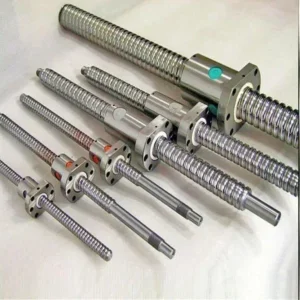
The axes of a CNC machine typically move through the integration of high-precision components such as servomotors, ball screws, linear guides, and feedback systems (encoders or linear scales). The CNC control unit processes commands from G-codes and sends signals to the servomotors to move at a specific speed and position. Servomotors usually rotate ball screws via a coupling or gearbox, which in turn provides linear motion for the machining table or tool. Feedback systems continuously report the axis’s instantaneous position to the control unit. Thanks to this closed-loop control system, the machine constantly monitors whether it has reached the programmed position and corrects deviations instantly, ensuring high precision. Axis deviation occurs as a result of an abnormality at any point in this complex loop. For example, a servomotor failing to produce the expected torque, backlash caused by wear in the ball screw, erroneous signals from the encoder, or incorrect calculations by the CNC control unit can lead to axis deviation. The correct functioning and harmony of each component are vital for the machine’s overall precision. In industrial automation, the expectation of precision at the level of thousandths of a millimeter necessitates these systems to operate flawlessly at all times. Therefore, a deep understanding of the technical specifications and potential failure modes of each component is essential to resolve axis deviation issues.
| Parameter | Value/Description |
|---|---|
| Positioning Accuracy | Typically ranges from ±0.005 mm to ±0.001 mm. Can be even lower in advanced machines. |
| Repeatability | ±0.003 mm to ±0.0005 mm. Ability to return to the same point with the same command. |
| Backlash Tolerance | Expected to be below 0.005 mm in new machines. Increases with wear. |
| Servomotor Resolution | Typically 2000-4000 ppr (pulses/revolution) for optical encoders or over 1,000,000 ppr for magnetic/absolute encoders. |
| Axis Speeds | Machining speeds 1-60 m/min, rapid traverse speeds can be over 30-100 m/min. |
| Thermal Expansion Coefficient | Approximately 11-13 µm/m°C for steel. Temperature differences can cause significant deviations in long axes. |
| Vibration Amplitude Tolerance | Generally should be below 0.05 mm/s RMS (Root Mean Square). Excessive vibration causes positioning error. |
Why Does a CNC Machine Lose Axis Position? Field Considerations
- Periodic and Comprehensive Mechanical Maintenance: Regular maintenance is fundamental to preserving the precision of CNC machines. Specifically, ball screws, linear guides, and their bearings must be continuously lubricated and kept clean. Worn or loose couplings, bearings, and fasteners lead to backlash in axis movement and consequently to positioning errors. Regular inspection of these components, adjustment of tension, and replacement when necessary play a critical role in preventing axis deviation. Visual inspections and lubrication performed before each shift or after specific operating hours can prevent major breakdowns.
- Stabilization of Environmental Conditions: CNC machines are highly sensitive to environmental factors such as temperature, humidity, and vibration. Especially in long-axis machines, thermal expansion can be a significant cause of axis deviation. Sudden or large changes in ambient temperature cause the machine’s metal structures to expand and contract, leading to dimensional deviations. Therefore, the operating area temperature must be kept within a specific range (typically 20±2°C), humidity must be controlled, and the machine must be isolated from external vibrations. Vibration can both compromise the structural integrity of the machine and cause feedback systems to generate erroneous signals.
- Health of Electrical Connections and Feedback Systems: Cabling between servomotors, drives, and encoders is vital for signal integrity. Loose connections, worn or damaged cables can lead to electrical noise (EMI) and consequently to erroneous feedback signals. Position feedback systems like encoders and linear scales are one of the most common causes of axis deviation. Dirty optical encoders, damaged magnetic strips, or faulty electronic components send incorrect position information to the control unit, causing the machine to deviate from its programmed trajectory. Regular cleaning of these components, checking the integrity of cables, and performing calibrations when necessary are essential.
- CNC Control Unit Parameters and Software Optimization: The parameters within the CNC control unit determine the machine’s motion dynamics, axis gain, acceleration and deceleration values, backlash compensation, and other critical settings. Incorrectly set or time-varying parameters can directly lead to axis deviation. For example, insufficient servo gain reduces the machine’s ability to follow commands, while excessive gain can cause vibration. Incorrect adjustment of the backlash compensation parameter causes positioning error when the axis changes direction. Periodically checking parameters, adjusting them according to the machine manufacturer’s recommendations, and following software updates are important for maintaining axis precision.
- Tool and Workpiece Clamping Quality: Axis deviation can sometimes stem not from the machine itself, but from external factors in the machining process. Factors such as improper tool clamping, worn or unbalanced tool tips, or insufficient clamping of the workpiece on the table can lead to vibration and deviations during machining, resulting in perceived axis deviation. Monitoring tool life, selecting the correct tool, optimizing cutting parameters, and reviewing workpiece clamping techniques can prevent such problems.
Why Does a CNC Machine Lose Axis Position? Common Problems and Solutions
Axis deviation in CNC machines typically arises from a combination of multiple factors. Here are common problem scenarios and their definitive solutions:
1. Mechanical Backlash and Wear:
- Problem: Wear in ball screw nuts or bearings, backlash in gearboxes, or loose/worn couplings cause positioning errors when the axis changes direction. This becomes particularly noticeable in precise contour machining or drilling operations.
- Solution:
- Mechanical Inspection and Replacement: First, all couplings, ball screw bearings, and nuts should be physically inspected, loose connections tightened, and worn parts (especially ball screw nuts and bearings) replaced.
- Backlash Compensation Adjustment: After the machine is mechanically optimized to the best possible condition, the backlash compensation parameters in the CNC control unit must be precisely adjusted. This adjustment should be done separately for each axis using precise measuring devices (e.g., laser interferometer or dial indicator).
- Lubrication: Regular and adequate lubrication of ball screw and linear guide systems delays wear and extends their lifespan.
2. Feedback System (Encoder/Linear Scale) Errors:
- Problem: Incorrect position information is transmitted to the control unit due to dirt, dust, oil accumulation on the encoder or linear scale, sensor damage, cable breaks, or electrical noise (EMI). This can cause the servomotor to go to the wrong position or to oscillate.
- Solution:
- Cleaning and Physical Inspection: Encoder discs, optical readers, and linear scale strips should be carefully cleaned, and checked for signs of damage.
- Cable Inspection and Insulation: The integrity of encoder/linear scale cables should be checked, and crushed, worn, or loose connections rectified. Ensure shielded cables are used against electrical noise and that grounding is correct.
- Signal Analysis: If necessary, test equipment like an oscilloscope should be used to check the accuracy and cleanliness of encoder signals, and faulty encoders should be replaced.
3. Servomotor or Drive Issues:
- Problem: Servomotor overheating, winding failure, brush wear (in DC motors), drive board failures, incorrectly set servo gains, or PID parameters can lead to instability or positioning error in axis movement.
- Solution:
- Drive Settings Optimization: The PID (Proportional-Integral-Derivative) parameters and gain settings of the servo drives should be re-tuned according to the machine’s dynamics. This is usually done using auto-tuning functions or by expert engineers.
- Thermal Control: Servomotor operating temperatures should be monitored, cooling systems checked if necessary, or the load on the motor reduced.
- Drive and Motor Fault Detection: Error codes on the drive should be checked, and connections between the motor and drive tested. If necessary, the motor and drive should be tested or replaced by a specialized service.
4. Thermal Expansion and Environmental Effects:
- Problem: Expansion and contraction of the machine frame or axis components (especially ball screws) due to temperature changes lead to dimensional errors, particularly during long machining times or ambient temperature fluctuations.
- Solution:
- Temperature Control: The temperature and humidity of the working environment should be kept as constant as possible, and air conditioning systems should be used effectively.
- Warm-up Procedures: Before starting operation, the machine should be run idle for a certain period to allow all axes and the spindle motor to reach their operating temperature.
- Thermal Compensation: Some advanced CNC control units have the ability to perform thermal compensation using data from temperature sensors. Correct adjustment of these parameters can reduce temperature-induced errors.
5. Control Unit or Software Errors:
- Problem: Software bugs in the CNC control unit, incorrectly set machine parameters, communication issues, or outdated software versions can negatively affect axis control.
- Solution:
- Parameter Verification: All machine parameters should be compared with the manufacturer’s original values, and deviations corrected. Backup files are crucial in this regard.
- Software Updates: The control unit software (firmware) and operating system should be updated to the manufacturer’s latest and most stable versions.
- Diagnosis and Debugging: Internal diagnostic tools of the control unit should be used to detect and resolve communication errors or software anomalies.
Why Does a CNC Machine Lose Axis Position? Conclusion and Expert Advice
Axis deviation in CNC machines is one of the most costly and time-consuming problems encountered in industrial production. However, most of these issues can be prevented or resolved with a systematic approach, regular maintenance, and correct diagnostic methods. As seen, axis deviation is not due to a single cause but can result from a combination of many factors across a wide spectrum, from mechanical wear to electrical noise, thermal effects to software errors. Therefore, when faced with an axis deviation problem, instead of making hasty decisions, it is essential to conduct a comprehensive examination covering all subsystems of the machine (mechanical, electrical, electronic, pneumatic/hydraulic, and software). Our field experience shows that to solve the problem at its root, past maintenance records, error logs, and operator observations must first be meticulously analyzed. Then, the positioning accuracy, repeatability, and backlash values of each axis should be measured using precise measuring devices (laser interferometer, dial indicator, oscilloscope, etc.). These data provide critical clues to narrow down the source of the problem. It should be remembered that preventive maintenance and operator training are the most effective ways to prevent problems like axis deviation. The diligent implementation of machine-specific maintenance programs, training operators to notice even the smallest anomalies in machine behavior, and adopting correct programming techniques are vital for production continuity and quality. With the advancements brought by Industry 4.0, sensor technologies and AI-powered predictive maintenance systems are opening new horizons in detecting and resolving potential axis deviation issues before they even occur. Investing in these technologies will increase businesses’ competitiveness in the long run and ensure maximum efficiency from CNC machines. In conclusion, to achieve the highest precision and efficiency from your CNC machines, carefully following all the steps outlined in this guide and keeping up with technological developments will be the key to your success in industrial automation.
FAQ
What exactly is axis deviation in a CNC machine?
Axis deviation in a CNC machine refers to the machine's inability to precisely follow its programmed path, leading to dimensional inaccuracies in the workpiece. This can manifest as parts being out of tolerance, inconsistent cuts, or visible shifts in machining operations.
What are the most common reasons an industrial CNC machine loses its axis position?
Common causes include mechanical wear in components like ball screws, linear guides, and couplings; issues with feedback systems such as dirty or damaged encoders; electrical problems like loose wiring or faulty servo drives; environmental factors like thermal expansion due to temperature fluctuations; and software or control unit parameter errors.
How can I effectively diagnose the root cause of axis deviation on my CNC router?
To diagnose axis deviation, start with a thorough mechanical inspection for wear and backlash. Check electrical connections and feedback signals using an oscilloscope. Review CNC control unit parameters for incorrect settings. Utilize laser interferometers or dial indicators for precise measurement of positioning accuracy and repeatability. Analyzing machine error logs and operator observations also provides crucial insights.
What are the definitive solutions for fixing axis position loss in a CNC machine?
Solutions often involve comprehensive mechanical maintenance, including replacing worn components and proper lubrication. Optimizing servo drive PID parameters and ensuring clean, shielded electrical connections are critical. Stabilizing the operating environment to control temperature and humidity, and updating CNC control unit software or adjusting thermal compensation parameters can also resolve issues.
How can I prevent axis deviation from occurring in my CNC machine?
Preventive maintenance, including regular lubrication and inspection of mechanical parts, is crucial. Ensuring stable environmental conditions, proper operator training, and periodic calibration of feedback systems can significantly reduce the risk. Investing in advanced monitoring and predictive maintenance technologies can also help detect potential issues early.