
What Happens When Linear Guides Run Without Lubrication?
📑 Table of contents (Click to open)
Linear guides are essential for precise movement in industrial automation. Running them without proper lubrication drastically increases friction, leading to heat buildup, rapid wear, loss of accuracy, noise, and eventual seizure. This significantly shortens equipment life and causes costly failures.
Practical notes for CNC router, automation and industrial motion systems.
The Critical Role of Lubrication in Linear Guides
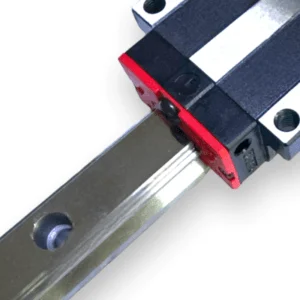
Linear guides are fundamental components in industrial automation systems, responsible for delivering precise and repeatable motion. Their core principle involves a moving block gliding along a fixed rail, typically with rolling elements like balls or rollers to minimize friction. However, for these systems to operate smoothly and efficiently, regular and correct lubrication is paramount. The absence of lubrication in linear guides, often seen as a simple maintenance oversight, can trigger a cascade of severe and irreversible consequences for the entire system.
Lubrication creates a protective film between the guide elements, preventing direct metal-to-metal contact. This film reduces friction, dissipates heat, minimizes wear, and acts as a barrier against corrosion. When lubrication is absent, this protective layer vanishes. Consequently, the coefficient of friction increases dramatically. This heightened friction converts a significant portion of kinetic energy into heat. The resulting high temperatures can cause thermal deformation and degrade the metallurgical structure of the guide components, including the rolling elements and rail surfaces. This accelerates processes like adhesive wear and fretting wear, characterized by micro-welding and subsequent material transfer on the guide surfaces.
As wear progresses, the internal clearances within the guides widen, directly impacting motion accuracy and repeatability. For applications in automation requiring sub-millimeter precision, this performance degradation is unacceptable. Furthermore, detached metal particles from worn surfaces, no longer flushed away by a lubricating film, act as an abrasive paste, exacerbating the damage. This cycle eventually leads to increased noise, elevated vibration levels, and, ultimately, seizure, rendering the guides inoperable. Such failures result in production line stoppages, expensive repairs, and significant economic losses due to unplanned downtime.
Operating Principles and Technical Data
Linear guides are broadly categorized into ball guides and roller guides. Both types facilitate linear motion by allowing a carriage to move along a rail, supported by internal rolling elements (balls or rollers). These elements bear the load while minimizing friction. Lubrication plays a vital role in this delicate interaction.
Key Functions of Lubrication:
- Friction Reduction: The lubricant forms a film between metal surfaces, preventing direct contact and lowering the friction coefficient, leading to reduced energy consumption and heat generation.
- Heat Dissipation: It absorbs and dissipates operational heat, preventing overheating of the system.
- Wear Prevention: By eliminating direct contact between rolling elements and the rail, it significantly reduces wear (adhesive, abrasive, fatigue).
- Corrosion Protection: It isolates guide surfaces from moisture and corrosive agents, preventing rust and corrosion.
- Contaminant Removal: Lubricant flow helps flush wear particles and external contaminants from the system.
In a dry linear guide, all these functions cease. The friction coefficient can increase by 10 to 100 times compared to a lubricated state, drastically reducing the guide’s lifespan and leading to premature failures. The following technical data table illustrates the critical impact of lubrication:
| Parameter | Value/Description |
|---|---|
| Lubrication Status | Adequate Lubrication / Dry Operation |
| Friction Coefficient (μ) | 0.001 – 0.005 (Lubricated) / 0.1 – 0.5 (Dry) |
| Operating Temperature Rise | Normal (5-15°C) / Excessive (Above 50°C, risk of critical deformation) |
| Expected Life (L10) | 10,000 – 100,000+ km (Lubricated) / Below 100 km (Dry, failure within hours) |
| Accuracy Loss | Minimal (µm level) / High (mm level, positioning error) |
| Noise Level | Low (40-60 dB) / High (80-100+ dB, abnormal sounds) |
| Surface Damage Type | Fatigue / Adhesive Wear, Scoring, Corrosion |
Key Considerations for Industrial Applications
- Establish a Regular and Proactive Lubrication Schedule: Maintenance plans should be meticulously developed and followed based on manufacturer recommendations. Lubrication intervals should be optimized considering operating cycles, load, speed, and environmental conditions. Usage-based schedules (operating hours, distance traveled) are often more effective than time-based ones. Automated lubrication systems significantly minimize human error and ensure consistent, controlled lubrication.
- Select the Correct Lubricant and Adjust Quantity: Each linear guide and application may require a lubricant with specific viscosity, additives, and base oil. Incorrect lubricant selection or insufficient/excessive lubrication can be as detrimental as running dry. Overtop-up can damage seals, attract contaminants, or lead to unnecessary costs. Always adhere strictly to manufacturer specifications, seeking expert advice if necessary.
- Continuous Visual and Auditory Inspection: Operators and maintenance personnel must regularly inspect the condition of the guides. Early warning signs include discoloration (darkening) of guide surfaces, abnormal lubricant leakage, presence of metal chips, increased friction when manually moved, or unusual noises (squealing, grinding). Prompt intervention is crucial upon observing such symptoms.
- Manage Environmental Factors and Protection: Dust, moisture, chemical fumes, and extreme temperature fluctuations can shorten lubricant life and damage guides. Protecting linear guides with appropriate seals or bellows is essential against environmental factors. For guides operating in dirty or corrosive environments, specialized sealing and lubrication solutions should be considered.
- Precision in Mounting and Alignment: Improper mounting or misalignment of linear guides can lead to uneven load distribution across the guide elements. This creates localized high-pressure points, causing the lubricant film to break down and accelerating wear. Correct mounting techniques and precise alignment enhance lubrication effectiveness and extend guide life.
- Periodic Sensor and Monitoring Systems: Modern automation systems can incorporate sensors to continuously monitor parameters like temperature, vibration, and even lubrication pressure of the guides. Such condition monitoring systems enable early detection of potential issues, facilitating planned maintenance and preventing unplanned downtime.
Common Issues and Solutions
Problems arising from dry or inadequately lubricated linear guides typically manifest with similar symptoms. The primary issue is the direct contact between rolling elements and the raceways. This leads to rapid wear, scoring, and potential seizure. Solutions involve immediate cessation of operation, thorough cleaning of the guide and its components, and re-lubrication with the correct type and amount of lubricant. If damage is severe, replacement of the affected linear guide set may be necessary. Implementing a robust preventive maintenance program, including regular lubrication and inspection, is the most effective strategy to avoid these costly issues.
For CNC router machines and other industrial equipment relying on precise linear motion, maintaining the integrity of linear guides is non-negotiable. A well-lubricated system ensures optimal performance, longevity, and reliability of your machinery. Neglecting lubrication is a direct path to premature failure and significant operational costs.
Ensure your industrial CNC router, spindle motor, servo drive, and motion control systems operate at peak efficiency by prioritizing the maintenance of critical components like linear guide rails and vacuum tables. Proper lubrication is key to preventing costly downtime and maintaining the precision your operations demand.
Need expert advice on linear guide maintenance or looking for high-quality CNC components? Request a quote on WhatsApp today!
Related product categories: Genel · Mekanik · 25 Mm Lineer Kızak, Rulman Ve Yataklar
