























































































Understanding and Diagnosing Axis Jamming in CNC Machines

📑 Table of contents (Click to open)
Axis jamming in CNC machines can lead to significant production losses and component damage. This article explains how to identify the symptoms, including abnormal sounds, excessive vibrations, servo motor overcurrent, and position errors. Early detection is crucial for preventing serious malfunctions and costly repairs.
Practical notes for CNC router, automation and industrial motion systems.
What is Axis Jamming in CNC Machines?
CNC (Computer Numerical Control) machines are indispensable in modern manufacturing, enabling high-precision and repeatable production processes. The smooth and uninterrupted operation of their axes (X, Y, Z, and rotational axes like A, B, C) is vital for product quality and operational efficiency. Axis jamming occurs when one or more of a CNC machine’s axes experience partial or complete loss of movement capability. This condition typically arises from excessive mechanical friction, overloading, or physical obstruction, preventing the machine from executing its programmed movements.
Axis jamming not only halts production but can also cause permanent damage to expensive components such as servo motors, ball screws, linear guide rails, and bearings. Therefore, accurately and promptly recognizing the signs of axis jamming is critical for implementing effective preventive and corrective actions.
How to Identify Axis Jamming: Symptoms and Technical Indicators
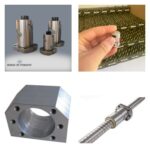
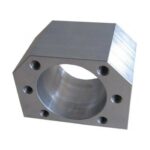
CNC machines rely on sophisticated systems for axis movement, primarily driven by servo motors that actuate ball screws and guide motion along linear guide rails. Servo motors provide precise control over position, speed, and torque based on commands from the control unit. Ball screws convert rotational motion into linear motion, while linear guides ensure smooth, low-friction movement. Axis jamming can stem from performance degradation or failure in any of these components.
Several technical parameters can indicate the onset of axis jamming:
- Servo Motor Current Draw: Under normal operation, servo motors consume a specific current range. When an axis jams, the motor attempts to generate more torque to overcome the resistance, leading to excessive current draw. This can cause the motor to overheat and eventually fail. Monitoring motor load displays on the control unit or using external current meters can help detect this.
- Position Error (Following Error): CNC control systems continuously monitor the difference between the commanded position and the actual position of an axis. This discrepancy is known as the “position error” or “following error.” During axis jamming, the motor struggles to reach the commanded position, causing this error value to rise abnormally. The control unit typically triggers an alarm (e.g., “Excessive Following Error” or “Axis Jam”) when this error exceeds a predefined threshold.
- Torque Fluctuation: While an axis moves normally, the motor torque remains within a stable range. In a jamming situation, the torque required to overcome resistance fluctuates erratically. These fluctuations can be observed on the diagnostic screens of servo drives or through specialized analysis software.
- Encoder Feedback: Encoders on servo motors report the motor’s angular position and speed to the control unit. Mechanical jamming can lead to irregular encoder feedback signals or create discrepancies where the control unit commands movement, but the motor cannot physically move.
- Thermal Anomalies: Increased friction or motor overload can lead to overheating of components like motors, bearings, or ball screw nuts. Thermal imaging cameras or non-contact thermometers can identify these hot spots.
Continuous monitoring and analysis of these technical data points are essential for early detection of axis jamming and for implementing preventive measures.
| Parameter | Value / Description |
|---|---|
| Servo Motor Current Draw | Sustained or sudden increases exceeding 150-200% of nominal current. |
| Position Error (Following Error) | Deviations exceeding the control unit’s alarm threshold (e.g., > ±0.1mm). |
| Torque Fluctuation | Sudden, erratic changes exceeding 50% of normal operating torque. |
| Axis Movement Speed | Difficulty reaching commanded speed or noticeable speed reduction. |
| Thermal Anomaly | Component temperatures (motor, bearings, guide rails) exceeding ambient by >20°C. |
| Mechanical Play (Backlash) | Increase in backlash in ball screws or guide rails exceeding 0.02mm. |
| Noise Level | Abnormal noises (grinding, squealing, knocking) 10-15 dB above normal operating sound. |
Field Observations for Diagnosing Axis Jamming
- Visual Inspection: With the machine powered off or in an emergency stop state, carefully examine the axis travel paths. Check linear guide rails for scratches, dents, rust, or debris accumulation. Inspect ball screws for surface wear, chips, or lack of lubrication. Verify the security of couplings and the connection between the motor and the ball screw. Inspect bellows for tears, which can allow chips and contaminants to enter the mechanism.
- Auditory Symptoms: Listen to the axes during operation. Abnormal sounds such as grinding, squealing, humming, clicking, or sharp knocking noises often indicate increased friction, failing bearings, or components making contact. Try to pinpoint the source of the noise.
- Vibration Analysis: Feel for unusual vibrations in the machine structure or directly on the axis while it is moving. A jammed axis may exhibit jerky, stuttering, or vibrating motion instead of smooth travel. These vibrations are typically caused by mechanical wear, misalignment, or motor strain.
- Monitoring Servo Motor and Drive Data: Modern CNC control units and servo drives provide real-time monitoring of critical operational data, including motor current, torque, speed, and position error. Regularly check these values. A sudden surge in motor current during axis movement, position errors reaching alarm levels, or consistently high torque readings are strong indicators of jamming. Trend analysis of this data can help predict potential jamming issues.
- Position Accuracy Tests: Periodically testing the machine’s positioning accuracy can reveal the mechanical health of the axes. Precision measurement tools like laser interferometers or ball bars can determine how accurately axes position themselves throughout their travel and their repeatability. Deviations in these tests may signal jamming or other mechanical problems.
- Thermal Monitoring: Check for excessive heating of components involved in axis movement (servo motor, bearings, ball screw nut) during operation. Increased friction or overload leads to overheating.
Addressing axis jamming promptly through accurate diagnosis prevents further damage, reduces downtime, and ensures the longevity and performance of your industrial CNC router machine.
For expert consultation and solutions regarding your CNC machinery, including servo drives and motion control systems, contact Mermak CNC.
Related product categories: Genel · AC Servo Motor · 60 Gövde Servo Motor Planet Redüktörler
