No products in the cart.
Features of Spindle Motors Specifically Designed for CNC Grinding Machines

Contents
- Introduction and Technical Analysis of Spindle Motors Specifically Designed for CNC Grinding Machines Considered the heart of industrial automation, CNC grinding machines hold critical importance in today’s manufacturing industry. These machines are indispensable for producing parts that demand high precision, excellent surface quality, and tight tolerances. One of the most fundamental components directly affecting the performance of these machines is, undoubtedly, their spindle motors. However, unlike spindle motors used in standard machining centers, those specifically designed for grinding applications must meet much more specific and demanding engineering requirements. This “Field Guide and Technical Article” provides an in-depth technical analysis of the features, operating principles, practical field applications, and critical considerations for these specialized spindle motors developed for CNC grinding machines, from an expert perspective. Grinding processes, by their material removal mechanism, rely on the principle of controlled abrasion at high speeds between the cutting tool (grinding wheel) and the workpiece. This process places a unique load on spindle motors due to high friction forces, continuous heat generation, and micron-level precision expectations. To overcome these challenges, specially designed spindle motors must possess key characteristics such as high rigidity, excellent vibration damping, superior thermal stability, a wide speed and torque range, and long-lasting precision. The difference between the dynamic loads encountered in chip-forming machining processes in standard machine tools and the continuous and homogeneous abrasive loads during grinding leads to fundamental differences in spindle design. Especially in applications where surface roughness and geometric tolerances are critical at the nanometer level, every component of the spindle motor – from bearings to the cooling system, from motor windings to the dynamic balance of the shaft – must be designed with the highest level of engineering excellence. This introductory section aims to clearly articulate why grinding spindles require such specialization and the expectations of industrial automation in this field. Operating Principle and Technical Data of Spindle Motors Specifically Designed for CNC Grinding Machines
- Field Considerations for Spindle Motors Specifically Designed for CNC Grinding Machines
- Common Problems and Solutions for Spindle Motors Specifically Designed for CNC Grinding Machines
- Conclusion and Expert Advice on Spindle Motors Specifically Designed for CNC Grinding Machines
- FAQ
Introduction and Technical Analysis of Spindle Motors Specifically Designed for CNC Grinding Machines
Considered the heart of industrial automation, CNC grinding machines hold critical importance in today’s manufacturing industry. These machines are indispensable for producing parts that demand high precision, excellent surface quality, and tight tolerances. One of the most fundamental components directly affecting the performance of these machines is, undoubtedly, their spindle motors. However, unlike spindle motors used in standard machining centers, those specifically designed for grinding applications must meet much more specific and demanding engineering requirements. This “Field Guide and Technical Article” provides an in-depth technical analysis of the features, operating principles, practical field applications, and critical considerations for these specialized spindle motors developed for CNC grinding machines, from an expert perspective.
Grinding processes, by their material removal mechanism, rely on the principle of controlled abrasion at high speeds between the cutting tool (grinding wheel) and the workpiece. This process places a unique load on spindle motors due to high friction forces, continuous heat generation, and micron-level precision expectations. To overcome these challenges, specially designed spindle motors must possess key characteristics such as high rigidity, excellent vibration damping, superior thermal stability, a wide speed and torque range, and long-lasting precision. The difference between the dynamic loads encountered in chip-forming machining processes in standard machine tools and the continuous and homogeneous abrasive loads during grinding leads to fundamental differences in spindle design. Especially in applications where surface roughness and geometric tolerances are critical at the nanometer level, every component of the spindle motor – from bearings to the cooling system, from motor windings to the dynamic balance of the shaft – must be designed with the highest level of engineering excellence. This introductory section aims to clearly articulate why grinding spindles require such specialization and the expectations of industrial automation in this field.
Operating Principle and Technical Data of Spindle Motors Specifically Designed for CNC Grinding Machines
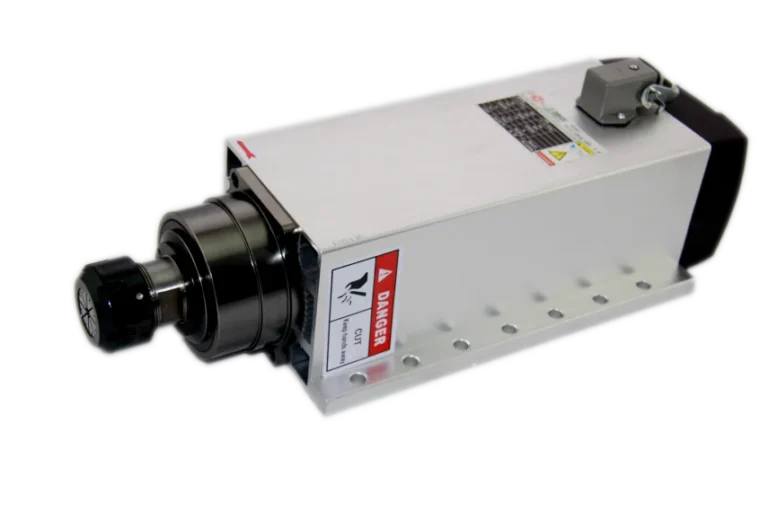
Spindle motors used in CNC grinding machines are specifically designed to meet high performance and precision requirements. The operating principle of these motors, unlike standard motors, focuses on providing minimum vibration and maximum rigidity even at high speeds. These spindles typically feature a direct drive structure, eliminating disadvantages such as vibration, friction, and energy loss associated with belt-pulley systems. The direct integration of the motor rotor onto the shaft increases power transmission efficiency while optimizing the dynamic balance and rotational precision of the shaft.
The main features and technical data of these specialized spindle motors can be detailed as follows:
- High Speed and Precise Speed Control: Grinding operations may require a very wide speed range depending on the material type and desired surface quality. These spindles can typically reach speeds from 20,000 RPM to 120,000 RPM (and even higher in some applications). In addition to these high speeds, providing speed control with millimeter-per-second precision via Variable Frequency Drives (VFD) directly affects the optimal cutting performance of the grinding wheel and the surface quality of the workpiece. This precise control is critically important, especially in fine and super-finishing grinding operations.
- High Rigidity and Vibration Damping: Even micron-level vibrations generated during the grinding process can negatively affect surface quality and tool life. Therefore, grinding spindles are equipped with ceramic bearings or hybrid ceramic bearings. Ceramic balls are lighter, harder, and have a lower coefficient of friction than steel balls, which means less heat generation and longer life at higher speeds. Furthermore, in some ultra-precision applications, hydrostatic or aerostatic bearings are used to allow the shaft to rotate on a fluid or air cushion, offering virtually zero friction and unparalleled rigidity. The spindle housing is also specially designed to minimize vibration and is typically made from materials with high damping properties.
- Superior Thermal Stability and Cooling Systems: High-speed rotating motors and bearings generate significant heat. This heat causes thermal expansion in the spindle shaft, directly affecting machining precision. Therefore, grinding spindles are usually equipped with closed-loop liquid cooling systems. The cooling fluid circulates through special channels in the spindle housing, removing heat from the motor windings and bearing areas. In some advanced systems, the temperature of the cooling fluid is precisely controlled to keep the spindle’s operating temperature constant, minimizing thermal deformations. Additionally, air-oil lubrication systems are frequently used for bearing lubrication and cooling.
- High Power Density and Compact Design: Grinding machines often have limited space. Therefore, it is important for spindle motors to have high power output while maintaining a compact structure. This is achieved through specially designed motor windings, high-performance magnetic materials, and optimized thermal management.
- Dynamic Balancing: To operate stably at high speeds, the spindle shaft must be dynamically balanced with very high precision. This is achieved during the manufacturing stage using special balancing equipment, guaranteeing that the spindle operates with minimum vibration across its entire speed range.
- Sealing and Protection: The grinding environment is filled with abrasive dust, coolants, and metal chips. Spindle motors are equipped with high-protection class sealing elements (e.g., labyrinth seals, air curtain systems) to prevent these contaminants from infiltrating internal components. This extends the life of bearings and motor windings.
- Integrated Sensor Technologies: Modern grinding spindles are equipped with various sensors to continuously monitor operating conditions. These sensors include temperature sensors (motor windings, bearings), vibration sensors, and speed/position sensors (encoders). This data is transmitted to the machine’s control system to ensure the spindle operates under optimal conditions, providing a basis for early detection of potential faults and predictive maintenance applications.
The combination of these features makes spindle motors specifically designed for CNC grinding machines critical components that deliver superior performance even in the most demanding and precise applications of the manufacturing industry. Every detail in the engineering and design process has a direct impact on the final quality of the workpiece and the overall efficiency of the machine.
| Parameter | Value/Description |
|---|---|
| Maximum Speed (RPM) | 20,000 – 120,000+ RPM (Application Dependent) |
| Motor Power (kW) | 3 kW – 30 kW (Higher for High-Torque Models) |
| Bearing Type | Ceramic Ball Angular Contact Bearings (Hybrid or Full Ceramic), Hydrostatic/Aerostatic Bearings |
| Cooling Method | Closed-Loop Liquid Cooling (Chiller Controlled), Air-Oil Mist Lubrication |
| Spindle Runout | ≤ 1 µm (Ultra-Precision Applications ≤ 0.5 µm) |
| Protection Class (IP) | IP65 – IP68 (High Protection Against Dust and Liquid Ingress) |
| Torque Density | High starting torque and wide constant power range |
| Integrated Sensors | Motor/Bearing Temperature, Vibration, Speed/Position (Encoder) |

Field Considerations for Spindle Motors Specifically Designed for CNC Grinding Machines
- Correct Installation and Alignment: Mounting the spindle motor on the machine requires perfect alignment of the spindle’s rotation axis with the machine’s motion axes. Even the slightest misalignment can lead to unnecessary stress on the spindle, shortened bearing life, vibration, and consequently, reduced machining quality. During installation, precision measuring instruments (laser alignment systems, micrometers) must be used, and the manufacturer’s mounting instructions must be strictly followed. The accuracy of the geometric relationship between the spindle and the workpiece is fundamental to the final product quality.
- Bearing Maintenance and Lubrication System Control: While ceramic or hybrid bearings in grinding spindles require less maintenance than standard bearings, proper lubrication is critically important. Most high-speed spindles are lubricated with an air-oil mist lubrication system. Regular inspection and cleaning of the air pressure, oil flow, and filters of these systems are essential. Moisture in the air line can lead to clogging of the lubrication system or damage to the bearings. The quality and viscosity of the lubricating oil must comply with the specifications provided by the manufacturer. Any abnormality can cause overheating and premature failure of the bearings.
- Cooling System Efficiency and Cleanliness: The thermal stability of the spindle directly affects machining precision. Therefore, regular maintenance of liquid cooling systems (chillers) is vital. The level, quality, and anti-freeze/corrosion inhibitor additives of the cooling fluid must be checked. Chiller filters should be periodically cleaned or replaced. Accumulation of sediment or contamination in the cooling channels or heat exchanger reduces cooling efficiency, leading to spindle overheating and precision losses due to thermal expansion. Maintaining the cooling fluid temperature within the constant and manufacturer-recommended range is a critical factor for spindle life and machining accuracy.
- Vibration Monitoring and Dynamic Balancing: Vibration levels on the spindle provide important information about bearing condition and the dynamic balance of the shaft. Modern machines have the capability for continuous monitoring through integrated vibration sensors. Abnormal vibration levels can be an early indicator of bearing wear, shaft imbalance, or mounting issues. Proper attachment and dynamic balancing of the grinding wheel are also crucial to minimize vibration. Checking and, if necessary, correcting the dynamic balance of the grinding wheel with every change or at regular intervals directly affects surface quality and spindle life.
- Environmental Conditions and Sealing Element Control: The grinding environment is rich in abrasive dust, coolants, and fine metal particles. Regular inspection of the spindle’s sealing elements (labyrinth seals, air curtain systems) and replacement of damaged ones prevent contaminants from reaching the bearings and motor windings. Environmental factors such as ambient temperature and humidity can also affect spindle performance; therefore, it is recommended to keep the machine’s operating environment under control. High humidity, in particular, can lead to corrosion in electrical components, while excessive temperature increases the load on the cooling system.
- Electrical Connections and Sensor Functions: Ensure that the spindle motor’s power cables, encoder cables, and sensor connections are secure and correctly made. Loose connections or cable damage can lead to unstable motor operation, incorrect sensor readings, or complete failure. The proper functioning of integrated temperature, vibration, and position sensors should be periodically checked; these sensors are vital for monitoring and protecting the spindle’s health.
Common Problems and Solutions for Spindle Motors Specifically Designed for CNC Grinding Machines
Spindle motors designed for CNC grinding machines, due to their high precision and complex structures, can be prone to certain issues. Early diagnosis and correct solutions for these problems enhance machine efficiency and prevent costly breakdowns. Here are some common problems and their solutions:
1. Excessive Vibration and Noise:
- Problem: Abnormal vibrations from the spindle, high noise levels, or surface quality defects on the workpiece (vibration marks, waviness).
- Possible Causes:
- Bearing wear or damage.
- Dynamic imbalance of the spindle shaft.
- Imbalance or incorrect mounting of the grinding wheel.
- Misalignment or loose mounting of the spindle on the machine bed.
- Partial short circuit or phase imbalance in motor windings.
- Vibration transmission from the coolant pump or chiller unit.
- Solutions:
- Check the spindle’s vibration sensor data. If abnormal values are present, the spindle should be disassembled and inspected to check the condition of the bearings, and replaced if necessary.
- Check the dynamic balance of the grinding wheel and rebalance if necessary. Ensure the grinding wheel is mounted correctly.
- Check and tighten the spindle’s mounting bolts on the machine. Recheck and correct alignment.
- Measure the insulation resistance and phase currents of the motor windings. If there is an electrical fault, the motor may need repair or replacement.
- Check connection elements to isolate vibration originating from the cooling system.
2. Overheating:
- Problem: Higher-than-normal temperature in the spindle housing or bearing areas, or activation of the motor protection thermal switch.
- Possible Causes:
- Cooling system failure (chiller malfunction, lack of coolant, clogged filters, pump failure).
- Excessive friction in bearings (lack of lubrication, incorrect lubrication, excessive preload, bearing damage).
- Motor overload (incorrect cutting parameters, dull grinding wheel).
- Very high ambient temperature.
- Insulation fault or short circuit in motor windings.
- Solutions:
- Check the coolant level, flow rate, and chiller operating status. Clean or replace filters. Ensure the coolant temperature is set correctly.
- Ensure the air-oil lubrication system is working correctly, and that air pressure and oil flow comply with manufacturer specifications. Check if bearings are excessively preloaded.
- Check machining parameters (feed rate, depth of cut) and review the sharpness of the grinding wheel.
- Keep the ambient temperature under control.
- Measure the resistance and insulation of the motor windings. Repair or replace the motor if necessary.
3. Speed or Torque Fluctuations / Spindle Stalling:
- Problem: Unstable spindle speed, inability to reach desired RPM, torque fluctuations, or unexpected stalling.
- Possible Causes:
- Frequency converter (VFD) malfunction or incorrect parameter settings.
- Encoder (speed/position sensor) malfunction or cable connection issue.
- Open circuit or short circuit in motor windings.
- Power supply voltage imbalance or low voltage.
- Mechanical jamming or overload.
- Solutions:
- Check VFD error codes and troubleshoot according to the manufacturer’s manual. Ensure VFD parameters are suitable for the spindle motor.
- Check encoder cable connections and the sensor itself. Replace the encoder if necessary.
- Measure the continuity and insulation resistance of the motor windings.
- Check the main power supply voltage.
- Check if the spindle shaft rotates freely. Evaluate if there is excessive load during machining.
4. Increase in Spindle Runout Values:
- Problem: Geometric errors in machined parts, deterioration of surface quality, or dramatic decrease in tool life.
- Possible Causes:
- Bearing wear or increased clearance.
- Shaft bending or deformation.
- Loosening or faulty mounting of the spindle.
- Contamination/damage of the tool holder or grinding wheel.
- Thermal deformations.
- Solutions:
- Measure spindle runout with precision measuring instruments (micrometer, dial indicator). If values are out of tolerance, check bearing condition and replace if necessary.
- Check if the shaft is physically bent (this usually occurs after a severe impact and may require spindle replacement).
- Check and tighten the spindle’s mounting bolts. Re-align.
- Clean the tool holder and grinding wheel, check for damage.
- Ensure the cooling system is working correctly and the spindle is thermally stable.
These problems can be largely prevented with regular maintenance, correct usage, and continuous monitoring. In case of any serious malfunction, contacting authorized service or expert technical support is the most appropriate approach.
Conclusion and Expert Advice on Spindle Motors Specifically Designed for CNC Grinding Machines
Spindle motors specifically designed for CNC grinding machines are among the most critical and technologically advanced components in the modern manufacturing industry. The high speed, unparalleled precision, superior rigidity, and thermal stability offered by these motors are indispensable for meeting today’s demanding surface quality and sub-micron tolerance expectations. The selection of a spindle motor directly impacts not only the machine’s performance but also production efficiency, part quality, and operating costs. Therefore, correct spindle selection and maintenance are key to maximizing the return on investment.
Based on our field experience, we would like to offer the following expert advice: Firstly, the focus should be not only on the technical specifications of the spindle motor but also on its suitability for the specific conditions required by the application. For example, robustly designed spindles with high torque and power capacity are preferred for continuous heavy grinding operations, while for applications such as ultra-precision internal grinding or mold polishing, higher-speed spindles with lower runout and excellent thermal stability should be prioritized. Secondly, predictive maintenance strategies should be adopted to protect the life and performance of the spindle motor. Continuous monitoring and analysis of data from integrated sensors (temperature, vibration, speed) enable the detection of potential faults at much earlier stages, minimizing unplanned downtime and costly repairs. This forms the basis of Industry 4.0 and smart manufacturing approaches. Thirdly, for high-tech components like grinding spindles, the use of original spare parts and authorized service support is of great importance. Aftermarket products or unqualified interventions, while seemingly offering cost advantages in the short term, can lead to much larger failures and production losses in the long run. Finally, regular training for operators and maintenance personnel on the operating principles, maintenance requirements, and troubleshooting methods of these specialized spindle motors is vital to ensure efficient and trouble-free operation of the machine. This holistic approach will fully unleash the potential of CNC grinding machines and guarantee sustainable success in a competitive manufacturing environment.
FAQ
What makes spindle motors for CNC grinding machines different from standard machining spindles?
Spindle motors for CNC grinding machines are engineered for extreme precision, high rigidity, and superior thermal stability. Unlike standard machining spindles, they feature ceramic or hybrid bearings, advanced liquid cooling systems, and dynamic balancing to handle continuous abrasive loads and achieve sub-micron tolerances, crucial for surface quality and geometric accuracy.
What are the typical technical specifications for these specialized grinding spindles?
Key technical specifications include maximum speeds ranging from 20,000 to over 120,000 RPM, motor power from 3 kW to 30 kW, ceramic or hybrid bearings, closed-loop liquid cooling, and spindle runout typically less than 1 µm. They also boast high IP protection ratings (IP65-IP68) and integrated sensors for temperature, vibration, and position monitoring.
What are the critical maintenance practices for ensuring the longevity and performance of a grinding spindle?
Regular maintenance is crucial. This includes precise installation and alignment, meticulous bearing lubrication (often via air-oil mist systems), ensuring the efficiency and cleanliness of the liquid cooling system, continuous vibration monitoring, and checking the integrity of sealing elements against abrasive dust and coolants. Proper dynamic balancing of the grinding wheel is also vital.
What are the most common problems encountered with grinding spindles and how can they be addressed?
Common issues include excessive vibration (due to bearing wear, imbalance, or misalignment), overheating (from cooling system failure or lubrication issues), speed/torque fluctuations (VFD or encoder problems), and increased spindle runout (bearing wear, shaft deformation). Early detection through integrated sensors and adherence to maintenance schedules are key to prevention.
What expert advice should be followed for selecting and maintaining a CNC grinding spindle?
When selecting a spindle, consider the specific application requirements (e.g., heavy grinding vs. ultra-precision finishing), prioritize predictive maintenance strategies using sensor data, insist on original spare parts and authorized service support, and ensure operators and maintenance staff receive regular training on spindle operation and care.