No products in the cart.
Servo Motor Selection Criteria for High-Precision CNC Lathe Retrofits

Contents
- Introduction and Technical Analysis of Servo Motor Selection Criteria for High-Precision CNC Lathe Retrofits
- Operating Principles and Technical Data for Servo Motor Selection in High-Precision CNC Lathe Retrofits
- Field Considerations for Servo Motor Selection in High-Precision CNC Lathe Retrofits
- Common Issues and Solutions in Servo Motor Selection for High-Precision CNC Lathe Retrofits
- Conclusion and Expert Advice on Servo Motor Selection Criteria for High-Precision CNC Lathe Retrofits
- FAQ
Introduction and Technical Analysis of Servo Motor Selection Criteria for High-Precision CNC Lathe Retrofits
In industrial automation and machine retrofitting processes, particularly in the modernization of high-precision CNC lathe machines, the correct servo motor selection is a critical success factor. For businesses aiming to gain a competitive advantage by equipping their existing machine fleet with current technologies, the transition from older generation DC or asynchronous motors to high-performance servo systems has become indispensable. This transition not only increases speed and torque but also directly impacts machining precision, repeatability, and overall production efficiency. This field guide and technical article, from an expert perspective, thoroughly discusses the fundamental technical criteria, engineering approaches, and practical application tips to consider when selecting servo motors for CNC lathe retrofits. Our goal is to enable engineers, maintenance teams, and automation professionals to make informed decisions in this complex process, help them avoid potential pitfalls, and increase the success rate of their retrofit projects. The right motor selection extends the machine’s lifespan, enhances energy efficiency, and reduces maintenance costs, providing a significant return on investment in the long run.
Operating Principles and Technical Data for Servo Motor Selection in High-Precision CNC Lathe Retrofits
Servo motors are an indispensable part of closed-loop control systems, designed to achieve position, speed, or torque control with high accuracy. In a CNC lathe machine, where machining precision is measured in thousandths of a millimeter, every component of the servo system holds great importance. The trio of servo motor, feedback element (encoder or resolver), and servo drive works in perfect synchronization to control the machine’s axis movements.
Key technical criteria to consider in servo motor selection include:
- Torque Requirement (Continuous and Maximum): The most significant load a motor encounters in a CNC lathe machine is the torque generated by cutting forces. The motor’s continuous torque indicates the torque value the machine can sustain for extended periods under nominal operating conditions, while peak torque refers to the torque the motor can produce during short-term accelerations, decelerations, or sudden load changes. These values must be carefully calculated, considering factors such as the type of material to be machined, cutting depth, tool geometry, and the machine’s mechanical efficiency. Incorrect torque selection can lead to motor overheating, performance degradation, or failure. Typically, the torque curves of the machine’s old motor or the technical specifications of a similar machine can be used as a starting point.
- Speed Requirement (Nominal and Maximum RPM): The machining speeds and rapid traverse speeds of the machine determine the nominal and maximum RPM values of the selected servo motor. Higher RPM capacity motors may be required for high-speed machining or rapid tool changes. However, it should be noted that high speed does not always coincide with high torque, and it is crucial to strike a balance between these two parameters. The use of a gearbox can increase the motor’s torque while reducing its speed and aid in inertia matching.
- Inertia Matching: Perhaps one of the most critical selection criteria, inertia matching, is the ratio between the motor’s inertia and the load’s (machine axis) inertia. For optimal control performance, the ratio of motor inertia to load inertia should generally be between 1:1 and 1:10. This ratio directly affects the servo system’s dynamic response, acceleration/deceleration times, and vibration tendencies. Incorrect inertia matching can lead to unstable system operation, oscillation, or slow response. Therefore, the inertia of the existing mechanical system must be calculated or measured in detail.
- Feedback Element (Encoder/Resolver Resolution): For high-precision CNC lathes, the resolution of the feedback element, which accurately senses the motor’s position and speed, is vital. Absolute encoders retain absolute position information even after power loss, while incremental encoders require a reference point at each startup. As machining precision increases, the encoder’s pulses per revolution (PPR) or bit resolution should also be increased. Modern servo systems typically offer sub-micron precision using encoders with 20-24 bit resolution.
- Power Rating (kW): Once the motor’s torque and speed requirements are determined, the mechanical power (kW) the motor will produce can be calculated. This value also provides information about the motor’s electrical power consumption and overall energy efficiency.
- Size and Mounting Compatibility: In retrofit projects, selecting a motor that physically fits the existing mechanical structure is important. The motor’s flange size, shaft diameter and length, and existing mounting holes must be compatible. Adapter plates or coupling modifications can be considered if necessary, but these should not adversely affect the system’s rigidity and precision.
- Environmental Conditions and IP Rating: Factors such as temperature, humidity, dust, and liquid contact in the machine’s operating environment determine the motor’s IP (Ingress Protection) rating. Especially in environments exposed to metal chips and cutting fluids, motors with a higher IP rating (e.g., IP65 or IP67) should be preferred.
- Drive Compatibility and Communication Protocols: The selected servo motor must be compatible with an existing or new servo drive. In modern automation systems, industrial communication protocols such as EtherCAT, PROFINET, SERCOS III are widely used. These protocols enhance performance in multi-axis systems by providing high-speed data exchange and synchronization. The drive must support the motor’s feedback type and communication interface.
- Braking System: Especially for vertical axes (such as the Z-axis), an integrated braking system (holding brake) is essential for the motor to safely hold the load in case of a power outage. The brake’s torque capacity must be higher than the torque of the load to be held.
- Overload Capacity: Servo motors have the capacity to produce torque up to a certain multiple (typically 2x to 3x) of their nominal torque under short-term peak loads. This feature is important for applications requiring sudden acceleration and deceleration.
- Cost and Supply Chain: Beyond the initial purchase cost of the motor, factors such as spare part availability, service, and technical support also affect long-term costs. Working with a reliable supplier ensures quick solutions in case of potential breakdowns.
| Parameter | Value/Description |
|---|---|
| Continuous Torque (Nominal) | 5 Nm – 30 Nm (Varies by application) |
| Maximum Torque (Peak) | 15 Nm – 90 Nm (Up to 3 times continuous torque) |
| Nominal Speed (RPM) | 1500 RPM – 3000 RPM (Ideal for most lathe axes) |
| Encoder Resolution | 20-24 bit (Absolute type, for sub-micron precision) |
| Inertia Ratio (Load/Motor) | 1:1 – 10:1 (For optimal control dynamics) |
| IP Protection Class | IP65 or IP67 (Protection against chips, liquids, and dust) |
| Brake Type | Electromagnetic (For vertical loads like the Z-axis) |
| Operating Voltage | 230 VAC or 400 VAC (Industrial standards) |
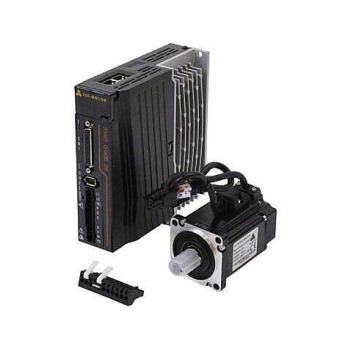
Field Considerations for Servo Motor Selection in High-Precision CNC Lathe Retrofits
- Existing Mechanical System Analysis and Backlash Elimination: No matter how good new and precise servo motors are, if the mechanical structure of the machine (ball screws, linear guide rails, bearings, couplings) is worn, loose, or not rigid, it will be impossible to achieve the expected precision. During the retrofit process, minimizing mechanical backlash, replacing bearings, and inspecting guide rails are priorities. Bringing the mechanical system to an optimal state before motor selection will unlock the true potential of the servo system.
- Accurate Sizing and Calculations: One of the most common mistakes in servo motor selection is under- or over-sizing. An undersized motor will overheat, have a shorter lifespan, and suffer performance degradation. An oversized motor, on the other hand, can lead to unnecessary cost increases and control difficulties due to inertia mismatch. Torque, speed, and inertia calculations should cover the most demanding machining scenarios, and safety factors must be considered. Sizing software provided by manufacturers greatly facilitates this process.
- Cabling and EMI/RFI Protection: Power and feedback cables between the servo motor and drive carry high-frequency signals, making them susceptible to electromagnetic interference (EMI) and radio frequency interference (RFI). This can lead to positioning errors or system instability. Therefore, using properly shielded cables, routing cables separately from other power lines, and applying appropriate grounding techniques are critically important.
- Thermal Management and Cooling: Servo motors generate heat during operation. Adequate cooling must be provided, especially for motors operating at high RPMs or under continuous high torque. Ambient temperature is a factor affecting the motor’s nominal torque capacity. External fans or water cooling systems should be considered if necessary. Motor overheating leads to both performance loss and a reduction in insulation life.
- Drive Parameter Settings (Tuning): Another topic as important as motor selection is the correct tuning of the servo drive. The drive’s gain parameters, inertia ratio, filter settings, and other control parameters determine the system’s dynamic response, precision, and stability. Incorrect tuning can cause vibrations, positioning errors, slow response times, or unstable motor operation. Most modern servo drives offer auto-tuning or manual tuning tools. Having an expert technician perform these adjustments ensures maximum efficiency from the system.
- Safety Functions and Integration: In CNC machine retrofits, not only performance but also occupational safety must be prioritized. Servo drives with integrated safety functions such as Safe Torque Off (STO) or Safe Stop 1 (SS1) ensure the motor is safely stopped in emergencies. These functions must be integrated into the control system in accordance with machine safety standards (e.g., EN ISO 13849-1).
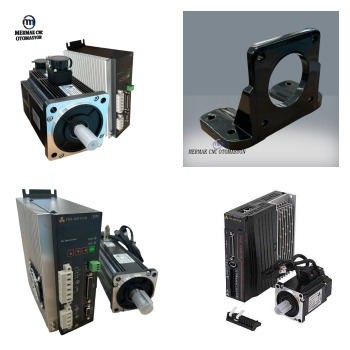
Common Issues and Solutions in Servo Motor Selection for High-Precision CNC Lathe Retrofits
Common issues related to servo motors in CNC lathe retrofits typically stem from incorrect selection, faulty installation, or improper parameter settings. For example, motor overheating usually indicates an undersized motor, continuous operation under high torque, insufficient cooling, or inertia mismatch. In this case, the motor’s torque curves should be re-examined, the workload reduced, the cooling system checked, or a larger motor considered. Another common problem is vibration and noise; this is often caused by inertia mismatch, mechanical backlash (coupling, ball screw), incorrect tuning parameters, or loose motor mounting. For a solution, inertia ratios should be recalculated, mechanical connections checked, and drive tuning optimized. Positioning errors or loss of precision are generally caused by encoder failure, encoder cable damage, electrical noise, drive tuning errors, or mechanical backlash. Encoder and cable connections should be checked, grounding improved, and drive parameters re-adjusted. Sometimes the motor moves unexpectedly or fails to stop despite the control signal; this situation is usually due to feedback loss, brake failure, control card issues, or internal drive malfunctions. Feedback connections and brake function should be checked, and drive error codes examined. Finally, slow response time or poor dynamic performance is typically caused by high inertia ratios, low gain settings, or insufficient motor torque capacity. Drive gains should be increased, inertia matching reviewed, and a higher torque motor considered if necessary. In all cases, a systematic approach to troubleshooting, analyzing error codes, and utilizing manufacturer documentation is critically important.
Conclusion and Expert Advice on Servo Motor Selection Criteria for High-Precision CNC Lathe Retrofits
The correct servo motor selection for high-precision CNC lathe machine retrofits is more than just a technical detail; it is a strategic decision that directly impacts a company’s production quality, efficiency, and competitiveness. This process requires a comprehensive engineering approach and field experience, going far beyond merely looking at motor torque and speed values. A successful retrofit project begins with a detailed analysis of the existing mechanical system, accurate determination of the dynamics required by the parts to be machined, and an evaluation of all system components (motor, drive, feedback, mechanical transmission) as a whole. It should be remembered that the most expensive or most powerful motor is not always the best solution; the key is to find the most suitable, efficient, and cost-effective solution for the specific requirements of the application. Based on our field experience, close collaboration with supplier companies and leveraging their expertise and sizing software provides a significant advantage in this process. Furthermore, during the installation and commissioning phase, meticulous cabling, grounding, and especially drive parameter tuning are vital for stable and precise system operation. Periodic maintenance and monitoring after the retrofit will extend the motor’s lifespan and enable early detection of potential problems. With this detailed field guide and technical article, we aimed to help our experts in the industrial automation sector overcome the challenges they will face in CNC lathe retrofit projects and develop high-performance, reliable, and long-lasting solutions. A retrofit performed with the right selections not only extends the life of the machine but also brings a new breath to the business in modern production standards and provides a significant return on investment in the long term. Request a quote on WhatsApp today for your CNC lathe retrofit needs.
FAQ
What are the most critical criteria for selecting a servo motor for a high-precision CNC lathe retrofit?
Servo motor selection for CNC lathe retrofits requires careful consideration of torque (continuous and peak), speed (nominal and maximum RPM), inertia matching, encoder resolution, power rating, physical size, environmental conditions (IP rating), drive compatibility, and safety features. These factors ensure optimal performance and longevity.
Why is inertia matching so important in servo motor selection for CNC lathes?
Inertia matching is crucial because it directly impacts the system's dynamic response, acceleration/deceleration times, and vibration tendencies. An optimal ratio (typically 1:1 to 1:10 between motor and load inertia) prevents instability, oscillation, and slow response, ensuring precise control.
What are the common problems encountered during servo motor retrofits on CNC lathes, and how can they be resolved?
Common issues include motor overheating (due to undersizing or insufficient cooling), vibration/noise (from inertia mismatch or mechanical backlash), and positioning errors (from encoder issues or improper tuning). Solutions involve re-evaluating sizing, optimizing cooling, checking mechanical connections, and meticulous drive tuning.
Does the mechanical condition of the existing CNC lathe affect servo motor performance after a retrofit?
Yes, the mechanical condition of the CNC lathe is paramount. Even with the best servo motor, worn ball screws, loose linear guide rails, or faulty bearings will compromise precision. Prioritizing mechanical overhaul and backlash elimination before motor installation is essential to realize the full potential of the servo system.
What type of encoder resolution is recommended for high-precision CNC lathe servo motors?
For high-precision applications, absolute encoders with 20-24 bit resolution are highly recommended. They retain absolute position information even after power loss, eliminating the need for homing cycles and providing the fine resolution required for sub-micron accuracy in CNC machining.