







































































Why Does Vacuum Drop When an MDF Table Leaks Air?
📑 Table of contents (Click to open)
Practical notes for CNC router, automation and industrial motion systems.
Understanding Vacuum Drop in MDF Tables
The primary reason for a vacuum drop when an MDF table leaks air is that the amount of air entering the system from external leaks exceeds the volume of air the vacuum pump can extract. This prevents the system from achieving or maintaining the desired negative pressure (vacuum). Consequently, the suction force required to hold the workpiece securely is insufficient, leading to reduced system efficiency.
The Principle of Vacuum Holding in CNC Operations
In industrial automation, particularly with CNC machines, vacuum presses, or lamination equipment, securely fixing workpieces is critical. This is often achieved using a vacuum system. A vacuum pump creates a low-pressure environment (vacuum) by removing air from a sealed volume. This pressure difference generates a holding force on the workpiece.
An MDF table (Medium Density Fiberboard) is commonly used in CNC routers and similar machinery as the primary surface for workpiece fixturing. These tables are designed with channels and holes to direct vacuum to the workpiece. However, if an air leak occurs in the MDF table or its associated system, atmospheric air begins to infiltrate the vacuum system. Even a powerful vacuum pump cannot maintain the necessary low pressure if the incoming air volume approaches or exceeds the pump’s extraction capacity. This directly results in a drop in vacuum level indicated by the system’s gauges.
Think of it like trying to fill a bucket with holes; if the leaks are too large or the filling rate is too slow, the bucket will never fill. Similarly, air leaks prevent the vacuum system from staying ‘sealed,’ forcing the pump to constantly work against incoming air. This not only lowers the vacuum level but also increases the pump’s workload, energy consumption, and can shorten its lifespan. Understanding this principle highlights the critical importance of vacuum system integrity in industrial processes.
Technical Details and Causes of Air Leaks
The operational principle of a vacuum system on an MDF table relies on creating a pressure difference. The vacuum pump extracts air from chambers beneath or within the MDF table, establishing a negative pressure. When a workpiece is placed on this surface, air is evacuated from the gap between the workpiece and the table. The external atmospheric pressure then pushes the workpiece onto the table surface, providing the necessary holding force for machining operations.
An air leak in an MDF table disrupts this pressure differential. Leaks typically arise from several sources:
- Table Porosity: Standard MDF has inherent porosity. “Vacuum tables” specifically designed for vacuum applications are denser and more sealed, but porosity can increase over time or due to damage. Lower quality or older MDF tables may naturally allow more air passage.
- Surface Damage: Scratches, cuts, holes, cracks, or wear on the table surface from CNC cutting operations create pathways for air to escape. This compromises the table’s integrity and allows vacuum to leak directly to the atmosphere.
- Inadequate Sealing: If vacuum seals or gasketing strips (e.g., rubber profiles) around the workpiece are insufficient, improperly placed, or damaged, air can leak into the vacuum zone. Furthermore, failing to effectively seal unused vacuum zones is a significant source of leaks and increases the vacuum load.
- Connection Issues: Loose connections, cracks in hoses, pipes, fittings (couplings, valves), or manifold systems connecting the vacuum pump to the MDF table, as well as worn seals, can all lead to air leaks. Regular inspection of these points is essential.
- Workpiece Characteristics: If the workpiece surface is uneven, does not fully cover the table area, or is porous itself (e.g., certain composite materials, wood laminates), vacuum leaks can occur. The workpiece’s shape and size also determine how effectively it seals the vacuum area.
As a result of these leaks, the vacuum pump must work harder, increasing energy consumption. The pump continuously tries to expel the leaking air to maintain the desired vacuum level. If the volume of leaking air becomes too great for the pump’s capacity, it cannot achieve the target vacuum, leading to the observed vacuum drop. This can cause workpiece slippage, reduced machining accuracy, decreased tool life, and production defects, negatively impacting overall operational efficiency.
In industrial automation, detecting and rectifying vacuum leaks is crucial for both operational efficiency and cost-effectiveness. Modern systems often incorporate vacuum sensors and PLC integration to continuously monitor vacuum levels, providing early warnings of potential issues and helping to ensure uninterrupted production processes.
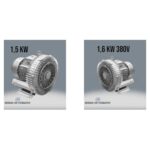
For optimal performance, ensure your CNC router machine and its vacuum system are properly maintained. Regularly inspect your MDF table for damage and ensure all seals and connections are in good condition. If you are experiencing persistent vacuum issues, it may be time to consider upgrading your vacuum pump or table system.
CTA: Need to ensure your CNC operations run smoothly? Request a quote on WhatsApp for reliable vacuum solutions and expert advice!
Related product categories: Genel · CNC Router · 380V Vakum Pompası
