




































































Does a Clogged Vacuum Filter Reduce Table Holding Power?
📑 Table of contents (Click to open)
Practical notes for CNC router, automation and industrial motion systems.
Understanding Vacuum Filter Clogging and Its Effect on CNC Table Holding Power
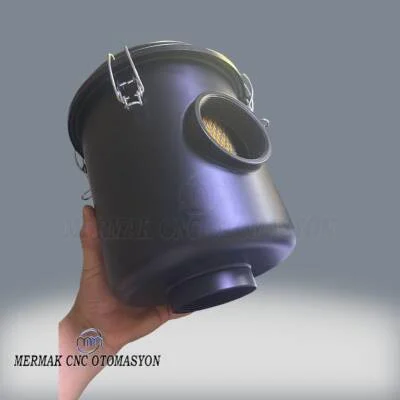
Yes, a clogged vacuum filter significantly and directly reduces the holding power of industrial vacuum tables (vacuum chuck systems). A blocked filter restricts the vacuum pump’s airflow capacity, lowering the system’s vacuum level. This diminished vacuum pressure weakens the force required to hold the workpiece securely.
How a Clogged Filter Impacts Table Holding Power
In industrial automation and machining, vacuum tables are essential for precise and secure workpiece positioning. These systems operate on the principle of creating a pressure difference to achieve adhesion. A vacuum pump evacuates air from the chamber beneath the table, generating a low-pressure area (vacuum). The higher external atmospheric pressure then forces the workpiece against this low-pressure zone, creating a strong holding force. For this system to function effectively, a consistent and sufficient airflow and an optimal vacuum level are crucial. The vacuum filter, situated in the airflow path, protects the vacuum pump from particles like dust, chips, and liquid droplets. Its primary role is to prevent contaminants from entering the pump’s internal mechanisms. When this filter becomes dirty and clogged over time, it increases resistance to airflow. This increased resistance hinders the vacuum pump’s ability to effectively draw air from under the table, consequently reducing the vacuum level within the system. A lower vacuum level directly translates to a weaker holding force on the workpiece, potentially leading to safety issues on the production line, machining errors, and reduced efficiency.
Operating Principle and Technical Data
The operation of vacuum tables is based on Bernoulli’s principle and pressure differential. A vacuum pump (e.g., rotary vane, claw, liquid ring, or regenerative blower) draws air from the chamber beneath the table. This process creates a low-pressure area relative to atmospheric pressure within the chamber. When a workpiece is placed on the table, the external atmospheric pressure (approx. 1013 mbar or 14.7 psi) pushes the workpiece into this low-pressure zone. The resulting holding force (F) is calculated as the product of the workpiece’s contact surface area with the table (A) and the pressure difference between the table and the atmosphere (ΔP): F = A * ΔP. A higher ΔP results in a greater holding force. The vacuum filter is located in the pump’s intake line, preventing contaminants from the environment or the machining process from reaching the pump. These contaminants can include wood chips, metal shavings, coolant mists, oil vapor, or general dust particles. By trapping these particles, the filter extends the pump’s lifespan and maintains its performance. However, as the filter element becomes saturated with these particles, its permeability decreases. As the filter pores become smaller or completely blocked, the resistance to airflow increases. This prevents the vacuum pump from reaching its nominal capacity, reducing its suction power. Consequently, the vacuum level achieved under the table decreases (ΔP drops), and the holding force diminishes mathematically. For example, if a table with a 100 cm² area achieves 800 mbar vacuum under normal conditions but only 500 mbar due to a clogged filter, the holding force will decrease by approximately 37.5%. This poses significant safety risks, especially in high-speed machining or when handling heavy parts. Furthermore, a clogged filter can cause the pump to work harder, overheat, and increase energy consumption. Regular filter maintenance and replacement are essential for optimal system performance.
| Parameter | Value/Description |
|---|---|
| Vacuum Level (Normal) | 700-900 mbar (-0.7 to -0.9 bar) |
| Vacuum Level (Clogged Filter) | 300-600 mbar (-0.3 to -0.6 bar) |
| Airflow Rate Impact | Reduction of 30-70% can be observed. |
| Filter Type | Particulate Filter, Oil Mist Filter, HEPA Filter (application dependent). |
| Holding Force Impact | Decreases proportionally to the vacuum level drop. |
| Maintenance Frequency | Daily/weekly checks, monthly/quarterly replacement based on operating environment and contamination level. |
| Differential Pressure Indicator | Manometer to visually indicate filter blockage. |
Field Considerations
- Regular Filter Inspection, Cleaning/Replacement: Filters, the heart of vacuum systems, require constant monitoring for operational continuity and safety. The filter’s contamination level should be checked periodically, either visually or via integrated differential pressure gauges (manometers). When the indicator exceeds a set threshold or the filter element is visibly dirty, cleaning or replacement should be performed immediately. Some filters can be cleaned with compressed air, while others are disposable. This routine maintenance prevents unnecessary strain on the vacuum pump and optimizes energy consumption.
- Correct Filter Type Selection: Each industrial application generates different contaminants. Woodworking machines produce significant dust and chips, while CNC metalworking machines may produce metal shavings and coolant mist. Therefore, the filter type (e.g., coarse particulate, fine particulate, oil mist separators, HEPA) must match the operating environment and potential contamination sources. An incorrect filter can lead to premature clogging or inadequate pump protection, negatively impacting system performance.
- Ensuring System Sealing: Air leaks within the system are as critical as filter clogging. Hose connections, gasket surfaces, valves, and the contact area between the workpiece and the table must be perfectly sealed. Even minor leaks can reduce vacuum levels and holding force. Therefore, during filter maintenance, all connection points and gaskets should be inspected, and worn or damaged parts replaced promptly. Leaks can often be detected by checking the maximum vacuum level the system can achieve when running idle with a vacuum manometer.
- Vacuum Pump Health and Maintenance: While the filter protects the pump, the pump itself requires regular maintenance. For oil-lubricated pumps, oil level and quality are crucial. Dirty or low oil levels reduce efficiency and can cause overheating. In dry-type pumps, wear on vanes or seals can lead to performance degradation. Periodic pump maintenance is as vital as filter replacement for the overall health of the system.
- Workpiece Characteristics and Table Design: The porosity and surface finish of the material being machined, as well as the workpiece size, also influence holding power. Porous materials (e.g., certain woods, composites) can allow some vacuum to pass through, making it difficult to achieve a full vacuum under the table. In such cases, higher capacity pumps or specialized vacuum seals might be necessary. Additionally, the vacuum table’s design, the layout of vacuum channels, and the sealing gaskets used are critical. If the workpiece does not completely cover the vacuum area, the holding force will be insufficient.

Common Problems and Solutions Related to Filter Clogging
Various issues can arise from or be related to filter clogging in vacuum systems. Early detection and correct resolution are vital for production efficiency and workplace safety.
- Problem: Sudden or gradual decrease in table holding power.
Solution: This is the most common symptom. First, inspect the vacuum filter for signs of clogging. If clogged, clean or replace it. Simultaneously, check the vacuum pump’s performance and ensure it’s operating within specifications. Verify system integrity by checking for air leaks at all connection points, hoses, and seals. Ensure the workpiece is properly seated and covers the vacuum zones effectively.
- Problem: Vacuum pump overheating or making unusual noises.
Solution: An overworked pump, often due to a clogged filter or air leaks, can overheat. Check the filter and system for blockages or leaks. Ensure the pump’s cooling system is functioning correctly. For oil-lubricated pumps, verify the oil level and condition. If the pump continues to exhibit issues after these checks, it may require professional servicing or replacement.
- Problem: Inconsistent holding force during machining.
Solution: This can be caused by intermittent filter clogging (e.g., dust accumulation and release) or fluctuating vacuum levels due to minor leaks. Regular filter maintenance is key. Implementing a vacuum monitoring system with alerts for low vacuum levels can help identify issues proactively. Ensure the servo drive and motion control systems are not affected by workpiece movement.
- Problem: Reduced efficiency and increased cycle times.
Solution: When holding force is reduced, machining parameters may need to be lowered to maintain stability, increasing cycle times. Addressing the root cause – typically a clogged filter or system leaks – will restore optimal performance. A well-maintained vacuum system, including clean filters and a properly functioning vacuum pump, is crucial for efficient CNC router machine operation.
Maintaining a clean and efficient vacuum system is paramount for the reliable operation of any industrial CNC router machine. Regular inspection and maintenance of the vacuum filter, along with other system components like the vacuum pump, linear guide rails, and servo drives, ensure consistent performance and longevity.
Need to ensure your CNC operations are running at peak efficiency?
Contact us on WhatsApp for expert advice and solutions to optimize your vacuum systems and overall CNC performance.
Related product categories: 380V Vakum Pompası · 210 m³/h Vakum Pompası Çeşitleri
