No products in the cart.
Understanding Motor Drivers: Step, Servo, and Inverter Differences
Contents
- What is a Motor Driver? The Core of Industrial Automation Control
- Understanding the Working Principles and Technical Data
- Step Drivers: Precision in Increments
- Servo Drivers: High-Performance Closed-Loop Control
- Inverter Drivers (VFD): Efficient AC Motor Speed Regulation
- Key Considerations for Industrial Applications
- Conclusion: Choosing the Right Driver for Your CNC and Automation Needs
Motor drivers are essential electronic control units that regulate the speed, torque, and position of electric motors in industrial automation. This article breaks down the distinctions between three primary types: Step drivers for precise incremental motion, Servo drivers for high-accuracy closed-loop control, and Inverter (VFD) drivers for efficient AC motor speed regulation.
Mermak CNC Technical Guide
Practical notes for CNC router, automation and industrial motion systems.
What is a Motor Driver? The Core of Industrial Automation Control
In industrial automation, a motor driver is a critical electronic device responsible for controlling the performance of an electric motor. It acts as an intermediary between a control system (like a PLC or microcontroller) and the motor, translating control signals into the precise power adjustments needed to achieve desired speed, torque, and sometimes, positional accuracy. These drivers are fundamental to the operation of a vast array of industrial machinery, from CNC router machines and robotic arms to conveyor systems and pumps. The choice of driver significantly impacts a system’s efficiency, precision, responsiveness, and overall reliability. This guide will delve into the specific characteristics, operational principles, and application suitability of three prevalent driver types: Step drivers, Servo drivers, and Inverter (VFD) drivers.
Understanding the Working Principles and Technical Data
Selecting the appropriate motor driver is paramount for optimizing system performance, managing costs, and ensuring energy efficiency in industrial applications. Each driver type is engineered to complement specific motor technologies and meet distinct control requirements.

Step Drivers: Precision in Increments
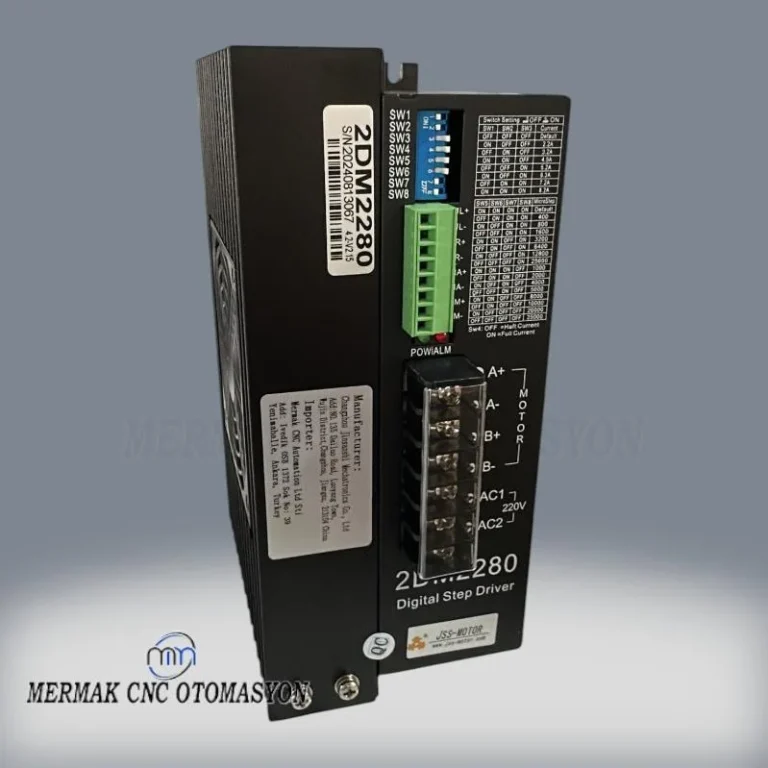
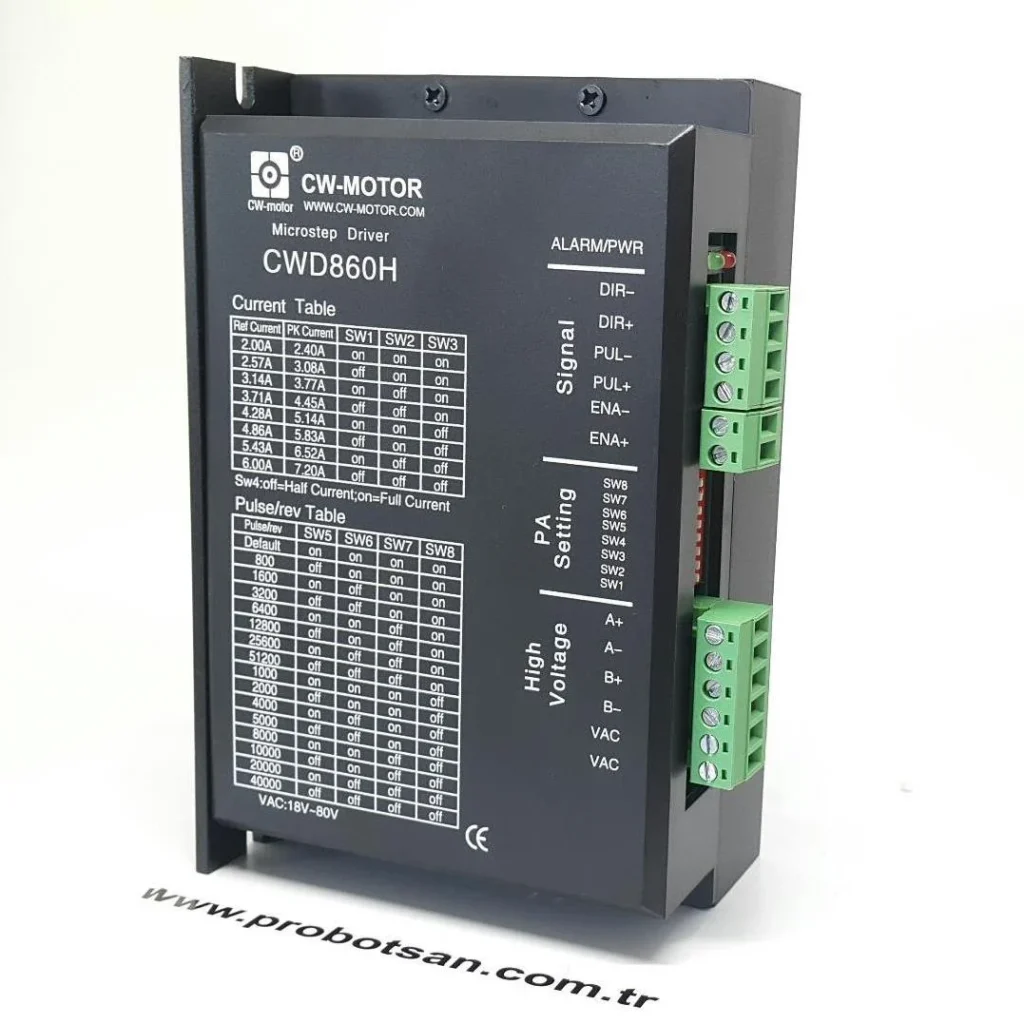
Step drivers are designed to control stepper motors. These motors move in discrete angular increments, or steps, in response to electrical pulses. A step driver translates these pulse signals into sequential energization of the motor’s windings, causing it to rotate one step at a time. Most step drivers operate on an open-loop control principle, meaning they send commands to the motor and assume the motor has executed them without requiring direct positional feedback. This simplicity makes step drivers and motors relatively cost-effective and easy to implement. They offer good torque at low speeds and reliable positioning for applications like 3D printers, small CNC machines, and indexing systems. However, they can lose steps at higher speeds or under heavy loads, leading to inaccuracies. Advanced features like micro-stepping can improve smoothness and resolution, mitigating some of these limitations.
Servo Drivers: High-Performance Closed-Loop Control
Servo drivers are engineered for servo motors and are indispensable for applications demanding the highest levels of precision and dynamic performance, such as advanced CNC machinery and robotics. Servo systems typically employ closed-loop control. This involves a feedback device, most commonly an encoder or resolver, attached to the motor shaft. The encoder continuously monitors the motor’s actual position, speed, and torque, sending this data back to the servo driver. The driver compares this feedback to the target command from the controller and makes real-time adjustments to the motor’s power output to eliminate any discrepancies (error signal). This constant feedback loop ensures exceptional positioning accuracy (often down to the micron level), rapid acceleration and deceleration, consistent torque across a wide speed range, and robust resistance to load variations. Unlike stepper motors, servo motors do not lose steps, ensuring precise motion control. While offering superior performance, servo systems are generally more expensive and require more complex setup and tuning.

Inverter Drivers (VFD): Efficient AC Motor Speed Regulation
Inverter drivers, also known as Variable Frequency Drives (VFDs) or AC drives, are primarily used to control the speed and torque of AC induction motors. Their operation involves converting the incoming fixed-frequency, fixed-voltage AC power from the grid into DC power (rectifier stage), and then inverting this DC power back into AC power with a variable frequency and voltage (inverter stage) to supply the motor. The motor’s speed is directly proportional to the frequency of the supplied power. VFDs enable smooth, continuous speed adjustment and offer soft-start and soft-stop capabilities, which reduce mechanical stress on the motor and connected equipment, thereby extending their lifespan. A significant advantage of VFDs is their energy-saving potential; by reducing motor speed when full power is not required (common in pumps, fans, and conveyors), they can achieve substantial energy savings. While often used in open-loop configurations for basic speed control, advanced VFDs can incorporate closed-loop control with encoder feedback for more precise speed or torque regulation. They are a popular choice for general-purpose speed control applications across various industrial machines.
| Parameter | Step Driver | Servo Driver | Inverter Driver (VFD) |
|---|---|---|---|
| Control Type | Open-Loop (Typically) | Closed-Loop (Always) | Open or Closed-Loop (V/f, Vector) |
| Motor Type | Stepper Motor | Servo Motor (DC/AC Brushless) | AC Induction Motor |
| Feedback Device | Usually None (Optional Encoder) | Always Required (Encoder, Resolver) | Optional (for Speed/Torque Control) |
| Positional Accuracy | Good (Per Step) | Very High (Micron Level) | Low (General Speed Control) |
| Dynamic Response | Moderate | Very High & Fast | Moderate |
| Typical Applications | 3D Printers, Small CNC, Indexing Tasks | Robotics, High-Performance CNC, Packaging, Precision Machinery | Pumps, Fans, Conveyors, Compressors, General Machine Speed Control |
| Cost | Low | High | Medium |

Key Considerations for Industrial Applications
- Proper Sizing and Compatibility: Ensuring the driver is correctly matched to the motor’s power, voltage, and current ratings is crucial. Mismatched drivers can lead to overheating, reduced performance, or damage. Pay close attention to manufacturer specifications for cable types, cross-sections, and shielding, especially for sensitive feedback signals in servo systems.
- Environmental Conditions and Cooling: Industrial environments can present challenges like dust, humidity, and extreme temperatures. Select drivers with appropriate IP ratings and operating temperature ranges. Adequate ventilation and cooling are essential for driver longevity and reliable operation, particularly for VFDs and high-power servo drivers.
- Electrical Noise and Interference: Motors and drives can generate electromagnetic interference (EMI). Proper grounding, shielded cabling, and careful wiring practices are necessary to prevent noise from affecting control signals or other sensitive electronic equipment.
- Safety Features: Industrial drivers often include safety features such as overcurrent, overvoltage, and thermal protection. Understanding and configuring these features is vital for protecting both the equipment and personnel.
Conclusion: Choosing the Right Driver for Your CNC and Automation Needs
The selection between step, servo, and inverter drivers hinges on the specific requirements of the application. For cost-effective, precise positioning at lower speeds, step drivers are a viable option. When high dynamic performance, rapid acceleration, and absolute positional accuracy are non-negotiable, servo drivers are the superior choice, particularly for demanding tasks on industrial CNC router machines. For efficient speed control of AC motors in applications like pumps, fans, and conveyors, inverter drivers (VFDs) offer significant energy savings and operational flexibility. By understanding the fundamental differences and application strengths of each driver type, engineers and technicians can make informed decisions to optimize their automated systems for peak performance and reliability.
Ready to enhance your industrial automation with the right motor control? Request a quote on WhatsApp today!
Related product categories: 0.75 Kw Variable Frequency Drives · 06B-2 Roller Chain Sprocket · 08B-1 Chain Sprocket