No products in the cart.
What is an Enclosure Thermostat? How is it Used for Fan and Heater Control?
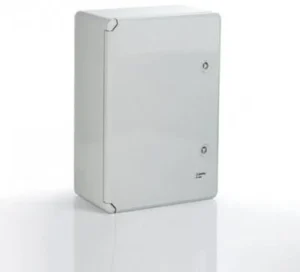
An enclosure thermostat is a critical automation component used to manage temperature inside industrial electrical panels. It typically works with bimetallic or electronic sensors to automatically activate cooling fans or heaters, preventing overheating of sensitive equipment and ensuring optimal operating conditions.
Mermak CNC Technical Guide
Practical notes for CNC router, automation and industrial motion systems.
Electrical enclosures are the heart of industrial automation systems, housing high-performance and sensitive equipment such as power supplies, drives, PLCs, relays, and various control devices. These components generate heat during operation, and controlling this heat is vital for system reliability, longevity, and performance. This is where the enclosure thermostat comes into play. An enclosure thermostat is a switching device that continuously monitors the internal temperature of an electrical enclosure. When this temperature exceeds or falls below a specific threshold, it automatically activates or deactivates the relevant cooling (fan) or heating (resistor) elements. Its purpose is to ensure that the equipment within the enclosure remains within the specified operating temperature range, preventing failures, performance degradation, and shortened lifespans caused by overheating. Furthermore, especially in cold or humid environments, maintaining the temperature above a certain level is crucial to prevent condensation, thereby eliminating the risk of electrical short circuits. These thermostats are typically compact and easily mountable on a DIN rail, featuring adjustable temperature setpoints.
Working Principle and Technical Data
Enclosure thermostats sense ambient temperature via internal sensors and compare it to a pre-set set point. These sensors can be bimetallic strips (for mechanical thermostats) or NTC/PTC thermistors (for electronic thermostats). The working principle is simple yet impactful:
- Fan Control (Normally Open – NO Contact Thermostat): When the enclosure temperature rises above the set upper threshold (e.g., 35°C), the thermostat’s normally open (NO) contact closes, activating the cooling fan. The fan stops when the temperature drops to the set lower threshold (e.g., 30°C), and the thermostat’s contact opens again. The temperature difference between these points is called hysteresis (switching differential), which prevents the fan from cycling on and off excessively, extending its lifespan. These thermostats are typically identified by blue adjustment knobs.
- Heater Control (Normally Closed – NC Contact Thermostat): When the enclosure temperature drops below the set lower threshold (e.g., 5°C), the thermostat’s normally closed (NC) contact opens, activating the heater. The heater stops when the temperature rises to the set upper threshold (e.g., 10°C), and the thermostat’s contact closes again. This is critical for condensation control, especially in outdoor enclosures or cold storage, as condensation can lead to short circuits and corrosion in electronic components. These thermostats are typically identified by red adjustment knobs.
- Dual Function Thermostats: Some thermostats offer both fan and heater control in a single unit. These devices usually have two separate contacts (one NC, one NO) and two separate adjustment knobs, providing protection against both overheating and excessive cooling/condensation. Typically, a higher setpoint is configured for the fan and a lower one for the heater.
Key technical parameters to consider when selecting an enclosure thermostat include:
- Adjustable Temperature Range: The range within which the device can be set (e.g., -10°C to +80°C).
- Switching Differential (Hysteresis): The difference between the thermostat’s opening and closing temperatures, typically ranging from 3K to 7K. This ensures stable operation without rapid cycling.
- Contact Type: Normally Open (NO), Normally Closed (NC), or Change-over (CO).
- Maximum Switching Capacity: The maximum current and voltage the thermostat can safely control (e.g., 250 VAC, 10A). This must match the power requirements of the fan or heater.
- Operating Voltage: The voltage the thermostat operates on (e.g., 230 VAC, 110 VAC).
- Mounting Type: Most are designed for DIN rail mounting (EN 60715).
- Protection Class (IP Code): Indicates protection against dust and water (e.g., IP20).
- Sensor Type: Bimetal, NTC, or PTC.
| Parameter | Value/Description |
|---|---|
| Adjustable Temperature Range | -10°C to +80°C (Model Dependent) |
| Switching Differential (Hysteresis) | 3K – 7K (Kelvin), Fixed or Adjustable |
| Contact Type | NO (Normally Open), NC (Normally Closed), CO (Change-over) |
| Max. Switching Current | 10A Resistive Load (AC1) / 2A Inductive Load (AC15) @ 250 VAC |
| Operating Voltage | 24VDC – 250VAC (Varies by model) |
| Mounting Type | DIN Rail (EN 60715) |
| Protection Class | IP20 |
| Sensor Principle | Thermobimetallic |
| Connection Terminals | Up to 2.5 mm² |

Field Considerations
- Correct Type Selection and Placement: Choosing an NO contact thermostat for fan control and an NC contact thermostat for heater control is essential. Dual-function thermostats are ideal for both needs. Proper placement is critical for accurate temperature sensing; the thermostat should be mounted near the warmest part of the enclosure but away from direct heat sources or cold air drafts. Incorrect placement can lead to unnecessary fan operation or inadequate heating.
- Wiring and Switching Capacity: The thermostat’s switching capacity must match the nominal values of the controlled fan or heater. Insufficient capacity can cause thermostat failure or premature wear. Connection wires should have an appropriate cross-section for the current, and connections must be secure. For high-current devices, the thermostat may need to control a contactor or relay.
- Hysteresis and Setpoint Adjustment: The thermostat’s hysteresis prevents rapid cycling of the fan or heater. Understanding this value and setting the temperature points according to the optimal operating range of the equipment and environmental conditions is crucial. For example, fan settings might be 35°C on and 30°C off; heater settings might be 5°C on and 10°C off. Overly sensitive adjustments (low hysteresis) can shorten equipment life.
- Integration with Humidity Control (Hygrostat): In humid environments or outdoor enclosures, temperature control alone may not prevent condensation. Using a hygrostat (humidity sensor) to control the enclosure heater is much more effective. A hygrostat activates the heater when humidity exceeds a certain level. Some advanced thermostats integrate both temperature and humidity sensors.
- Periodic Inspection and Maintenance: Regular checks of the thermostat and its connected fan/heater are important for maintaining performance. Verify that thermostat settings haven’t drifted, contacts are free from oxidation, fan filters are clean, and the heater is functioning effectively.
By correctly implementing and maintaining enclosure thermostats, industrial facilities can significantly enhance the reliability and lifespan of their electrical control systems, preventing costly downtime and equipment damage. For solutions that integrate advanced control systems for your CNC machinery, including precise environmental management, request a quote on WhatsApp.
Related product categories: Genel · CNC Kontrol Paneli · Mach3 Kontrol Kartları