





































































What is a Coolant Pump? How is it Used in CNC and Machine Tools?
📑 Table of contents (Click to open)
Practical notes for CNC router, automation and industrial motion systems.
Understanding the Coolant Pump in CNC and Machine Tools
In industrial automation and manufacturing, CNC (Computer Numerical Control) machines and other machine tools must operate with high precision and efficiency. A critical component ensuring the operational continuity and processing quality of these machines is the coolant pump. This device, as its name suggests, is an electromechanical unit that delivers coolant (typically a cutting fluid or emulsion) at a specific pressure and flow rate to the cutting zone or relevant systems to manage the excessive heat generated during machining processes. The contact between the tool and workpiece during machining generates significant heat due to high friction and deformation energy. This heat can lead to tool overheating, wear, and reduced lifespan, while also causing dimensional changes in the workpiece, deterioration of surface quality, and even alteration of material structure. The coolant pump effectively dissipates this heat, thereby extending tool life, increasing machining accuracy, improving surface quality, and maintaining the overall efficiency of the machine tool. In CNC machines, various types of cooling systems and, consequently, pumps may be used not only for the cutting zone but also for cooling spindle bearings, hydraulic units, and sometimes electrical cabinets.
Operating Principle and Technical Data
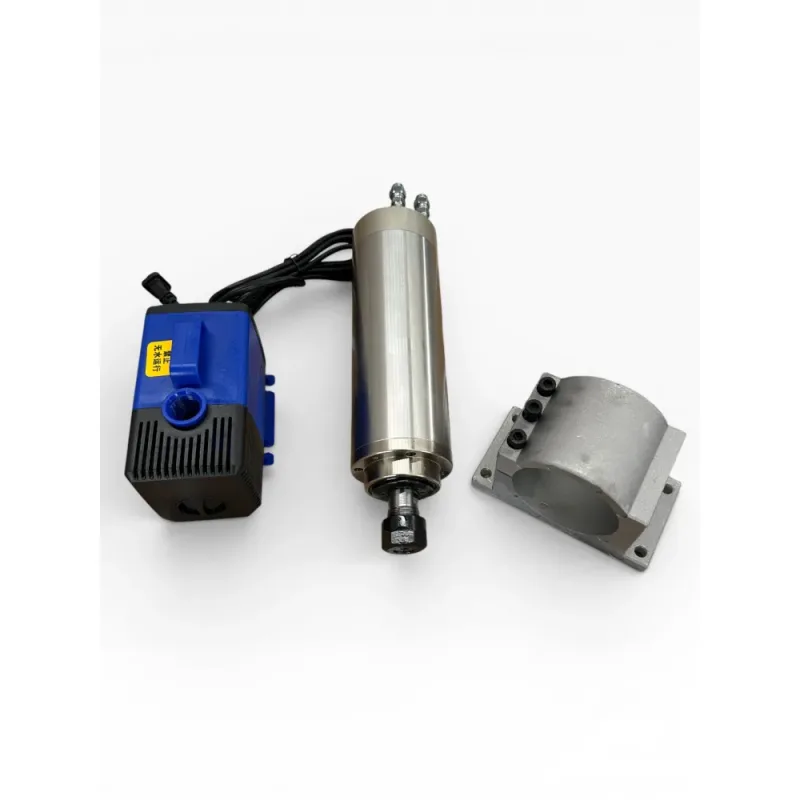
While the operating principles of coolant pumps vary by type, the fundamental goal is to transfer fluid from one point to another at higher pressure. Centrifugal pumps are the most common type used in CNC and machine tools. These pumps utilize an impeller, driven by a motor, to draw fluid into the center and expel it outwards using centrifugal force. This expulsive force increases the fluid’s pressure and velocity, enabling it to reach the desired point with high flow. Centrifugal pumps can be either submersible (mounted inside the fluid tank) or external (mounted outside the tank and connected via a suction line). Submersible pumps are frequently preferred in machine tools due to their compact size and fewer issues with suction lines.
For applications requiring higher pressure (e.g., deep hole drilling, micro-machining, or high-pressure through-spindle coolant systems), multi-stage centrifugal pumps or, occasionally, positive displacement pumps (like gear pumps) may be employed. Multi-stage pumps connect multiple impellers in series to progressively increase fluid pressure. This is vital for maximizing chip evacuation and cooling, especially when machining hard materials like stainless steel or titanium, or when using very small diameter tools.
The correct selection and filtration of the coolant are also critical factors for pump performance and the overall health of the system. Cutting fluids not only provide cooling but also perform lubrication, chip removal, and corrosion prevention. Metal chips, contaminants, and other particles within these fluids can, over time, damage the pump’s impellers and seals, cause blockages, or reduce pump efficiency. Therefore, coolant systems typically incorporate filters (paper filters, magnetic filters, cyclone filters, etc.) placed before the pump to ensure clean fluid is being pumped.
Key parameters to consider when selecting a coolant pump include:
- Flow Rate (Q): Expressed in liters per minute (LPM) or cubic meters per hour (m³/h), this is the volume of fluid the pump can deliver per unit of time. It is determined by the machining operation’s requirements.
- Head (H): Expressed in meters (m) or Bar, this indicates the height or pressure to which the pump can elevate the fluid. Crucial for through-spindle coolant or high-pressure applications.
- Motor Power (P): Measured in kilowatts (kW) or horsepower (HP), this is the power of the electric motor driving the pump, selected based on flow and pressure needs.
- Supply Voltage and Frequency: Must match the electrical grid (e.g., 230V/400V, 50Hz/60Hz).
- Fluid Type and Viscosity: The type of fluids the pump is designed for (cutting oil, water-based emulsion, special coolants) and their viscosity range.
- Ingress Protection (IP) Rating: The pump’s resistance to dust and water (e.g., IP54, IP68), important for industrial environments.
- Maximum Operating Temperature: The range of ambient and fluid temperatures within which the pump and motor can safely operate.
- Connection Sizes: The diameters of the pump’s suction and discharge ports.
| Parameter | Value/Description |
|---|---|
| Pump Type | Submersible Centrifugal (Most common), External Centrifugal, Multi-stage, Positive Displacement |
| Flow Rate Range | 5 – 500 Liters/Minute (Varies by application) |
| Pressure Range | 0.5 – 100 Bar (From low pressure to high-pressure through-spindle coolant) |
| Motor Power | 0.09 kW – 15 kW (Based on required flow and pressure) |
| Supply Voltage | 230V Single Phase / 400V Three Phase (50/60 Hz) |
| Fluid Compatibility | Water-Based Emulsions, Cutting Oils, Light Oils |
| IP Rating | IP54, IP55, IP68 (Suitable for industrial environments) |
Field Considerations
- Correct Pump Selection and Installation: It is essential to select a pump that matches the required flow rate and pressure for the application. The pump’s physical dimensions should be compatible with the coolant tank capacity and the overall machine structure. For submersible pumps, the fluid level must be maintained between the manufacturer’s specified minimum and maximum limits. For external pumps, a short and unobstructed suction line is important to prevent cavitation. Proper electrical connections and motor protection (thermal overload relay) must be ensured.
- Coolant Quality and Filtration: Regular monitoring and maintenance of coolant quality are vital for pump longevity and machining performance. Metal chips, contaminants, and foreign matter in the fluid can damage the pump’s impellers and bearings. Therefore, using an effective filtration system (e.g., mechanical filters, magnetic separators) and regularly cleaning or replacing filters is necessary. The coolant’s concentration, pH level, and biological contamination should be regularly measured, and adjustments made as needed.
- Maintenance and Checks: Coolant pumps operate continuously under demanding conditions and require regular maintenance. Periodic checks should include monitoring motor bearing noise, the condition of sealing elements (shaft seals, gaskets), the tightness of electrical connections, and the pump’s overall vibration levels. Inspect impellers for buildup or wear and clean or replace parts as necessary. Sudden drops in pressure or flow rate can be early indicators of blockages or pump failure.

Common Problems and Solutions
Coolant pumps can encounter various issues in industrial settings. Early detection and correct solutions are crucial for uninterrupted machine operation. For instance, a common problem is reduced flow rate, often caused by clogged filters or impellers. Cleaning the filters and pump intake, or inspecting and cleaning the impeller, can resolve this. If the pump fails to prime, ensure the fluid level is adequate and the suction line is free of air leaks. For motor-related issues, check the electrical supply and overload protection. Persistent problems may indicate internal pump wear, requiring professional inspection or replacement.
Investing in a high-quality coolant pump and adhering to a strict maintenance schedule are essential for maximizing the efficiency and lifespan of your CNC and machine tools. Proper coolant management, including filtration and regular fluid analysis, plays an equally important role.
For robust and reliable coolant pump solutions tailored to your industrial needs, explore Mermak CNC’s range of products. Request a quote on WhatsApp to discuss your specific requirements with our experts.
Related product categories: Genel · 380V Vakum Pompası · Takım Tutucu Kovanlar
