













































































What is Grease? Where is it Used in Bearings and Linear Systems?

📑 Table of contents (Click to open)
Practical notes for CNC router, automation and industrial motion systems.
Grease is a semi-solid lubricant composed of base oil, a thickener, and additives. It is crucial in industrial automation systems for reducing friction, wear, and corrosion, thereby extending the lifespan of moving parts such as bearings, linear guides, and ball screws. Grease provides effective protection under high loads, low speeds, shock loads, and challenging environmental conditions, ensuring it stays in place.
What is Grease and Where is it Used in Bearings and Linear Systems?
In the realm of industrial automation, the efficient and uninterrupted operation of machinery is paramount. Among the most fundamental elements used to protect moving components and enhance their performance is grease. So, what is grease, and specifically, where is it used in bearings and linear systems? Grease is essentially a semi-solid lubricant consisting of a base oil (mineral or synthetic), a thickener that holds the oil together, and various additives to improve its performance. Unlike liquid oils, grease tends to remain in place on the surface it’s applied to, making it ideal for applications requiring sealing or intermittent lubrication.
Grease reduces friction between two surfaces in machinery, minimizing heat generation, preventing wear, and protecting metal surfaces from corrosion. It also acts as a barrier against contaminants like dust, dirt, and moisture from the external environment, safeguarding sensitive mechanisms. These properties make it an indispensable lubricant for critical components such as bearings (ball, roller, tapered) and linear motion systems (linear guides, ball screws, linear modules), especially in environments with high loads, shock impacts, or variable speeds. In industrial automation applications, grease is key to the long-term, reliable operation of numerous systems, including robotic arms, CNC machines, conveyor systems, and assembly lines.
Working Principle and Technical Data
The working principle of grease is based on its thickener structure acting like a sponge, absorbing the base oil and releasing it in a controlled manner under mechanical stress. When a component like a bearing or a linear guide moves, the base oil within the grease forms a film between the moving surfaces. This film prevents metal-to-metal contact, thereby reducing the coefficient of friction, dissipating heat, and preventing wear. The thickener prevents the grease from being expelled by gravity or centrifugal force, ensuring it remains in the application area.
The performance of grease depends on the type and proportion of its components:
- Base Oil: Constitutes 70-95% of the grease. Its viscosity determines the grease’s performance at high or low speeds, its operating temperature range, and film thickness. While mineral oils are common for general applications, synthetic oils (PAO, ester, silicone) are preferred for extreme temperatures, high speeds, or applications requiring special chemical resistance.
- Thickener: Provides the semi-solid structure of the grease and is present in proportions of 3-30%. The most common thickeners are based on lithium soaps (general purpose), calcium soaps (water resistance), aluminum complex (high temperature, water resistance), polyurea (high temperature, long life), and bentonite (high temperature, chemical resistance). The type of thickener affects the grease’s dropping point, mechanical stability, and water resistance.
- Additives: Make up 0-10% of the grease and are added to enhance specific properties. These include EP (Extreme Pressure) additives (protect metal surfaces under high loads), anti-wear (AW) additives, rust and corrosion inhibitors, antioxidants (extend oil life), tackifiers, and solid lubricants (graphite, molybdenum disulfide).
Use in Bearings: Bearings are found wherever rotational motion occurs, increasing efficiency by minimizing friction. Ball bearings, roller bearings, and needle bearings have applications ranging from high speeds to heavy loads. Grease prevents wear and extends operational life by providing a continuous lubricating film between the rolling elements and raceways within the bearing. In sealed bearings (closed type), grease can provide lifetime lubrication. For high-speed applications, greases with low-viscosity base oils are used, while for heavy-load, low-speed applications, greases with high-viscosity base oils and EP additives are preferred.
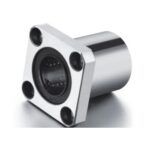
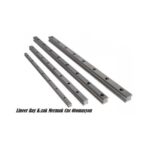
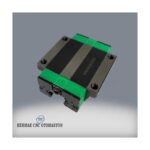
Use in Linear Systems: Linear guides, ball screws, and linear modules are fundamental components in industrial automation, providing precise linear motion. Grease plays a critical role in minimizing friction between moving and stationary elements, maintaining precision, and extending system life. In linear guides, grease lubricates the rolling elements (balls or rollers) and contact surfaces between the guide carriage and the rail. Ball screws utilize grease to lubricate the thread contact between the nut and the screw, ensuring efficient power transmission and preventing wear. In these applications, grease typically needs to be more adhesive and water-resistant, while maintaining a stable structure that does not affect the precision of movement and positioning. Most linear system manufacturers recommend specific grease types or specifications for their products.
Grease selection must consider application conditions (load, speed, temperature, environmental factors), equipment design, and manufacturer recommendations. Incorrect grease selection or inadequate lubrication can lead to premature equipment failure, increased energy consumption, and production losses.
| Parameter | Value/Description |
|---|---|
| NLGI Consistency Class | 000 (Very Fluid) – 6 (Very Stiff). Classes 2 and 3 are most common in industrial applications. |
| Base Oil Viscosity (cSt @ 40°C) | Typically in the range of 100 cSt – 460 cSt. Low viscosity for high speeds, high viscosity for high loads. |
| Dropping Point | The temperature at which the grease begins to liquefy. Varies by thickener type (e.g., ~180-200°C for Lithium, >250°C for Polyurea). Must be higher than the maximum operating temperature. |
| Operating Temperature Range | The temperature range within which the grease can maintain its performance. Can vary from -40°C to +200°C depending on base oil and thickener. |
| Thickener Type | Lithium Soap, Lithium Complex, Calcium Soap, Aluminum Complex, Polyurea, Clay (Bentonite). Selected based on application requirements. |
| Water Resistance | The ability of the grease to retain its structure and lubricating properties upon contact with water. Critical in wet or humid environments. |
| EP (Extreme Pressure) Additives | Additives that prevent wear on metal surfaces under high loads and shock impacts. Important for gears and heavily loaded bearings. |
Important Considerations in Practice
- Correct Grease Selection: Choosing the appropriate grease for each application is vital. Strictly adhere to the manufacturer’s specified parameters (NLGI class, base oil viscosity, thickener type, additives). Operating conditions such as heavy loads, high temperatures, high speeds, humid, or dusty environments directly influence grease selection. For instance, synthetic-based greases with high dropping points are suitable for bearings operating at high temperatures, while calcium complex greases with good water resistance are preferred for humid environments. Incorrect grease selection can lead to premature bearing failures and reduced system performance.
- Application Method: Proper application is as crucial as correct selection. Over-greasing can cause excessive heat buildup and churning, while under-greasing leads to insufficient lubrication. For bearings, typically 1/3 to 1/2 of the bearing’s free space is filled with grease. For linear guides and ball screws, a thin, even layer should be applied. Specialized grease guns and automatic lubrication systems can ensure consistent and accurate application.
- Compatibility: When relubricating or topping up, ensure the new grease is compatible with the existing grease. Mixing incompatible greases can break down the thickener structure, leading to premature failure. Always consult the manufacturer’s compatibility charts if unsure.
- Storage and Handling: Store grease in a cool, dry place, away from direct sunlight and contaminants. Keep containers tightly sealed. Contaminated grease loses its effectiveness and can damage machinery.
- Regular Maintenance: Implement a regular lubrication schedule based on operating conditions and manufacturer recommendations. Periodic inspection of lubrication points can help identify potential issues before they become critical.
Proper understanding and application of grease are fundamental to maintaining the reliability and longevity of industrial machinery, including CNC router machines and other automated equipment. By selecting the right grease and applying it correctly, you ensure optimal performance and minimize costly downtime.
Need expert advice on lubrication for your industrial CNC router or other automation systems? Request a quote on WhatsApp today!
Related product categories: Genel · 25 Mm Lineer Kızak, Rulman Ve Yataklar · 20 Mm Lineer Kızak, Rulman Ve Yataklar
