




































































What is a Vacuum Filter? How Does it Protect the Vacuum System from Dust?
📑 Table of contents (Click to open)
Practical notes for CNC router, automation and industrial motion systems.
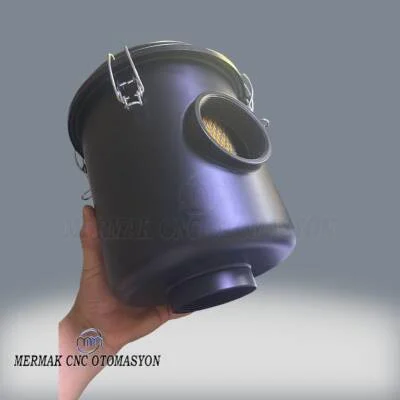
A vacuum filter is a vital component that safeguards the vacuum pumps and other critical parts of industrial vacuum systems from dust, particles, liquid droplets, and other contaminants. It extends the system’s lifespan, optimizes performance, and ensures production continuity by preventing failures.
In industrial automation, vacuum technologies play a crucial role in applications such as lifting, conveying, suction, drying, and packaging. At the heart of these systems are vacuum pumps, precision engineering products that draw in air or gas from the environment or process. However, this air can contain various contaminants like dust, chips, fibers, granules, vapors, oil particles, and even small liquid droplets originating from the production environment. This is precisely where the vacuum filter comes into play. Acting as a protective shield, the vacuum filter prevents these contaminants from reaching the vacuum pump or other sensitive components, ensuring the system operates efficiently and reliably.
The primary function of a vacuum filter is to mechanically capture solid or liquid particles from the incoming air stream, preventing them from entering the system. This protection prevents serious damage such as wear, clogging, and corrosion within the vacuum pump’s internal mechanisms (rotors, vanes, valves, seals). A damaged vacuum pump leads to performance degradation, increased energy consumption, and ultimately, costly repairs or replacements. Furthermore, filtration is not limited to pump protection; in certain applications (e.g., food, pharmaceutical, electronics manufacturing), it is also used to maintain the cleanliness and quality of the vacuumed environment or product.
Vacuum filters come in various designs and filtration levels depending on the application and the type of contaminant. For instance, simple cartridge filters may suffice for coarse dust, while high-efficiency solutions like HEPA (High-Efficiency Particulate Air) filters might be necessary for very fine particles or sterile environments. For separating liquid droplets, coalescing filters or cyclonic pre-separators can be preferred. Selecting the correct filter is crucial for system reliability and operational efficiency.
Operating Principle and Technical Data
The working principle of vacuum filters is based on the physical trapping of particles in the air stream by a filter medium. Air enters the filter housing and passes through the porous structure of the filter element (cartridge, bag, disc, etc.), where particles are captured on the filter surface or within its depth. This process can occur through several mechanisms:
- Interception: Particles moving with the airflow adhere to filter fibers when they pass close by.
- Impaction: Larger, heavier particles, due to their momentum, collide directly with the filter fibers at sharp turns in the airflow or on the fibers themselves, becoming trapped.
- Diffusion: Very small particles (typically less than 0.1 microns) move randomly due to collisions with air molecules (Brownian motion). This random movement pushes them towards the filter fibers, leading to their capture.
- Sieving: Particles are trapped because they are physically too large to pass through the pores of the filter medium.
The filter medium is typically made from cellulose, synthetic fibers (polyester, polypropylene, fiberglass), PTFE (Polytetrafluoroethylene), or specialized composite materials. The structure of the medium, its pore size, surface area, and chemical resistance determine the filter’s efficiency, lifespan, and application suitability. For example, in environments with moisture or chemical vapors, synthetic or PTFE filters resistant to water and chemicals are preferred, while cellulose-based filters can offer an economical solution for dry dust applications.
Filtration efficiency measures how well a filter captures contaminants of a specific particle size and is usually expressed as a percentage (e.g., 99.99% efficiency for 0.3-micron particles). The micron rating indicates the smallest particle size the filter can capture. Standards like ISO 16890 are used to define filter performance and classification for industrial filters.
Another important technical parameter is the pressure drop caused by the airflow through the filter. A clean filter has minimal pressure drop. However, as the filter element becomes dirty, its pores clog, increasing resistance to airflow, which leads to a rise in pressure drop. A high pressure drop forces the vacuum pump to work harder, increasing energy consumption and reducing vacuum levels. Therefore, it is critical to monitor filters regularly and replace or clean them when a specific pressure drop limit is reached.
The flow rate is directly related to the vacuum pump’s capacity, and the filter must be sized appropriately to handle this flow rate comfortably. An undersized filter can lead to premature clogging and performance issues. Vacuum filters are used in many areas of industrial automation: dust and chip extraction in CNC machines, protecting vacuum grippers in robotic applications, preventing product loss and pump damage in pneumatic conveying systems, maintaining product quality in packaging machines, and separating vapors and particles in chemical processes, among others.
| Parameter | Value/Description |
|---|---|
| Filtration Efficiency | 99.9% – 99.999% (for particles between 0.3 µm – 5 µm) |
| Particle Capture Capacity | 0.1 micron to 500 microns (varies by application and filter type) |
| Filter Medium Material | Cellulose, Polyester, Polypropylene, Fiberglass, PTFE Membrane |
| Operating Temperature Range | -20°C to +150°C (depending on material and seals) |
| Max. Pressure Difference | 50 mbar to 500 mbar (maximum recommended differential pressure) |
| Maintenance/Replacement Interval | 3 months – 2 years (depends on contamination level and operating hours) |
| Application Areas | CNC, Robotics, Pneumatic Conveying, Packaging, Food, Chemical, Textile |
Key Considerations in Practice
- Correct Filter Selection and Sizing: Every vacuum application is unique, and selecting the right filter is fundamental for the system’s longevity and efficiency. First, identify the types of contaminants (dust, chips, liquids, oil vapor, chemical gases) and their particle sizes present in the system. Then, choose a filter element with the appropriate micron rating and sufficient surface area, considering the vacuum pump’s flow rate and the desired filtration efficiency. An incorrect filter choice may provide inadequate protection or lead to unnecessarily high pressure drops and energy loss. For instance, hydrophobic filter media or liquid separator pre-filters should be used in high-humidity environments.
- Regular Maintenance and Filter Replacement: Vacuum filters are consumables that become clogged with contaminants over time. This clogging increases the filter’s resistance to airflow (pressure drop), causing the vacuum pump to consume more power, reducing vacuum levels, and leading to overheating. Therefore, filters must be checked periodically and replaced or cleaned (if cleanable type) when a specific pressure drop threshold is reached or at the manufacturer’s recommended maintenance intervals. Typically, a differential pressure sensor or gauge installed on the vacuum system is the most reliable indicator for filter replacement timing.
- Proper Installation and Sealing: The filter’s performance is directly dependent on its correct installation and sealing. The filter housing and element must be securely fitted to prevent any bypass of unfiltered air. Any leaks can significantly compromise the filtration effectiveness and potentially damage the vacuum pump. Ensure that seals are intact and properly seated during installation.
Investing in the right vacuum filter and adhering to a strict maintenance schedule are crucial steps to ensure the optimal performance, reliability, and extended operational life of your industrial vacuum systems. For expert advice on selecting the best vacuum filtration solutions for your specific needs, request a quote on WhatsApp.
Mechanical components, such as those found in General automation systems, rely heavily on clean operating environments. Proper filtration prevents premature wear and ensures that components like servo drives and linear guide rails function as intended.
Related product categories: 380V Vakum Pompası · Diğer Çeşitler
