






































































Linear Bearings: What They Are and How They’re Used in Linear Motion Systems

📑 Table of contents (Click to open)
Linear bearings are crucial mechanical components in industrial automation, minimizing friction on shafts or rails to enable precise, repeatable straight-line motion. They support loads in applications like robotics, CNC machines, and conveyor systems, offering high speed and accuracy.
Practical notes for CNC router, automation and industrial motion systems.
Understanding Linear Bearings: The Backbone of Precise Motion
Linear bearings are fundamental components in industrial automation, designed to facilitate controlled and efficient movement along a straight axis. Unlike traditional rotary bearings that support circular motion, linear bearings enable components like workpieces, robot arms, or conveyor tables to move smoothly and with minimal friction from one point to another. Their primary function is to support loads while maximizing the accuracy, repeatability, and speed of motion. These versatile components are indispensable across a wide range of applications, from modern manufacturing plants and laboratory equipment to medical devices and large-scale machine tools. By enabling movement along a shaft or rail with significantly reduced friction, linear bearings minimize energy loss, reduce wear, and extend the operational life of machinery.
Working Principles and Technical Specifications
The operation of linear bearings is based on the principle of rolling or sliding friction to facilitate linear motion. The most common types of linear bearings utilize rolling elements such as balls, rollers, or needles. These elements circulate within a bearing housing, allowing a moving component to glide smoothly along a hardened shaft or a dedicated rail. This rolling action results in a much lower coefficient of friction compared to sliding contact, leading to reduced energy consumption and less heat generation. Linear motion systems typically employ two main categories of bearings: ball bearing bushings and linear slide systems (rail and block).
Ball Bearing Bushings
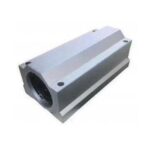
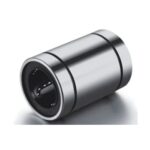
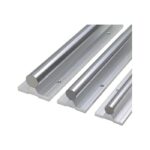
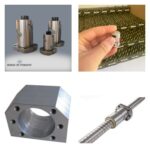
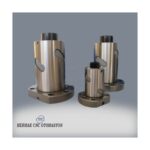
These bearings operate on a hardened and precision-machined shaft. The bearing block contains internal channels where balls circulate. As the block moves, the balls roll between the shaft and the bearing housing, providing low-friction linear movement. They are generally compact and suitable for moderate loads and speeds. Ball bearing bushings are frequently found in CNC machines, 3D printers, and packaging machinery due to their precision and cost-effectiveness.
Linear Slide Systems (Rail and Block)
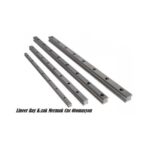
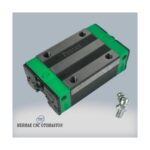
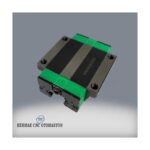
These systems consist of a linear rail (or guideway) and a linear block that travels along the rail. The block contains recirculating balls or rollers that engage with the rail’s grooves. Compared to ball bushings, these systems typically offer higher load capacities, greater rigidity, and superior accuracy. Roller-based systems are often preferred for applications requiring very heavy loads and high impact resistance, while ball-guided systems are used for general-purpose high-performance linear motion. They are essential in applications such as laser cutting machines, robotic arms, heavy industrial automation, and precision measuring instruments. The number and geometry of contact points between the block and the rail directly influence the system’s load-carrying capacity, moment resistance, and overall rigidity.
Key technical data that define the performance of linear bearings include:
- Dynamic Load Capacity (C): The maximum continuous load a bearing can withstand over a specified life (typically 50 km or 100 km). This value is used to determine the bearing’s fatigue life.
- Static Load Capacity (C0): The maximum load a bearing can handle without permanent deformation. This is important for loads experienced when the system is stationary or moving at low speeds.
- Accuracy Class: Refers to the manufacturing tolerances of the bearing and rail. Classes like P0, P1, P2, P5, and P6 indicate precision levels, with P0 being the lowest and P6 the highest. Higher accuracy means more precise positioning and less deviation.
- Coefficient of Friction: The amount of friction generated during motion. A low coefficient of friction signifies less energy loss and heat generation.
- Maximum Speed: The highest linear speed at which the bearing can operate safely and efficiently. High speeds may require specialized bearing designs and careful lubrication.
- Stiffness: Indicates how much the bearing deforms under load. High stiffness ensures minimal deflection and accurate positioning.
- Service Life (L10): The estimated travel distance at which 90% of bearings will operate without signs of fatigue under specific load and speed conditions.
- Operating Temperature Range: The minimum and maximum temperatures within which the bearings can operate without affecting performance or lifespan.
- Material: The materials used for the bearing housing, balls/rollers, and rails (typically hardened steel, stainless steel) affect corrosion resistance and load capacity.
These technical specifications are vital for selecting the most appropriate linear bearing system for a given application. Incorrect selection can lead to reduced system performance, premature failure, and increased maintenance costs.
| Parameter | Value/Description |
|---|---|
| Dynamic Load Capacity | 500 N – 100,000 N (Varies by model and size) |
| Static Load Capacity | 1,000 N – 200,000 N (Varies by model and size) |
| Accuracy Class | Normal (P0), High (P1), Super High (P2), Ultra High (P3) |
| Coefficient of Friction | 0.002 – 0.005 (For rolling element bearings) |
| Maximum Speed | 1 m/s – 10 m/s (Depends on application and lubrication) |
| Operating Temperature | -20°C to +80°C (Standard; varies for special types) |
| Service Life (L10) | 50 km – 100,000 km (Depends on load, speed, and lubrication) |
| Material | Hardened Bearing Steel, Stainless Steel |
Critical Considerations in Application
- Correct Bearing Selection and Sizing: Thoroughly analyze the application’s requirements, including load (dynamic and static), speed, accuracy, rigidity, and environmental conditions (dust, moisture, temperature, chemicals). Overloading or selecting the wrong type of bearing will shorten its lifespan and degrade system performance. Load calculations must account for vertical and horizontal forces, moment loads, and impact effects. Apply safety factors to ensure catalog values align with field realities.
- Precise Installation and Alignment: The performance of linear bearing systems is directly dependent on installation precision. The parallelism, straightness of rails or shafts, and correct torque application for block fastening are critical. Misalignment leads to excessive stress, premature wear, increased friction, and vibration. Use specialized alignment tools and precision measuring instruments during installation, strictly adhering to manufacturer guidelines.
- Effective Lubrication and Maintenance: Regular and correct lubrication is essential for the longevity and smooth operation of linear bearings. Lubrication reduces friction, prevents wear, provides corrosion protection, and dissipates heat. The type of lubricant (oil or grease), quantity, and lubrication interval should follow the manufacturer’s recommendations and the specific operating conditions. Neglecting lubrication can lead to rapid degradation and failure.
- Environmental Protection: In dusty or contaminated environments, consider using linear bearings with seals or wipers to prevent ingress of foreign particles, which can cause premature wear and damage. For corrosive environments, stainless steel options or special coatings may be necessary.
Proper selection, installation, and maintenance of linear bearings are paramount for achieving optimal performance and reliability in demanding industrial applications. These components are integral to the precision and efficiency of modern automated systems.
For your industrial automation needs, including high-precision linear motion components, explore our range of solutions. Request a quote on WhatsApp today to discuss your specific requirements.
Related product categories: Genel · 25 Mm Lineer Kızak, Rulman Ve Yataklar · 20 Mm Lineer Kızak, Rulman Ve Yataklar
