








































































Hydraulic Cylinders vs. Pneumatic Cylinders: Understanding the Differences

📑 Table of contents (Click to open)
Practical notes for CNC router, automation and industrial motion systems.
In industrial automation, both hydraulic cylinders and pneumatic cylinders are essential actuators that convert fluid pressure into linear motion. While they share a basic structure of a piston within a cylinder, their operating principles and resulting performance characteristics lead to distinct application niches. Understanding these differences is crucial for selecting the right actuator for your specific industrial needs, whether for a CNC router machine, an industrial CNC router, or other automated machinery.
Hydraulic cylinders typically operate using incompressible fluids, most commonly hydraulic oil. A hydraulic pump generates high pressure, which is then directed to move a piston, enabling the production of significant linear forces. These systems are renowned for their high power density, precise control, and ability to lift or move heavy loads. They are indispensable in heavy industries, from construction equipment to metalworking presses.
Conversely, pneumatic cylinders utilize compressed air. A compressor supplies pressurized air, which is guided by pneumatic valves to actuate the piston. Pneumatic systems generally produce lower forces than hydraulic systems but can achieve higher speeds and offer simpler installation and maintenance. They are frequently employed in applications requiring rapid, moderate-force movements, such as in the food and beverage, pharmaceutical, packaging, and assembly line industries.
The core distinction lies in the working fluid: the incompressibility of oil grants hydraulics its power and control, while the compressibility of air allows pneumatics its speed and flexibility. This fundamental difference dictates the advantages, disadvantages, and ideal use cases for each system.
Working Principles and Technical Data
Both cylinder types aim to generate linear motion, but their methods and performance metrics differ significantly. Let’s delve deeper into their operational principles and technical specifications.
Hydraulic Cylinder Principles and Features
Hydraulic systems operate on Pascal’s Principle: pressure applied to an enclosed fluid is transmitted undiminished to every portion of the fluid and the walls of the containing vessel. In a hydraulic cylinder, high-pressure oil from a pump acts on the piston’s surface area, generating substantial force and causing linear movement. The piston’s direction is reversed by controlling the oil flow with a directional control valve. The oil circulates within a closed loop, returning to a reservoir, which contributes to system efficiency.
- High Force Capacity: Due to the incompressibility of hydraulic oil, very high forces (e.g., tons) can be generated even with small-diameter cylinders. This makes them ideal for heavy lifting, pressing, cutting, and clamping applications.
- Precise Control and Positioning: With proportional valves and closed-loop control systems, the speed, force, and position of hydraulic cylinders can be adjusted with extreme precision. This is critical for applications like robotics and CNC machinery requiring high accuracy.
- Rigidity: Hydraulic systems offer high rigidity against external loads, meaning they can maintain their position under load.
- System Complexity: Hydraulic systems often involve more components, including pumps, reservoirs, filters, coolers, and complex valve manifolds, leading to higher initial costs and maintenance requirements.
- Leakage Risk: Operating under high pressure, hydraulic systems carry a risk of oil leaks, which can cause environmental contamination and safety hazards.

Pneumatic Cylinder Principles and Features
Pneumatic systems use compressed air, typically conditioned by an FRL (Filter-Regulator-Lubricator) unit, from a compressor. This pressurized air is directed by a directional control valve to one side of the cylinder, pushing the piston and creating linear motion. Air on the opposite side of the piston is exhausted to the atmosphere. Unlike hydraulic systems, air is usually vented and not recirculated in a closed loop.
- High Speed Capability: The low viscosity of air and its ability to be easily exhausted allow pneumatic cylinders to achieve very high speeds, beneficial for rapid cycle times in automation.
- Cleanliness: Air is a much cleaner medium than hydraulic oil, making pneumatic systems suitable for industries where hygiene is paramount, such as food processing, pharmaceuticals, and textiles. Leaks do not cause environmental pollution.
- Simplicity and Lower Cost: Pneumatic systems generally have a simpler design with fewer components, resulting in lower installation costs and reduced maintenance needs.
- Lower Force Capacity: Due to air’s compressibility, pneumatic cylinders produce lower forces compared to hydraulic cylinders. Achieving equivalent force often requires significantly larger cylinder diameters.
- Less Precise Control: The compressibility of air makes precise positioning and speed control more challenging. Cylinders may exhibit a ‘springy’ behavior under load.
- Energy Efficiency: The continuous operation of compressors and energy losses during air preparation can make pneumatic systems less energy-efficient than hydraulics.
| Parameter | Hydraulic Cylinder | Pneumatic Cylinder |
|---|---|---|
| Working Fluid | Incompressible Hydraulic Oil | Compressible Air |
| Max Force | Very High (Tons) | Moderate (Few hundred kg) |
| Precision & Control | Very High (Position, Speed, Force) | Moderate (Less rigid due to air compressibility) |
| Speed | Moderate – High (Controllable) | Very High (Ideal for rapid cycles) |
| System Complexity | More Complex (Pump, reservoir, filters, cooler) | Simpler (Compressor, FRL unit) |
| Installation Cost | Higher | Lower |
| Operating Cost | Lower (High energy efficiency) | Higher (Compressor & air prep) |
| Maintenance | Regular oil changes, filter checks, leak detection | Air quality checks, filter replacement, seal inspection |
| Environmental Impact | Potential oil leak risk | Clean, exhausted air |
| Typical Applications | Heavy industry, presses, construction machinery, metal forming | Packaging, assembly, food processing, robotic grippers |

Considerations in Practice
For efficient and safe operation in industrial automation systems, several practical aspects must be considered when implementing hydraulic or pneumatic cylinders. The choice often depends on the specific requirements of the application, such as the required force, speed, precision, operating environment, and budget. For instance, if your operation involves heavy-duty tasks like lifting massive components or performing high-force pressing on a CNC press brake, a hydraulic system is likely the superior choice. Conversely, if the application demands rapid pick-and-place movements on a packaging line or precise, clean manipulation in a pharmaceutical setting, a pneumatic system would be more appropriate. Ensuring proper system design, component selection, and regular maintenance are key to maximizing the performance and lifespan of either type of cylinder. For advanced motion control in CNC router machines, understanding the nuances of servo drives and linear guide rails is also critical, complementing the function of the primary actuators.
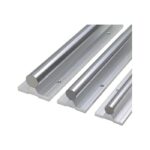
When selecting components for your industrial machinery, consider the overall system integration. For example, a robust CNC control panel is essential for managing the complex sequences of operations involving cylinders, spindle motors, and other machine components. Reliable linear guide rails ensure smooth and precise movement, while powerful servo drives provide the necessary torque and speed for dynamic tasks.
Ultimately, the decision between hydraulic and pneumatic cylinders hinges on a careful evaluation of performance needs versus operational constraints. Both technologies play vital roles in modern industrial automation, enabling everything from intricate assembly tasks to heavy material handling.
Need to discuss the best actuation solution for your industrial machinery? Request a quote on WhatsApp and let our experts help you find the perfect fit.
Related product categories: Genel · CNC Kontrol Paneli · Armutlu Silindir
