No products in the cart.
How to Clean Linear Guide Rails: Essential Maintenance for CNC Machines
Contents
Proper cleaning of linear guide rails is crucial for maintaining the precision and performance of industrial automation systems. This guide covers the essential steps to remove contaminants, clean rail surfaces and bearing elements, and re-lubricate for extended lifespan and optimal efficiency.
Mermak CNC Technical Guide
Practical notes for CNC router, automation and industrial motion systems.
Understanding Linear Guide Rails and the Need for Cleaning
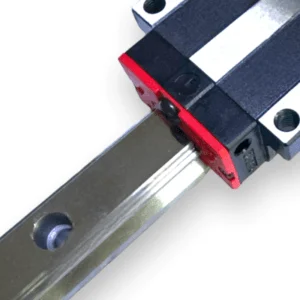
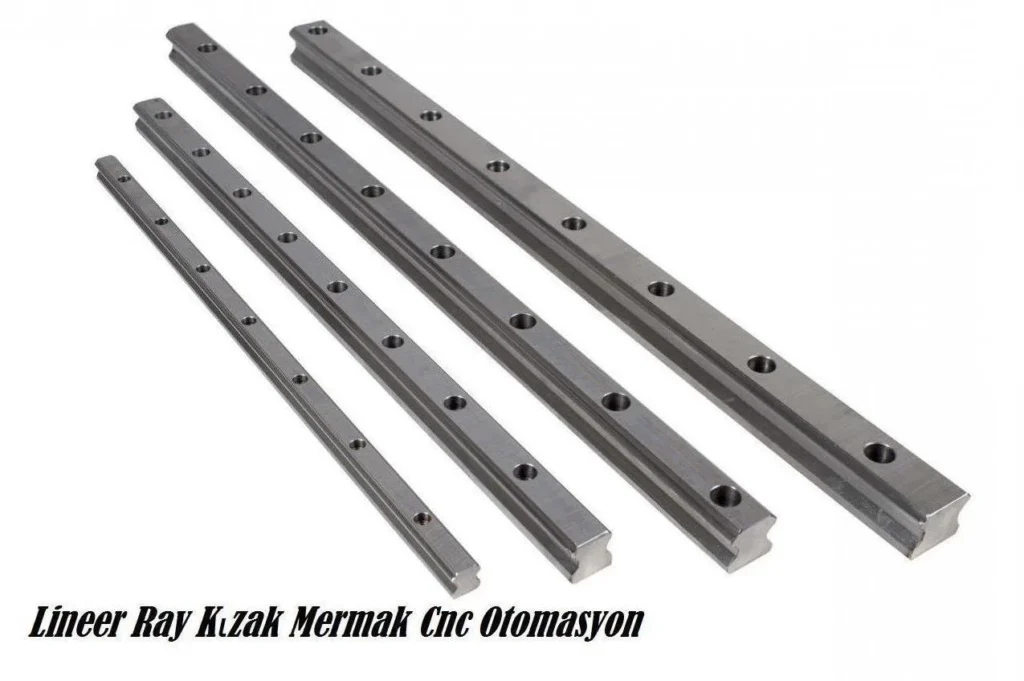
Linear guide rails are fundamental mechanical components in industrial automation, providing high-precision movement and positioning. They are indispensable in applications such as robotic arms, CNC machines, automated assembly lines, and various motion systems. These rails enable a moving component (the carriage or block) to travel linearly along a fixed track (the rail) with minimal friction. Over time, critical surfaces can accumulate dust, metal chips, oil residues, coolant, and other environmental contaminants. These buildups impede the smooth operation of the rails, increase friction, accelerate wear, and degrade the system’s positioning accuracy. Therefore, linear guide rail cleaning is a periodic maintenance process designed to eliminate these contaminants, restore the rails’ original performance, and extend their operational life.
Effective linear guide rail cleaning involves more than just physically removing debris; it requires selecting appropriate cleaning agents that do not damage the rail’s structure, employing correct techniques, and performing proper post-cleaning lubrication. Inadequate or incorrect cleaning can cause permanent damage to the rail components, compromise seals, or introduce new contaminants into the system. Consequently, this process is vital for the seamless operation of industrial automation and demands a professional approach.
Operating Principles and Technical Considerations
Linear guides operate using rolling elements (balls or rollers) housed within the carriage, which travel along precisely machined raceways on the rail. This design ensures low friction, high rigidity, accuracy, and repeatability. However, these precise structures are highly sensitive to contamination. Even the smallest particles can become trapped between the rolling elements and the raceway surfaces, leading to micro-wear. Over time, this wear accumulates, increasing surface roughness, raising the coefficient of friction, and disrupting the smooth motion of the rails.
The primary goal of linear guide rail cleaning is to remove these particles and old, degraded lubricants. Lubricants can degrade over time due to oxidation or contamination, losing their viscosity and protective properties. This reduces their ability to form a protective film between rolling elements, increasing metal-to-metal contact and accelerating wear. Technically, the cleaning process must be performed without compromising the surface tension of the rails, damaging seals, or causing corrosion, especially to the bearing steel and other sensitive components. Proper re-lubrication after cleaning is essential to form a hydrodynamic film, minimize friction and heat, and significantly extend the rails’ service life.
Performance metrics for linear guides in industrial automation, such as positioning accuracy, repeatability, and service life, are directly influenced by cleaning and maintenance. A contaminated rail can operate outside its nominal accuracy specifications, leading to production errors. Thus, the question of how to clean linear guide rails addresses not just a maintenance task, but a strategic operation impacting production quality and efficiency. Ensure all moving and stationary surfaces, especially raceways and seals, are thoroughly cleaned during the process.
| Parameter | Value/Description |
|---|---|
| Cleaning Frequency | Every 3-6 months, or as per manufacturer’s recommendation, depending on environmental conditions and operating intensity. |
| Cleaning Agent | Isopropyl alcohol (IPA), industrial degreasers (seal-compatible), mineral-based solvents. Manufacturer approval is crucial. |
| Tools | Lint-free cloths, soft brushes, low-pressure air gun, plastic scrapers, cleaning spray. |
| Critical Checkpoints | Rail surface, carriage bearing raceways, seals, lubrication ports, mounting screws. |
| Post-Cleaning Procedure | Re-lubricate with fresh, manufacturer-approved grease or oil suitable for the specific rail type. Ensure all moving surfaces are coated. |
| Important Note | Never use abrasive cleaners or metal brushes. Avoid high-pressure air. |
| Safety Precautions | Use Personal Protective Equipment (PPE) like gloves and safety glasses. Work in a well-ventilated area. Ensure machine power is disconnected. |
Key Considerations During Cleaning
- Proper Cleaner Selection and Application: The cleaning agent must be compatible with the linear guide materials, especially seals and plastic components. Incorrect solvents can cause seals to swell, crack, or corrode. Isopropyl alcohol (IPA) or specially formulated industrial degreasers are often recommended. Apply the cleaner to a lint-free cloth rather than spraying directly onto the rail. Move the carriage along the entire length of the rail to clean all surfaces and remove contaminants. Avoid high-pressure air, as it can force debris deeper into the mechanism or damage seals.
- Inspection for Mechanical Damage and Wear: During cleaning, carefully inspect the rail and carriage for any signs of mechanical damage such as scratches, dents, rust, or deformation. Visible wear on raceways or rolling elements may indicate the end of the rail’s service life or issues with previous lubrication/maintenance. Check the integrity and flexibility of seals; worn or hardened seals allow new contaminants to enter and should be replaced. This inspection helps preemptively identify potential failures and plan necessary repairs or replacements.
- Thorough Re-lubrication and Lubricant Choice: Re-lubrication after cleaning is critical for restoring performance and extending the life of the linear guides. Once the rail is completely clean and dry, apply a fresh, manufacturer-recommended grease or oil of the correct type and quantity. Using the wrong lubricant can negate the benefits of cleaning and even accelerate wear. Ensure lubrication ports are clear and that sufficient lubricant reaches all rolling elements and raceway surfaces. Move the carriage through its full range of motion to distribute the lubricant evenly.
- Evaluating Environmental Conditions: The operating environment significantly impacts cleaning frequency and methods. Dusty, humid, chip-laden, or chemically exposed environments require more frequent cleaning and more aggressive protective measures. Consider using additional protective elements like bellows, covers, or specialized sealing systems in such conditions. Regularly assessing and mitigating environmental contamination is key to maintaining the longevity and accuracy of your linear guide systems.
Regular and meticulous cleaning of linear guide rails is not just a maintenance chore; it’s an investment in the reliability, precision, and longevity of your CNC machinery and automated systems. By following these guidelines, you can ensure your equipment operates at peak performance, minimizing downtime and maximizing productivity.
For expert advice on CNC machine maintenance or to inquire about high-quality linear guide components, contact us today!
Ready to optimize your CNC operations? Request a quote on WhatsApp now!
Related product categories: Genel · 25 Mm Lineer Kızak, Rulman Ve Yataklar · 20 Mm Lineer Kızak, Rulman Ve Yataklar