



































































Geared Stepper Motors in Industrial Automation: A Comprehensive Guide
📑 Table of contents (Click to open)
- Introduction and Technical Analysis of Geared Stepper Motors in Industrial Automation
- Operating Principle and Technical Data of Geared Stepper Motors in Industrial Automation
- Field Considerations for Geared Stepper Motors in Industrial Automation
- Common Problems and Solutions for Geared Stepper Motors in Industrial Automation
- Conclusion and Expert Advice on Geared Stepper Motors in Industrial Automation
- FAQ
Introduction and Technical Analysis of Geared Stepper Motors in Industrial Automation
Industrial automation forms the backbone of modern manufacturing and processing, optimizing critical factors such as efficiency, precision, and repeatability. In this dynamic sector, motion control systems play a vital role in ensuring machines operate accurately and synchronously. As fundamental components of motion control, stepper motors are frequently preferred actuators, especially in applications requiring precise positioning. However, the torque capacity and ability of a pure stepper motor to handle load inertia can be insufficient for certain heavy-load or high-precision applications. This is where geared stepper motors come into play, offering engineering solutions that overcome the performance limitations of standard stepper motors.
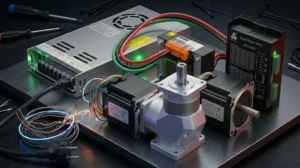
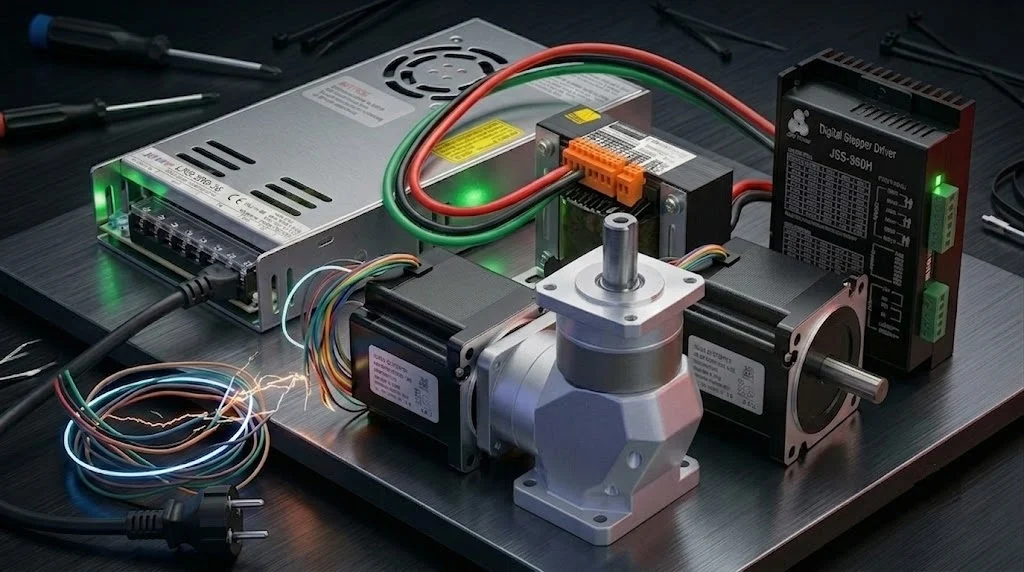
A geared stepper motor, as its name suggests, is a combination of a stepper motor integrated with a gearbox (reducer). This integration significantly increases the motor’s output torque while simultaneously reducing its speed, thereby enhancing the overall resolution and precision of the system. In industrial automation, particularly in areas such as CNC machines, robotic systems, conveyor belts, packaging machines, medical devices, and optical equipment, the requirements for millimeter or micron-level positioning and high holding torque make geared stepper motors indispensable. These motors offer the potential to achieve similar performance levels to closed-loop systems with the simplicity and cost advantage of open-loop control, without the complexity and expense. This article will thoroughly examine the critical role of geared stepper motors in industrial automation, their operating principles, technical specifications, considerations in field applications, and proposed solutions for common issues, from an expert perspective.
Operating Principle and Technical Data of Geared Stepper Motors in Industrial Automation
The operating principle of geared stepper motors relies on the perfect harmony of two main components: the stepper motor and the reducer (gearbox). A stepper motor is a DC motor that operates on electromagnetic principles, causing the rotor to rotate at specific angles (step angle). Sequential pulses applied to the motor windings ensure the rotor advances a specific step with each pulse. This allows for precise control of the motor’s position. However, stepper motors have inherent disadvantages: torque drop at high speeds, difficulty in overcoming inertia at low speeds, and limited output torque. This is where the reducer comes into play.
The reducer is a gear system mounted on the motor’s output shaft. Its primary function is to convert the motor’s high-speed, low-torque motion into lower-speed, higher-torque motion. This works on the principle of one gear wheel turning another with fewer teeth. The reduction ratio determines how much the output shaft rotates for one revolution of the motor. For example, in a system with a 10:1 reduction ratio, the output shaft rotates 1 revolution when the motor rotates 10 revolutions. This situation offers many engineering advantages:
- Torque Multiplication: The reducer increases the torque produced by the motor by the reduction ratio. This provides the ability to move or hold much heavier loads compared to a non-geared stepper motor of the same size. Thus, smaller and more cost-effective stepper motors can accomplish tasks that would otherwise require larger, more expensive motors.
- Resolution Enhancement: Each step of the motor is converted into a smaller angular movement by the reduction ratio. For example, a stepper motor with a 1.8-degree step angle, when used with a 10:1 reducer, achieves an effective step angle of 0.18 degrees at the output shaft. This dramatically increases the system’s positioning accuracy and resolution. When combined with micro-stepping techniques, it becomes possible to achieve precision in much smaller fractions of a millimeter.
- Inertia Matching: The reducer helps to better match the load inertia with the inertia reflected to the motor shaft. This allows the motor to drive the load more efficiently, reduce resonance issues, and achieve smoother, more stable motion. While excessive inertia can lead to step loss and vibration, the reducer minimizes these negative effects.
- Speed Reduction: Naturally, speed reduction occurs along with the increase in torque. This is an advantage, especially for applications requiring very slow and controlled movements. This feature is critically important in areas such as precise feeding mechanisms, optical adjustments, or fluid dosing systems.
Among reducer types, planetary gear reducers are the most commonly used. Their high efficiency, compact design, low backlash ratios, and high torque density make them ideal for industrial applications. Worm gear reducers, on the other hand, may be preferred in applications such as vertical load carrying due to their high reduction ratios and self-locking features. The quality of the gearbox directly affects the motor’s overall performance, lifespan, and system precision.
Technical data to consider when selecting a geared stepper motor in industrial automation:
- Step Angle and Resolution: The motor’s basic step angle (e.g., 1.8° or 0.9°) and the effective step angle at the output shaft with the reduction ratio (e.g., 1.8° / 100 = 0.018°).
- Output Torque: The nominal and holding torque of the geared motor must meet load requirements.
- Reduction Ratio: Must be carefully selected according to the application’s speed and torque requirements.
- Backlash: Also known as gear play. This is a critical parameter that directly affects positioning accuracy. For high-precision applications, reducers with low backlash (e.g., < 5 arc-min) should be preferred.
- Efficiency: Indicates the energy loss of the reducer. Planetary gear reducers generally offer high efficiency.
- Maximum Output Speed: The maximum angular speed that the output shaft can achieve.
- Protection Class (IP Rating): Must be suitable for the working environment’s dust and water resistance requirements (e.g., IP65).
- Size and Mounting Type: Physical dimensions and mounting holes are important for mechanical integration.
- Operating Temperature: The safe operating temperature range of the motor and reducer.
These motors reach their full potential when used with appropriate drivers. Advanced stepper motor drivers offer micro-stepping control, resonance damping, current control, and error detection mechanisms, enhancing system performance and reliability. The right combination of motor, reducer, and driver provides high-performance, cost-effective, and reliable motion control solutions in industrial automation applications.
| Parameter | Value/Description |
|---|---|
| Motor Type | Hybrid Stepper Motor |
| Nominal Step Angle (Motor only) | 1.8° (200 steps/revolution) |
| Reduction Ratio | 50:1 (Planetary Gear) |
| Effective Output Step Angle | 0.036° (10000 steps/revolution) |
| Nominal Output Torque | 20 Nm (Motor torque x Reduction ratio x Efficiency) |
| Maximum Backlash | < 10 arc-min (0.166°) |
| Efficiency | 90% – 95% |
| Protection Class | IP54 |
| Operating Temperature Range | -10°C to +50°C |
Field Considerations for Geared Stepper Motors in Industrial Automation
- Correct Load Matching and Sizing: This is the most critical step in selecting the motor and reducer. The maximum torque (including acceleration, friction, and load torques), speed, and precision values required by the application must be calculated in detail. The motor’s peak torque should be sufficiently higher than the load’s peak torque (typically with a 20-30% safety margin) to prevent step loss. Additionally, the ratio of load inertia to motor inertia is important for stable motor operation. The reducer plays a significant role in this inertia matching. An oversized or undersized motor/reducer combination will lead to either unnecessary cost and space or performance deficiencies and failures.
- Mechanical Mounting and Alignment: Avoiding mechanical stress during the mounting of the geared stepper motor to the machine is vitally important. Misalignment between the motor and load shaft increases stress on couplings, shortens bearing life, increases vibration, and causes energy loss. Flexible couplings can compensate for small misalignments, but large deviations are absolutely unacceptable. The mounting surface must be flat and rigid, and all fasteners should be tightened to the manufacturer’s recommended torque values. Overtightening or loose connections can lead to problems.
- Environmental Factors and Protection Class: The operating conditions of the environment where the motor and reducer will operate (dust, humidity, temperature, chemicals, vibration) must be considered. The IP (Ingress Protection) rating indicates how well the motor and reducer are protected against these factors. For example, in dusty or humid environments, products with IP65 or higher protection should be preferred. Extreme temperatures can damage the motor’s winding insulation and the lubricants in the reducer. If necessary, additional cooling or protective enclosures should be used.
- Correct Driver Selection and Settings: The performance of the geared stepper motor depends on the driver used and its correct adjustment. The driver’s current capacity must be suitable for the motor’s nominal current, and its micro-stepping capability must meet the application’s precision requirements. Micro-stepping settings provide smoother motion and less vibration, while also increasing the motor’s effective resolution. Acceleration/deceleration ramps must be set correctly for the motor to reach maximum speed and stop without losing steps. Drivers with features such as resonance damping and automatic current reduction improve efficiency and stability.
- Cabling and EMI Protection: Proper selection and routing of power and signal cables between the motor and driver are important. Power cables must have a cross-section appropriate for the current drawn by the motor and should be routed separately from signal cables. Using shielded cables and proper grounding is critical to reduce the risk of Electromagnetic Interference (EMI). Long cable distances can cause signal degradation and voltage drop, so special measures (e.g., line drivers) may be taken in these situations.
- Periodic Maintenance and Inspection: Geared stepper motors generally require low maintenance, but periodic inspections are important for the reducer’s lifespan and performance. The oil level of the gearbox (if applicable and a replaceable type) or the condition of its seals should be checked. Signs of wear (increased noise, vibration, increased backlash) should be observed. Loose connections, cable damage, and motor overheating should be regularly inspected and addressed in a timely manner.
Common Problems and Solutions for Geared Stepper Motors in Industrial Automation
While geared stepper motors offer high reliability in automation systems, various problems can arise due to incorrect selection, installation, or operating conditions. Based on our field experience, the most common problems and proposed solutions are as follows:
1. Step Loss (Missing Steps): This occurs when the motor fails to follow commanded steps, resulting in deviation from the target position.
- Causes:
- Load exceeding the motor’s torque capacity (overload).
- Acceleration/deceleration ramps being too aggressive.
- Insufficiently set driver current or low driver capacity.
- Operation at resonance points.
- Mechanical friction or binding.
- Insufficient power supply voltage.
- Solutions:
- Review load torque calculations; if necessary, select a higher torque motor/reducer combination.
- Soften ramps by extending acceleration and deceleration times.
- Check driver current settings and ensure they match the motor’s nominal current. Use a more powerful driver if needed.
- Enable the driver’s resonance damping features or adjust speed ranges to avoid motor resonance frequencies.
- Check for friction in the mechanical system, lubricate bearings and guides, and free any binding parts.
- Check the power supply voltage; use a sufficient and stable power source.
2. Overheating: The motor or driver exceeding its normal operating temperature range.
- Causes:
- Motor current set too high.
- High duty cycle or continuous operation at high torque.
- Insufficient cooling or ventilation.
- High ambient temperature.
- Excessive friction or lack of lubrication in the reducer (rarely).
- Solutions:
- Adjust driver current to the motor’s nominal values, especially reduce holding current.
- Avoid continuous operation at maximum torque if the application does not require it.
- Ensure adequate airflow around the motor; use a cooling fan or heat sink if necessary.
- Control ambient temperature.
- Check the oil level and quality in the reducer (if it is a type that requires maintenance).
3. Noisy Operation and Vibration: The motor or its connected mechanical system producing abnormal sounds or excessive vibration.
- Causes:
- Resonance issues.
- Loose mechanical connections or faulty mounting.
- Damaged or worn reducer gears.
- Imbalance of the motor or load.
- Incorrect micro-stepping settings.
- High backlash.
- Solutions:
- Utilize the driver’s resonance damping features or shift operating speeds away from resonance frequencies.
- Check and tighten all mounting screws and coupling connections.
- Inspect the reducer; replace gears if there is wear or damage.
- Ensure the load is balanced.
- Increase micro-stepping settings to smooth motion.
- Use a low-backlash reducer or compensate for backlash with software.
4. Insufficient Positioning Accuracy or Repeatability: The motor failing to consistently return to the same position accurately.
- Causes:
- Reducer with a high backlash ratio.
- Step loss.
- Play or flexibility in the mechanical system.
- Cabling or signal noise.
- Solutions:
- Use a reducer with lower backlash (precision gearbox).
- Address step loss issues with the solutions mentioned above.
- Minimize all play and flexibility in the mechanical system.
- Use shielded cables and keep signal cables separate from power cables to reduce EMI.
- Consider transitioning to a closed-loop control system with an encoder if necessary (though this may reduce the cost advantage of a stepper motor).
These problems often arise from a combination of several factors. A systematic troubleshooting approach and consulting the manufacturer’s technical documentation will help in finding the most accurate solution. As field experts, we always recommend starting with the simplest and most likely causes and proceeding step by step.
Conclusion and Expert Advice on Geared Stepper Motors in Industrial Automation
In the face of the continuously evolving and increasingly precise demands of industrial automation, geared stepper motors serve as a critical bridge in terms of performance, cost-effectiveness, and reliability. These motors maintain the simplicity and low-cost advantages of open-loop control offered by standard stepper motors, while providing significantly higher torque, enhanced resolution, and inertia matching capabilities thanks to the integrated reducer. Consequently, they have become an indispensable solution in many applications requiring precise positioning, heavy load handling, and controlled slow motion. From CNC machines to medical devices, robotic systems to packaging machines, they form the backbone of modern production processes across a wide spectrum of industries.
As an expert, I want to emphasize the importance of adopting a holistic approach when integrating geared stepper motors into your system or troubleshooting existing systems. Not only the motor itself, but also the type of reducer, its reduction ratio, backlash characteristics, and efficiency are critically important. Furthermore, driver selection, cabling standards, and environmental conditions, which directly affect motor performance, should not be overlooked. Our field experience indicates that many performance issues stem from incorrect sizing, faulty installation, or inappropriate driver settings. Therefore, conducting detailed engineering calculations during the project planning phase, meticulously reviewing manufacturer technical documentation, and applying correct techniques during installation are vital for long-term system reliability and efficiency.
In the future, as industrial automation becomes even smarter and more flexible, we anticipate that geared stepper motors will offer even more sophisticated solutions by integrating with controllers, more advanced communication protocols, and AI-supported adaptive control algorithms. Energy efficiency and lower maintenance requirements will also continue to play a key role in the development of this technology. Fully utilizing the potential of these motors is possible not only by correctly selecting components but also by understanding how the system works as a whole and being open to continuous improvement. It should be remembered that success in industrial automation is achieved through the right technology choice, correct application, and continuous learning.
FAQ
What is a geared stepper motor and how does it differ from a standard stepper motor?
A geared stepper motor combines a standard stepper motor with a gearbox (reducer). The gearbox increases the output torque and improves positioning resolution by reducing the output speed, making it suitable for heavy loads and high-precision applications.
What are the typical industrial applications for geared stepper motors?
Geared stepper motors are widely used in CNC router machines, robotic systems, conveyor belts, packaging machinery, medical devices, and optical equipment where precise positioning, high holding torque, and controlled slow movements are essential.
What technical specifications should be considered when selecting a geared stepper motor?
Key factors include output torque, reduction ratio, backlash (gear play), efficiency, step angle, IP rating for environmental protection, and physical dimensions. Careful selection based on application requirements is crucial.
What are the common problems encountered with geared stepper motors in industrial automation?
Common issues include step loss (missing steps), overheating, noisy operation/vibration, and insufficient positioning accuracy. These are often caused by incorrect sizing, aggressive acceleration ramps, improper driver settings, resonance, or mechanical misalignment.
How can common problems with geared stepper motors be resolved?
Solutions involve re-evaluating load calculations, adjusting acceleration/deceleration ramps, optimizing driver current settings, implementing resonance damping, ensuring proper mechanical alignment, using shielded cables, and conducting regular maintenance checks.