No products in the cart.
Energy Chain (Cable Carrier) Selection and Installation Rules
Contents
- Introduction and Technical Analysis of Energy Chain (Cable Carrier) Selection and Installation Rules
- Operating Principle and Technical Data of Energy Chain (Cable Carrier) Selection and Installation Rules
- Field Considerations for Energy Chain (Cable Carrier) Selection and Installation Rules
- Common Problems and Solutions for Energy Chain (Cable Carrier) Selection and Installation Rules
- Conclusion and Expert Advice on Energy Chain (Cable Carrier) Selection and Installation Rules
- FAQ
Energy Chain (Cable Carrier) Selection and Installation Rules: A Comprehensive Field Guide
Introduction and Technical Analysis of Energy Chain (Cable Carrier) Selection and Installation Rules
Moving systems, at the heart of industrial automation, are an indispensable part of today’s manufacturing processes. One of the critical components ensuring the continuous and safe operation of these systems is undoubtedly energy chains, also known as cable carriers. Especially in areas with dynamic movement such as CNC machines, robotic applications, crane systems, and storage and retrieval systems, the safe routing and protection of energy and data carriers like electrical cables, pneumatic and hydraulic hoses, and fiber optic cables are vital. Energy chains extend the system’s lifespan, minimize failures, and reduce maintenance costs by protecting these sensitive transmission lines from mechanical wear, impact, tension, bending, and environmental factors. Conversely, an incorrectly selected or improperly installed energy chain can lead to system downtime, significant production losses, and even occupational safety risks. This comprehensive field guide and technical article aims to provide in-depth information for professionals in the industrial automation sector on energy chain selection, operating principles, installation rules, and solutions to common problems. A correct energy chain solution not only protects cables but also enhances the system’s overall performance and reliability.
Operating Principle and Technical Data of Energy Chain (Cable Carrier) Selection and Installation Rules
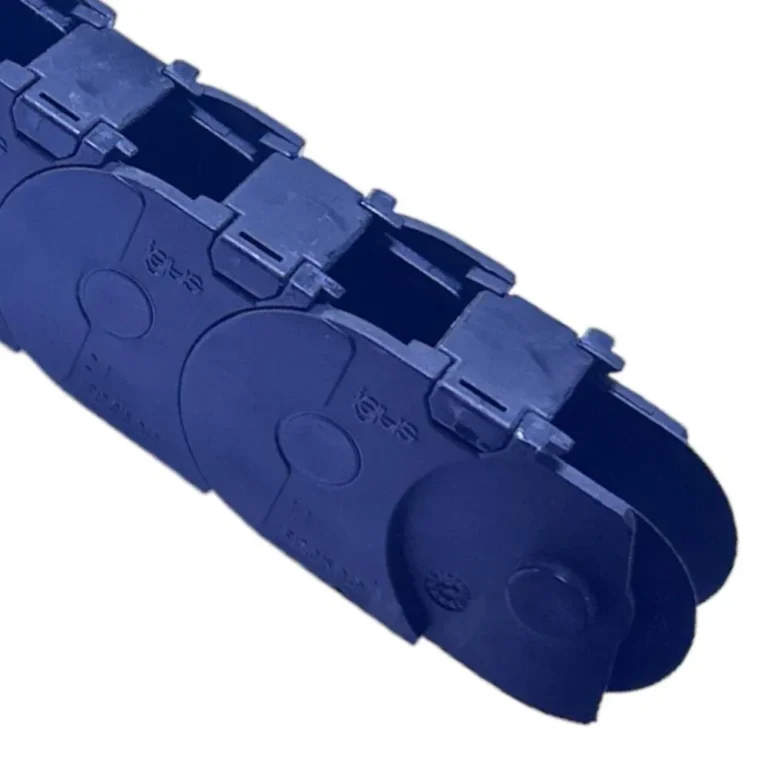
Energy chains are flexible structures typically made of high-performance polymers (such as polyamide) or steel, consisting of modular elements connected by hinges. This modular design allows the chain to bend and move with a specific bending radius. The chain is connected to a fixed point (usually the machine body) and a moving point (carrier slide, robot arm, etc.). As the moving part advances, the chain follows this movement, carrying and protecting the cables and hoses inside in an organized manner. This prevents unnecessary stretching, pinching, or rubbing of cables, significantly extending their lifespan.The selection of an energy chain is a critical process that requires careful evaluation of a series of engineering parameters. These parameters directly affect the chain’s performance, lifespan, and system safety:
- Number and Diameters of Cables and Hoses: The internal space of the chain must be large enough to comfortably accommodate the total outer diameters of all cables and hoses to be carried. Overfilling causes cables to rub against each other and wear out. It is generally recommended that 10-15% of the internal space remains empty.
- Travel Distance (L): The total horizontal or vertical travel distance of the system determines the unsupported length of the chain. For long distances, supporting guide channels may be required to prevent the chain from sagging.
- Speed (v) and Acceleration (a): The maximum travel speed (m/s) and acceleration (m/s²) of the system are important for selecting the chain material and structure. High speeds and accelerations create more dynamic loads on the chain and may require specially designed chains resistant to these conditions.
- Carried Load (m): The total weight (kg/m) of all cables and hoses the chain will carry affects the chain’s durability and sag. The load calculation must be accurate, and the chain’s carrying capacity must be suitable for this load.
- Bending Radius (R): This is the minimum radius at which the chain can bend. It is mandatory to comply with the minimum bending radii specified by the manufacturers of the cables and hoses inside the chain. An incorrect bending radius can lead to conductor breaks in cables. The R value of the chain should be selected according to the cable with the largest bending radius inside it.
- Environmental Conditions: Factors such as operating temperature, humidity, exposure to UV light, contact with chemical substances, and levels of dust and dirt directly influence the chain’s material selection. For example, UV-resistant polymers are preferred for outdoor applications, and specially resistant polymers for chemical environments.
- Mounting Type: Chains can be mounted in different configurations for unsupported (self-supporting), gliding, vertical, or circular movements. The chain and guide channel design vary according to the mounting type.
- Material: The most common material is high-performance polyamides (plastic). However, steel or hybrid (plastic-steel) chains may be preferred when extra protection is required against heavy loads, high temperatures, or mechanical impacts.
Different types of energy chains are available:
- Open Type Chains: These types allow for quick addition and removal of cables, providing ease of installation and maintenance. They are generally preferred in clean and dust-free environments.
- Closed Type (Tube Type) Chains: These types fully protect cables from dust, chips, sparks, and chemical splashes. They are used especially in machining, welding robots, or dirty environments.
- Robotic Chains (3D Chains): Special chains with three-dimensional movement capability used in multi-axis and complex moving robot arms.
- Silent Chains: Specially designed chains optimized for applications where noise levels are critical.
| Parameter | Value/Description |
|---|---|
| Inner Width (Bi) | 10 mm – 800 mm (Internal cable/hose space) |
| Inner Height (Hi) | 10 mm – 150 mm (Internal cable/hose space) |
| Bending Radius (R) | 18 mm – 600 mm (Selected according to the minimum bending radius of cables) |
| Max. Travel Distance | 1 m – 800 m (Varies for supported or unsupported) |
| Max. Speed (v) | 1 m/s – 30 m/s (Varies by application and chain type) |
| Max. Acceleration (a) | 5 m/s² – 200 m/s² (Higher for special applications) |
| Operating Temperature Range | -40°C to +120°C (Varies by material) |
| Material Options | High-Performance Polymer (PA), Steel, Hybrid (PA+Steel) |
Field Considerations for Energy Chain (Cable Carrier) Selection and Installation Rules
- Correct Sizing and Internal Arrangement: The internal space of the chain should be at least 10-15% larger than the total cross-sectional area of all cables and hoses to be carried. Vertical and horizontal separators should be used to prevent cables from rubbing against each other and to ensure air circulation. Preventing the mixing of cables of different diameters and ensuring each cable remains within its own bending radius is critically important.
- Cable Securing with Strain Relief: It is mandatory to secure cables at their entry points into the chain at both the moving and fixed ends with appropriate strain relief elements. This prevents cables from being pulled, stretched, and consequently breaking from connectors or connection points during movement. Securing allows cables to move freely within the chain while eliminating tensile stress at the end points.
- Compliance with Minimum Bending Radius: Every cable and hose has a minimum bending radius (R) specified by its manufacturer. When selecting an energy chain, the R value of the most sensitive cable inside must be taken as the basis, and the chain’s bending radius must be equal to or greater than this value. Failure to comply with this rule leads to cracks in cable insulation, conductor breaks, and short circuits.
- Mounting Method and Alignment: The fixed and moving end connection elements of the chain must be correctly mounted and aligned according to manufacturer instructions. Incorrect alignment can lead to excessive stress on the chain, premature wear, and noisy operation. In horizontal applications, correct placement of guide channels to ensure smooth gliding of the chain is important.
- Support Systems and Guide Channels: Especially for long travel distances or high speed/acceleration applications, guide channels or support rails should be used to prevent the chain from sagging, control its lateral movement, and extend its lifespan. Guide channels ensure the chain follows a smooth trajectory and reduce wear.
- Material Selection Suitable for Environmental Conditions: If the operating environment has special requirements such as chemical interactions, high/low temperatures, UV radiation, dust, humidity, or explosive atmospheres, the material of the chain and accessories must be selected to suit these conditions. For example, UV-stabilized polymers should be preferred for outdoor applications, and special chemical-resistant materials for chemical plants.
- Periodic Maintenance and Inspection: Energy chains, being a critical component of the system, require regular visual inspection and maintenance. Signs of wear, cracks, or deformation should be looked for at chain connection points, and the condition of cables and the integrity of strain relief elements should be checked. If necessary, contamination should be cleaned, and worn parts replaced in a timely manner.
Common Problems and Solutions for Energy Chain (Cable Carrier) Selection and Installation Rules
While energy chains are extremely reliable when correctly selected and installed, some problems can be encountered in field conditions. Early diagnosis and resolution of these issues are vital for the continuous operation of the system.
- Cable Wear, Breakage, or Short Circuit:Causes: This is one of the most common problems. It usually arises from incorrect bending radius selection, overfilling the chain, cables rubbing against each other, insufficient or incorrect strain relief application, or cables getting pinched while moving within the chain. Incompatible ambient temperature with the cable insulation material can also be a cause.Solutions:
- Correct Bending Radius (R): The minimum bending radius specified by the cable manufacturer must be strictly adhered to, and the chain’s R value should not be smaller than this.
- Internal Arrangement: Vertical and horizontal separators should be used to prevent cables from rubbing against each other, leaving 10-15% empty space for cables.
- Strain Relief: Ensure cables are secured at both ends with appropriate strain relief elements.
- Cable Selection: Highly flexible cables (e.g., with a high number of bending cycles) specifically designed for dynamic applications should be preferred.
- Energy Chain Breakage, Cracking, or Deformation:Causes: Overloading the chain beyond its carrying capacity, incorrect material selection (e.g., using a standard chain where heavy-duty is required), exposure to sudden impacts or excessive vibration, speeds and accelerations exceeding chain limits, ambient temperature outside the chain material’s operating range.Solutions:
- Load Calculation: The weight of all cables and hoses must be calculated correctly, and the chain’s static/dynamic carrying capacity must be suitable for this load.
- Material Selection: A chain made of the correct material (polymer, steel, hybrid) suitable for the application conditions (load, speed, ambient temperature, chemical exposure) should be chosen.
- Impact Protection: If necessary, appropriate guards can be used to protect the chain from external factors.
- Speed/Acceleration Control: The system’s speed and acceleration limits should not exceed the chain’s endurance values.
- Noisy Operation or Vibration:Causes: Incorrect chain alignment, worn or loose connection elements, lack of or improper placement of guide channels, uneven distribution of cables within the chain, resonance occurring at high speeds.Solutions:
- Alignment Check: Ensure the chain and guide channel are correctly and parallelly aligned.
- Maintenance: Worn or loose connection elements should be checked and replaced if necessary.
- Guide Channel: The use of guide channels is essential for long distances or high speeds. Ensure the channel is clean and smooth.
- Silent Chains: In applications where noise is critical, specially designed silent type energy chains can be preferred.
- Chain Coming Off its Track or Getting Stuck:Causes: Incorrect installation, absence or deformation of the guide channel, excessive load accumulation within the chain, the chain’s bending radius not being suitable for the system, an external obstruction.Solutions:
- Correct Installation: Careful installation must be performed according to manufacturer instructions.
- Guide Channel Check: The integrity, cleanliness, and correct alignment of the guide channel should be checked periodically. Deformed channels should be replaced.
- Load Distribution: Ensure the load within the chain is evenly distributed.
- Environmental Control: Ensure there are no obstructions in the chain’s movement area.
- Contamination and Dust Accumulation:Causes: Frequently encountered in dirty, dusty, or chip-laden environments where open-type chains are used. Accumulated dirt can accelerate the wear of the chain mechanism and damage cables.Solutions:
- Closed Type Chains: In dirty or aggressive environments, closed type (tube type) energy chains should be preferred.
- Protective Brushes/Wipers: Brushes or wipers that prevent dust and dirt can be installed at the chain’s entry and exit points.
- Regular Cleaning: Open-type chains should be regularly cleaned with compressed air or appropriate cleaners.
Conclusion and Expert Advice on Energy Chain (Cable Carrier) Selection and Installation Rules
In the complex and dynamic world of industrial automation, energy chains are much more than simple cable carriers; they are critical engineering marvels that ensure the safety and continuity of energy and data flow, forming the veins of the system. As we have discussed in this detailed field guide, the correct selection and installation of an energy chain is not just an immediate cost item, but also means significant savings in long-term operational efficiency, system safety, and maintenance costs. From an expert’s perspective, I would like to emphasize that every step in this process must be meticulously planned and executed. Especially the accurate analysis of technical parameters such as travel distance, speed, acceleration, carried load, environmental conditions, and the minimum bending radii of cables/hoses forms the basis for project success.The vast majority of problems encountered in the field stem from insufficient preliminary analysis, incorrect sizing, unsuitable material selection, or faulty installation. Therefore, working with expert engineering teams from the very beginning of the project and utilizing the technical support and documentation of manufacturing companies is of great importance. Seemingly simple details such as the correct application of strain relief mechanisms and the proper arrangement of cables within the chain using appropriate separators are critical factors that directly affect cable lifespan. It should be remembered that the total cost of ownership (TCO) of an energy chain system encompasses much more than the initial purchase cost; downtime, production losses, maintenance, and replacement costs are important parts of this equation. Therefore, the correct investment made at the outset will more than pay for itself in the long run. Periodic inspections and preventive maintenance routines, in turn, offer the opportunity to detect and resolve potential problems before they escalate, guaranteeing the system’s sustainability. The care you show in the selection and installation of these dynamic cable carriers at the heart of your industrial automation will directly affect the reliability and efficiency of your entire facility.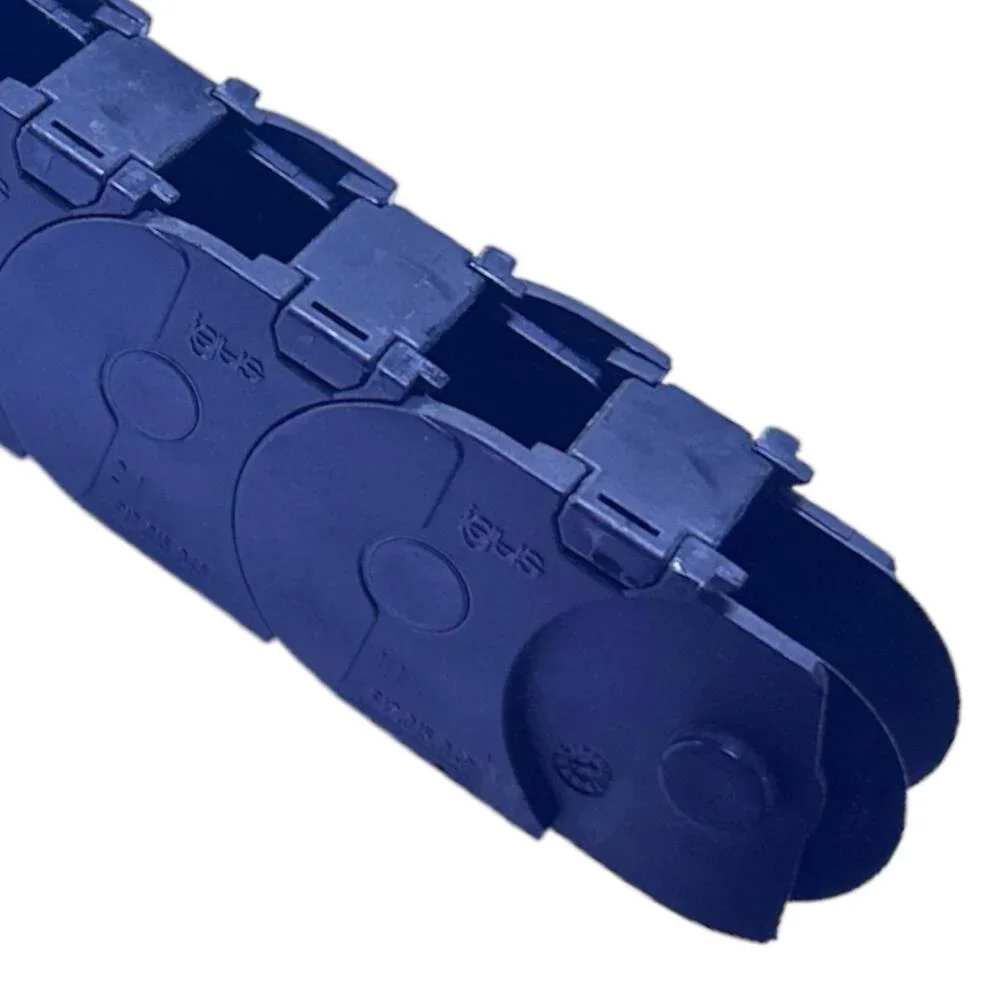
FAQ
What is an energy chain (cable carrier) and what is its primary function?
Energy chains, also known as cable carriers, are flexible mechanical components designed to guide and protect cables, pneumatic hoses, and hydraulic hoses on moving machinery. They prevent tangling, wear, and damage, ensuring continuous operation and extending the lifespan of the contained elements.
What are the critical parameters to consider when selecting an energy chain for an industrial application?
Key factors include the number and diameter of cables/hoses, travel distance, speed and acceleration of the system, the total weight of the carried load, the minimum bending radius required by the cables, environmental conditions (temperature, chemicals, dust), and the mounting type (e.g., unsupported, gliding).
What are the most common problems encountered with energy chains in industrial environments, and how can they be prevented?
Common issues include cable wear or breakage (often due to incorrect bending radius or overfilling), chain breakage or deformation (due to overloading or unsuitable material), noisy operation (from misalignment or worn parts), and the chain coming off its track (due to improper installation or damaged guide channels).
What are the essential rules for proper installation and maintenance of an energy chain?
Proper installation requires securing cables with strain relief at both ends, using vertical and horizontal separators inside the chain for organization, ensuring the bending radius matches cable specifications, and correctly aligning the chain and any guide channels. Regular maintenance, including visual inspections and cleaning, is also crucial.
How can energy chains be protected from dust and contamination in harsh industrial settings?
For dirty or chip-laden environments, closed-type (tube-type) energy chains are highly recommended as they provide full protection against contaminants. Additionally, protective brushes or wipers can be installed at the chain's entry and exit points, and regular cleaning routines should be implemented for open-type chains.