




































































Why is My Drill Hole Larger Than the Drill Bit? Causes and Solutions
📑 Table of contents (Click to open)
Practical notes for CNC router, automation and industrial motion systems.
Understanding Why Drill Holes Exceed Drill Bit Diameter
In industrial automation and manufacturing, precise hole drilling is paramount. When a drill bit creates a hole larger than its nominal diameter, it signifies a critical issue that can compromise production quality and increase costs. This problem extends beyond mere aesthetics, leading to assembly mismatches, loose fasteners, sealing failures, and reduced product lifespan. In sectors demanding tight tolerances, such as aerospace, automotive, and medical device manufacturing, even minor deviations are unacceptable. The reasons behind oversized holes are often a complex interplay of mechanical, thermal, and geometric factors. This guide aims to provide industrial automation professionals with a comprehensive understanding of the common causes behind oversized drill holes.
Operational Principles and Technical Factors
A drill bit functions by removing material as it advances into a workpiece. The cutting edges generate forces and thermal interactions that determine the hole’s diameter. Ideally, the drilled hole should match the bit’s nominal diameter within specified tolerances. Deviations from this ideal can be attributed to several technical factors:
1. Drill Bit Geometry and Condition
- Worn or Improperly Sharpened Bits: Uneven wear or incorrect sharpening of the cutting lips can cause one side to cut more aggressively than the other. This imbalance leads to the bit oscillating around its axis, resulting in a larger hole diameter. Damage to the chisel edge can also prevent proper centering, causing the bit to “wander.”
- Incorrect Point Angle: An inappropriate point angle for the workpiece material can affect how the bit penetrates and removes material. Too sharp an angle increases brittleness, while too wide an angle causes excessive friction and heat, accelerating wear and impacting hole size.
- Improper Helix Angle: The helix angle influences chip evacuation and cutting force direction. An incorrect angle can lead to chip congestion, overheating, and friction against the hole wall, widening the diameter.
- Insufficient Clearance Angle: The clearance angle behind the cutting lips prevents the bit from rubbing against the workpiece. Insufficient clearance causes friction and heat buildup, shortening bit life and enlarging the hole. Excessive clearance weakens the cutting edge, making it prone to breakage.

2. Cutting Parameters
- Excessive Cutting Speed (RPM): High speeds increase friction and heat, leading to rapid bit wear and workpiece expansion. An overheated bit may cut more aggressively or deform, resulting in oversized holes.
- High Feed Rate (mm/rev): An overly aggressive feed rate increases the forces on the drill bit, causing it to flex, vibrate, or advance uncontrollably. This can also lead to chip congestion and affect hole diameter.
- Low Feed Rate: Very slow feed rates can cause the bit to rub rather than cut, generating heat and accelerating wear, which contributes to larger hole sizes.

3. Machine and Fixturing Rigidity
- Spindle Runout: Wobble in the spindle or tool holder causes the drill bit to follow a circular path larger than its diameter. This is a common cause of oversized holes, often stemming from worn spindle bearings, contamination, or improper assembly.
- Inadequate Machine Rigidity: A lack of rigidity in the CNC router machine or workpiece fixture can lead to vibrations and flexing during drilling. These instabilities result in non-uniform cutting and enlarged holes.
- Workpiece Clamping: Insufficient clamping of the workpiece to the machine table or fixture allows movement during drilling, leading to uncontrolled bit advancement and oversized holes.

4. Cooling and Chip Evacuation
- Insufficient Cooling: The heat generated during drilling can cause thermal expansion of both the bit and the workpiece. Inadequate or improper coolant application prevents control of this expansion, leading to larger hole diameters. Overheating also rapidly wears the bit.
- Chip Evacuation Issues: In deep hole drilling, poor chip removal can cause chips to jam in the flutes, rubbing against the hole walls. This friction enlarges the hole diameter and degrades surface finish.
| Parameter | Value/Description |
|---|---|
| Drill Bit Condition | Worn cutting lips, damaged chisel edge. |
| Cutting Speed (RPM) | Exceeding recommended values for material and bit size leads to overheating and wear. |
| Feed Rate (mm/rev) | Too high: bit flex, vibration. Too low: rubbing, heat. |
| Spindle Runout | Runout exceeding 0.02 mm (0.0008 in) typically causes noticeable hole enlargement. |
| Machine/Fixture Rigidity | Lack of rigidity causes vibrations and workpiece movement. |
| Coolant Flow | Insufficient flow, incorrect type, or improper application leads to overheating and chip jamming. |
| Bit Geometry | Point angle, helix angle, or clearance angle unsuitable for the workpiece material. |

Conclusion
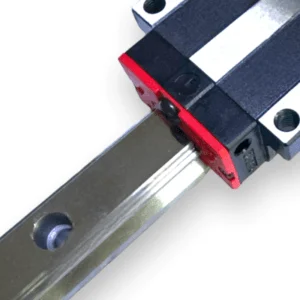
Addressing oversized drill holes requires a systematic approach, examining the drill bit’s condition, cutting parameters, machine integrity, and coolant/chip management. By meticulously analyzing these factors, manufacturers can identify the root cause and implement corrective actions, ensuring the precision and quality demanded by industrial applications. Maintaining your CNC router machine, including its spindle motor, servo drives, and linear guide rails, is crucial for consistent performance.
Need to ensure precision in your drilling operations? Request a quote on WhatsApp for Mermak CNC solutions.
Related product categories: Electronics · Combination Packages · Linear Guides, Bearings, and Housings
