








































































Why Are Cylindrical Roller Bearings Preferred for Heavy Loads?

📑 Table of contents (Click to open)
Cylindrical roller bearings offer significantly higher radial and axial load capacities compared to ball bearings due to their wider contact area. This makes them ideal for demanding industrial applications with heavy loads, shock, and vibration.
Practical notes for CNC router, automation and industrial motion systems.
In industrial automation and heavy industry, the correct selection of bearings is crucial for the smooth and efficient operation of moving parts. Especially in environments with high loads, impacts, and vibrations, cylindrical roller bearings offer distinct advantages over ball bearings and are frequently preferred. The fundamental difference lies in how the load is distributed across the contact surface. While ball bearings distribute load through point contact between the ball and the raceway, cylindrical roller bearings utilize cylindrical, tapered, or spherical rollers to spread the load over a wider line contact or area contact. This broad contact area significantly reduces the pressure per unit area, allowing the bearing to safely handle much higher static and dynamic loads. For machines operating under heavy loads, this feature extends bearing life, minimizes failure risk, and enhances operational reliability.
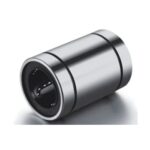
Structurally, cylindrical roller bearings consist of rollers (cylindrical, tapered, or spherical) placed between inner and outer rings, positioned at specific intervals by a cage (separator). Each roller acts as an element that absorbs and distributes the load. This design not only provides high load-carrying capacity but also superior resistance to shock loads. In the industrial automation sector, applications such as presses, conveyor systems, heavy machinery, wind turbines, and steel mills, which encounter extreme load conditions, are primary reasons for choosing cylindrical roller bearings.
Operating Principle and Technical Data
The performance of cylindrical roller bearings under heavy loads is based on their unique operating principles and superior technical characteristics. The load is distributed along the wide line or area of contact between the rollers and their raceways. This reduces contact stresses and delays metal fatigue, extending bearing life. Cylindrical roller bearings are categorized based on different load types and application requirements:
- Cylindrical Roller Bearings: Ideal for carrying high radial loads. The cylindrical shape of the rollers provides excellent line contact between the inner and outer rings. They are preferred in applications with high speeds and high radial loads. Single, double, and multi-row types are available. Some designs allow for axial displacement, compensating for thermal expansion of the shaft.
- Tapered Roller Bearings: Capable of handling both high radial and high axial loads simultaneously. The tapered geometry of the rollers and raceways allows them to effectively manage these combined loads. They are widely used in automotive applications, gearboxes, and heavy equipment. They are often mounted in pairs.
- Spherical Roller Bearings: Can carry very heavy radial loads and moderate axial loads. Their most significant feature is the ability to compensate for shaft or housing misalignment. Due to the two raceways on the inner ring and the spherical raceway on the outer ring, they can tolerate angular errors. This makes them indispensable in demanding and dynamic environments such as the steel industry, paper machines, wind turbines, and mining equipment.
The technical data of cylindrical roller bearings plays a critical role in selection and design. Dynamic load rating (Cr) refers to the equivalent radial load the bearing can safely carry for a specific operating life (typically 1 million revolutions), while static load rating (Co) indicates the maximum load the bearing can withstand without permanent deformation when stationary. These values vary based on the bearing’s size, number of rollers, and geometry. Additionally, limiting speed, operating temperature range, material quality (usually high-carbon chromium steel), cage material (steel, brass, polyamide), and sealing types also affect performance. Proper lubrication and mounting ensure these technical capacities are fully utilized.
| Parameter | Value/Description |
|---|---|
| Load Carrying Capacity | 2-5 times higher than ball bearings (radial and/or axial) |
| Contact Type | Line Contact (Cylindrical) or Area Contact (Tapered, Spherical) |
| Typical Application Areas | Gearboxes, Conveyors, Steel Mills, Wind Turbines, Mining Equipment, Presses |
| Shock Resistance | Superior durability against impact loads |
| Misalignment Tolerance | Spherical roller bearings offer high tolerance (up to ±2.5 degrees) |
| Material Standard | Typically high-carbon chromium steel (e.g., AISI 52100) |
| Friction Coefficient | May be slightly higher than ball bearings, but load capacity advantage is dominant |
Field Considerations
- Correct Bearing Type and Size Selection: For heavy load applications, bearing selection is not limited to load capacity alone. A thorough analysis of the radial, axial, or combined loads the application is subjected to, operating speed, temperature range, mounting space constraints, and potential shaft/housing misalignments must be considered. For instance, cylindrical rollers are preferred for high radial loads only, tapered for combined loads, and spherical for heavy radial loads with misalignment tolerance. Oversizing leads to unnecessary costs, while undersizing causes premature failure. Therefore, technical data from manufacturer catalogs and calculation software must be used meticulously.
- Proper Mounting and Dismounting Techniques: The life and performance of cylindrical roller bearings are significantly influenced by correct mounting. Forcing a bearing onto a shaft or housing can cause internal stresses, surface damage, and premature fatigue. Typically, thermal mounting (heating the bearing to expand it) or hydraulic mounting methods are preferred. Special mounting and dismounting tools should be used, and impact tools like hammers must be strictly avoided. Maximum care should be taken to ensure the cleanliness and correct alignment of the bearing during installation. Incorrect mounting is one of the most common causes of bearing failure under heavy load conditions.
- Effective Lubrication and Sealing Management: Lubrication is critical for reducing friction, dissipating heat, and preventing corrosion in cylindrical roller bearings operating under heavy loads. The correct type of lubricant (grease or oil) should be selected based on the application’s speed, temperature, load, and environmental conditions. Lubrication schedules must be regularly followed according to manufacturer recommendations and operating conditions. Insufficient or excessive lubrication can shorten bearing life. Simultaneously, using effective sealing elements (seals, labyrinth seals) to prevent dust, moisture, and other contaminants from entering the bearing ensures it remains clean and the lubricant maintains its performance. Contaminants can lead to wear and surface roughening on bearing surfaces under heavy loads, causing premature failures.

Common Issues and Solutions
While cylindrical roller bearings are durable in heavy load applications, various issues can arise due to incorrect use or maintenance deficiencies. One of the most common problems is overloading and fatigue. When a bearing is subjected to loads exceeding its capacity, cracks, spalling, and pitting can occur on the raceways or rollers. This situation is generally caused by incorrect bearing selection or exceeding the operational limits of the machine. To prevent this, accurate load calculations and adherence to manufacturer specifications are essential. Another frequent issue is contamination. Ingress of dust, dirt, or moisture can lead to abrasive wear, corrosion, and lubricant degradation, significantly reducing bearing life. Effective sealing, regular inspection of seals, and maintaining a clean operating environment are crucial. If contamination is suspected, the bearing should be replaced, and the cause of contamination addressed. Improper lubrication, either insufficient or excessive, is also a major cause of premature failure. Insufficient lubrication leads to increased friction, heat, and wear, while excessive lubrication can cause churning, overheating, and lubricant breakdown. Ensuring the correct lubricant type, quantity, and re-lubrication intervals are maintained is vital. Finally, mounting errors, such as using excessive force, misalignment, or damaging components during installation, can lead to immediate or early failure. Using appropriate tools and following precise mounting procedures are non-negotiable for ensuring bearing longevity and performance.
For industrial CNC router machines and other heavy-duty equipment where precision and reliability are paramount, selecting the right bearing is a critical engineering decision. Understanding the advantages of cylindrical roller bearings, their technical specifications, and proper maintenance practices ensures optimal performance and longevity for your machinery.
Need to ensure your heavy-duty machinery operates at peak performance? Discuss your bearing requirements with our experts and get a personalized quote. Request a quote on WhatsApp today!
Related product categories: Genel · 25 Mm Lineer Kızak, Rulman Ve Yataklar · 20 mm Rulman Çeşitleri
