No products in the cart.
CNC Machine Safety and Emergency Equipment
Contents
- Introduction and Technical Analysis of Workplace Safety and Emergency Equipment in CNC Machines CNC (Computer Numerical Control) machines, an indispensable component of modern manufacturing, have revolutionized production processes with their high precision, repeatability, and automation capabilities. However, this advanced technology also introduces specific occupational health and safety (OHS) risks. For every enterprise operating in the industrial automation sector, the efficient and safe operation of CNC machines is not merely a legal obligation but also the foundation of operational excellence and employee well-being. This field guide and technical article meticulously analyze potential hazards encountered with CNC machines, addressing the necessary safety and emergency equipment, technical principles, and implementation methods from an expert perspective to minimize these risks. The complex structure of CNC machines, including fast-moving parts, high-speed cutting tools, pressurized hydraulic/pneumatic systems, and electrical power usage, poses various dangers for operators and maintenance personnel. These hazards can manifest as mechanical entrapment, cuts, flying debris, electrical shocks, chemical exposure (cutting fluids), noise, and ergonomic strain. Therefore, conducting a comprehensive risk assessment and implementing appropriate safety measures based on this assessment is critically important. Safety measures should adopt a multi-layered approach, encompassing machine design, technical safeguards, emergency equipment, administrative controls, and personal protective equipment (PPE). Notably, industrial automation systems significantly enhance workplace safety by minimizing human error and automatically detecting and responding to hazardous situations. In this context, international standards such as EN ISO 13849 (Safety-Related Parts of Control Systems) and EN ISO 12100 (Safety of Machinery – General Principles for Design – Risk Assessment and Risk Reduction) serve as guiding principles for the design and implementation of safety systems. Operating Principles and Technical Data for CNC Machine Safety and Emergency Equipment
- Field Considerations for CNC Machine Safety and Emergency Equipment
- Common Problems and Solutions for CNC Machine Safety and Emergency Equipment
- FAQ
Introduction and Technical Analysis of Workplace Safety and Emergency Equipment in CNC Machines
CNC (Computer Numerical Control) machines, an indispensable component of modern manufacturing, have revolutionized production processes with their high precision, repeatability, and automation capabilities. However, this advanced technology also introduces specific occupational health and safety (OHS) risks. For every enterprise operating in the industrial automation sector, the efficient and safe operation of CNC machines is not merely a legal obligation but also the foundation of operational excellence and employee well-being. This field guide and technical article meticulously analyze potential hazards encountered with CNC machines, addressing the necessary safety and emergency equipment, technical principles, and implementation methods from an expert perspective to minimize these risks.
The complex structure of CNC machines, including fast-moving parts, high-speed cutting tools, pressurized hydraulic/pneumatic systems, and electrical power usage, poses various dangers for operators and maintenance personnel. These hazards can manifest as mechanical entrapment, cuts, flying debris, electrical shocks, chemical exposure (cutting fluids), noise, and ergonomic strain. Therefore, conducting a comprehensive risk assessment and implementing appropriate safety measures based on this assessment is critically important. Safety measures should adopt a multi-layered approach, encompassing machine design, technical safeguards, emergency equipment, administrative controls, and personal protective equipment (PPE). Notably, industrial automation systems significantly enhance workplace safety by minimizing human error and automatically detecting and responding to hazardous situations. In this context, international standards such as EN ISO 13849 (Safety-Related Parts of Control Systems) and EN ISO 12100 (Safety of Machinery – General Principles for Design – Risk Assessment and Risk Reduction) serve as guiding principles for the design and implementation of safety systems.
Operating Principles and Technical Data for CNC Machine Safety and Emergency Equipment
Workplace safety in CNC machines is not limited to reactive measures; it aims to prevent the occurrence of hazardous situations or minimize their effects through a proactive approach. Various emergency and safety equipment work in an integrated manner to achieve this goal. This equipment is typically directly connected to the machine’s control system and operates on the principle of bringing the machine to a safe state in the event of a potential hazard.
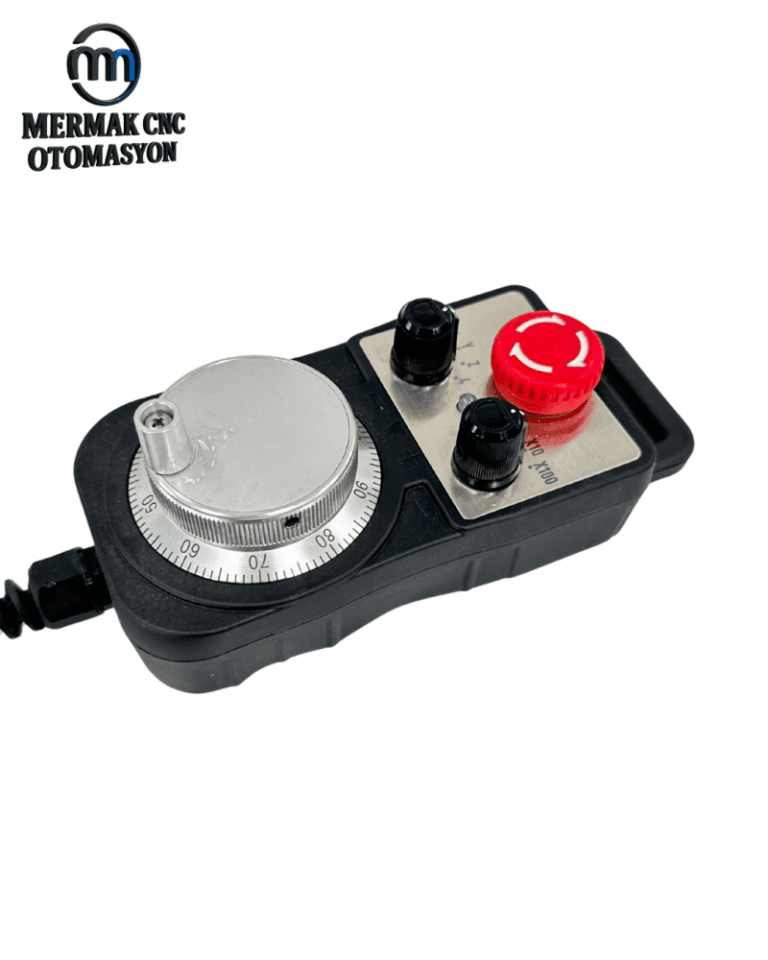
Emergency Stop Buttons: Mandatory on every CNC machine, these buttons allow an operator or any nearby person to immediately intervene and stop the machine. They are typically red and mushroom-headed, placed in easily accessible locations. Technically, they can operate in Cat 0 (immediate power cut) or Cat 1 (controlled stop, followed by power cut) stopping categories, in accordance with EN ISO 13850. These buttons are wired in series with the machine control system’s safety circuit and, when activated, cut power to all moving parts, stopping hazardous motion.
Safety Fences and Interlock Systems: Physical barriers are used to prevent unauthorized access to the machine’s working area. These barriers typically consist of robust metal panels and enclose the machine’s dangerous zones. The openable doors of these barriers are equipped with safety interlock systems. These interlocks prevent the machine from operating when the door is open and prevent the door from opening while the machine is running. Operating with magnetic, mechanical, or RFID-based sensors, these systems continuously send information about the door’s status to the safety PLC. The EN ISO 14119 standard specifies the design and selection criteria for interlocking devices.
Light Curtains and Area Scanners: These are used to secure the human-machine interface, especially in highly automated CNC applications such as robotic cells and automatic loading/unloading systems. Light curtains create a series of infrared light beams, and if any of these beams are interrupted, they trigger the safety circuit, stopping the machine. Area scanners use laser technology to continuously scan a specific area and stop hazardous motion when a person or object enters this area. These systems typically comply with EN IEC 61496 standard at Type 2, Type 3, or Type 4 safety levels (PLc, PLd, PLe), and their response times are measured in milliseconds, which is critical for rapid shutdowns.
Two-Hand Control Systems: Used particularly in CNC applications involving hazardous movements such as pressing or clamping. They require the operator to press two separate buttons simultaneously and within a specific time frame to start the machine. This ensures that the operator’s hands are away from the hazardous zone. The EN ISO 13851 standard covers the design and verification principles of these systems.
Safety Relays and Safety PLCs: These are central control units that process signals from all safety equipment and ensure the machine stops safely. Unlike traditional control systems, safety relays and PLCs feature internal redundancy, self-testing, and fault tolerance. This ensures that the safety function continues or the machine enters a safe state even in the event of a single component failure. EN ISO 13849 (Performance Level – PL) and EN IEC 61508/61511 (Safety Integrity Level – SIL) standards define the requirements for these safety control systems.
Hydraulic/Pneumatic Safety Valves: Used to cut off the energy of hydraulic or pneumatic systems in the machine. In an emergency or during machine maintenance, these valves relieve pressure in the system, preventing uncontrolled movement of parts. They typically have dual-coil or redundant designs.
Cutting Tool Monitoring and Breakage Detectors: These systems indirectly provide safety by continuously monitoring the condition of the cutting tool. Tool breakage or excessive wear can cause the workpiece to fly off or damage the machine. These detectors stop the machine in the event of a potential hazard, protecting both the machine and the operator.
Fire Detection and Suppression Systems: Especially in high-speed CNC machines using oil-based cutting fluids, there is a risk of swarf and oil vapor ignition. Integrated fire detection (smoke, temperature sensors) and automatic suppression (CO2, special chemical agents) systems minimize fire risk and provide rapid intervention in case of a fire.
| Parameter | Value/Description |
|---|---|
| Emergency Stop Category | Cat 0 (Power cut) or Cat 1 (Controlled stop) according to EN ISO 13850 |
| Safety Performance Level (PL) | PLc, PLd or PLe according to EN ISO 13849-1 (depending on machine risk) |
| Safety Integrity Level (SIL) | SIL 1, SIL 2 or SIL 3 according to IEC 61508/61511 (depending on machine risk) |
| Light Curtain Response Time | 5 ms – 30 ms (varies by application and protection distance) |
| Door Interlock Type | Mechanical, Magnetic, RFID (compliant with EN ISO 14119) |
| Supply Voltage (Safety Circuit) | 24V DC (Industrial standard) |
| IP Protection Class (Sensors/Buttons) | IP65 – IP69K (Protection against dust and liquid ingress) |
| Operating Temperature Range | -10°C to +60°C (Industrial environment standards) |
Field Considerations for CNC Machine Safety and Emergency Equipment
- Periodic Maintenance and Inspections: All safety equipment (emergency stop buttons, safety interlocks, light curtains, etc.) must be regularly inspected and maintained by authorized personnel, according to manufacturer instructions and relevant standards. These checks are critical to ensure that the equipment functions correctly and can perform its safety function in the event of a fault. Inspection and maintenance results must be recorded, and corrective actions taken promptly. Sensors, in particular, should be regularly checked for contamination, alignment, and cable connections.
- Operator Training and Authorization: All personnel using or maintaining CNC machines must undergo comprehensive training on safe operating procedures, the location and use of emergency equipment, risks, and precautions. These training sessions should include practical applications in addition to theoretical knowledge and be repeated periodically. Only authorized and trained personnel should work on the machine and intervene with safety systems. Training should be updated when machine configurations change or new safety equipment is added.
- Use of Personal Protective Equipment (PPE): The use of appropriate PPE is mandatory when working with CNC machines. This equipment includes protective glasses or face shields against flying chips and particles, durable gloves against sharp edges and cutting fluids, hearing protection (earplugs or earmuffs) against high noise levels, protective footwear (steel-toed) against heavy and sharp parts, and workwear when necessary. Proper selection, regular inspection, maintenance, and full use of PPE by personnel must be ensured.
- Machine Modifications and Authorization: Any unauthorized or improper modification to CNC machines and safety systems is strictly prohibited. All machine modifications must be carried out by authorized engineers in accordance with manufacturer instructions, relevant standards, and a comprehensive risk assessment, ensuring that the performance of safety systems is not affected. Disabling or bypassing safety systems is an unacceptable violation and can have severe legal consequences.
- LOTO (Lockout/Tagout) Procedures: When performing maintenance, repair, cleaning, or adjustment operations on the machine, LOTO (Energy Isolation) procedures must be meticulously applied to ensure that the machine’s energy is completely cut off and cannot be unexpectedly restarted. These procedures involve locking out and tagging energy sources (electrical, hydraulic, pneumatic, etc.), so only the person performing the work can remove the lock.
- Emergency Plans and Drills: Detailed emergency plans for potential emergencies (fire, injury, machine breakdown, etc.) must be established within the facility, and these plans should be tested regularly through drills. All personnel should know emergency exit routes, assembly points, first aid stations, and emergency communication procedures. It is important to have first aid trained personnel and keep first aid supplies up to date.
- Work Environment and Ergonomics: A tidy, clean, and well-lit work area, prevention of slippery floors, and provision of ergonomic working conditions directly affect workplace safety. Cluttered work environments increase the risk of trips and falls, while insufficient lighting can lead to errors and accidents. Appropriate working postures and regular rest breaks should be provided to prevent ergonomic discomfort caused by prolonged standing or repetitive movements by operators.
Common Problems and Solutions for CNC Machine Safety and Emergency Equipment
No matter how advanced safety equipment for CNC machines may be, various problems can arise during implementation and maintenance processes. These issues can reduce the safety level and lead to potential hazards. With an expert approach, it is possible to anticipate these problems and develop effective solutions.
1. Faulty Installation or Wiring:
Problem: Incorrect connection or non-standard installation of safety sensors, emergency stop buttons, or safety relays. This can cause the safety function not to activate or to operate incorrectly.
Solution: All installation and wiring operations must be carried out by authorized and experienced technicians in accordance with relevant electrical and machine safety standards such as EN 60204-1. Comprehensive post-installation tests (functional tests, loop tests) and inspections should be performed, and wiring diagrams and documentation kept up-to-date.
2. Sensor Malfunctions and Contamination:
Problem: Sensors such as light curtains, safety door interlock sensors, or area scanners malfunctioning due to contamination from chips, oil mist, dust, or cooling fluids, or physical impact. This leads to false alarms or failure to detect hazards when needed.
Solution: Regular cleaning of sensors and inspection of their optical surfaces is necessary. Sensors with high IP protection ratings (IP67, IP68) suitable for industrial environments should be preferred. Additionally, robust mounting of sensors to prevent impact from machine vibrations or shocks, and equipping them with protective covers, is important. Faulty sensors should be replaced immediately.
3. Neglect or Misuse of Emergency Stop Buttons:
Problem: Operators not understanding the importance of emergency stop buttons or pressing them unnecessarily, disrupting production. In some cases, attempts to consciously or intentionally disable them.
Solution: Operators should receive continuous and comprehensive training on the vital importance of emergency stop systems. It should be emphasized that these buttons should only be used in a genuine emergency. Buttons should be positioned in easily accessible but not accidentally pressed locations and clearly labeled. Establishing a safety culture and clearly stating the severe consequences of violations is important.
4. Bypassing Safety Barriers or Door Interlocks:
Problem: Bypassing safety barriers, disabling door interlocks, or manipulating them to increase production speed or for
FAQ
Why is workplace safety critical for CNC machines?
CNC machine safety is paramount to prevent accidents and ensure operator well-being. It involves implementing various technical and administrative measures to mitigate risks associated with high-speed moving parts, cutting tools, electrical systems, and hazardous materials.
What are the essential emergency equipment components for industrial CNC routers?
Key emergency equipment includes emergency stop buttons, safety interlock systems for doors and guards, light curtains, area scanners, two-hand control systems, safety relays, and safety PLCs. These systems are designed to bring the machine to a safe state rapidly in case of danger.
What practical measures should be taken on-site to enhance CNC machine safety?
Regular maintenance and inspection of all safety equipment, comprehensive operator training and authorization, mandatory use of appropriate Personal Protective Equipment (PPE), strict adherence to LOTO (Lockout/Tagout) procedures, and the establishment of detailed emergency plans and drills are crucial.
What are the common safety problems with CNC machines and how can they be resolved?
Common issues include faulty installation, sensor malfunctions due to contamination, misuse of emergency stop buttons, bypassing safety barriers, insufficient risk analysis leading to inadequate safety equipment, and a lack of periodic maintenance. Solutions involve proper installation by certified technicians, regular cleaning and inspection, continuous training, using tamper-resistant interlocks, and comprehensive risk assessments.
Which international standards are relevant for CNC machine safety equipment?
International standards such as EN ISO 13849 (Performance Level – PL), EN IEC 61508/61511 (Safety Integrity Level – SIL), EN ISO 13850 (Emergency Stop), EN ISO 14119 (Interlocking Devices), and EN IEC 61496 (Light Curtains) provide guidelines for designing and implementing robust safety systems.