






































































Why CNC Homing is Essential on Every Startup
📑 Table of contents (Click to open)
Discover why performing the homing procedure on your CNC machine every time you start it is non-negotiable. This process ensures precision, repeatability, and operational safety by establishing a definitive zero point for all axes. Essential for accurate machining and preventing costly errors.
Practical notes for CNC router, automation and industrial motion systems.
Understanding CNC Homing: The Foundation of Precision
In the realm of modern manufacturing, CNC (Computer Numerical Control) machines are indispensable tools, capable of executing tasks with sub-millimeter precision. To consistently achieve this high level of accuracy, a critical step must be performed at the start of each operation or after any significant downtime: CNC homing, also known as referencing. This procedure is fundamental; it allows the machine’s control system to precisely understand the physical location of its axes. By moving the machine’s components to a predefined “absolute zero” or “reference point,” homing establishes a consistent and reliable starting position. This reference point is typically detected by limit switches or reference sensors located at the end of each axis’s travel. Once this point is reached, the control system registers it as the zero position, and all subsequent movements are calculated from this origin. This ensures perfect synchronization between the machine’s internal positional data and its actual physical state, which is vital for accurate part machining, preventing tool collisions, and maintaining production consistency.
Why Homing is Crucial on Every Startup
The necessity of performing the homing procedure on every startup stems from factors directly impacting machine precision and safety. Events such as power outages, emergency stops, manual axis adjustments, or prolonged periods of inactivity can cause the control system to lose track of the axes’ exact positions. This is particularly true for systems utilizing incremental encoders, which reset their count upon power loss, effectively making the machine “forget” its location. Homing rectifies this “memory loss,” guaranteeing the machine always starts from a known, correct position. This is paramount for achieving accurate dimensions on workpieces, avoiding collisions between the tool and the workpiece or machine components, and ensuring the repeatability required for mass production.
Operational Principles and Technical Data
The homing process in CNC machines relies on sophisticated control algorithms and precise sensors. Each axis typically employs either limit switches or dedicated reference switches. Limit switches define the physical boundaries of movement, while reference switches pinpoint the machine’s absolute zero. Reference switches are generally more accurate and repeatable than standard limit switches.
The homing sequence generally involves these steps:
- Upon startup, the operator or an automated routine initiates the homing command.
- The machine moves each axis in a specific direction, usually at a slow, controlled speed, towards its reference switch.
- Upon detecting the switch, the machine typically overshoots slightly and then reverses direction, moving back slowly until it precisely triggers or releases the switch. This second, slow pass minimizes the mechanical hysteresis of the switch, enhancing repeatability.
- This precise point is then recorded as the absolute zero point (machine zero point) for that axis.
Once all axes have completed this process, the machine is considered “homed” and ready for operation. Some advanced CNC systems incorporate absolute encoders, which retain positional data even when power is off, theoretically eliminating the need for homing on every startup. However, in practice, even absolute encoder systems often require an initial homing sequence upon setup or after major maintenance for absolute positional verification. Furthermore, absolute encoders are sometimes used in conjunction with reference sensors to bolster positional accuracy and system reliability. The requirement for homing on every startup can vary based on machine age, control system type, and encoder technology, but it remains a recommended practice for ensuring optimal precision and safety.
| Parameter | Value/Description |
|---|---|
| Reference Point Type | Machine Zero (Machine Zero) – A fixed, physical starting point for each axis. |
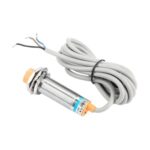
| Detection Mechanism | Limit Switch, Reference Sensor (Optical, Magnetic, Inductive), Z-pulse on Encoder. |
| Repeatability | Typically ±1 µm to ±10 µm, depending on sensor quality and speed. |
| Homing Speed | Usually starts at a low speed (e.g., 1-5 m/min), further reduced (e.g., 0.1-0.5 m/min) after sensor trigger for precision. |
| Process Duration | Can range from 10 seconds to 1 minute, depending on the number of axes and travel distance. |
| Significance | Machining accuracy, tool path precision, workpiece positioning, collision prevention. |
| Applications | All CNC milling, turning, laser, plasma, waterjet cutting machines, and robotic systems. |
Practical Considerations for Industrial CNC Operations
- Sensor and Limit Switch Integrity: The sensors and limit switches are critical for homing. Ensure they are clean, free from dust, chips, or oil, and physically undamaged. Contamination or damage can lead to incorrect reference point detection, jeopardizing entire machining operations. Regular inspection of their condition and connections is vital.
- Optimizing Homing Speed: The homing speed is a configurable parameter within the CNC control system. Setting this speed too high can prevent sensors from accurately detecting the reference point, reducing precision. Conversely, excessively low speeds prolong the homing process. Adhering to the machine manufacturer’s recommended speeds ensures an optimal balance between speed and accuracy, especially during the critical second pass over the reference switch.
- Mechanical Precision and Backlash Control: Mechanical play or backlash in the axes (e.g., in ball screws or linear guides) can affect homing repeatability. Direction changes during homing can expose this backlash differently. Regular maintenance and adjustment of mechanical components, including checking for and correcting backlash, are essential for consistent homing.
- Managing Emergency Stops: An emergency stop (E-stop) can cause the machine axes to lose their positional memory. After an E-stop, it is imperative to perform a homing procedure before resuming operation. Avoid manually moving axes after an E-stop; if manual movement is unavoidable, homing becomes even more critical.
- Preventing Collisions During Homing: Ensure the machine’s travel path during the homing sequence is clear of any workpieces, fixtures, or obstructions. As axes move towards their limits to find the reference point, unexpected contact with an obstacle can cause significant damage to the machine and tooling. Operators must verify the work area is clear before initiating homing.
- Accuracy of Control System Parameters: Parameters related to homing (speed, direction, sensor delays) are configured within the CNC control system. Incorrect settings can lead to homing failures. Only authorized and experienced personnel should modify these parameters.

In conclusion, the homing procedure is not merely a startup routine; it’s a fundamental aspect of maintaining the integrity and performance of your industrial CNC router machine. By ensuring your machine is properly referenced on every startup, you safeguard its precision, enhance its reliability, and ultimately protect your investment. For robust and accurate machining solutions, always prioritize this essential step.
Ready to optimize your production with reliable CNC technology? Request a quote on WhatsApp today!
Related product categories: Electronics · Combination Packages · Linear Guides, Bearings, and Housings