



































































Ball Screw vs. Rack and Pinion for CNC Router Z-Axis Design: A Technical Analysis
📑 Table of contents (Click to open)
- CNC Router Z-Axis Design: Ball Screw or Rack and Pinion? Introduction and Technical Analysis
- Ball Screw vs. Rack and Pinion for CNC Router Z-Axis Design: Operating Principles and Technical Data
- Ball Screw vs. Rack and Pinion for CNC Router Z-Axis Design: Field Considerations
- Ball Screw vs. Rack and Pinion for CNC Router Z-Axis Design: Common Problems and Solutions
- Ball Screw vs. Rack and Pinion for CNC Router Z-Axis Design: Conclusion and Expert Advice
- FAQ
CNC Router Z-Axis Design: Ball Screw or Rack and Pinion? Introduction and Technical Analysis
In the industrial automation and machine manufacturing sector, particularly in the design of precision machining centers like CNC Routers, the selection of linear motion systems is critically important. The Z-axis, which provides vertical movement, directly impacts fundamental operations such as machining depth, tool changes, and approach to the material surface. The performance of this axis is a primary factor determining the quality of the final product, machining speed, and the overall efficiency of the machine. The two most common linear motion mechanisms used for the Z-axis are ball screw and rack and pinion systems. Both technologies have their unique advantages, disadvantages, and suitability for specific application areas. This detailed technical article and field guide is prepared to assist engineers, designers, and machine manufacturers in making the correct choice for their Z-axis designs. We will delve into the technical specifications, performance criteria, and field applications of these two systems, illuminated by industry experience and engineering principles.
Ball Screw vs. Rack and Pinion for CNC Router Z-Axis Design: Operating Principles and Technical Data
The CNC Router Z-axis typically provides the vertical movement of the machining head or spindle. The precision, repeatability, speed, and load capacity of this movement depend on the chosen linear motion mechanism. Ball screw and rack and pinion systems address these requirements with different approaches.
Ball Screw Systems:
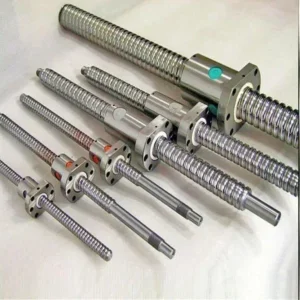
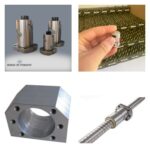
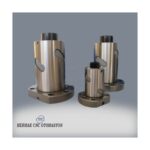
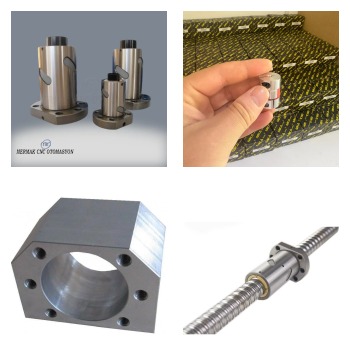
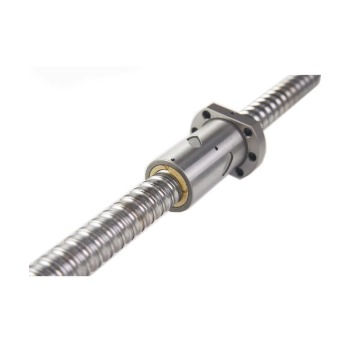
Ball screw systems are precision mechanisms that convert rotary motion into linear motion with high efficiency. They primarily consist of a screw shaft and a ball nut that rotates on this shaft. The gap between the nut and the screw is filled with steel balls. These balls roll between the threads of the screw as the nut rotates, minimizing friction and ensuring high efficiency. When used in the Z-axis, the screw typically remains stationary, and the nut, attached to the spindle carrier, moves up and down. Alternatively, the nut can be held stationary, and the screw can move up and down as it rotates, but the former method is more common in CNC router Z-axes.
- Precision and Repeatability: Ball screws offer micron-level positioning accuracy due to their manufacturing tolerances. This is indispensable for precise machining, mold making, and detailed engraving applications.
- Backlash: High-quality ball screws are manufactured with near-zero backlash using preloaded nuts. This minimizes positioning error during direction changes and improves machining quality. For the Z-axis, backlash directly affects the precision of the tool’s contact with the material, especially during up-and-down movements.
- Rigidity: Ball screws possess high axial rigidity, demonstrating good resistance to forces generated during machining and reducing vibration.
- Efficiency: Due to the rolling motion of the balls, the friction coefficient is low, which translates to less energy consumption and less heat generation.
- Limitations: In long strokes, a phenomenon known as the “whipping effect” can occur due to the screw’s own weight. This leads to vibration and loss of accuracy if the critical speed of the screw is exceeded. Therefore, they are generally not preferred for very long Z-axis strokes. Additionally, they are quite sensitive to contamination and require good sealing and protection. Their cost is higher compared to rack and pinion systems.
Rack and Pinion Systems:
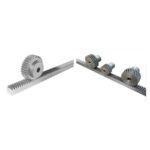
Rack and pinion systems operate on the principle of a gear (pinion) rolling along a flat toothed bar (rack) to provide linear motion. In a CNC Router Z-axis, the pinion is typically mounted on the motor shaft, and the rack is fixed vertically to the spindle carrier. As the motor rotates, the pinion moves along the rack, causing the spindle to move up or down.
- Speed and Stroke Length: Rack and pinion systems theoretically offer unlimited stroke length because racks can be joined in modules. Furthermore, when combined with high-speed motors, they can achieve very high linear speeds. This is advantageous for applications where large materials need to be processed quickly.
- Cost: Generally, they are more cost-effective than ball screw systems, especially for long strokes.
- Durability and Environmental Tolerance: Rack and pinion systems are more robust than ball screws and are more tolerant of contamination in industrial environments such as dust and chips.
- Limitations: The biggest disadvantage of rack and pinion systems is their inherent tendency to have more backlash. The clearance between the gears can cause a loss of precision during direction changes. Although double pinion, preloaded, or precision ground rack and pinion sets are used to reduce this backlash, they generally cannot achieve the micron-level precision of ball screws. Additionally, wear and tear can increase backlash over time and require regular lubrication. Noise levels at high speeds and loads can be higher compared to ball screws.
| Parameter | Ball Screw System (Z-Axis) | Rack and Pinion System (Z-Axis) |
|---|---|---|
| Positioning Accuracy | High (±0.005 – ±0.01 mm) | Medium-High (±0.02 – ±0.05 mm, depending on quality) |
| Repeatability | Very High (±0.002 – ±0.005 mm) | Medium-High (±0.01 – ±0.02 mm) |
| Maximum Linear Speed | Medium (30-60 m/min, critical speed limitation) | High (60-120 m/min and above) |
| Load Capacity (Vertical Load) | High (Rigidity with preloaded nuts) | High (Dependent on gear module) |
| Backlash | Very Low (Near zero with preloaded nuts) | Medium-High (Can be reduced with precision gears and dual pinion) |
| Cost (Long Stroke) | High (Especially for long screws) | Medium-Low |
| Environmental Tolerance | Low (Sensitive to dust, chips, requires good sealing) | High (More robust, less sensitive to contamination) |
| Maintenance | Regular lubrication, cleaning, seal inspection | Regular lubrication, gear wear inspection, alignment |
Ball Screw vs. Rack and Pinion for CNC Router Z-Axis Design: Field Considerations
- Application Area and Material Type: The type of materials the CNC Router will process and the required level of precision are fundamental determinants. For materials like wood or plastic, high speed and moderate precision may suffice, whereas applications such as metal, composite, or mold machining demand micron-level accuracy. Ball screws are ideal for high precision and fine details. Rack and pinion systems are preferred where speed and stroke length are priorities, such as cutting large panels, rapid prototyping, or general-purpose woodworking.
- Desired Speed and Acceleration: How fast the Z-axis needs to move and how quickly it needs to accelerate and decelerate are important. Rack and pinion systems offer the potential for higher linear speeds and accelerations, which is advantageous for fast tool changes or reducing machining time. Ball screws, due to critical speed limitations, can struggle to exceed certain speeds.
- Load to be Carried and Rigidity Requirement: Spindle weight, tool weight, and vertical forces generated during machining directly affect the load capacity and rigidity of the chosen system. Ball screws can carry axial loads very well and offer high rigidity. Rack and pinion systems can also carry heavy loads when appropriate module and gear quality are selected, but backlash management becomes more critical. For the Z-axis, especially with heavy spindles, while a ball screw does not have a self-locking feature, when used with the motor’s braking or holding torque, it can provide a more secure hold. In rack and pinion systems, the motor’s braking capacity or an external braking mechanism becomes even more crucial.
- Cost and Budget Constraints: The project budget plays a significant role in the selection. Ball screws are generally more expensive due to their manufacturing processes and precision, especially for long strokes and large diameters. Rack and pinion systems typically offer a more cost-effective solution, making them attractive for entry-level or budget-friendly machines. However, high-quality, precision-ground rack and pinion sets can also be costly.
- Environmental Conditions and Ease of Maintenance: The operating environment of the machine (dusty, humid, or with chips) affects system selection. Ball screws are sensitive to contamination and must be protected with a good bellows or sealing system. Otherwise, particles entering between the balls can lead to premature wear and performance degradation. Rack and pinion systems are more robust and can operate with less precision, making them suitable for dirtier environments. Both systems require regular lubrication and maintenance; grease or special lubrication systems are typically used for ball screws, while gear oil or grease is used for rack and pinion systems.
- Backlash Management: Backlash in the Z-axis is critically important, especially for depth control and surface quality. Preloaded nuts in ball screws largely solve this problem. In rack and pinion systems, precision gear manufacturing, dual pinion systems (preloaded twin pinions), or adjustable pinion mechanisms are used to minimize backlash. During the design phase, how this backlash will be managed and how wear over time will be compensated for must be planned.
Ball Screw vs. Rack and Pinion for CNC Router Z-Axis Design: Common Problems and Solutions
Both linear motion systems can experience specific problems in Z-axis applications, and their correct identification and resolution directly impact machine performance.
- Ball Screw Problems:
- Increased Backlash: Over time, wear on the balls or thread grooves can increase backlash.
Solution: Check or adjust the preload of the nut. If the nut is not adjustable or wear is excessive, the nut or the entire ball screw set may need to be replaced. Regular and proper lubrication can slow down wear. - Sticking or Irregular Movement: Contamination (chips, dust, metal particles) entering the ball grooves can cause movement to stick or bind. Insufficient lubrication also leads to similar problems.
Solution: Install a good bellows or sealing system. Regularly clean the system and lubricate according to the manufacturer’s recommendations. In severely contaminated situations, disassembly, cleaning, and re-lubrication may be necessary. - Exceeding Critical Speed Limits (for Long Screws): Especially long and slender ball screws can experience vibration (whipping effect) at high speeds.
Solution: Choose a larger diameter ball screw, keep the screw shorter (if design allows), or use more rigid bearing supports at the ends of the screw. Limiting the maximum speed through driver parameters can also be a temporary solution. - Noise and Vibration: Insufficient lubrication, worn balls, or damaged bearings can cause noise and vibration.
Solution: Check lubrication, inspect the condition of bearings and balls, and replace if necessary.
- Increased Backlash: Over time, wear on the balls or thread grooves can increase backlash.
- Rack and Pinion Problems:
- Excessive Backlash: Wear on pinion teeth or rack teeth, misalignment, or insufficient preload can increase backlash.
Solution: Check and adjust the alignment of the pinion and rack. If there is wear, replace the worn parts. In dual pinion systems, check preload settings. Regular lubrication slows down wear. - Tooth Breakage or Damage: Teeth can break or get damaged due to excessive load, shock operation, or insufficient material quality.
Solution: Use a rack and pinion with a higher module (larger teeth) or hardened teeth. Review machine parameters (acceleration, speed, cutting forces) and prevent overloading. Damaged parts should be replaced immediately. - Noise and Vibration: Misalignment, insufficient lubrication, worn gears, or low-quality gears lead to noise and vibration.
Solution: Ensure proper alignment. Perform regular and appropriate type of lubrication. Use higher quality (e.g., ground) gears. - Insufficient Load Carrying Capacity: Especially in the Z-axis, the rack and pinion may be insufficient for heavy spindles or high cutting forces.
Solution: Select rack and pinion sets with a larger module or wider tooth surface. If necessary, add pneumatic or hydraulic balancing systems to support Z-axis movement.
- Excessive Backlash: Wear on pinion teeth or rack teeth, misalignment, or insufficient preload can increase backlash.
- General Z-Axis Problems (for Both Systems):
- Motor Insufficiency: The torque or power of the motor (stepper or servo) driving the Z-axis may be insufficient, especially for heavy spindles or high acceleration requirements.
Solution: Choose a higher torque motor. Optimize motor driver settings. Use a counterweight or pneumatic balancing system to balance the Z-axis. - Faulty Encoder Feedback: Damaged encoder cables, signal interference, or a faulty encoder can lead to positioning errors.
Solution: Check and isolate encoder cables. Test or replace the encoder. - Bearing Problems: Wear or damage to the linear guide rails and carriages that provide movement for the Z-axis spindle carrier can cause jitter and loss of precision.
Solution: Regularly inspect, lubricate, and replace worn parts of the linear guide rails and carriages.
- Motor Insufficiency: The torque or power of the motor (stepper or servo) driving the Z-axis may be insufficient, especially for heavy spindles or high acceleration requirements.
Ball Screw vs. Rack and Pinion for CNC Router Z-Axis Design: Conclusion and Expert Advice
The decision of whether to use a ball screw or rack and pinion system for a CNC Router’s Z-axis must be carefully evaluated based on the specific project requirements, budget constraints, and expected performance targets. As an expert in the industrial automation sector, I emphasize that this choice does not contain a “single correct answer” but rather requires a series of engineering compromises and optimizations. If your application demands critical values such as high precision, sub-micron repeatability, and low backlash, for instance, in mold machining, precision engraving, or optical component manufacturing, ball screw systems will generally offer superior performance. The inherent low friction and preloading capability of ball screws provide excellent stability and accuracy in vertical Z-axis positioning. However, this comes with factors such as higher cost, sensitivity to contamination, and critical speed limitations for long strokes.
On the other hand, if your project prioritizes high speed, long stroke, durability, and cost-effectiveness, for example, for rapid cutting of large wood or composite panels, furniture manufacturing, or general-purpose CNC Router applications, rack and pinion systems may be a more suitable solution. The modular structure of rack and pinion offers theoretically unlimited stroke length, while its more robust construction is more resistant to dust and chips in industrial environments. However, backlash management in rack and pinion systems poses a more critical engineering challenge and may require specialized and more costly solutions (precision ground gears, dual pinion systems) for high-precision applications. The effect of vertical forces and gravity on the Z-axis increases the importance of the motor’s braking capacity or an additional counterweight/balancing system in rack and pinion systems.
In conclusion, as a CNC Router Z-axis designer, you must first clearly define the main purpose and performance criteria of the machine. Then, you must factor in all technical and commercial considerations such as spindle weight, maximum machining forces, desired speed and precision, environmental conditions, and budget. In most cases, finding the optimal balance by weighing the advantages and disadvantages of both systems is essential. It should be remembered that regardless of the system chosen, quality components, correct assembly, regular maintenance, and proper lubrication are indispensable for the long-lasting and trouble-free operation of both systems. This detailed analysis and field guide, I hope, will help you make informed and optimized decisions in your Z-axis design. Request a quote on WhatsApp for further consultation.
FAQ
What are the primary advantages of ball screw systems for Z-axis precision?
Ball screw systems offer superior positioning accuracy (typically ±0.005 – ±0.01 mm) and very high repeatability (±0.002 – ±0.005 mm) due to their preloaded nuts and rolling ball design. This makes them ideal for applications requiring fine detail and tight tolerances.
When are rack and pinion systems a better choice for CNC Router Z-axis movement?
Rack and pinion systems excel in applications requiring high linear speeds (60-120 m/min and above) and long stroke lengths, as racks can be modularly extended. They are also generally more durable and tolerant of dusty industrial environments compared to ball screws.
What is backlash, and how does it affect Z-axis performance in both systems?
Backlash is the play or clearance between the moving parts of a linear system, leading to positioning errors, especially during direction changes. In ball screws, preloaded nuts minimize backlash to near zero. In rack and pinion systems, it's a greater challenge, often addressed with precision ground gears, dual pinions, or adjustable mechanisms.
How do environmental conditions impact the choice between ball screw and rack and pinion?
Ball screws are sensitive to contamination and require good sealing to prevent dust and chips from entering the ball grooves, which can cause premature wear. Rack and pinion systems are more robust and less susceptible to performance degradation from typical industrial debris.
Which system is generally more cost-effective for a CNC Router Z-axis?
Ball screws are typically more expensive, especially for long strokes, due to their precision manufacturing. Rack and pinion systems offer a more cost-effective solution for longer travel, though high-quality, ground rack and pinion sets can also be significant investments.