No products in the cart.
5 Critical Rules for Spindle Motor Selection in Industrial CNC Routers
Contents
- Introduction and Technical Analysis: 5 Critical Rules for Spindle Motor Selection
- Operating Principle and Technical Data: 5 Critical Rules for Spindle Motor Selection
- Field Considerations: 5 Critical Rules for Spindle Motor Selection
- Common Problems and Solutions: 5 Critical Rules for Spindle Motor Selection
- Conclusion and Expert Advice: 5 Critical Rules for Spindle Motor Selection
- FAQ
Introduction and Technical Analysis: 5 Critical Rules for Spindle Motor Selection
At the heart of industrial automation, CNC machines are critically important for the precision and efficiency of machining operations. One of the most fundamental and performance-defining components of these machines is the spindle motor. Spindle motors rotate cutting tools at high speeds and with high precision, enabling material processing. Correct spindle motor selection not only affects the machine’s performance but also directly impacts production quality, tool life, energy efficiency, and total operating cost. An incorrect selection can lead to operational disruptions, frequent breakdowns, low production efficiency, and higher-than-expected maintenance expenses. Therefore, the spindle motor selection process is a strategic decision that requires engineering knowledge, field experience, and detailed technical analysis.
This field guide and technical article elaborates on 5 critical rules that industrial automation professionals should consider when selecting a spindle motor. Each rule is supported by theoretical knowledge, practical applications, and engineering principles, aiming to provide readers with a comprehensive perspective. The goal is not merely to list technical parameters but also to explain their effects on the production process and final product quality, helping to make more informed and optimized selections. With increasing competition in the sector, maximizing the performance of every component has become a necessity. Spindle motors must be one of the strongest links in this chain. When selecting the spindle motor, which is the heart of our machine, it is essential to make a long-term and sustainable investment by considering not only current needs but also potential future requirements.
Operating Principle and Technical Data: 5 Critical Rules for Spindle Motor Selection
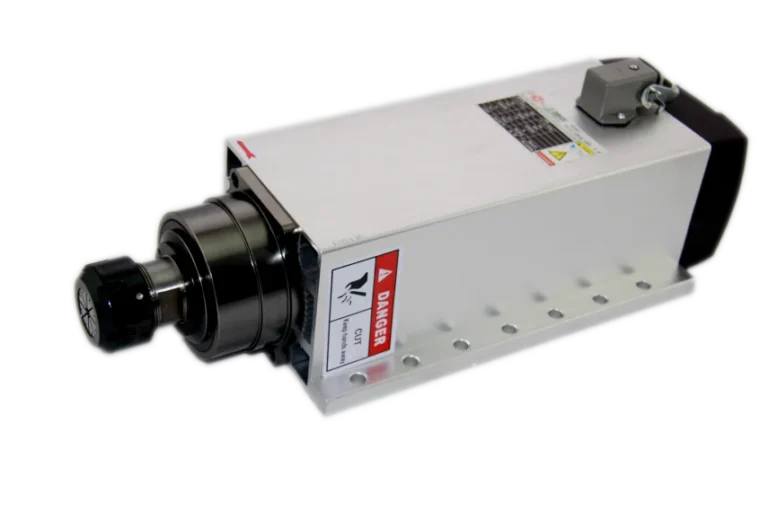
A spindle motor is essentially an electric motor integrated with a high-speed and high-precision shaft (work spindle). These motors typically operate on the principle of AC asynchronous (induction) motors or AC synchronous (PMSM – Permanent Magnet Synchronous Motor) motors. While asynchronous motors can be more robust and cost-effective, synchronous motors offer higher power density, better dynamic performance, and more precise control capabilities. The main components of a spindle motor include the stator (stationary part), rotor (rotating part), high-precision bearings, a cooling system, and usually a position or speed feedback system (encoder or resolver). Electrical energy creates a magnetic field by applying alternating current to the stator windings. This magnetic field generates torque on the rotor, initiating and sustaining rotational motion. The motor’s speed and torque are typically controlled by a Variable Frequency Drive (VFD) or a servo drive.
The engineering data of spindle motors includes a series of critical parameters that define their performance:
- Nominal Power (kW): The amount of power the motor can continuously produce. This generally refers to the maximum power the motor can deliver under continuous operating conditions without overheating.
- Maximum Power (kW): The peak power value the motor can deliver during short-term overload conditions (e.g., sudden cutting loads).
- Nominal Torque (Nm): The torque the motor can continuously produce at nominal speed. This is an indicator of the force required to overcome cutting forces.
- Maximum Torque (Nm): The highest torque value the motor can produce under short-term instantaneous loads. It is usually important during acceleration/deceleration or challenging cuts.
- Maximum Speed (RPM): The highest rotational speed the motor can safely reach. It is critically important for High-Speed Machining (HSM) applications.
- Speed Range (RPM): The range between the lower and upper speed limits at which the motor can operate stably and efficiently.
- Bearing Type and Life: One of the most important factors determining the precision and life of spindle motors. High-precision angular contact ball bearings or ceramic bearings are commonly used.
- Runout (TIR – Total Indicator Runout): A measurement indicating how much the work spindle deviates from its axis of rotation. Low runout values mean high machining precision and longer tool life. Micron-level runout values are essential, especially for precision machining.
- Rigidity (Stiffness): Indicates how little the work spindle deforms under cutting forces. High rigidity ensures better surface quality and more accurate sizing.
- Cooling System: Can be air-cooled or liquid-cooled. Liquid cooling is preferred for high-power and continuous operation applications.
- Balance Class: Dynamic balancing is important to minimize vibration at high speeds. G-class values (e.g., G2.5) indicate the motor’s balance quality.
Spindle motors are used in a wide range of applications:
- Metalworking: Machining metals such as steel, aluminum, titanium in operations like milling, turning, drilling, grinding.
- Woodworking: Furniture manufacturing, panel processing, door and window production.
- Plastic and Composite Processing: Shaping polymer and composite materials used in automotive, aerospace, and general industry.
- Aerospace Industry: Precision machining of high-performance alloys and composites.
- Medical Devices: Production of biocompatible materials and precision surgical instruments.
- Mold Making: Production of molds requiring high surface quality and geometric accuracy.
These versatile application areas emphasize that spindle motor selection must be carefully made according to the specific requirements of each application.
| Parameter | Value/Description |
|---|---|
| Power Range | 0.5 kW – 60 kW (Varies by Application) |
| Maximum Speed | 5,000 RPM – 120,000 RPM (High-Speed Models) |
| Nominal Torque | 1 Nm – 300 Nm (Depends on Motor Size and Power) |
| Cooling Type | Air-Cooled, Liquid-Cooled (Most Common), Oil Mist |
| Bearing Type | Angular Contact Ball Bearing, Ceramic Bearing (Hybrid/Full Ceramic) |
| Runout (TIR) | < 3 µm (for High-Precision Applications) |
| Mounting Type | Flange Mount, Cartridge Type, Integrated (Direct Drive) |
| Balance Class | G2.5 @ 30,000 RPM (According to ISO 1940-1 Standard) |
Field Considerations: 5 Critical Rules for Spindle Motor Selection
- Critical Rule 1: Power and Torque Requirement Analysis
The first and most fundamental step in spindle motor selection is to accurately determine the power and torque values required by the application. This depends on factors such as the type of material to be machined (steel, aluminum, composite, etc.), the geometry and material of the cutting tool, the material removal rate (MRR), and the desired machining strategy (roughing, finishing). Roughing operations typically require high torque and moderate speed, while finishing and small-diameter tool usage may require high speed and lower torque. Engineers should determine the necessary torque by performing cutting force calculations (e.g., Merchant’s cutting force theory or experimental data). Furthermore, the motor’s continuous (nominal) and instantaneous (maximum) torque capacities are critically important for the machine to meet acceleration/deceleration dynamics and sudden load changes. A motor with insufficient torque capacity can lead to problems such as stalling, tool breakage, or motor stoppage, especially in hard materials or deep cuts. Power requirement is a function of torque and speed (P = T * ω). It must be ensured that the motor’s power curve meets the torque requirements across the entire speed range of the application. The nominal power must also be sufficient for the motor to operate for extended periods without overloading.
- Critical Rule 2: Speed Range and Machining Precision
The speed range required by the application is another decisive factor in spindle motor selection. High-Speed Machining (HSM) applications typically require speeds above 15,000 RPM, necessitating specially designed high-speed spindle motors. If finishing or micro-machining is performed with small-diameter tools (e.g., below 1 mm), very high speeds (40,000 RPM and above) may be required. Such speeds place significant demands on the motor’s bearing structure, dynamic balance quality, and cooling system. On the other hand, for heavy material removal operations with large-diameter tools, lower speeds (e.g., below 5,000 RPM) and high torque capacity become important. Machining precision is closely related to the spindle motor’s runout (TIR) value. Low runout (typically 3 microns or less) means better surface quality, more accurate sizing, and extended tool life. The motor’s internal structure (bearings, the spindle itself) and assembly quality play a critical role in maintaining this precision even at high speeds. The vibration level of the spindle motor also affects machining precision; motors with a high balancing class should be preferred for low vibration levels.
- Critical Rule 3: Cooling System and Thermal Management
Spindle motors generate a significant amount of heat when operating under high speed and load. Effective dissipation of this heat directly affects the motor’s performance, lifespan, and machining precision. The main cooling systems are divided into air-cooled and liquid-cooled. Air-cooled spindle motors are generally preferred for lower power applications, offering a simpler and more cost-effective solution, but they can be less efficient and affected by ambient temperature. Liquid-cooled spindle motors, however, offer higher power density, better heat transfer, and more stable thermal performance. Especially in long-term and high-performance operations, a liquid cooling system (usually with a chiller unit) is an absolute necessity to prevent temperature changes from negatively affecting machining precision. The quality of the cooling fluid, flow rate, and temperature control are vital for the system’s efficiency. Insufficient cooling can lead to overheating of motor windings, shortened bearing life, and deterioration of machining precision due to thermal expansion. Therefore, selecting a cooling system suitable for the motor’s operating conditions is essential for long-term reliability.
- Critical Rule 4: Mounting Type, Dimensions, and Integration
The integration of the spindle motor into the machine is important for mechanical design and operational efficiency. Different mounting types are available: flange mount (motor bolted to the machine via a flange), cartridge type (motor housed within an enclosure, and this enclosure fixed to the machine), and integrated (direct drive) systems (motor directly part of the work spindle). The chosen mounting type should be determined based on the machine’s overall design, space constraints, and desired rigidity level. Integrated spindle motors generally offer higher rigidity and fewer mechanical losses, while cartridge-type motors can provide more flexible maintenance and replacement options. The motor’s physical dimensions and weight must also be suitable for the machine’s overall structure, axis movement limitations, and dynamic performance. An excessively large or heavy spindle motor can negatively affect the machine’s dynamics, prolong acceleration/deceleration times, and increase structural rigidity requirements. Additionally, practical integration details such as compatibility with the Automatic Tool Changer (ATC), sensor integration (vibration, temperature, etc.), and cable routing should not be overlooked. Correct mounting type and sizing enhance the machine’s overall performance and ease of use.
- Critical Rule 5: Bearing Structure, Life, and Ease of Maintenance
The heart of the spindle motor lies in its bearings. In high-speed and high-precision spindle motors, angular contact ball bearings are typically used. These bearings can carry both radial and axial loads and are preloaded to provide high rigidity. For high-speed applications, ceramic ball bearings (hybrid or full ceramic) are preferred. Ceramic balls are lighter, harder, produce less friction, generate less heat, and can reach higher speeds than steel balls, which translates to longer bearing life and better performance. Bearing life depends on the motor’s continuous operating conditions, load profile, cooling effectiveness, and maintenance quality. Insufficient lubrication, overheating, overloading, or contamination can significantly shorten bearing life. The lubrication system (grease, oil-air mist, or jet lubrication) is vital for the healthy operation of the bearings. Ease of maintenance is also an important factor; some spindle motors have more accessible designs for bearing replacement, while others may require special service equipment and expertise. The selection and maintenance of bearings have a direct impact on the overall reliability and operational costs of the spindle motor. Choosing the correct bearing type and ensuring regular, proper maintenance ensures the motor’s long-lasting and trouble-free operation.
Common Problems and Solutions: 5 Critical Rules for Spindle Motor Selection
Spindle motors, being one of the most critical components in industrial automation, can encounter various problems that directly affect operational continuity and product quality. Early diagnosis and correct solutions to these problems are vital for minimizing machine downtime and maintaining production efficiency.
- Overheating: One of the most common problems. Exceeding the motor’s nominal operating temperature can damage winding insulation, shorten bearing life, and impair machining precision due to thermal expansion.
- Causes: Insufficient or clogged cooling system (clogged filters, faulty pump, low coolant level), continuous operation of the motor above its nominal power (overloading), increased friction in bearings (lack of lubrication, wear), incorrect VFD parameter settings.
- Solutions: Check and clean the cooling system, review coolant level and quality, ensure the chiller unit is functioning correctly. Adjust machining parameters (depth of cut, feed rate) to match the motor’s capacity. Inspect bearings, lubricate if necessary, or replace them. Review VFD settings (e.g., motor thermal model).
- Excessive Vibration and Noise: High vibration levels reduce surface quality, shorten tool life, and can damage machine components.
- Causes: Unbalanced cutting tool or tool holder, worn or damaged bearings, imbalance in the spindle shaft itself or the motor’s internal structure, incorrect mounting of the motor to the machine, electrical vibrations from the VFD.
- Solutions: Inspect the tool and tool holder, rebalance or replace if necessary. Inspect bearings, identify clearances or damage, and replace them. Have the spindle shaft’s balance checked. Inspect the motor’s mounting surfaces and bolts, tighten any looseness. Optimize VFD settings (e.g., switching frequency).
- Loss of Precision (High Runout): Leads to dimensional errors in machined parts, poor surface quality, and tool breakage.
- Causes: Worn or damaged bearings, bent or damaged spindle shaft, precision issues with the tool holder or tools themselves, spindle deformation due to thermal expansion.
- Solutions: Thoroughly inspect bearings and replace if necessary. Measure the spindle shaft’s runout and consider repair or replacement if it’s out of tolerance. Check the quality and accuracy of tool holders and tools. Ensure the cooling system provides thermal stability.
- Low Torque or Power Output: Results in reduced cutting capacity, decreased feed rates, and inefficient operation.
- Causes: Spindle motor not sized appropriately for the application (insufficient power/torque), incorrect VFD parameter settings (current limits, voltage/frequency ratio), voltage drops in the power supply, partial fault in motor windings.
- Solutions: Re-evaluate whether the spindle motor meets the application’s requirements. Check VFD parameters and adjust them according to the motor’s nominal values. Check the electrical supply. Measure the resistance and insulation of motor windings.
- Short Life or Early Failure: The motor fails much earlier than its expected lifespan, leading to high maintenance costs and production losses.
- Causes: Continuous overloading, insufficient or incorrect lubrication, poor cooling, incorrect selection or mounting of bearings, environmental factors (dust, moisture, coolant ingress), vibrations.
- Solutions: Optimize motor operating conditions, avoid overloading. Implement regular and correct lubrication programs. Ensure the effectiveness of the cooling system. Ensure the correct bearing type is selected for the application and properly mounted. Protect the motor from environmental contaminants (sealing, air barriers). Eliminate vibration sources.
Most of these problems can be prevented or detected early and resolved through regular preventive maintenance, proper monitoring systems (temperature, vibration sensors), and operator awareness. In the troubleshooting process, it is crucial to refer to the motor and VFD user manuals and follow manufacturer recommendations.
Conclusion and Expert Advice: 5 Critical Rules for Spindle Motor Selection
In the world of industrial automation, especially CNC machining, spindle motor selection is far more than a simple product choice from a catalog; it is a strategic engineering decision that directly impacts a machine’s performance, efficiency, precision, and long-term reliability. The 5 critical rules we’ve covered in this detailed field guide – Power and Torque Requirements, Speed Range and Precision, Cooling System, Mounting Type and Dimensions, Bearing Structure and Life – provide a comprehensive framework for determining the most suitable spindle motor to meet the unique demands of each application. Our field experience clearly shows that any compromise or incomplete analysis in these rules, while seemingly offering a short-term cost advantage, will result in much higher long-term operating costs, frequent breakdowns, production losses, and poor product output.
As expert advice, I recommend approaching the spindle motor selection process with a holistic perspective. Instead of focusing solely on the motor’s technical specifications, it is essential to consider the entire machining process, the tools used, the material to be machined, environmental conditions, and even the operator’s experience level. For example, selecting a high-speed spindle motor necessitates the appropriate selection of other components such as high-precision tool holders, dynamically balanced tools, and an effective liquid cooling system. A weakness in one component will degrade the performance of the entire system. Furthermore, by considering your future potential production needs and the flexibility of your machine, choosing a motor with slightly higher capacity or a wider speed range can increase the value of your machine investment in the long run and allow you to adapt to new projects more quickly. Remember, a spindle motor is not just an electric motor; it is a marvel of precision engineering that forms the foundation of machining accuracy and productivity.
Finally, close collaboration with spindle motor suppliers is invaluable for gaining information about the latest technologies and most suitable solutions. Their application engineers can often provide valuable insights into industry best practices and specific scenarios. The right choice guarantees not only today’s but also tomorrow’s competitive and efficient production processes. I hope this guide will be a guiding light for professionals in the industrial automation field, helping them make more informed and strategic decisions in spindle motor selection.
FAQ
Why is spindle motor selection so critical for industrial CNC machines?
Spindle motor selection is crucial because it directly impacts the CNC machine's performance, precision, tool life, energy efficiency, and overall operating costs. An incorrect choice can lead to frequent breakdowns, reduced production efficiency, and higher maintenance expenses.
What are the 5 critical rules for selecting a spindle motor?
The 5 critical rules are: 1. Power and Torque Requirement Analysis, 2. Speed Range and Machining Precision, 3. Cooling System and Thermal Management, 4. Mounting Type, Dimensions, and Integration, and 5. Bearing Structure, Life, and Ease of Maintenance.
What type of bearings are best for high-performance spindle motors?
For high-speed and high-precision applications, angular contact ball bearings are commonly used. For even higher speeds and longer life, ceramic ball bearings (hybrid or full ceramic) are preferred due to their lighter weight, hardness, and lower friction.
What are the common issues encountered with spindle motors and how can they be addressed?
Common problems include overheating (due to insufficient cooling or overloading), excessive vibration (from unbalanced tools or worn bearings), loss of precision (high runout), low torque output (incorrect sizing or VFD settings), and short lifespan (poor maintenance or environmental factors).
What expert advice should be followed during spindle motor selection?
A holistic approach is recommended. Consider the entire machining process, tools, materials, environmental conditions, and operator experience. Collaborate closely with suppliers for the latest technologies and optimal solutions. Also, consider future production needs for long-term investment value.