No products in the cart.
10 Critical Factors to Consider When Buying a CNC Router Machine
Contents
- Introduction and Technical Analysis As indispensable players in industrial automation and modern manufacturing processes, CNC Router machines play a pivotal role in meeting the flexibility, precision, and efficiency needs of today’s production facilities. Equipped with Computer Numerical Control (CNC) technology, these machines are capable of cutting, engraving, drilling, and shaping a wide range of materials with high precision, including wood, plastics, composite materials, metals like aluminum, and even some types of ceramics. By shifting production processes from manual operations to digital controls, minimizing human error, and maximizing repeatability, CNC Routers have become a strategic investment tool in countless sectors, from furniture manufacturing to advertising, automotive to aerospace, mold making to prototyping. However, ensuring the return on investment in this technology and maximizing operational efficiency requires the correct machine selection, which is of critical importance. Determining the most suitable CNC Router for your company’s current and future needs among the many models and configurations available on the market requires in-depth technical analysis and field experience. Operating Principle and Technical Specifications
- Key Considerations in the Field
- Common Problems and Solutions
- Expert Advice
- FAQ
Introduction and Technical Analysis
As indispensable players in industrial automation and modern manufacturing processes, CNC Router machines play a pivotal role in meeting the flexibility, precision, and efficiency needs of today’s production facilities. Equipped with Computer Numerical Control (CNC) technology, these machines are capable of cutting, engraving, drilling, and shaping a wide range of materials with high precision, including wood, plastics, composite materials, metals like aluminum, and even some types of ceramics. By shifting production processes from manual operations to digital controls, minimizing human error, and maximizing repeatability, CNC Routers have become a strategic investment tool in countless sectors, from furniture manufacturing to advertising, automotive to aerospace, mold making to prototyping. However, ensuring the return on investment in this technology and maximizing operational efficiency requires the correct machine selection, which is of critical importance. Determining the most suitable CNC Router for your company’s current and future needs among the many models and configurations available on the market requires in-depth technical analysis and field experience.
Operating Principle and Technical Specifications
The fundamental operating principle of a CNC Router is based on converting 2D or 3D models created with Computer-Aided Design (CAD) software into command sequences called G-code, which the machine can understand, via Computer-Aided Manufacturing (CAM) software. These G-codes are interpreted by the machine’s control unit, ensuring precise movement of the motors on the movable axes (X, Y, Z, and optional A, B, C). The spindle motor, located on the machine, guides the rotating cutting tool (milling cutter, drill bit, etc.) along the specified path on the material to create the desired shape. The spindle is typically air or liquid-cooled and can operate at different power and RPM ranges depending on the type of material to be processed and the cutting speed. The machine’s mechanical structure generally consists of a spindle mounted on a gantry system and motors that move this gantry along the X and Y axes. The Z-axis controls the up-and-down movement of the spindle. For material clamping, vacuum tables, T-slot tables, or mechanical clamping systems are used. The control system is the brain of the machine; it processes G-codes, drives the motors, provides speed and position control, and offers the operator interface. Modern CNC Routers are equipped with advanced features such as automatic tool changers (ATC), tool length sensors, automatic lubrication systems, and integrated dust collection systems, increasing efficiency and automation levels.
| Parameter | Value/Description |
|---|---|
| Working Area (X, Y, Z) | Example: 1300x2500x200 mm (Should be selected according to material dimensions.) |
| Spindle Motor Power | Example: 3 kW – 9 kW (Determined by the hardness of the material to be processed.) |
| Spindle Motor Speed (RPM) | Example: 6,000 – 24,000 RPM (Should be selected according to tool and material compatibility.) |
| Motion System | Servo Motors and Helical Rack-and-Pinion (Preferred for high precision and speed.) |
| Repeatability | Example: ±0.03 mm (Should be checked according to manufacturer datasheet value.) |
| Maximum Processing Speed | Example: 15 – 25 m/min (Varies according to material and tool limits.) |
| Table Type | Vacuum Table and T-Slot Combination (Provides flexibility and strong grip.) |
| Control System | Example: Syntec, Mach3, Siemens (Selected based on ease of use and feature set.) |
| Tool Change System | Automatic Tool Changer (ATC) – 8/12 Position (Critical for production efficiency.) |
Key Considerations in the Field
- 1. Working Area and Number of Axes: The first and most fundamental decision when purchasing a CNC Router is the machine’s working area (travel distance along the X, Y, Z axes) and the number of axes. You must carefully analyze your company’s current and projected maximum part dimensions. A small machine will be unable to process large parts, while an unnecessarily large machine can mean both unnecessary investment cost and idle space. Generally, 3-axis machines are sufficient for cutting, engraving, and drilling on flat surfaces, but 4 or 5-axis machines may be required for more complex, angled, or rotational geometries. 4-axis machines typically allow for the processing of cylindrical parts with a rotary axis, while 5-axis machines enable the tool to approach the workpiece from multiple angles simultaneously, allowing for the production of much more complex geometries in a single setup. This reduces setup time and the probability of errors.
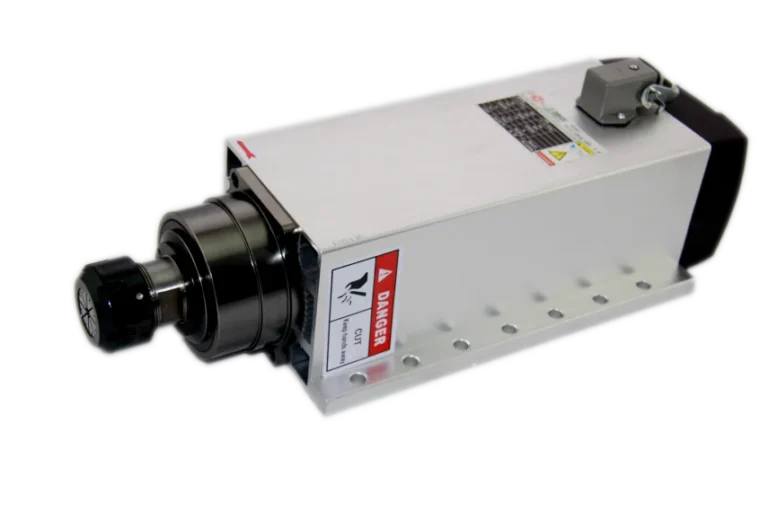
- 2. Spindle Motor Power and Speed: The power (kW) and maximum speed (RPM) of the spindle motor directly affect the types of materials the machine can process and the cutting speeds. For soft materials like wood and plastic, lower power (3-5 kW) spindles may be sufficient, but for aluminum, composites, or harder metals, spindles with 7.5 kW and above should be preferred. High spindle speeds (18,000-24,000 RPM) are important for fine detail machining with small diameter tools and achieving smooth surfaces. Lower speeds may be necessary for deep cuts with larger tools or processing hard materials. The spindle’s cooling system (air or liquid) is a critical factor in maintaining its performance and lifespan during long and intensive operations. Liquid-cooled spindle motors generally offer quieter operation and more stable temperature control.
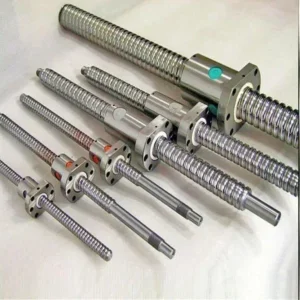
- 3. Motion System and Mechanical Structure: The machine’s motion system is decisive in terms of precision and speed. Stepper motors may be sufficient for cost-effective and simple applications, but servo motors should be preferred for industrial applications requiring high precision, speed, and repeatability. Servo motors can compensate for position errors thanks to feedback mechanisms and offer more dynamic movements. For power transmission, helical rack-and-pinion systems provide high speed and precision in large working areas, while ball screws offer the highest precision in smaller areas. The machine’s mechanical structure, i.e., the rigidity (robustness) of the frame and gantry, directly affects machining quality by absorbing vibrations. Welded steel construction, heavy-duty machines offer long-lasting and stable performance. Light or insufficiently rigid machines can lead to vibration problems and surface quality defects, especially during fast and aggressive cutting.
- 4. Control System and Software: The CNC Router’s control system (controller) and the software used (CAD/CAM) form the interface between the machine and the operator, and are of great importance in terms of ease of use, flexibility, and functionality. Various controllers are available on the market, such as Mach3, DSP-based systems (e.g., RichAuto), Syntec, Fanuc, and Siemens. It is important that the control system is user-friendly, has an intuitive interface, and offers easy adjustment of debugging and processing parameters. Furthermore, compatibility with your company’s existing CAD/CAM software (SolidWorks CAM, Mastercam, ArtCAM, VCarve, etc.) ensures a smooth workflow. Advanced control systems offer features such as tool path optimization, automatic zeroing, and parameter changes during processing, increasing efficiency.
- 5. Vacuum Table and Material Clamping Systems: Ensuring the material to be processed remains fixed and motionless on the table is vital for machining precision and safety. Vacuum tables are ideal for fast and effective clamping of large and flat materials. The power of the vacuum pump and the ability to divide the table into vacuum zones (zone control) provide flexibility for different material sizes. For large-sized materials, a powerful vacuum pump and multiple vacuum zones ensure that the material is held with equal pressure from all points. Additionally, T-slot tables or hybrid vacuum/T-slot tables offer additional flexibility for clamping irregularly shaped or small parts with mechanical clamps. The correct material clamping system shortens production time and improves machining quality.
- 6. Automatic Tool Changer (ATC) and Tool Sensor: In high-volume and multi-step production processes, an Automatic Tool Changer (ATC) significantly shortens production time and reduces operator intervention by eliminating the need for manual tool changes. ATC systems typically have a tool magazine capacity of 6, 8, 10, or 12 positions. An ATC with sufficient capacity should be selected, considering the number and variety of different tools used per workpiece. Furthermore, a tool length sensor automatically measures the tool length after each tool change, performs Z-axis zeroing, and guarantees machining precision. These features save time and labor, especially in the production of complex parts.
- 7. Precision and Repeatability: The precision (resolution) and repeatability of a CNC Router are the most critical technical parameters determining the quality and consistency of manufactured parts. Precision refers to the smallest movement step of the machine, while repeatability indicates how closely the machine can return to the same point when the same command is given repeatedly. High precision and repeatability (typically ±0.05 mm and below) are vital for mold making, precise part production, or products requiring assembly. These values are directly related to the machine’s mechanical structure (ball screws, linear guide rails), the quality of the motors, and the resolution of the control system. It is important that the values specified by the manufacturer can also be verified under field conditions.
- 8. After-Sales Support, Warranty, and Training: A CNC Router is a significant investment and a long-term working partner. Therefore, the quality of the after-sales support services, spare part availability, technical service speed, and warranty conditions of the company you purchase the machine from are of great importance. Being able to receive fast and effective support in case of possible malfunctions or technical problems minimizes production interruptions. Easy availability of spare parts ensures the machine remains operational throughout its lifespan. Additionally, providing comprehensive training services for your operators to use the machine most efficiently shortens the initial learning curve and reduces potential errors. If possible, obtaining support from a local distributor or directly from the manufacturer’s representative in Turkey can provide an advantage in terms of communication and service quality.
- 9. Safety Features and Environmental Compliance: Occupational health and safety are a priority in every production environment. When selecting a CNC Router, you should meticulously examine the machine’s safety features. Features such as emergency stop buttons (E-stop), safety sensors, door locks, light barriers, tool protection covers, and overload protection systems enhance operator safety. Furthermore, the machine’s compliance with international safety and environmental standards, such as the CE certificate, meets legal requirements and contributes to your company’s sustainability goals. Dust collection systems and chip management solutions improve the cleanliness and air quality of the working environment, protecting operator health and extending the machine’s lifespan.
- 10. Budget and Cost Analysis (TCO): Purchasing a CNC Router is not just about the initial acquisition cost. Adopting a Total Cost of Ownership (TCO) approach enables you to make a more accurate investment decision in the long run. In addition to the machine’s price, you should also consider items such as shipping, installation, training, software licenses, spare parts, consumables (cutting tools, vacuum pump filters, etc.), electricity consumption, and maintenance costs. A seemingly cheaper machine may break down more frequently due to low-quality components, consume more energy, or have high spare part costs. This can prove more expensive in the long run. Performing a Return on Investment (ROI) analysis to predict how quickly the machine will add value to your company and amortize its cost is an important part of a strategic decision-making process.
Common Problems and Solutions
Common problems encountered in CNC Router operations can typically be mechanical, electrical, software-related, or operator-induced. For example, loss of precision or vibration often results from backlash in the axes, worn linear guide rails, loose connections, or unbalanced tools. As a solution, periodic mechanical maintenance, checking bolts and nuts, lubricating rails, and performing tool balancing adjustments are recommended. Tool breakage or burning can be caused by incorrect cutting parameters (RPM, feed rate, cutting depth), worn tools, insufficient cooling, or material clamping issues. In this case, selecting the appropriate tool for the material to be processed, optimizing cutting parameters, regularly checking and replacing the tool, and ensuring the efficiency of the cooling system are necessary. Control system errors or axis shifts can occur due to electrical noise, poor grounding, software conflicts, or motor step loss. Solutions include checking the electrical installation, proper grounding, software updates, adjusting motor parameters, and reducing mechanical friction. Surface quality issues can arise from tool wear, spindle vibration, incorrect RPM/feed combination, or material properties. These problems can be resolved by tool replacement, spindle maintenance, fine-tuning cutting parameters, and using appropriate tool path strategies. When encountering any problem, it is always best to first consult the machine’s user manual and, if necessary, seek support from an authorized technical service.
Expert Advice
The acquisition of a CNC Router is a strategic decision that directly impacts a company’s production capacity, efficiency, and competitive edge. Therefore, a comprehensive evaluation should be conducted, encompassing not only the initial cost but also long-term operational needs, technical specifications, after-sales support, and total cost of ownership (TCO). As an expert, my advice is not to rush this process, to thoroughly research models from different manufacturers in the market, and if possible, to consult with reference customers. Clearly defining your needs, concretizing the variety of materials to be processed, part dimensions, production volume, and precision expectations will guide you towards the right machine. Before purchasing the machine, requesting a demo or test run with your own materials or similar applications is invaluable for understanding the machine’s real performance and whether it meets your expectations. The strength of the supplier company’s engineering and application support plays a critical role during the machine’s installation, commissioning, and operator training processes. Remember, a well-chosen CNC Router is not just a machine; it is a powerful investment that fuels your company’s future growth and innovation potential. The right choice will ensure uninterrupted, efficient, and profitable production for many years to come.
FAQ
How do I determine the right working area for my industrial CNC router?
The ideal working area for a CNC router depends entirely on the maximum dimensions of the parts you plan to produce. For small components, a compact machine might suffice, but for large panels or complex assemblies, a larger working envelope (e.g., 1300x2500mm or more) is essential. Consider both current and future project requirements to avoid limitations.
What spindle motor power and speed are suitable for different materials?
Spindle motor power (kW) and speed (RPM) are crucial. For softer materials like wood or plastics, a 3-5 kW spindle might be adequate. However, for harder materials such as aluminum, composites, or dense hardwoods, a 7.5 kW or higher power spindle is recommended. High RPMs (18,000-24,000) are beneficial for fine detailing and smooth finishes, while lower RPMs are suitable for heavy material removal with larger tools.
Should I choose stepper or servo motors for my CNC router, and what motion system is best?
For industrial applications requiring high precision, speed, and repeatability, servo motors are highly recommended over stepper motors. Servo drives offer feedback mechanisms to correct positional errors and provide more dynamic motion control. For power transmission, helical rack-and-pinion systems are excellent for large working areas, while ball screws provide superior precision for smaller, more intricate tasks.
What are the key features to look for in a CNC router's control system and software?
A robust control system (e.g., Syntec, Siemens, Mach3) and compatible CAD/CAM software are vital for seamless operation. Look for user-friendly interfaces, easy parameter adjustment, and features like tool path optimization and automatic zeroing. Ensure compatibility with your existing design software to streamline your workflow.
What type of material clamping system is best for industrial CNC routing?
Vacuum tables are ideal for quickly and effectively clamping large, flat materials, offering strong hold and reducing setup time. For irregularly shaped or smaller parts, T-slot tables or hybrid vacuum/T-slot systems provide flexibility for mechanical clamping. The power of the vacuum pump and zone control features are important for versatile material handling.