
No products in the cart.


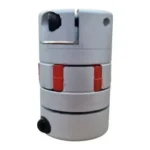
GS19 Coupling 14×14 D40XL66 Machined Ready Size
12.96$
Best Quality Best Price Guarantee
In stock
📦 Category: 14x14 Lead Screws and Nuts
Mermak assuranceFrom factory to end user · importer / main dealer · strong stock
ImporterMain dealer / distributorStrong stockGood priceCorporate invoice
In stock / available to order · 14-day return for standard unused products; conditions may vary for custom size/cut products.
GS19 Coupling 14X14 D40XL66 Machined Ready Size
INDUSTRIAL AUTOMATION PARTS | SUPERIOR PERFORMANCE SERIES
Detailed Product Review
In industrial automation systems, especially in motion control applications, torque transmission between driving and driven shafts is a critical engineering challenge for the overall performance, precision, and lifespan of the system. The GS19 Coupling series is a jaw-type, elastomeric coupling solution designed to meet these requirements. With its pre-machined standard dimensions such as 14×14 mm shaft diameter, 40 mm outer diameter (D), and 66 mm overall length (L), this coupling is optimized to provide reliable, zero-backlash torque transmission between rotating components like servo motors, stepper motors, and gearboxes. Its primary function is to effectively compensate for angular, parallel, and axial misalignments between two shafts, while damping vibrations originating from the drive system or from the load. This extends the life of mechanical components (motor bearings, gearbox gears, spindle bearings) and minimizes operational noise. Consequently, the system’s dynamic response and positioning accuracy are maintained, and energy transfer efficiency is increased.
The structural design of the GS19 series is based on the combination of two jawed hubs made from high-strength 6061 T6 aluminum alloy and a polyurethane elastomeric element (spider) with a hardness of 92 Shore A, positioned between these hubs. This material selection and design architecture ensure that the coupling possesses high torsional rigidity along with significant vibration damping capacity. The aluminum alloy hub combines high torque transmission capability with low inertia, while the elastomeric element absorbs stresses caused by sudden load changes and shocks, thereby enhancing system stability. The ready-machined shaft bores allow for direct mounting onto the shaft without the need for additional machining or special adapters, significantly reducing installation time and engineering costs. Manufactured to Mermak CNC’s engineering standards, this coupling offers long-lasting, maintenance-free operational performance in demanding industrial environments, contributing to the overall efficiency and reliability of automation systems. Application areas range widely from CNC machines to robotic systems, automation lines, and medical equipment. Mermak CNC proudly supplies these high-performance couplings to clients in the United Kingdom, United States, Canada, Australia, Ireland, New Zealand, South Africa, and similar international markets.
GS19 Coupling 14×14 D40XL66 Machined Ready Size Advantages
Zero-Backlash Torque Transmission and Positioning Accuracy: The GS19 Coupling, thanks to its jaw structure and pre-compressed elastomeric element, provides absolute zero-backlash torque transmission. This means the movement of the driving shaft is transferred to the driven shaft without any angular delay or loss. In closed-loop control applications, particularly in CNC machines, robotic manipulators, and precision positioning systems, the zero-backlash structure maximizes path accuracy, repeatability, and the system’s dynamic response. This ensures that the motion commanded by the control algorithm is executed with the highest fidelity in the mechanical system, enhancing machining quality and operational precision.
Effective Vibration and Shock Damping Capacity: The specially selected polyurethane elastomeric element (spider) with a hardness of 92 Shore A, located at the center of the coupling, effectively absorbs torsional vibrations and sudden shock loads originating from the drive system or caused by load changes. This damping capability reduces dynamic stresses on connected mechanical components such as motors, gearboxes, bearings, and spindles, thereby delaying wear and tear and extending their service life. Furthermore, it minimizes the occurrence of resonance frequencies in the system, lowering operational noise and increasing overall system stability. This feature is critical, especially in applications with frequent high acceleration and deceleration cycles.
Fast and Direct System Integration: The GS19 Coupling is precisely machined and supplied ready for use with 14×14 mm shaft bores and D40xL66 mm outer and overall length dimensions. This “machined ready size” feature eliminates the need for the end-user to perform additional machining or design special adapters. Its compatibility with standard shaft diameters and dimensions allows for quick and seamless integration into existing drive systems. This significantly shortens assembly time, reduces engineering and labor costs, and accelerates the project commissioning process. The set-screw mounting type offers secure and easy fastening onto the shaft, simplifying maintenance and replacement procedures.
Technical Specifications and Capacity
FeatureValue/Description
Coupling TypeGS Type Jaw Coupling
Outer Diameter (D)40 mm
Overall Length (L)66 mm
Shaft Diameters14 mm x 14 mm (Both Ends)
Nominal Torque12 Nm (Newton meters) – Continuous operating torque
Maximum Torque28 Nm (Newton meters) – For instantaneous peak loads
Maximum Speed10,000 RPM (Revolutions per minute)
Misalignment Compensation (Angular)±1.0° (Degrees)
Misalignment Compensation (Parallel)±0.20 mm
Misalignment Compensation (Axial)±0.50 mm
Hub MaterialHigh Strength Aluminum Alloy (6061 T6)
Elastomer (Spider) MaterialPolyurethane (92 Shore A Hardness) – Blue
Operating Temperature Range-30°C to +80°C
BacklashZero Backlash
Mounting TypeSet-screw
Technical Frequently Asked Questions (FAQ)
How does the 92 Shore A hardness of the GS19 Coupling’s elastomeric element (spider) affect the coupling’s performance characteristics?
A hardness of 92 Shore A represents a relatively high hardness value for polyurethane elastomer. This hardness level increases the coupling’s torsional rigidity, leading to less angular deflection during torque transmission, which is critical for applications requiring precise positioning. A harder elastomer can transmit higher torques with less deformation, thus contributing to the preservation of the zero-backlash feature. However, a harder elastomer may slightly reduce vibration damping capacity while increasing resistance to shock loads. This specific hardness has been selected for the GS19 series to provide an optimized balance between torque transmission precision and vibration damping, ensuring both dynamic performance and system protection.
What do the specified misalignment compensation values (angular ±1.0°, parallel ±0.20 mm, axial ±0.50 mm) for the coupling mean in terms of system design and component lifespan?
These misalignment compensation values indicate the maximum limits within which the GS19 Coupling can safely absorb geometric deviations between the driving and driven shafts. Angular misalignment (±1.0°) refers to the angular deviation between shafts, parallel misalignment (±0.20 mm) refers to the parallel offset of the shaft axes relative to each other, and axial misalignment (±0.50 mm) refers to the forward-backward movement of the shafts along their axial direction. When operating within these values, the coupling’s elastomeric element compensates for these deviations by flexing, preventing unnecessary radial or axial loads on connected components like motors, bearings, and gearboxes. This extends the overall lifespan of the system, prevents premature failures, and reduces maintenance costs. Exceeding these limits can shorten the coupling’s life, cause excessive vibrations, and lead to damage in connected equipment.
How does the “zero backlash” design principle of the GS19 Coupling improve its performance in closed-loop control systems?
A zero-backlash design means that the coupling has no angular play during torque transmission from the driving shaft to the driven shaft. In closed-loop control systems, this feature is critical because position or speed feedback must respond instantly and accurately to the actual movement of the shaft. Backlash reduces control system sensitivity, can cause oscillations, and negatively impacts positioning accuracy. The zero-backlash structure of the GS19 Coupling ensures that control signals are transmitted directly and without delay to the mechanical system, allowing the system to operate with higher precision, respond faster, and position more stably. This directly enhances system performance in applications such as CNC machining, robotic manipulation, and precision measuring instruments.
When selecting a coupling, how should the nominal torque (12 Nm) and maximum torque (28 Nm) values be interpreted, and how does the service factor relate to these values?
Nominal torque (12 Nm) refers to the maximum torque the coupling can transmit continuously and safely. This is the torque limit at which the coupling will exhibit long-term performance under normal operating conditions. Maximum torque (28 Nm) is the torque value the coupling can withstand without deformation or permanent damage during instantaneous peak loads or short-term overload situations. This value indicates the coupling’s resilience, especially in applications with sudden acceleration/deceleration or shock loads. When selecting a coupling, the application’s continuous operating torque should not exceed the nominal torque. Furthermore, it is recommended to apply a service factor (SF) based on the application’s dynamic characteristics and operating environment. The service factor is obtained by multiplying the nominal torque by a specific coefficient (e.g., if SF=1.5, the coupling’s nominal torque is considered 12 Nm * 1.5 = 18 Nm). This provides an additional safety margin against unexpected load fluctuations, vibrations, or uncertainties in operating conditions, optimizing the coupling’s lifespan.
| Dimensions | 14x14 |
|---|---|
| Coupling Bore Diameter | |
| Coupling Outer Size |
You must be logged in to post a review.
Taksit Tablosu
Related Products
 GS19 Coupling 16x19 D40XL66 Machined Ready Size12.96$View
 %55 DiscountGS19 Coupling 19x19 D40XL66 Machined Ready SizeOriginal price was: 12.96$.5.83$Current price is: 5.83$.View
 GS19 Coupling 12.7x12.7 D40xL66 Machined Ready Size12.96$View
Reviews
There are no reviews yet.