
No products in the cart.


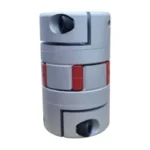
GS19 Coupling 12.7×12.7 D40xL66 Machined Ready Size
12.96$
Best Quality, Best Price Guarantee
In stock
📦 Category: 12.7x12.7 Lead Screws and Nuts🏷️ Dimensions: 12,7x12,7🏷️ Coupling Series: GS19
Mermak assuranceFrom factory to end user · importer / main dealer · strong stock
ImporterMain dealer / distributorStrong stockGood priceCorporate invoice
In stock / available to order · 14-day return for standard unused products; conditions may vary for custom size/cut products.
The GS19 Coupling 12.7×12.7 D40xL66 Machined Ready Size is a flexible connector designed to transmit torque with high precision and zero backlash between two rotating shafts in industrial automation systems. This coupling is particularly crucial for power transmission between critical components operating under dynamic load, such as servo motors, stepper motors, encoders, and other precision actuators. It effectively absorbs inevitable shaft misalignment deviations (radial, angular, and axial) that may occur in the system. This flexibility significantly reduces stress on the bearings and seals of the connected equipment, thereby extending mechanical life and minimizing the risk of failure. Its zero backlash design guarantees that motion from the input shaft is transmitted one-to-one to the output shaft without any delay or slippage in torque transmission. This feature is a critical engineering advantage, especially for applications requiring high repeatability and positioning accuracy. The coupling’s design maintains stability even during sudden acceleration and deceleration cycles, optimizing the system’s dynamic performance and enhancing overall system stability by damping vibrations originating from resonance frequencies.
The body of this coupling is manufactured from high-strength aluminum alloy using precision CNC machining techniques, and its surface is reinforced with an anodized coating. The anodized coating enhances the material’s wear resistance, corrosion resistance, and electrical insulation properties, ensuring long-lasting and reliable performance even in harsh industrial environments. The machined ready size, suitable for standard shaft diameters of 12.7 mm, simplifies the installation process and speeds up system integration, thus reducing engineering and installation costs. The compact D40xL66 dimensions offer an ideal solution for automation systems with limited mounting space, while its optimized geometry provides a low moment of inertia. Low inertia allows the motor to respond faster, consume less energy, and exhibit more dynamic performance in high-speed motion control applications. The clamp-type mounting, secured with stainless steel set screws, creates a secure and non-slip connection on the shaft, while its disassemblable nature facilitates maintenance and replacement processes. This combination of technical features makes the GS19 Coupling an indispensable component for industrial machinery that demands unwavering performance under high speeds, sudden load changes, and continuous operation conditions.
Advantages of the GS19 Coupling 12.7×12.7 D40xL66 Machined Ready Size
Zero Backlash Torque Transmission: The zero backlash design of the GS19 Coupling ensures that the rotational motion from the input shaft is transmitted to the output shaft one-to-one and instantaneously, without any angular delay or loss. This feature is critical for applications requiring precise positioning, such as tool path tracking in CNC machines or robotic joint movements, ensuring repeatability. The complete elimination of backlash improves the system’s dynamic response time, minimizes oscillations in control loops, and provides millimeter-accurate positioning capabilities even during high-speed direction changes. This engineering principle directly optimizes the overall precision and repeatability of the system, enhancing the surface quality of machined parts and reducing error rates in assembly processes.
High Shaft Misalignment Tolerance: The flexible structure of the coupling is capable of effectively absorbing radial, angular, and axial misalignment deviations between the connected motor and spindle shafts. Radial misalignment occurs when shaft centers are not parallel, angular misalignment occurs when shafts are at an angle to each other, and axial misalignment occurs when the distance between shafts is different from the ideal. The GS19 Coupling compensates for these deviations through internal structural deformation, preventing excessive stress and side loads on the bearings and seals of the connected equipment. This prevents premature wear of bearings and seals, extending the service life of expensive components like motors and spindles, and minimizing unplanned downtime and maintenance costs. High misalignment tolerance also facilitates easier installation, reducing the time and labor costs associated with precise alignment procedures.
Low Moment of Inertia: The optimized lightweight aluminum alloy body and compact design of the GS19 Coupling offer a low moment of inertia. Moment of inertia is a measure of an object’s resistance to changes in its rotational motion and directly affects the motor’s acceleration and deceleration capabilities in motion control systems. A low moment of inertia allows the motor to accelerate and decelerate faster with less energy consumption. This shortens the motor’s response time, especially in high-speed and dynamic motion control applications (e.g., robotics or high-speed indexing systems). Faster response times improve overall system cycle times, increase production efficiency, and optimize energy consumption, leading to savings in operating costs. Furthermore, low inertia reduces mechanical stress within the system, positively contributing to component longevity.
Technical Specifications and Capacity
Feature
Value/Description
Model Series
GS19 Series Precision Coupling
Shaft Diameters (D1xD2)
12.7 mm x 12.7 mm (Machined Ready Size)
Outer Diameter (D)
40 mm
Total Length (L)
66 mm
Nominal Torque
10 Nm (Newton meters)
Maximum Torque
20 Nm (Newton meters)
Maximum Speed
8000 RPM (Revolutions per minute)
Material
Anodized Aluminum Alloy (Body), Stainless Steel (Set Screws)
Alignment Tolerance
Angular: ±1.0°, Radial: ±0.2 mm, Axial: ±0.2 mm
Backlash
Zero Backlash
Mounting Type
Clamp Type
Operating Temperature
-20°C ~ +80°C
Moment of Inertia
5.5 x 10⁻⁵ kg·m²
Technical Frequently Asked Questions (FAQ)
What are the mechanical and chemical advantages of the anodized aluminum alloy used in the GS19 Coupling body?
The high-strength aluminum alloy used in the GS19 Coupling body is significantly improved in terms of surface hardness and corrosion resistance through anodization (anodizing). Anodizing creates a controlled oxide layer on the aluminum surface, resulting in a structure that is much thicker, harder, and denser than the material’s natural oxide layer. Mechanically, this coating increases the surface’s wear resistance, ensuring the coupling lasts longer under dynamic loads and friction conditions. Chemically, the anodized layer enhances aluminum’s resistance to environmental factors, particularly moisture, oxygen, and certain chemicals, minimizing the risk of rust and corrosion. Furthermore, anodized coating improves aluminum’s electrical insulation properties, making the coupling more reliable in certain electrical applications. This combination guarantees that the coupling maintains high performance and durability even in harsh industrial environments.
What technical advantages does the clamp-type mounting offer compared to other coupling mounting methods?
The clamp-type mounting used in the GS19 Coupling provides a connection to the shaft through a clamping force applied radially. Unlike set screw types, this method does not create any notches or deformations on the shaft, thus preserving the shaft’s integrity and dynamic balance. Because the clamping force is distributed evenly across the shaft surface, a higher torque transmission capacity and a more reliable non-slip connection are achieved. This is critically important in applications with high dynamic loads, such as sudden accelerations/decelerations or direction changes. Additionally, clamp-type mounting allows the coupling to be easily attached to and detached from the shaft, simplifying installation, disassembly, and maintenance processes, and reducing labor time. For systems requiring precise positioning, the adjustability of the coupling’s position on the shaft is also a significant advantage, allowing for fine-tuning with ease.
What do the specified misalignment tolerances (Angular: ±1.0°, Radial: ±0.2 mm, Axial: ±0.2 mm) of the GS19 Coupling mean in system design?
The detailed misalignment tolerances of the GS19 Coupling specify the maximum acceptable deviation amounts between the two connected shafts and are critical engineering parameters for system designers. An angular tolerance of ±1.0° means the shafts can be misaligned by up to 1 degree relative to each other, while a radial tolerance of ±0.2 mm indicates that the shaft centers can be offset by up to 0.2 mm in parallel. An axial tolerance of ±0.2 mm signifies that the axial distance between the shafts can deviate by up to 0.2 mm from the nominal value. These tolerance values guarantee that the coupling, thanks to its flexible structure, can absorb these deviations and operate without imposing excessive stress on the bearings of the connected motor or spindle. In system design, these values determine the required mounting precision; misalignments within these tolerances are safely managed by the coupling, preserving the system’s long-term reliability and performance. This also helps reduce installation costs by requiring less precise mounting.
How does the low moment of inertia of the GS19 Coupling contribute to the overall efficiency of industrial automation systems?
The low moment of inertia of the GS19 Coupling (5.5 x 10⁻⁵ kg·m²) enhances the overall efficiency of industrial automation systems in several ways. Low inertia means the motor requires less torque during acceleration and deceleration, as the resistance to rotational motion is lower. This allows the motor to respond faster and reach the desired speed in a shorter time, especially in applications with high-speed and dynamic motion profiles (e.g., robotic arms, CNC axes). Faster response times shorten cycle times, increasing production capacity. Furthermore, since the motor needs to produce less torque, it can deliver the same performance with lower energy consumption, leading to direct energy savings in operating costs. Low inertia also reduces mechanical stress and vibrations within the system, extending the life of the motor and other connected components, lowering maintenance requirements, and increasing overall system reliability. All these factors combined mean that the low moment of inertia of the GS19 Coupling significantly improves the system’s operational efficiency and sustainability.
Mermak has 16 years of experience in the industrial automation sector. Our products are stocked and prepared from our Ankara Uzay Sanayi factory/warehouse. Current stock quantities and prices are updated on our website. Stocked products are dispatched without production waiting times. We ensure careful packaging and meticulous follow-up of invoices and documents. We partner with reliable logistics providers, and the Mermak team closely monitors the shipment process. Upon request, we can arrange video viewings of our products or factory via WhatsApp or other contact channels. We proudly supply high-quality components to customers in the United Kingdom, United States, Canada, Australia, Ireland, New Zealand, and South Africa, as well as similar countries and international markets.
| Dimensions | 12,7x12,7 |
|---|---|
| Coupling Series | GS19 |
You must be logged in to post a review.


Reviews
There are no reviews yet.