
No products in the cart.


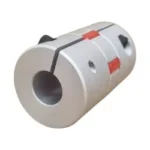
GS19 Coupling 16×19 D40XL66 Machined Ready Size
12.96$
Best Quality, Best Price Guarantee
In stock
📦 Category: 16x19 Lead Screws and Nuts🏷️ Dimensions: 16x19🏷️ Coupling Series: GS19
Mermak assuranceFrom factory to end user · importer / main dealer · strong stock
ImporterMain dealer / distributorStrong stockGood priceCorporate invoice
In stock / available to order · 14-day return for standard unused products; conditions may vary for custom size/cut products.
GS19 Coupling 16X19 D40XL66 Machined Ready Size
INDUSTRIAL AUTOMATION PARTS | SUPERIOR PERFORMANCE SERIES
Detailed Product Review
The GS19 Coupling series is a flexible jaw coupling element designed to transmit rotational motion and torque from a drive shaft (e.g., motor shaft) to a driven shaft (e.g., lead screw or gearbox input) in industrial automation systems. This mechanical connection element minimizes stress on system components by absorbing potential radial, angular, and axial misalignments between two shafts. Its operating principle relies on torque transmission through an elastomeric insert (spider), typically polyurethane-based, positioned between two metal hubs. The jaws of the hubs engage with the lobes of the insert, transmitting torque via compressive force, while the flexible deformation of the elastomer compensates for shaft misalignments. This structure also dampens sudden torque loads (shock loads) and system vibrations, extending the mechanical life of the connected motor, bearings, and other motion transmission components, ensuring the system operates more stably, quietly, and efficiently. The zero backlash feature is particularly critical for applications requiring precise positioning and motion control.
The body of the GS19 Coupling is manufactured from a high-strength aluminum alloy (typically 6061-T6). This material choice ensures the coupling is lightweight while offering significant mechanical properties such as high torque capacity and corrosion resistance. The elastomeric insert is made from a special polymer with high resistance to wear and fatigue, available in different hardness (durometer) values depending on application requirements. This specific model is offered with factory-machined ready sizes for 16mm and 19mm shaft diameters. This significantly simplifies assembly processes, eliminates the need for additional machining, and ensures direct compatibility with common industrial components like standard NEMA motors (e.g., NEMA 23, NEMA 34) and lead screws. Its compact design with an outer diameter of 40mm and a total length of 66mm offers ease of integration in systems with limited space. GS19 Couplings are widely used in industrial automation applications requiring high performance and reliability, such as CNC machining centers, 3D printers, robotic manipulators, conveyor systems in automation lines, and precision measuring instruments. The design of this coupling reduces bearing and shaft stresses caused by misalignments, thereby increasing the overall operational reliability and efficiency of the system.
Advantages of the GS19 Coupling 16X19 D40XL66 Machined Ready Size
High Torque Transmission and Zero Backlash Precision: The GS19 Coupling, thanks to its optimized jaw geometry and the compressive strength of its elastomeric insert, offers a nominal torque capacity of 8 Nm and a maximum torque capacity of 20 Nm, despite its compact dimensions. This high torque transmission capability is critical, especially in servo and stepper motor applications where dynamic loads and rapid acceleration/deceleration cycles are common. The coupling’s “zero backlash” feature guarantees the absence of any play in mechanical motion transmission. This eliminates lag and positioning errors between the motor’s command signal and the driven shaft’s movement, maximizing system performance in all applications requiring micron-level accuracy in CNC machining centers, high repeatability in robotic systems, and precise motion control in general.
Versatile Shaft Misalignment Compensation and Vibration Damping: Through the flexible structure of its elastomeric insert, the GS19 Coupling effectively compensates for radial (~0.2 mm), angular (~2°), and axial (~0.2 mm) misalignments between the drive and driven shafts. This feature significantly reduces stress on bearings, seals, and other connected components caused by shaft misalignments arising from assembly tolerances or thermal expansion, thereby extending the life of these parts. Furthermore, the elastomeric insert absorbs vibration energy originating from the motor and load, improving the system’s overall acoustic performance and reducing the risk of resonance. Under sudden shock loads, the elastomer’s deformation capability helps protect the mechanical system by damping impact energy, which enhances operational stability and reliability.
Optimized Integration and Long-Term Operational Reliability: This coupling model is offered with ready-machined sizes for standard shaft diameters such as 16mm and 19mm. This eliminates the need for additional machining or special adapters on-site, significantly reducing assembly time and labor costs. Quick and easy integration accelerates project development and commissioning processes. The combination of a high-strength aluminum alloy body and a wear-resistant elastomeric insert provides the GS19 Coupling with high durability and a long service life, even in demanding industrial environmental conditions. This structural robustness ensures the coupling performs reliably across a wide operating temperature range, from -20°C to +80°C. Minimum maintenance requirements and high operational continuity reduce the system’s total cost of ownership and optimize the return on investment period.
Technical Specifications and Capacity
FeatureValue/Description
Product CodeGS19-16X19-D40XL66
Coupling TypeFlexible Jaw Coupling
Shaft Diameters (d1 x d2)16 mm x 19 mm (Machined Ready)
Outer Diameter (D)40 mm
Total Length (L)66 mm
MaterialHigh-Strength Aluminum Alloy (6061-T6)
Nominal Torque Capacity8 Nm
Maximum Torque Capacity20 Nm
Maximum Speed8000 RPM
Angular Misalignment Compensation~2°
Radial Misalignment Compensation~0.2 mm
Axial Misalignment Compensation~0.2 mm
BacklashZero Backlash
Clamping MechanismSet Screw (Single or Double)
Operating Temperature-20°C to +80°C
Technical Frequently Asked Questions (FAQ)
How does the elastomeric insert in the GS19 Coupling contribute to the overall performance and lifespan of connected system components?
The elastomeric insert is the core component providing flexibility to the GS19 Coupling and contributes to performance in multiple ways. Primarily, it absorbs shaft misalignments (radial, angular, axial), reducing stress between the drive and driven shafts. This prevents overloading on motor bearings, lead screw bearings, and other rotating elements, thereby extending the mechanical life of these components. Secondly, thanks to the viscoelastic properties of the elastomer, it effectively dampens system vibrations and sudden shock loads. This damping ensures the system operates more stably and quietly, reduces the risk of resonance, and improves machining quality in precision applications. Additionally, the elastomeric insert provides electrical insulation, preventing current transfer that could arise from potential differences between the two shafts, which can help protect certain electronic components. An elastomer selected with the appropriate hardness (durometer) optimizes torque transmission capacity and damping characteristics according to application requirements.
When selecting the GS19 Coupling for an application, how should the nominal and maximum torque capacities and shaft misalignment values be evaluated?
Nominal and maximum torque capacities are critical parameters when selecting the GS19 Coupling. The nominal torque capacity (8 Nm) represents the torque the coupling can continuously and safely transmit and should be higher than the application’s continuous operating torque. The maximum torque capacity (20 Nm) indicates the peak torque the coupling can withstand for short durations, which should be sufficient to handle peak torques occurring during sudden accelerations, decelerations, or shock loads. It is generally recommended to select a value that is 1.5 to 2 times the nominal torque as a safety factor. The shaft misalignment values (radial ~0.2 mm, angular ~2°, axial ~0.2 mm) specify the maximum misalignments the coupling can compensate for. The expected maximum shaft misalignments in the application should not exceed the coupling’s specified compensation limits. Exceeding these limits can lead to excessive deformation of the elastomeric insert, premature fatigue, or even failure, and can also create unwanted stresses on the connected shafts and bearings. Therefore, both torque requirements and expected shaft misalignments must be thoroughly analyzed and evaluated with appropriate safety margins when selecting the coupling.
What technical advantages does the “zero backlash” feature of the GS19 Coupling offer in precision motion control systems?
The “zero backlash” feature of the GS19 Coupling means it transmits torque between the drive and driven shafts without any mechanical play or dead movement. This technical feature is critical, especially for precision motion control systems based on servo motors and stepper motors. The absence of backlash ensures that every micro-turn or step of the motor is instantly and fully transmitted to the driven shaft. This significantly increases positional accuracy and repeatability, enabling micron-level machining and motion precision in CNC machines, robotic manipulators, and precision measuring instruments. Furthermore, zero backlash improves the system’s dynamic response, allowing for sharper and more controllable movements during motor acceleration and deceleration cycles. It eliminates oscillations (hunting) and instabilities caused by backlash in feedback systems, contributing to more stable operation of the control loop. Consequently, it maximizes the overall performance and efficiency of the system in high-speed and high-precision applications.
What advantages do the ready-machined shaft diameters (16x19mm) and the high-strength aluminum alloy material of the GS19 Coupling offer in terms of system integration and operational efficiency?
The GS19 Coupling’s standard and ready-machined shaft diameters of 16mm and 19mm offer significant advantages for system integration. This feature allows the coupling to be directly compatible with standard NEMA motors (e.g., common shaft diameters for NEMA 23 or NEMA 34 motors) and lead screw systems without requiring additional machining or adapters. This considerably shortens assembly time, reduces labor costs, and accelerates project commissioning processes, allowing for more efficient use of engineering resources. The use of high-strength aluminum alloy (6061-T6) ensures the coupling is lightweight while offering an excellent strength-to-weight ratio. This light construction reduces inertia, especially in high-speed and dynamic applications, thereby reducing the load on the motor and optimizing energy consumption. Furthermore, the aluminum alloy exhibits high resistance to corrosion, guaranteeing that the coupling operates reliably and has a long service life, even in industrial environments where it may be exposed to moisture or chemical vapors. This combination of material and design enhances the coupling’s operational efficiency while minimizing maintenance requirements and reducing the system’s total cost of ownership.
| Dimensions | 16x19 |
|---|---|
| Coupling Series | GS19 |
You must be logged in to post a review.
Taksit Tablosu
Related Products
 GS19 Coupling 14x16 D40XL66 Machined Ready Size12.96$View
 %55 DiscountGS19 Coupling 19x19 D40XL66 Machined Ready SizeOriginal price was: 12.96$.5.83$Current price is: 5.83$.View
 GS19 Coupling 14x14 D40XL66 Machined Ready Size12.96$View
Reviews
There are no reviews yet.