







































































Why CNC Router Frames Need Grinding or Machining After Welding

📑 Table of contents (Click to open)
CNC router frames must be ground or machined after welding to relieve thermal stresses, achieve dimensional accuracy, and ensure smooth assembly surfaces. These critical steps are essential for the machine’s positioning accuracy, repeatability, processing quality, and longevity. Neglecting them can lead to frame deformation and significant performance degradation.
Practical notes for CNC router, automation and industrial motion systems.
The Necessity of Post-Weld Machining for CNC Router Frames
CNC router frames are typically fabricated by welding steel profiles or plates. The welding process introduces localized high temperatures and subsequent rapid cooling, causing the material to expand and contract. This thermal cycle results in internal stresses and dimensional distortions within the frame. Post-weld grinding or machining is a series of mechanical and thermal treatment processes designed to eliminate these undesirable effects, ensuring the frame meets the precise operational requirements of a CNC machine.
A CNC router’s core function relies on movements accurate to fractions of a millimeter. The geometric integrity of the frame is paramount. Irregular surfaces, weld spatter, burrs, and especially frame warpage resulting from welding prevent the accurate installation of critical components such as linear guide rails, ball screws, servo motors, and the spindle motor. These components demand precise alignment, requiring the frame’s mounting surfaces to be perfectly planar, parallel, and perpendicular. Grinding and machining processes achieve these geometric necessities, making them engineering imperatives for functional performance and machine lifespan, not merely aesthetic refinements.
Operational Principles and Technical Data
The CNC router frame serves as the primary support for all moving parts and machining loads, making its rigidity, vibration damping capacity, and dimensional stability critically important. The technical principles driving the need for post-weld machining include:
- Weld Stresses and Distortion: Localized melting and solidification during welding create tensile and compressive stresses within the material. As the frame cools, these stresses lead to bending, warping, and twisting. These distortions, particularly noticeable in long, slender frame profiles, can range from 0.5 mm to several millimeters, far exceeding the typical precision requirements (0.02-0.05 mm) of a CNC machine.
- Surface Flatness and Tolerances: Precision motion systems like linear guides and ball screws require perfectly flat, parallel, and perpendicular mounting surfaces. Weld seams, burrs, and surface roughness (typically Ra > 6.3 µm) impede the proper seating of these components. High-precision machining (milling, planing) and grinding bring these surfaces to the required flatness, parallelism, and perpendicularity tolerances. Typically, flatness tolerance for guide ways is 0.02-0.03 mm per meter, with surface roughness between Ra 0.8-1.6 µm.
- Heat Treatment (Stress Relieving): Residual stresses from welding can cause the frame to “settle” or deform over time, especially with operational use or ambient temperature changes. To prevent this, frames often undergo controlled heating in a furnace (typically 550-650 °C for steel) followed by slow cooling, a process known as stress relief annealing. This releases internal stresses and enhances dimensional stability. Final machining is usually performed after this heat treatment.
- Vibration Damping and Rigidity: A well-machined and stress-relieved frame exhibits higher rigidity and better vibration damping. Vibrations directly impact machining quality, tool life, and surface finish. Precise surfaces and correct assembly ensure vibrations are effectively transmitted and dissipated within the machine structure.
| Parameter | Value/Description |
|---|---|
| Typical Post-Weld Distortion | 0.5 mm – 3 mm (region and length dependent) |
| Target Surface Flatness (Guide Ways) | 0.02 – 0.05 mm / meter (high precision) |
| Target Parallelism (Opposing Guide Ways) | 0.01 – 0.03 mm / meter |
| Surface Roughness (Ra Value, Post-Machining) | 0.8 – 3.2 µm (milling), 0.4 – 0.8 µm (grinding) |
| Stress Relief Annealing Temperature (Steel) | 550 – 650 °C (varies by material type) |
| Machining Methods Used | CNC Milling, Planing, Surface Grinding, Honing |
| Key Factors Affected by Precision | Positioning Accuracy, Repeatability, Surface Quality, Tool Life |
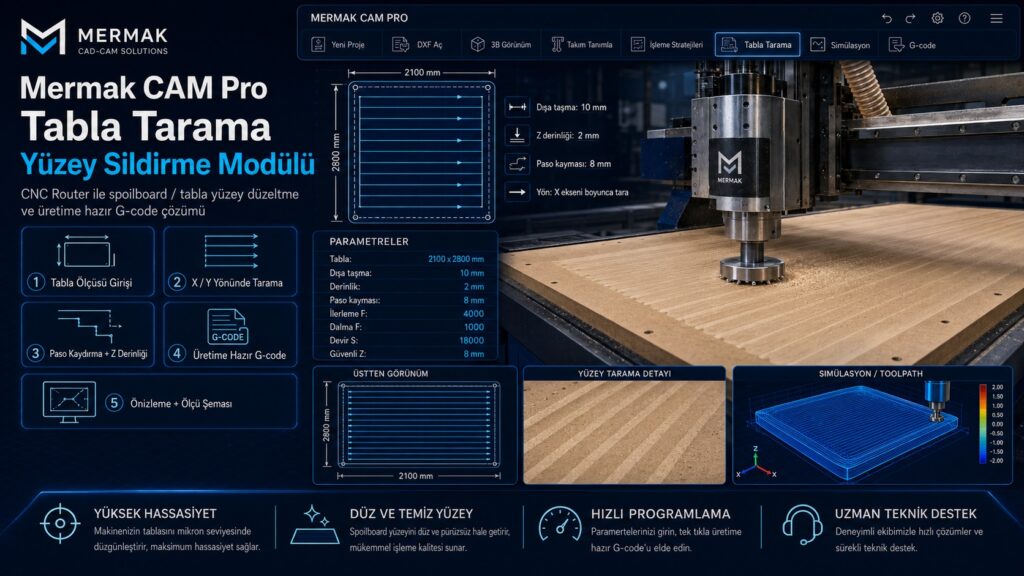
Key Considerations in Practice
- Correct Heat Treatment Procedure: Stress relief annealing is crucial for dimensional stability. The furnace temperature, holding time, and especially the cooling rate must be meticulously controlled according to the material type and frame geometry. Slow, controlled cooling prevents the formation of new stresses. This process is typically performed after rough machining and before precision machining.
- High-Precision Measurement and Inspection: Throughout and after the machining processes, advanced measurement equipment such as laser trackers, Coordinate Measuring Machines (CMMs), or precision levels should be used to verify the frame’s geometric accuracy. These checks ensure early detection of deviations and facilitate necessary corrections. Intermediate measurements after each machining step guarantee final product quality.
- Appropriate Machine and Tool Selection: CNC gantry milling machines or planing machines with sufficient capacity and rigidity are essential for the frame’s size and required precision. The geometry, coating, and cutting parameters of the tools must be optimized for the specific material. Tool wear should be regularly monitored and calibrated.
- Proper Frame Clamping and Fixturing: Securely and stress-free clamping of the frame to the machine table during machining is vital. Incorrect clamping can induce additional stresses, leading to post-machining distortions. Using multiple support points and precise alignment techniques ensures the frame does not deform under its own weight.
- Environmental Control: For critical machining steps, controlling the workshop’s temperature and humidity is important, as large metal components are sensitive to thermal variations. Effective chip management and cleaning procedures are also necessary to prevent debris from damaging precision measuring devices or machined surfaces.
- Material Knowledge and Expertise: Machining welded structures requires understanding the metallurgical changes in the material post-welding (e.g., hardening). Experienced operators and engineers can identify these changes and apply optimal machining strategies to minimize potential issues.
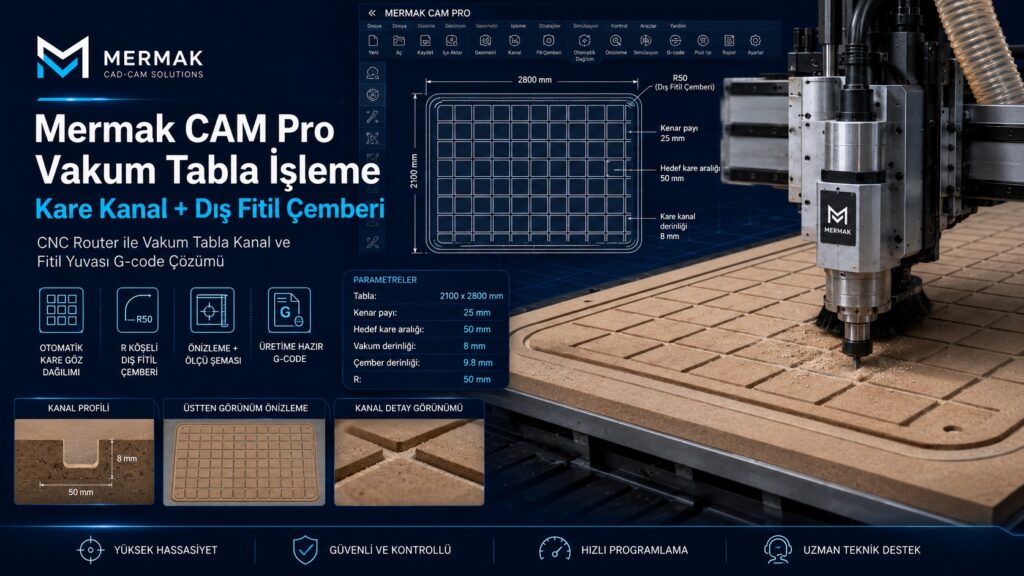
Ensuring the dimensional accuracy and stability of a CNC router frame through meticulous post-weld machining is fundamental to achieving the high performance, precision, and longevity expected from industrial CNC machinery. These processes are non-negotiable for building reliable and accurate CNC routers.
For robust industrial CNC router machines built to exacting standards, contact us to discuss your specific requirements.
Related product categories: General · Electronics · Combination Packages