





































































Choosing the Right CNC Router Bit for Woodworking

📑 Table of contents (Click to open)
Selecting the correct CNC router bit is crucial for achieving high-quality results in woodworking. This guide explores different bit types, materials, and flute configurations to help you choose the best tool for your specific project, from rough cuts to intricate 3D carvings.
Practical notes for CNC router, automation and industrial motion systems.
Selecting the Right CNC Router Bit for Woodworking
In the industrial automation and woodworking sectors, the performance of a CNC router machine and the quality of the finished product are significantly influenced by the choice of the correct cutting tool (router bit). Wood, being a fibrous material with varying densities, grain structures, and hardness levels, necessitates specific bit selections based on the type of wood, the operation (cutting, carving, grooving, profiling), and the desired surface finish. Choosing the right bit not only enhances work quality but also extends machine lifespan, reduces tool wear, and maximizes production efficiency. Conversely, incorrect bit selection can lead to undesirable outcomes such as burn marks, chip jamming, material tearing, and bit breakage. This guide delves into the optimal selection of CNC router bits for woodworking applications from both a technical and practical standpoint.
Understanding CNC Router Bit Mechanics and Technical Specifications
CNC router bits function by removing material through rotational cutting. Bits used for woodworking are characterized by their geometry, material composition, flute count, and coatings. Each of these attributes directly impacts cutting quality, chip evacuation, and tool longevity.
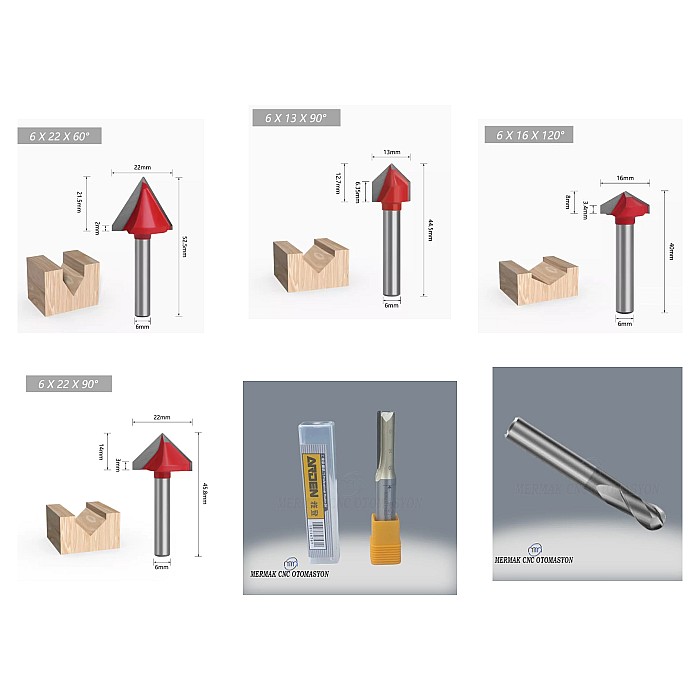
Bit Geometries and Their Functions:
- Straight Bits: Typically featuring two cutting edges, these bits are used for horizontal cuts. They do not inherently direct chips upwards or downwards. Suitable for basic grooving and cutting tasks.
- Spiral Bits: Among the most common types, their cutting edges are arranged in a spiral pattern.
- Up-Cut Spiral Bits: These pull chips upwards, away from the workpiece. This enhances chip evacuation, particularly in deep grooves or full cuts. However, they can cause lifting of wood fibers on the top surface, especially with laminated materials like plywood.
- Down-Cut Spiral Bits: These push chips downwards, towards the workpiece. This results in a very clean cut on the top surface, preventing fiber lifting. They are ideal for veneered MDF or laminated panels where a smooth top finish is essential. Chip evacuation can be a challenge, potentially leading to chip jamming in deep cuts.
- Compression Bits (Up/Down): Combining both up-cut and down-cut spiral features, these bits ensure clean cuts on both the top and bottom surfaces while effectively clearing chips from the center. They are excellent for full cuts on double-sided laminated panels.
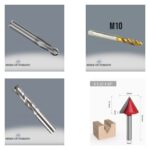
- Ball Nose Bits: Feature a rounded tip. Used for 3D carving, contouring, and creating smooth transitions. Indispensable for detailed relief work and sculptural projects.
- V-Groove Bits: Create V-shaped channels. Commonly used for sign making, lettering, chamfering, and decorative engraving. Their angles (e.g., 60°, 90°) allow for channels of varying depths and widths.
- Core Box Bits: Used for creating rounded bottom grooves or channels.
- Chamfer Bits: Used to bevel edges at a specific angle.

Bit Materials:
- High-Speed Steel (HSS): Suitable for softer woods and lower speeds; economical but has low wear resistance and cannot withstand high temperatures.
- Solid Carbide: The most common and preferred material for woodworking. Offers high hardness, wear resistance, and heat tolerance. Ideal for hardwoods, composite materials (MDF, plywood), and high-speed cutting.
- Polycrystalline Diamond (PCD): The hardest material, used for processing highly abrasive materials (e.g., melamine-faced panels, compact laminates). Despite its high cost, PCD bits offer significantly longer tool life than carbide bits.
Flute Count:
- Single Flute: Generally provides faster chip evacuation, suitable for softer materials and higher feed rates.
- Two Flute: The most common type, offering a good balance between chip evacuation and surface finish.
- Three Flute or More: Suitable for smoother finishes and slower feed rates, but chip evacuation is more challenging. Often used for harder materials or finishing passes.
| Parameter | Value/Description |
|---|---|
| Bit Type | Spiral Up-Cut |
| Purpose | Rough cutting, deep grooving, chip evacuation priority |
| Material Application | Solid wood, MDF, deep cuts |
| Advantages | Excellent chip evacuation, tool life |
| Disadvantages | Risk of fiber lifting on the top surface |
| Recommended Flute Count | 1 or 2 |
| Bit Material | Solid Carbide |
Practical Considerations for Woodworking
- Material Selection and Bit Matching: Each wood type has unique properties. Softwoods (pine, fir) may suffice with less aggressive, single-flute bits, while hardwoods (oak, maple) and composites (MDF, plywood) require more durable, two- or three-flute solid carbide bits. For laminated materials, compression bits are crucial for maintaining surface quality on both sides.
- Optimizing Cutting Parameters: Spindle speed (RPM), feed rate, and depth of cut are interconnected. High RPM with low feed rate can cause burning, while low RPM with high feed rate may lead to bit breakage or rough surfaces. Generally, higher RPMs (18,000-24,000) are preferred for wood, with feed rates adjusted based on material hardness. Depth of cut should ideally not exceed 50% of the bit diameter, though specialized bits like compression types may allow for deeper passes.
- Chip Evacuation and Vacuum Systems: Effective chip removal is vital for cut quality and tool life. Inadequate evacuation leads to chip buildup around the bit, overheating, burn marks, and potential breakage. A robust vacuum system and appropriate bit geometry (especially up-cut spiral bits) help minimize these issues.
- Bit Maintenance and Dullness: A dull bit results in burn marks, increased power consumption, strain on the CNC router machine, and poor cut quality. Regular inspection and replacement of worn bits are essential for maintaining efficiency and precision.
Conclusion
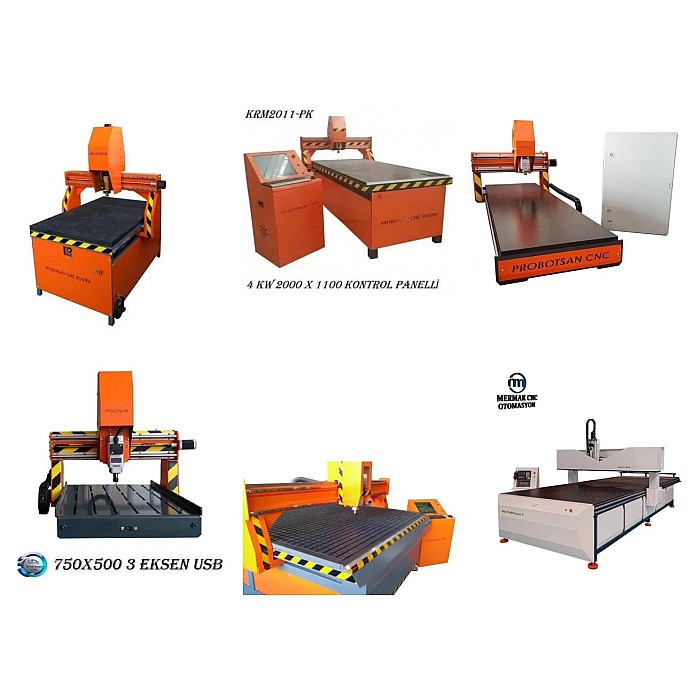
The selection of the correct CNC router bit is a critical factor in achieving professional results in woodworking. By understanding the different bit geometries, materials, and flute configurations, and by carefully considering the specific wood type and application, you can optimize your cutting processes. This leads to improved surface finish, extended tool life, and increased overall productivity. For demanding applications requiring precision and durability, consider Mermak’s range of industrial CNC router machines equipped with high-quality spindle motors and advanced motion control systems, ensuring optimal performance with the right tooling.
Ready to enhance your woodworking capabilities? Request a quote on WhatsApp for our advanced CNC solutions and expert tooling advice.
Related product categories: Uncategorized
